
Growing Strawberries Under Glass in a Greenhouse
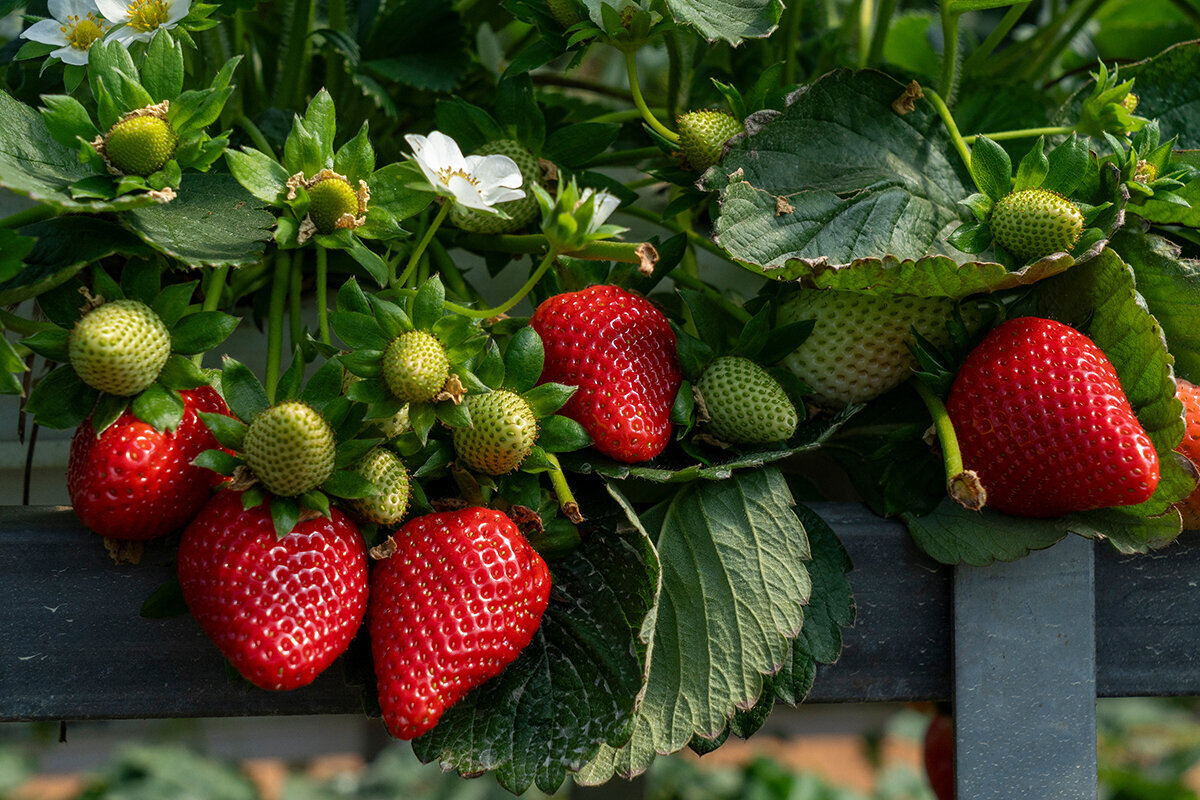
Bloomcabin crop journal / Ireland
Cultivating strawberries
beneath glassinside a greenhouse
A protected strawberry is more than early fruit: it shows how closely light, airflow, moisture and picking time work together.
01What the greenhouse changes
Careful observation is the essential ingredient.
Strawberries make minor errors obvious. Set a crown too deeply and lingering moisture may cause rot; miss a day’s ventilation and white flowers can face grey mould; let a pot dry out and berries may shrink before leaves wilt. Weather sometimes hides such slips outdoors. Under glazing, steady daily attention exposes them early, when simple adjustments can still put matters right.
Earlier fruit is only part of the benefit. Shelter protects flowers and berries from persistent rain, while measured irrigation reaches the roots and containers can sit at a comfortable picking height. Damaged fruit is removed sooner, leaf undersides are easier to inspect and emerging trouble becomes more visible. Strawberries remain seasonal rather than winter houseplants. As daylight increases in Ireland, thoughtful greenhouse care can provide a generous start to spring and a gentler finish to autumn.
Manage the strawberry area as its own small climate. Give it strong light, a clear path, nearby water and enough room for air to pass through the foliage. Do not press every pot against the glazing, where temperatures fluctuate and root balls dry faster. Before fixing benches, irrigation and containers in place, consult Bloomcabin’s Classic Aluminium Greenhouse planning guide before deciding on the layout.
For a dedicated picking area, consider the proportions and ventilation choices of the Classic Aluminium Greenhouse. Its layout can reserve a sunny side for fruit while retaining workspace for propagation, repotting and other seasonal crops.
02Choose varieties by purpose
Settle on a cropping pattern before selecting names.
Use protected space deliberately. Choose between one concentrated harvest and smaller repeated pickings, then select the corresponding growth habit rather than collecting varieties at random. Start with healthy, correctly labelled plants from a dependable nursery. Clean young stock lowers avoidable plant-health risks and simplifies later inspection.
Variety names matter, but first decide on the fruiting group. Taste, texture and performance during warm days vary by site and structure. Trial two varieties in small numbers before filling a bench. Keep the labels and note harvest timing, flavour and care. Plants that taste excellent and stay healthy in your greenhouse merit space again.
Everbearing and day-neutral strawberries generally suit a long protected season. Add summer-fruiting plants when you would rather gather a generous early-summer crop over a shorter interval.
One main picking period
Summer-fruiting plants
Summer-fruiting strawberries form next season’s flower buds in advance and provide one abundant harvest around late spring or early summer. Their concentrated crop is useful for jam, freezing or a planned picking weekend, followed by a distinct maintenance phase. Because runners are integral to this group, a narrow, renewable row in a soil bed or raised bed is particularly suitable.
They can thrive beneath glazing, although a single strong flush occupies the protected area differently from containers that crop for longer. Choose this group if a planned harvest event appeals and there is room to guide runners, refresh plants and maintain an open row.
A versatile choice under cover
Day-neutral
Day-neutral strawberries respond less strongly to daylight duration and can flower and fruit for an extended period when conditions suit them. Retailers often group them with everbearing plants. Choose for taste first, then assess how each plant handles your greenhouse light, heat, ventilation and harvest routine. A small home trial tells you more about local performance than broad variety claims.
Remove runners when fruit is the main aim, keeping the plant’s resources for flowers and berries. This suits protected growing: modest pickings every few days are easy to inspect, enjoy and chill without a brief glut. Even moisture around shallow roots and dependable pollination matter more than forcing fast growth.
Repeated flushes
Everbearing
Everbearing strawberries produce flowers and fruit more than once, often cropping strongly in early summer and again towards autumn. They grow well in containers but need consistent watering, harvesting and hygiene. Include a familiar variety if it has proved dependable in your garden. In limited space, a small, orderly selection usually gives better results than a crowded mixture.
03Seasonal work beneath glazing
Let daylight, frost risk and plant condition govern the pace.
Ireland’s Atlantic influence differs across exposed coasts, sheltered inland gardens and higher sites. Let available light, greenhouse temperature and plant development determine the timing, especially without heating. This is a working rhythm, not a fixed monthly timetable: prepare, plant, support blossom, limit lingering damp, harvest and renew.
Late winterReady the spaceInspect containers and vents
Early springSet out plantsAlign crowns with the surface
Late springSupport blossomProvide airflow and pollen transfer
SummerPick regularlyMaintain moisture and feed carefully
AutumnRefresh the cropRetain the best and tidy up
In late winter, clean containers, inspect glazing and drainage, check doors and vents, and clear old foliage. Plant in bright, cool early-spring weather; protect potted roots if severe frost threatens an unheated house. During flowering, ventilate early, keep foliage dry and admit insects when possible. Through summer, harvest often, water evenly and cut unwanted runners. In autumn, retain sound plants, replace weak, diseased or crowded stock and clean the strawberry area before winter.
04Crown position and root care
Set the crown precisely where the growing medium ends.
The crown is the thickened living centre from which leaves, flower stems, runners and roots emerge. It is not a bulb and must not disappear beneath compost. Remember three points: cover the roots fully, leave the growing tip visible and position the crown level with the surface.
Crown position from the side
Buried too far
Level placement
Raised too far
Buried too far: persistent damp around the crown raises the likelihood of rot. Level placement: the roots remain covered and the crown touches the surface. Raised too far: uncovered roots lose moisture rapidly and provide a weaker anchor.
Before setting bare-root stock, briefly moisten its roots in fresh water. Make a wide planting hole so each root can point loosely downwards instead of bending up or folding into a knot. Firm the growing medium only lightly, water the plant thoroughly and check its level again after everything settles. The crown may then need to be raised a little.
Keep approximately 25 to 30 cm between crowns in pots or troughs. The spacing has practical value: every root ball remains reachable for watering, berries can be gathered without crushing leaves and foliage dampened by a cool night can dry efficiently. A row in a long planter should also be slim enough to examine comfortably from either side.
- Fill pots with a high-grade, open and durable growing medium instead of dense garden soil.✦
- Do not let fruit touch damp compost, standing water or discarded plant matter.✦
- Label each variety and planting date; midsummer memory can mislead.✦
- After watering, promptly reset plants with uncovered roots or crowns that have sunk.✦
05Managing the shallow root zone
Aim for even moisture, open texture and dependable drainage.
Strawberry roots work close to the surface. A plant may still appear leafy and vigorous while its fruit becomes small because the upper root zone repeatedly dried out and was then overwatered. Pots in a greenhouse warm and dry more quickly than outdoor beds, especially beside glazing or on raised benches.
Select a quality peat-free or peat-reduced mix that retains moisture but drains freely. A compact pot can succeed, although deeper troughs or suitably large containers provide a steadier reserve. Keep drainage holes clear. Saucers should not leave the root ball standing in runoff, and surplus water must also have a safe route out of raised beds.
Drip irrigation delivers moisture to the root zone while helping foliage and fruit stay dry. Judge each pot from its weight, the temperature and a moisture check several centimetres down, not from a rigid schedule. Water slowly so the whole root ball is wetted, then stop when a little drains out rather than saturating the container.
| What you notice | Likely meaning | Useful response |
|---|---|---|
| Dry surface and unusually light container | Moisten before leaves wilt | Apply water gradually until slight drainage appears; do not let roots remain immersed. |
| Medium stays soaked and foliage loses strength | Watering frequency or drainage needs attention | Check emitter duration, drainage holes and growing-medium structure. |
| Abundant foliage but little blossom | Possible excess nitrogen or inadequate light | Follow the fertiliser label; do not force growth with extra doses. |
| Berries remain small during hot spells | Overheated air or stressed roots | Irrigate and open vents sooner, adding shade only around the day’s strongest heat. |
Approach to feeding:Base feeding on the growing medium’s quality and the instructions supplied with a suitable berry fertiliser. Everbearing plants crop over a long period, so they need regular but moderate nourishment. Additional nitrogen does not make better berries; it often creates soft, dark, dense foliage that dries slowly and encourages problems. Use compost and supplementary nutrients sparingly in beds too.
Before fixing irrigation, drainage or accessible growing surfaces in one arrangement, consult the FAQ about Aluminium Greenhouses before positioning pipework and benches permanently.
06From blossom to evenly formed berry
Evenly shaped fruit begins with thorough flower pollination.
Use fresh air to protect the crop and give pollination a helping hand.
Strawberries are self-fertile, so pollen from a second variety is not required. Even so, every flower has numerous stigmas, all of which need pollen for balanced fruit development. In suitable conditions during flowering, ventilate through the doorway and roof openings. This admits visiting insects and keeps damp air from settling among the leaves.
Cold conditions, long spells of rain or fine mesh may temporarily keep insects away. On a dry morning, pass a soft brush lightly between several open flowers or tap their stalks with care. Only delicate movement is required. A berry with a narrow point or an undeveloped side may reflect incomplete pollen transfer, although excessive warmth or injured blossom can produce a similar result.
Ventilation matters just as much. Growth slows in cold or excessive heat, and spring sunshine can raise greenhouse temperatures far beyond the outdoor forecast. Begin airing before heat builds and avoid a packed, humid canopy. When considering glazing and air movement, Bloomcabin’s guide to made-to-measure Aluminium Greenhouses provides useful context for planning a productive picking area.
07Deciding the future of each runner
Will it replace a plant or compete with the crop?
Runners, botanically called stolons, grow outwards from the mother crown, with new daughter plants forming along them. In summer-fruiting beds, chosen daughters can renew the row. On everbearing plants grown mainly for crops, runners compete for light, moisture, space and energy, so remove them while small.
To propagate a healthy favourite, pin a well-positioned daughter plant into a small pot of fresh medium while it remains attached to its parent. Separate the runner only after roots have established, then grow the young plant independently. Do not take runners from weak or diseased stock, because pests and pathogens can accompany the wanted varietal traits.
From established crown to young replacement
Parent
plant crown
plant crown
Connecting runner
Botanical stolon
Botanical stolon
Cut away
to favour cropping
to favour cropping
Root the daughter
to renew stock
to renew stock
Cropping everbearing plants: remove runners promptly. Sound summer-fruiting plants: root the strongest daughters, then separate and label them clearly.
08Give every plant workable space
Easy access supports clean berries and relaxed daily care.
A useful strawberry layout lets you irrigate, examine and gather from every plant without reaching through tangled leaves. Elevated containers improve working height and circulation but lose moisture sooner. Soil beds offer a steadier reserve and a lush appearance, although they demand a wider route and disciplined cleaning. One practical compromise combines bench pots or troughs for everbearing strawberries with a modest bed for summer-fruiting plants.
Leave enough aisle room for a watering can or harvest dish without brushing the foliage. Position frequently picked plants nearer the door and remove fallen leaves and berries. For further planning, see Bloomcabin’s Classic Aluminium Greenhouse overview for dimensions, glazing and ventilation that can shape the planting zone.
Containers on a bench
Adaptable and tidy
Elevated growing bed
Buffered root moisture
Long trough or planter
Fruit within easy reach
Bed at floor level
Room to guide runners
Bench pots make variety changes simple and work neatly with drip irrigation. Raised beds offer ample root volume but need effective drainage. Troughs and long planters provide a comfortable picking height, secure supports and close moisture monitoring. Ground beds suit summer-fruiting strawberries and controlled runners when rows stay narrow, airy and easy to renew.
09A measured approach to symptoms
Notice warning signs early, when a modest response may still suffice.
Soft grey growth on berries
Tiny pale marks across leaves
Upturned foliage with a light film
Misshapen or lumpy berries
Soft grey growth on berries: Grey mould often begins in spent blossom or beside the leafy cap before spreading over ripening fruit. Remove affected berries and dead floral parts immediately, improve airflow and avoid splashing. Cool damp weather, congested foliage and plant debris make infection more likely.
Tiny pale marks across leaves: Inspect the undersides for spider mites during warm, dry spells. Fine speckling, scraped areas and bronzing are warning signs. Isolate badly affected plants and identify the cause before choosing a gentle, suitable response.
Upturned foliage with a light film: Powdery mildew may lift leaf margins and create flour-like growth, often beneath the leaf. Humid air can support it even when no surface water is visible. Open congested growth, take away badly affected tissue and maintain regular air exchange.
Misshapen or lumpy berries: Check pollination first. Improve insect access or brush open flowers gently, then investigate heat, uneven watering and pest injury.
10Recognising peak ripeness
Pick when colour reaches the shoulder and the berry is cool, firm and fragrant.
Strawberries gain no sweetness once detached. Leave each fruit in place until colour reaches the shoulder near the calyx and its aroma is distinct. Pick dry, firm berries during a cool morning. Their colour may deepen afterwards, but the sugar content will not increase meaningfully away from the plant.
Support the berry in your hand and pinch or twist the stem above the calyx instead of tugging the fruit. At peak production, pick every one to two days and daily in hot weather. Regular harvesting removes overripe berries and provides a useful check on leaves, flowers and watering.
Needs more timePale near the calyx
Ready to gatherEven colour with clear scent
Beyond the ideal stageDull or softening
Pale near the calyx: wait, because little sweetness develops after picking. Even colour and clear fragrance: gather while the berry is firm enough for the kitchen. Use dull, leaking or soft fruit immediately; remove and discard any berry that is breaking down or showing mould.
Handling after picking
Chill soon and rinse only when needed.
Place the berries in a broad, shallow dish with as little layering as possible. Bruising traps damp and reduces storage life. Let field warmth escape briefly in shade, then refrigerate them unwashed. Rinse immediately before eating. Greenhouse fruit picked at full aroma is finest that day, although carefully chilled sound berries may keep for several days.
What to expect from the crop:A fixed kilogram yield per plant would mislead. Variety, plant age, light, pollination, rooting space, warmth, watering and harvest intervals all affect production. Value a small group of healthy everbearing plants for recurring fragrant handfuls rather than an annual total.
11Practical answers
Questions about strawberries beneath glazing
Will strawberries grow without greenhouse heating?
Yes. An unheated greenhouse shelters plants from rain and lengthens the shoulder seasons of spring and autumn. It does not remove winter: monitor night conditions, insulate container roots during severe frost and water sparingly so the root ball does not dry out. Cool dormancy generally suits strawberries better than warm conditions combined with poor winter light.
What number of plants is sensible for a home greenhouse?
Plan around access, paths and air movement rather than the greatest possible number. In pots or troughs, leave roughly 25 to 30 cm between plants, plus room for watering and picking. Ten accessible plants with reliable moisture and ventilation will usually be healthier and more productive than twenty crowded plants with persistently damp foliage.
Is it worth taking off the earliest blossom?
With newly planted everbearing strawberries, taking away the earliest blossom for several weeks can help roots and crowns become established before supporting fruit. Summer-fruiting stock is also handled cautiously during establishment because later cropping relies on a vigorous crown. For strong plants that are already blooming, assess their health rather than applying this practice automatically.
What can make protected strawberries small yet sweet?
Small berries may be normal for the variety, but possible causes also include incomplete pollination, dry shallow roots, heat, low light, crowding or a heavy crop on a young plant. Check pollen transfer first, then review watering consistency and ventilation. Do not respond automatically with additional fertiliser.
When should greenhouse strawberry plants be renewed?
Renew the crop when yield, fruit size or plant health falls noticeably. In a protected home garden, replacing exhausted plants with healthy stock is often simpler and safer than keeping them indefinitely. Replace earlier where crowns weaken, recurring disease appears or crowding makes cleaning and inspection difficult.
12References and useful background
Sources from cultivation, advisory work and plant medicine.
These attributed German horticultural and plant-health references informed the cultivation guidance. For Irish conditions and regulated product use, follow current advice from the relevant Irish authorities.
- Landwirtschaftskammer: strawberry cultivation guidance
Domestic-garden guidance covering culture, planting and harvest. - LfL Bayern: strawberries for the home garden
Practical information about plant groups, care and pollen transfer. - LfL Bayern: crop protection in small gardens
Prevention, diagnosis and careful plant-protection practice. - Landwirtschaftskammer: strawberry grey mould
Information about Botrytis, moisture, cleanliness and preventative practice. - Berlin Plant Protection Office: gardening bulletin
Plant-health information issued for Germany’s recreational gardeners. - Landwirtschaftskammer: feeding strawberry crops
Nutrient management and a cautious approach to fertiliser. - Landwirtschaftskammer: compact notes on strawberry production
Further information on healthy crops and practical cultivation.
Create a Bloomcabin strawberry corner
Reserve a sunny bench for strawberries.
Give this eagerly awaited crop an orderly home: a bench of fragrant everbearing plants, a clear central path, a narrow irrigation line and roof vents ready before flowering. It becomes a meeting point between kitchen garden and daily conservatory routine, offering blossom, ripe fruit and a short trip to the bowl.
Explore the Classic Aluminium GreenhouseFor more help with equipment, materials and arranging the interior, consult the FAQ about Aluminium Greenhouses.
