
Growing Sweet Potatoes in a Greenhouse
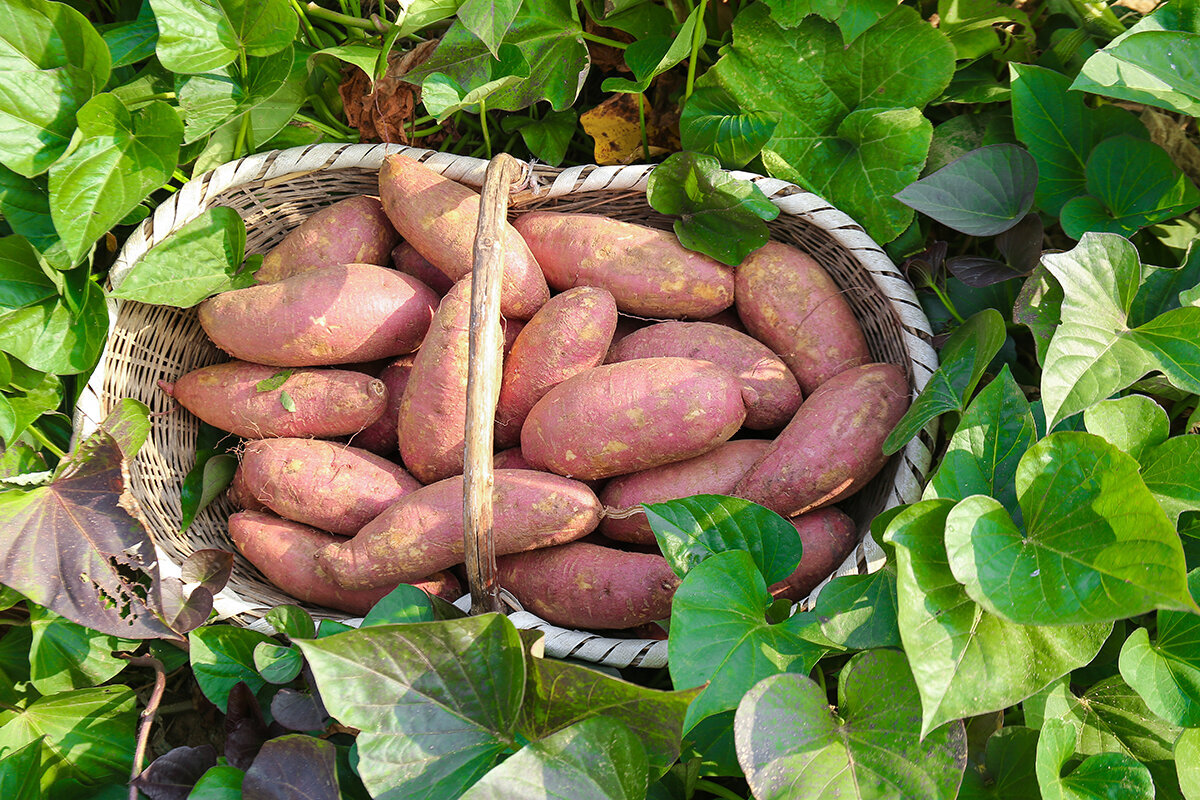
Bloomcabin cultivation notes for Irish growers
Sweet Potatoes Under Glass: An Irish Growing Plan
Turn captured summer heat into food: establish slips, keep the crop moving through an extended warm spell, then condition lifted roots with care.
Building the crop beneath the surface
Make every mild week useful.
Success rarely hinges on one impressive day of planting; it develops as the roots receive a long succession of settled, warm weeks.
Because Ireland is strongly influenced by the Atlantic, mild summers can still bring cool nights and unsettled spells. Outdoor vines may look abundant while producing disappointing storage roots. Cold ground in May or an early autumn slowdown can arrive during root initiation and bulking. Give the crop an early warm footing, many uninterrupted growing weeks, and loose, aerated earth kept consistently moist and frost-free until harvest.
Cover improves the odds by allowing slips to settle away from harsh weather, helping beds warm earlier and softening the effect of chilly nights. It can also preserve useful growth towards summer’s end. An unheated house does not turn sweet potatoes into a winter crop; it gives greater control over their summer season. Planting, watering, shading, ventilation and lifting should all reflect that limit.
What protection contributes: Use shelter to prevent cold pauses in growth. During bright midsummer spells, ventilate early and add shade when required so the same protected space remains light and productive without trapping punishing heat.
01 / Understanding the plant
A warmth-loving vine that forms edible storage roots.
Botanically, the sweet potato — Ipomoea batatas belongs to the bindweed family. Its edible storage roots develop beneath a plant that spreads widely, either creeping or climbing. Growers start it from young shoots called slips, which may be rooted beforehand or rooted during propagation. Cutting up a culinary sweet potato and treating the pieces as seed potatoes is the wrong approach. Healthy, correctly identified slips give a more dependable start in a greenhouse bed used repeatedly.
Low temperatures quickly slow this crop. Roughly 20 to 29 °C supports active growth, while development is severely checked below about 10 °C and frost stops it altogether. Air warmth is not enough when the root zone is cold, waterlogged or compressed. Alternating drought and overwatering can be equally disruptive.
02 / Using protected space well
Plan for outward spread rather than height.
A tomato-house arrangement cannot simply be reused unchanged. Long stems need a low horizontal route along a border, over a tidy edge or around a large container. Below ground, storage roots need deep, well-structured soil with reliable drainage. The layout should give both halves of the plant warmth and order while leaving them accessible for watering, inspection and harvest.
Begin the layout with ventilation. Roof vents, the doorway and, where needed, assisted air movement help prevent excessive heat and stagnant moisture around foliage. A sound structure such as the Classic Aluminium Greenhouse supplies lasting, light-filled shelter for climate management while preserving ample soil space for a sprawling crop and keeping working areas clear.
Choose for the available warm season
Three practical cultivar groups for protected home growing.
Early autumn cooling makes the time to maturity especially important. Where possible, buy named, healthy slips whose origin can be traced. A known cultivar gives more useful guidance on likely harvest timing and reduces the risk of introducing diseased or unsuitable material to protected soil.
Earlier orange-fleshed options
Consider comparatively early cultivars such as Beauregard. Orange-fleshed types that bulk quickly are usually more practical for Irish gardens, cool districts and unheated houses than speciality cultivars with very late harvests.
Established orange cultivars
Orleans and Evangeline combine familiar flavour with orange flesh suited to baking, roasting and puréeing. They still need a prolonged spell of summer warmth and generous room for their vigorous vines.
Light- and purple-fleshed cultivars
Cream or purple roots add variety in the kitchen, but colour alone is a poor selection rule. Check the expected harvest time, growth habit and location advice before allocating valuable covered ground to a slow-finishing cultivar.
Raising planting slips
Begin with new growth, not chopped root.
Order slips for your likely local transplanting window, or raise a small home-grown supply in advance. Depending on when planting is planned, propagation can begin between late January and March. Even so, purchased plants that are healthy and true to cultivar are safer, particularly if the protected border will return to sweet potatoes or other crops in future seasons.
1
Set the mother root
Use sound, warm and preferably untreated stock.
2
Grow robust shoots
Wait for several healthy leaves.
3
Remove the shoot cleanly
Twist gently or cut with a clean blade.
4
Form a root system
Leaves stay above; fresh roots develop below.
5
Plant into the bed
Harden off, then plant gently.
To produce slips at home, place an undamaged and preferably untreated mother root horizontally, half covered by loose compost that is only lightly moist. Keep it bright and warm but never sodden. When sturdy shoots carry several healthy leaves, ease them away by twisting or use a disinfected tool. Remove foliage from the lower stem and stand each shoot in water or clean, damp propagation compost. Pot or plant it promptly once strong white roots can be seen. Weak, drawn or cold-stressed shoots establish poorly.
Over a number of days, accustom rooted slips to the stronger light and moving air of the greenhouse. At planting, place the rooted lower stem and several leaf nodes beneath the loose soil, keeping only the sound upper crown above ground. Treat the slip as a delicate warm-season seedling rather than as a tough piece of potato planting material.
Handle slips as tender young plants. A leafy slip still stops developing when its roots are cold. Wait for lasting warmth in the greenhouse bed, then plant into loose soil that drains excess water freely.
Warmth controls the schedule
Let root-zone readings guide the season.
Do not transplant merely because the average frost period has passed. Sweet potatoes establish properly only after the root zone itself has warmed. Take a morning measurement at planting depth with a soil thermometer. In an unheated Irish greenhouse, suitable conditions often arrive from late April into May, and later in cool or exposed locations. Open vents and the door before midday heat becomes excessive.
Ground below about 15 °C
Keep waiting and recheck.
Soil remains consistently warm
Slips may now be planted.
Air temperature of 20–29 °C
A useful range for strong development.
Autumn temperatures falling
Finish the crop and lift it.
Sweet-potato roots develop slowly in cool soil, and prolonged damp conditions then add a greater risk of rot. A single warm date matters less than several days during which the bed remains warm without losing all its heat overnight. Vines grow strongly around 20 to 29 °C when moisture is steady and fresh air enters regularly. Below about 10 °C, progress across the whole plant is sharply restricted.
A thermometer inserted at root depth tells you more than either the outdoor reading or a comfortably warm greenhouse at noon. In an Irish spring, the main benefit of cover is earlier soil warming with fewer cold interruptions. During sunny summer weather, the objective reverses: admit air early, leave the doorway open and use shading if required to prevent trapped solar warmth from becoming damaging heat.
Plan the bed for roots and vines
Give roots depth and vines a clear horizontal course.
Loosen the bed deeply, ensure surplus water can leave, and do not tread on the prepared area afterwards. With heavy soil, build a friable ridge about 20 cm high. It warms sooner, improves drainage and can be opened more carefully during harvest. Large pots can also work. Allow at least 35 to 45 litres per plant, ideally more, using broad containers with ample drainage holes. Pots warm rapidly, but their limited compost also dries considerably faster than garden soil.
Space slips about 30 to 40 cm apart and allow roughly 80 to 100 cm between rows. Just as importantly, keep a horizontal route clear for each long vine. You should be able to water at ground level, examine leaf undersides, guide wandering growth and harvest later without stepping on the root zone.
- Work in mature compost to create open, well-drained soil, while avoiding fresh manure and an unnecessarily high nitrogen supply.
- Leave each crown visible and reachable instead of losing it beneath a dense, disordered mat of vines.
- Lead vines beside a chosen border edge or along a low support; do not train sweet potatoes vertically like cucumbers.
Loose rooting zone
Ridge approximately 20 cm high
Ridge approximately 20 cm high
Clear working route
Room to water, inspect and harvest
Room to water, inspect and harvest
Water, feeding and airflow
Keep root moisture steady and the house air moving.
During establishment and storage-root formation, sweet potatoes benefit from an even water supply but cannot tolerate waterlogging. Judge soil moisture, foliage and the greenhouse climate together rather than following an inflexible weekly watering routine.
Water the bed rather than the greenhouse
Water deeply when the slips are planted and keep the soil reliably moist until they take hold. Thereafter, the surface may become a little dry between applications, but deeper soil should not dry completely. Check approximately 8 to 10 cm down with a finger or narrow probe. A drip line or watering wand delivers water quietly near soil level and helps keep foliage dry. Inspect containers more often because their restricted compost warms up and loses water quickly.
Practical response
Do not apply mulch until sufficient warmth has accumulated in the bed. A light, airy covering can slow evaporation. By contrast, a thick layer that stays wet may preserve cold conditions, limit air exchange and delay the very soil warming you were trying to achieve.
Feed storage roots, not excessive foliage
In many home gardens, well-rotted compost, decent soil and a balanced organic feed for vegetables are sufficient. Too much readily available nitrogen encourages impressive top growth at the expense of the storage roots you want. If foliage is already vigorous and dark green, extra feeding may offer no benefit. Containers are more likely to need cautious replenishment because nutrient reserves are limited. Always assess irrigation, compost and plant condition as one system.
Practical response
Apply any extra fertiliser to moist soil and water it in. Avoid repeated nitrogen-rich doses simply because the plants occupy the greenhouse for a long season. A mass of green growth with little beneath it is not a successful crop.
Ventilation supports roots as well as leaves
Greenhouse warmth is valuable until it becomes heat stress. On sunny days, open the roof vents and doorway early, with additional shading during high summer if needed. Moving air disperses still, humid pockets among thick foliage and allows leaf surfaces to dry soon after watering or a damp night. Neatly routed vines are also easier to inspect, so spider mites, whiteflies and aphids can be noticed sooner.
Practical response
Plan ventilation, beds and paths before the vines fill the house. The Classic Aluminium Greenhouse provides a bright, stable framework, useful soil area and enough room for an orderly daily routine.
Read the vines before harvest
Three concerns to investigate before lifting.
Abundant leaves but disappointing roots
Possible explanation: Root formation may be delayed by excessive nitrogen, overcrowding, a cool late start or repeated water stress. Drastic pruning will not force storage roots to appear. Improve moisture management and the greenhouse climate wherever possible, then give the plants as much remaining warm time as conditions safely allow.
Speckled or curling foliage
Possible explanation: Spider mites, whiteflies and aphids can multiply quickly in warm greenhouse air that is dry and still. While watering, inspect new tips and leaf undersides every week. Remove heavily affected leaves early, restore airflow and deal with the identified pest rather than treating the whole crop routinely. If control is needed, use only a product authorised in Ireland for amateur home-and-garden use and follow its label.
Split or distorted storage roots
Possible explanation: Uneven watering, compacted soil, stones or solid clods can divert growth and produce misshapen roots. Prepare the full soil depth beforehand, maintain reasonably even moisture and avoid disturbing the root area later.
Start clean by choosing healthy material, disinfecting tools, using suitable compost and rotating crops where the available beds permit it. Remove dropped leaves and residues from other plants. When leaf spotting worsens markedly or its cause remains unknown, do not keep roots from affected plants as next season’s mother stock. In enclosed ground used repeatedly, prevention is much easier than later restoration.
A careful lifting sequence
Treat the skin as though it were paper.
Freshly lifted sweet potatoes have exceptionally delicate skins. A scratch is an injury that must heal during curing. Lift slowly and methodically around the plant rather than rushing a digging fork through the bed.
01
Choose the right moment
Harvest before frost or sustained cold nights arrive.
02
Take away the vines
Make every crown clearly visible.
03
Loosen from well outside
Start beyond the expected spread of the roots.
04
Handle only once
Set each root down gently.
The crop may be ready after roughly 90 to 120 warm growing days, depending on its cultivar and starting date. If the foliage remains sound, cover may supply several valuable extra weeks, but do not gamble on a sudden cold spell. First shorten the vines and mark the crown. Place a hand spade or digging fork well beyond it, then loosen the soil gradually towards the centre. Storage roots often extend farther than the visible top of the plant suggests.
Brush away loose, dry soil gently rather than washing roots intended for storage. Keep the harvest out of direct sun and lower it carefully instead of throwing it into a bucket. Arrange healthy roots singly or in shallow layers inside ventilated crates. Set aside cut, badly bruised or otherwise damaged specimens for prompt kitchen use; only sound roots should proceed straight to controlled curing.
The warm curing interval
Conditioning improves eating and keeping quality.
Curing is a managed warm, humid stage rather than casual drying. During it, minor harvest wounds close, the skin becomes more resilient and later eating and storage quality improve. A greenhouse is suitable only when direct sun, condensation and sharp day-to-night fluctuations can be prevented. In many homes, a small hygienic room or purpose-controlled chamber offers steadier conditions than an open greenhouse.
On harvest day
Shade the roots
Keep them away from direct sun.
During day one
Dry the surface gently
Brush away only soil that is already loose.
Approximately 5–10 days
Provide humid warmth
About 29–32 °C; 85–90 % relative humidity.
When curing ends
Store in moderate coolness
About 12–16 °C; dark and airy.
As soon as lifting is complete, protect the roots from sunlight and do not wash them. Let surface moisture and attached soil dry only enough for gentle brushing; do not desiccate the harvest with forceful hot air. Cure healthy roots for about five to ten days at approximately 29 to 32 °C and a relative humidity near 85 to 90 %. Some air exchange remains essential. Avoid condensation and stale odours, and check every day for soft patches.
Once cured, place the roots somewhere dark and well ventilated at about 12 to 16 °C. Do not move them abruptly into a cold cellar or put them in a refrigerator, as chilling can cause watery areas and later loss of quality. If the greenhouse is used for curing, keep the crates shaded and monitor temperature and humidity closely with a thermometer and hygrometer.
Settle the crop into storage
Keep only the soundest roots for longer storage.
After curing, retain only roots that are firm, undamaged and healthy in appearance. Arrange them loosely in shallow ventilated crates, slatted timber boxes or open baskets, using paper for cushioning if helpful. Do not build deep stacks, and protect them from cold draughts. Examine the supply no less than once a month. Any root that softens, weeps or shows decay should be taken out before the problem reaches neighbouring specimens.
An Irish home may offer a frost-free pantry, a moderately heated utility room or another suitable cupboard that performs better than a garage, refrigerator or unheated shed. The goal is steady, moderately cool conditions rather than true cold. Correct curing can greatly improve storage life, and specialist guidance mentions six to twelve months under favourable conditions. At home, however, the condition of each individual root remains decisive.
Sweet-potato greenhouse questions
Practical guidance for managing a heat-demanding crop.
Use local weather observations, a thermometer at planting depth and your cultivar’s stated maturity period when choosing dates. A greenhouse improves the prospect of a worthwhile crop, but it cannot remove the need for a long, warm season.
Can an unheated glasshouse carry sweet potatoes year-round?
Usually not in Ireland. An unheated glasshouse can warm spring soil earlier, lessen the effect of cold nights and retain growing conditions later in autumn. Sweet potatoes nevertheless remain sensitive to low temperatures. Winter root zones and nighttime air are generally too cold for productive storage-root formation, and natural winter light is often insufficient for strong growth.
How many plants are sensible in a small glasshouse?
Young slips disguise how much room the mature crop needs. In a compact house, two plants positioned well are often easier to tend and can outperform six crowded ones. Allow 30 to 40 cm from one plant to the next, give each a generous root zone and reserve a defined horizontal route for its vines.
Should sprawling vines be cut back for tidiness?
Prune only lightly where a vine continually blocks a path or restricts airflow. Heavy cutting performed repeatedly removes working leaf area, leaving less energy for storage-root development. It is better to turn long growth along the bed edge, around a container or over a low removable support.
May I raise slips from a shop-bought sweet potato?
Yes, but it is less dependable than beginning with healthy, correctly named propagation material. A retail root may have been treated to suppress sprouting, while its cultivar, previous storage and plant-health status may be unknown. For protected soil that will remain productive over several seasons, slips supplied through a traceable source are the safer choice.
Why do newly harvested roots have so little sweetness?
They have probably not completed curing. Roots straight from the bed often retain a starchy character. Put undamaged specimens through a controlled stage of humid warmth, then allow further time in moderately cool storage. Do not refrigerate the crop. Its texture and flavour will commonly become more rounded during this process.
Sources and further horticultural reading
Explore the specialist growing and post-harvest references below.
Continue with Bloomcabin: Setting up a greenhouse · Smart greenhouse ideas for home gardeners · Bloomcabin greenhouses and garden rooms
- Federal Information Centre for Agriculture (Germany) — German sweet-potato cultivation
- Bavarian Garden Academy — batatas and suitable cultivar guidance
- University of Göttingen — research into cultivating sweet potatoes
- Washington State University Extension — guidance on raising sweet-potato slips
- UC Davis — sweet-potato handling after harvest and storage
- Penn State Extension — recognising scurf on sweet potatoes
- Landwirtschaft.de — sweet-potato growing in Germany
Keep the warmth of summer
A greenhouse can turn seasonal heat into a crop for storage.
Patient growers receive two rewards: first, months of vigorous vines in the warm greenhouse, and later a cured harvest that is firmer, sweeter and ready for winter meals. Give sweet potatoes abundant light, controllable warmth, moving air, loose soil and enough ground area for their spreading habit.
Classic Aluminium Greenhouse