
Pollinating Crops Successfully Under Glass
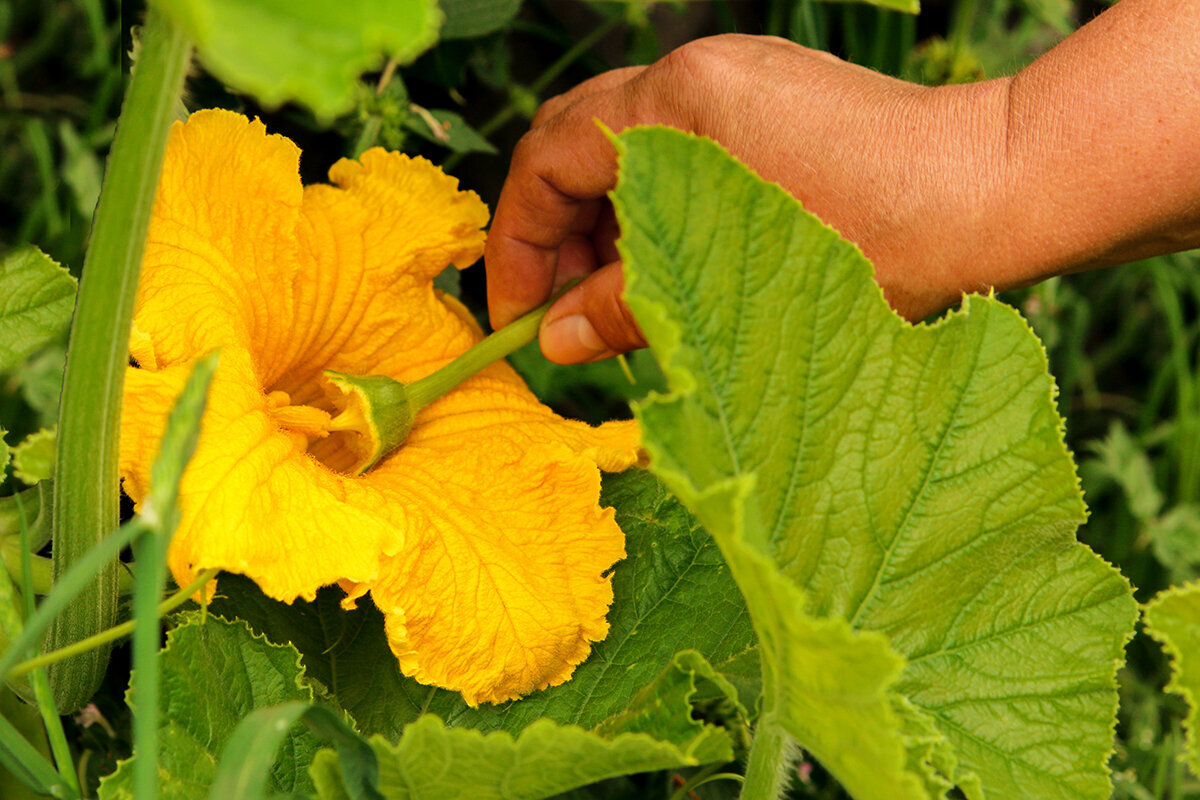
Greenhouse growing / pollen transfer
Pollinating Crops Successfully Under Glass
A greenhouse protects flowers but removes some natural movement. Provide only the pollen transfer that each crop genuinely needs.
Outside, flowers experience constant motion. Breezes flex their stems, bees arrive and depart, and repeated brief encounters carry pollen where it must go. Glass softens that activity, leaving the grower to supply movement when a crop requires it.
A brush, powered device or managed bumblebee colony is therefore not necessary for every protected crop. Each species has its own pollination pattern. A tomato flower contains both the anthers and stigma, and a mild jolt can loosen mature pollen. Squashes and many conventional cucumbers instead bear male and female blooms separately, requiring pollen to cross between them. Strawberries are self-fertile, although distributing pollen across the entire centre helps the developing berry fill evenly.
Consider growing conditions before deciding how much intervention is needed. During bloom, roof vents, sensible shade and clearly arranged plants serve practical purposes: they reduce heat stress, favour viable pollen and simplify routine inspection. One suitable example is the Classic Aluminium Greenhouse which gives home gardeners a durable, orderly place for ventilation, access and plant care. Other formats and design choices are shown in the Classic Aluminium Greenhouse range and the Classic Aluminium Greenhouse overview.
The key sequence
Pollination comes first; fertilisation and fruit set are later, distinct events.
Understanding that order helps avoid repeated hand-pollination when another cause is limiting the crop. Excess heat, erratic moisture, poor nutrition or the wrong variety may be responsible instead.
01
Release
Ripe pollen leaves the anther02
Transfer
Pollen reaches the stigma03
Reception
The pollen tube starts growing04
Set
The ovary begins to swellRelease
Anthers need time to mature before they can shed viable grains. Cold nights, severe heat, saturated air or general crop strain may interrupt release long before anything attempts to carry the pollen.
Transfer
A breeze, a brief tremor, visiting insects, gentle brushing or flower-to-flower contact can deliver grains to a stigma that is ready to receive them. Crop biology determines which route is appropriate.
Reception
After a grain arrives, its tube extends down towards the ovary. Although hidden, this growth connects the act of pollination with fertilisation and can falter when cultivation conditions are poor.
Set
Following fertilisation, ovules continue developing as the tissue around them expands. Even then, later stress may prevent the plant from nourishing or retaining the new fruit.
Begin diagnosis by examining the bloom itself. A blossom that falls before its ovary expands may signal an unsuccessful transfer. Equally, hot days, difficult night-time conditions, abrupt moisture changes or too much nitrogen may be involved. Moving pollen successfully is only one step towards ripe produce.
Identify the flower before intervening
One greenhouse, several flower architectures.
Let the structure of the bloom determine your technique rather than relying only on the crop’s name. Tomatoes, peppers and aubergines largely fertilise themselves, though motion helps to dislodge their pollen. Cucurbits generally require movement between a male bloom and its female counterpart. A strawberry blossom has numerous separate fruit-forming structures, and missed areas may later appear as distortion in the berry.
Greenhouse-bred cucumber cultivars can be an important exception. Parthenocarpic types develop cucumbers without fertilisation, while unwanted pollen may promote seed formation and distorted produce. Before bringing insects inside or attempting a manual transfer, consult the packet, plant tag or cultivar notes.
Pollen routes
United flower parts
→
Tomato family: vibrate gently
Male and female flowers
→
Cucurbits: transfer precisely
Many receptive points
→
Strawberries: encourage insect visits
Fruit without pollen
→
Parthenocarpic: manage climate
Tomatoes, peppers and aubergines: Both reproductive structures occur together in each bloom. A measured tremor helps mature grains leave the anthers; modest vibration or restrained air movement therefore makes better sense than applying a brush to every blossom.
Squashes, melons and standard cucumbers: Pollen must pass between two flowers that have opened recently, one male and one female. Their useful flowering period is short, making careful timing and observation much more valuable than vigorous handling.
Strawberries: Every flower contains many individual fruitlets. Repeated insect contacts can spread pollen widely across the centre, contributing to a fuller, more evenly shaped berry.
Parthenocarpic varieties: With these cultivars, the priority shifts away from moving pollen. Maintain steady moisture, sound roots, fresh air and suitable temperatures, and consult the cultivation directions provided with the seed or transplants.
United flower organs
Tomato-type flower
Anthers surround the central stigma.
Separate flowers
Squash flower
Male pollen meets a female stigma.
Many receptive points
Strawberry flower
Many fruitlets form one berry.
With tomato-type blooms, a brief touch to the supporting twine or a mild tremor through the truss can free pollen without handling or crushing the individual flowers.
A female cucurbit bloom is most easily recognised by the tiny undeveloped fruit directly beneath it. Successful manual transfer requires a recently opened male bloom to be available while the female remains fresh.
Uneven strawberry development sometimes points to gaps in pollination. Similar distortion may, however, come from pests, frost injury, disease, crowded planting or stressful conditions around the roots.
A practical workshop
Choose the smallest effective intervention.
Protect fragile blooms by using dry hands, clean equipment and minimal pressure. Deliberate, restrained handling is best: bruising petals, breaking trusses or repeatedly disturbing flowers will not raise the harvest.
≈
Tomatoes, peppers and aubergines: vibration
These plants ordinarily complete pollination inside each bloom, but a sheltered house may lack enough motion. In mild, dry conditions, send a slight tremor through the support twine or the stem carrying the truss. A powered toothbrush or compact pollinating tool can supply the same brief pulse. Touch only the base of the stem with very light pressure; the device should never contact the bloom itself.
- Treat blooms after they open, leaving buds and developing fruits untouched.
- A short, gentle movement is enough. Hard shaking damages stems and can make flowers drop.
- With tomatoes, a fine yellow dusting of pollen may be visible in suitable conditions, but seeing it is not essential.
- Exchange the air gently; a forceful draught may injure blossoms and remove unnecessary moisture from the plants.
↔
Squashes, melons and standard cucumbers: direct transfer
Select a male bloom that has just opened and shows pollen on its anthers. Ease its petals backwards or remove them carefully. Another option is to lift the grains with a spotless, soft painting brush, then touch them lightly onto a receptive female stigma. The developing ovary beneath that female bloom confirms which flower you have chosen.
- Do this during the morning, when the two blossoms are open and both the stigma and pollen remain fresh.
- One male flower can serve several female flowers, but only while enough pollen remains.
- If you plan to monitor the result, attach a loose marker beside the bloom you treated.
- Do not hand-pollinate cucumbers labelled parthenocarpic.
✦
Strawberries: distribute rather than merely touch
Pollination must reach many points across a strawberry blossom. When coverage is patchy, the resulting berry may stay small or develop unevenly. Provided weather, access and cultivation conditions permit, several visits from naturally occurring insects generally distribute pollen better than a single pass with a brush.
- Allow insects inside only when growing conditions, pests and the weather make access appropriate.
- During flowering, avoid treatments that endanger bees and use every product exactly as its label directs.
- Keep brush work for limited plant numbers, planned crosses or temporary lulls in insect visits.
- Alongside pollination, inspect misshapen berries for pest, frost and growth stress.
○
Herbs and seed: decide the harvest goal
Leaf harvests from herbs such as coriander, basil and dill do not depend on pollinated blooms. Seed production is different: flowering behaviour, the transfer route and possible crossing then matter. Where continued leaf growth is the aim, it can help to keep flowering specimens apart so more plant energy remains directed towards fresh foliage.
- Before saving seed, determine whether that species usually fertilises itself or readily crosses with neighbours.
- Controlled propagation may require physical separation, isolation or a carefully managed manual transfer of pollen.
- Do not confuse flowering in leafy herbs with poor pollination; it is often bolting.
A permanent, practical home for a varied collection of crops comes from the Classic Aluminium Greenhouse whose accessible interior supports tending, watering and deliberate control of ventilation.
A window, not a fixed hour
Use the morning and read the weather and crop.
Cucurbit blooms stay receptive for only a short part of the day, commonly early on. Tomato trusses may respond better as the morning progresses, once petals are dry and grains shed readily. Observation matters more than a timetable: inside one greenhouse, cool damp conditions produce a very different response from bright, dry July weather in which temperatures climb quickly.
Start of dayCheck squash flowers and condensation.
MorningTransfer fresh pollen precisely.
Late morningVibrate tomato trusses gently.
AfternoonVentilate, shade and observe.
EveningCheck watering and temperature.
Attend to cucurbit blooms soon after they unfold. Tomato-family trusses are often ready for a mild tremor as the morning advances and moisture no longer holds the grains together. Wet petals, visible heat strain or stale air are reasons to improve the internal conditions first. Resume work on the blossoms only when the environment is more favourable.
- Humidity Still, moisture-laden air may bind grains together instead of allowing them to fall freely. Avoid misting the blooms themselves. Increase ventilation, and direct irrigation towards the soil around the roots rather than onto the plant.
- Heat Strong temperature peaks can strain flowers and fruit set. Open roof vents and the door in good time, and use suitable shading when required. Ventilation and heat protection matter during flowering just as much as pollen transfer.
- Cool nights Low night temperatures can impair pollen production, fertilisation and growth. Do not assume more frequent vibration can compensate for an unsuitable temperature pattern. Assess several trusses over several days.
- Water balance Steady moisture around the roots helps normal plant processes continue. Alternating between overly dry and saturated soil may cause blossoms to fall or fruits to struggle later, despite successful earlier delivery of pollen.
Over the longer term, steady and anticipatory climate management gives better results. The Classic Aluminium Greenhouse creates controllable conditions for airing, shading and watering through Ireland’s variable spring and summer weather.
Reading the signs properly
Check fruit set: not every shape fault begins with pollen.
A bloom captures one stage, while the developing produce records what followed. Note whether it falls before any swelling appears, starts a fruit that later stalls, or creates distortion in isolated fruits rather than across the planting. Compare those patterns with recent heat, dry spells, pest activity and any abrupt alteration to feeding.
Stable transferOvary grows evenly.
Flower dropsCheck climate and transfer.
Uneven shapeCheck pollination and stress.
Young fruit stopsInvestigate later crop stress.
Read the sequence this way: Petals fading as the ovary expands steadily are encouraging, although continued crop care is still required. A blossom that detaches cleanly may indicate poor pollen delivery or difficult temperatures. Distorted strawberries, cucumbers and squashes can follow incomplete coverage, but pest damage, moisture strain and other growth disorders must also be considered. Where development starts normally and then halts, a later problem with heat, irrigation or plant vigour is the stronger clue.
When insects are part of the answer
Provide access consciously and manage it carefully.
The buzz pollination performed by bumblebees can work particularly well for tomatoes. Their repeat visits also help strawberries and cucurbits that rely on pollen movement. In a modest domestic glasshouse, doors and vents may welcome local insects during mild, dry conditions, provided doing so neither compromises temperature management nor creates unacceptable pest pressure.
A managed bumblebee colony is a specialist growing choice rather than a routine upgrade for domestic gardens. Appropriate provenance, careful siting, a compatible crop-protection plan and guidance from a knowledgeable supplier are all needed. Wild bees should never be captured for release indoors. Read the directions for every plant-protection treatment. Do not treat exposed blossoms or spray while insects are flying unless that use is specifically permitted and safe for pollinators.
Make the garden beyond the glasshouse welcoming too. Diverse flowers and restrained treatment can provide food across the season. Keep routes inside clear, and leave suitable openings available when conditions allow. A carefully made setting for this is the Classic Aluminium Greenhouse in a range of garden settings. The considered construction of the Classic Aluminium Greenhouse supports an orderly plant layout and conscious adjustment of ventilation and access during flowering.
A repeatable flowering routine
A calm ten-minute check, three times each week.
For mixed planting, a regular light routine is preferable to one intensive session. Supply only the motion or delivery appropriate to each crop, then refocus on moisture, conditions and plant health.
- Check at the right time. Look for crops carrying newly opened blooms. Early hours generally suit cucurbits, whereas tomato trusses often respond once the morning has progressed and their flowers have dried.
- Identify the flower mode. Is the bloom equipped to fertilise itself, divided into male and female forms, built like a strawberry with numerous receptive sites, or from a parthenocarpic cultivar for which pollen is unnecessary?
- Carry out the suitable action. Lightly tap or vibrate tomato-type trusses. Pollinate standard cucurbit varieties precisely. Make strawberries accessible to visitors. Leave parthenocarpic cucumbers alone.
- Check the climate before leaving. Note the thermometer, assess moisture around the roots and alter ventilation where required. The effectiveness of pollen and stigma always depends on the growing conditions surrounding the flower.
- Assess fruit again later. Look for swelling ovaries, recurring flower drop and typical deformation patterns. Change crop management only when several observations provide reliable clues.
Frequently asked questions
Greenhouse pollination, clearly explained.
Is a brush suitable for every crop grown under glass?
No. Soft bristles can move grains between the distinct flower sexes of cucurbits and may help with a limited number of strawberry blossoms. Tomato, pepper and aubergine blooms are handled more efficiently by giving the truss a slight tremor suited to their structure. Parthenocarpic cucumbers develop without fertilisation, so applying pollen manually would be counterproductive.
How often should I vibrate tomato flowers?
During the main blooming period, a restrained schedule will generally suffice. Apply one brief, mild pulse to newly opened trusses on several days each week. Extra force or frequency offers no assurance of a larger crop. If set stays poor, investigate heat, moisture in the air, ventilation, irrigation, feeding and cultivar suitability rather than escalating the physical treatment.
Should I spray flowers for better pollination?
Generally, no. Moisture can bind pollen into clumps, while persistently damp foliage is more vulnerable to disease. When humidity builds inside, increase ventilation and stop overhead irrigation from wetting the crop during flowering. Apply water at soil level around the plants, leaving opened blossoms dry.
Why do greenhouse cucumbers flower but make no fruit?
First check whether the variety is pollination-dependent or parthenocarpic. Standard varieties usually need transfer from a male to a female flower. Parthenocarpic greenhouse cucumbers set fruit without pollination. If their fruit set fails, temperature, light, root conditions, water stress or general plant vigour are more likely causes than missing pollen.
Can the greenhouse stay closed during flowering?
Yes, if you provide the required pollen transfer another way. Tomatoes can be vibrated by hand and pollination-dependent cucurbits can be pollinated directly. A closed greenhouse still needs effective ventilation to control temperature and humidity. If you depend on insects, they need safe entry and an easily found exit.
Sources and further reading
Knowledge behind pollen transfer.
More from Bloomcabin: Aluminium greenhouses designed for gardens in Ireland · Classic aluminium greenhouse · Aluminium greenhouse questions answered
- North Rhine-Westphalia agricultural chamber, Germany – ventilation, humidity, fruit set and disappointing tomato crops in small glasshouses:Low tomato yield in small greenhouses
- North Rhine-Westphalia agricultural chamber, Germany – tomato blossoms, vibration and the influence of growing conditions:All about tomatoes
- University of Minnesota Extension – pollination needs of crops and parthenocarpic cucumbers:Which fruits and vegetables depend on pollination
- University of Minnesota Extension – identifying male and female cucumber flowers and growing guidance:Growing Cucumbers in Home Gardens
- Royal Horticultural Society – additional guidance on growing and pollinating tomatoes under glass:How to Grow Tomatoes
- North Rhine-Westphalia agricultural chamber, Germany – troubleshooting tomato crops in smaller greenhouses:Low tomato yield in small greenhouses
- North Rhine-Westphalia agricultural chamber, Germany – managing tomato flowers, set, irrigation and greenhouse conditions:All about tomatoes
Complete the transfer
The greenhouse protects the flower – you provide the right movement.
Recognise the bloom’s structure, apply only the movement or pollen delivery it requires, and revisit the developing fruit before adjusting your approach. Repeating this measured pattern supports productive greenhouse harvests.
01
Identify flowers
Identify flowers
02
Choose transfer
Choose transfer
03
Check fruit set later
Check fruit set later
