
Pergola Noise in Rain and Wind: What Matters
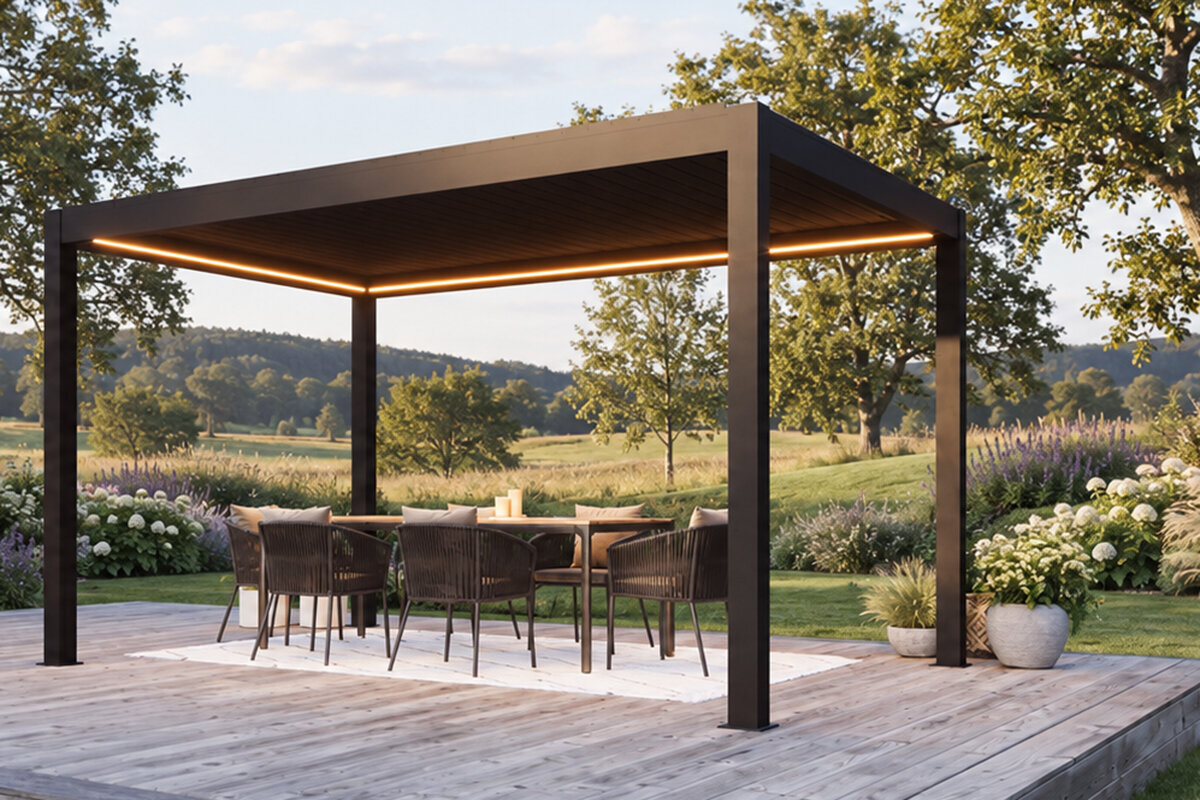

An aluminium pergola may be heard when drops hit its canopy, air passes the edges or components shift slightly. No single sound promise covers every installation; position, roofing, structural design and workmanship interact to determine the experience.
When choosing a covered place outdoors, many people first consider shade, looks and the season of use. Sound warrants equal thought. Weather acts on panels, channels and joints, while the listener’s activity and surroundings alter the effect. A noise lost on an open patio may stand out beside the home or across an otherwise peaceful garden.
Raindrops produce the most familiar impact against the canopy. During windy spells, air moving past blades, side panels, drainage channels and joints may become noticeable. Minor weather-driven movement can carry through the frame as well. It does not, by itself, indicate poor quality; it does merit attention to design, fitting and correct operation.
Use this guide to set sensible expectations and arrive at a consultation with precise questions. It covers possible acoustic sources in an aluminium pergola, the influence of its surroundings, and the place of workmanship and follow-up inspection in a considered choice.
Basics · 01
How falling rain produces roof sound
Sound begins as each drop contacts a rigid surface. Its prominence changes with the force and pattern of the shower and with activities below. Pergolas commonly cover places for meals, conversation or rest, so overhead impacts may attract more attention during a peaceful evening than amid a lively afternoon outdoors.
On bioclimatic models, examine the separate blades rather than considering only the frame. Their spacing, overlap and angle govern the route taken by water and the way impacts travel through the assembly. Discuss materials alongside suitable operation for each weather condition, including the experience likely during a downpour.
- Use the intended activity as your guide: reading, dining and conversation respond differently to rain noise.
- Nearby masonry, glazing and façades may bounce sound back towards the terrace and change how loud it seems.
Variable canopy ideas are available among our bioclimatic aluminium pergolas with configurations to consider.
Roof systems · 02
How a fixed canopy tends to sound
Rain can also make a standard pergola noticeable. Impact enters through the covering and travels into the supporting parts, with the canopy profile, subframe and junctions influencing the character. Nor is an unenclosed site necessarily quieter: without surrounding shelter, the assembly may receive the full force of both showers and moving air.
Judge the pergola in relation to the dwelling, not as an isolated object. A canopy beside rooms used for sleep, work or relaxation brings the wall and windows into the acoustic picture. Nearby glass, another canopy or smooth paving may return sound. Supply a measured location drawing so advice reflects the actual arrangement.
- Ask which roof details direct water deliberately and where drip sounds may be noticeable in your proposed orientation.
- Photographs do not reveal everything: calm reading space and an exposed entertaining area call for different judgements.
For a simple, timeless form, browse our standard aluminium pergola range across varied terrace layouts.
Wind · 03
How airflow can create sound
Air movement comes in pulses rather than a steady flow. Posts, rails and canopy rims interrupt it; walls alter its path, while gaps may increase its speed. The resulting whistle or rush varies by gust and approach. Conditions on an unsheltered rooftop differ markedly from those on a terrace enclosed by buildings and planting.
The angle of adjustable blades changes the profile presented to a breeze. Acoustic planning should therefore take account of the operating instructions, including the actions specified for windy periods. Tell the adviser where prevailing gusts approach the property and when the terrace will normally be occupied, so operation is considered alongside layout.
- Watch the terrace through several breezy periods to learn where gusts arrive and which parts of the site amplify them.
- Tell the adviser about tall boundaries, corners and nearby buildings that may redirect air around the pergola.
For changing shade on a terrace, Bloomcabin groups its adjustable-louvre bioclimatic pergolas in one relevant range.
Construction · 04
Movement, connections and component noise
Heat, damp and wind forces all act on an external frame. As materials expand or settle, joints, trims and interfaces may briefly announce that movement. Separate occasional responses to weather from a pattern that keeps returning. If parts rattle, scrape or strike, log exactly when it happened and what the weather was doing.
The source may lie below or beside the canopy rather than within it. Anchors, accurately plumb posts and well-finished junctions contribute to the finished behaviour. Following the instructions for that model allows its parts to interact correctly. Before ordering, establish the required base conditions and agree what will be examined when work is handed over.
- For noticeable sounds, record wind direction, rainfall and roof position; these details make an objective assessment much easier.
- Ask for one handover walk-through covering controls, accessible joints and all adjustable components.
For a linear garden design, our fixed-roof classic pergola range offers a practical reference for comparison.
Planning · 05
Why location shapes what you hear
Identical models may be perceived quite differently: one might sit in a protected courtyard, another beside a windward corner. Walls, windows, paving and boundary structures create the acoustic space around it. Seating position matters as well. Weather heard beneath the canopy will not have the same presence at a chair placed a few metres beyond it.
Map the places where people will gather, not merely the dimensions and appearance of the canopy. Locate the table, lounge furniture or cooking area, note the rooms along the adjoining wall, and consider normal hours of use. Those details allow a consultant to discuss sound in context rather than offer broad catalogue language.
- Add chairs, entrances, glazing and permanent landscaping to a basic drawing before finalising size and options.
- Listen on the terrace during wet or breezy conditions; existing echoes and funnelled air are useful design evidence.
Where sunlight and fresh-air needs vary, look at our adjustable bioclimatic pergola designs for added layout choice.
Installation · 06
Why installation quality matters
Good design still relies on accurate building work. The proposed base must accept the specified anchors, the uprights and frame need true alignment, and fasteners and joints require patient assembly. Tension introduced during fitting, or trim left out of position, may make the structure more vocal when the weather moves through it.
Agree responsibilities and required installation documents before the job starts. If the property raises structural or planning questions, consult a competent professional and the relevant Irish planning authority where appropriate. General guidance cannot establish whether a particular foundation, wall build-up or site constraint is acceptable.
- Ahead of fitting, review the base, buried or concealed services, and every interface that could affect the work.
- At handover, request a documented operating test and inspect accessible components while the installer demonstrates them.
For an uncomplicated canopy with a restrained appearance, consider our traditional aluminium pergola collection designed for exterior spaces.
Use · 07
Include roof position and care
Sound remains a consideration after the pergola is fitted. Where the canopy contains adjustable sections, their angle affects the path taken by drops and air. Use the instructions supplied for the model whenever conditions alter quickly. Light control should not be the only consideration if the manufacturer’s guidance calls for another setting during rain or strong breezes.
Periodic inspection can reveal a developing change. Clear leaves or other loose material only as directed in the care information, while watching for damage and listening for a new sound. When operation seems abnormal, seek informed advice instead of altering structural fixings or mechanisms without authority.
- Describe each repeat occurrence by its setting and timing, rather than reporting only that the pergola is noisy.
- Following a major weather event, look over accessible parts and use the prescribed maintenance method for the model.
For adaptable daylight and ventilation, you might shortlist our bioclimatic pergolas for terraces when comparing options.
Buying advice · 08
Useful questions before deciding
A worthwhile purchase begins with the actual constraints of the property as well as the desired appearance. Have the adviser set out how the canopy works, where water travels and what preparation fitting requires. Rather than seeking silence in all conditions, define the outdoor experience you hope to achieve. That gives the acoustic discussion a practical purpose.
Think through later routines too. Is the area intended for peaceful reading, regular dining or use beside a study? Review the live quotation and the exact options included, without assuming one pergola version behaves like another. This keeps the decision transparent while avoiding promises that cannot account for the proposed location.
- Ask for differences between roof types, side solutions and fixings to be explained clearly for your actual terrace layout.
- Keep important commitments and product details in the current quotation and order documentation so planning and installation align.
For an overview of the principal formats, browse standard garden and terrace pergolas side by side.

Comparison
Compare sound sources systematically
Acoustic behaviour comes from several interacting details. The table organises the enquiries worth making about weather and everyday use. Although only an on-site review can assess a particular installation, the prompts direct discussion towards the relevant circumstances and parts.
| Topic | Possible perception | Key planning question |
|---|---|---|
| Rain on the roof | Drops strike solid roof surfaces audibly. | How close is the seating beneath the roof? |
| Wind at edges | Gusts can create airflow sounds. | Which wind directions shape the terrace? |
| Moving louvres | Roof position changes surface and airflow. | What operation is intended during weather changes? |
| Connections and covers | Loose or poorly fitting parts may be noticeable. | How will installation and handover be checked? |
| Façade and floor | Hard surfaces can reflect sound. | Which surfaces surround the planned location? |
Rain
Drop size, rainfall intensity and roof surface shape the sound. A heavy shower is naturally perceived differently from steady light rain.
Wind
Openings and nearby structures redirect wind into concentrated paths. Noise at an unsheltered corner is therefore especially dependent on placement.
Installation
Secure connections, accurately fitting parts and checking moving elements are crucial. Unfamiliar sounds should be described specifically and assessed professionally.

Five steps for planning pergola acoustics
Consider acoustics while the scheme is still flexible. A handful of deliberate observations will make product selection, pricing discussions and conversations with the installer more productive.
01
Observe the terrace
Spend time there during a gentle shower and a breezy spell. Record channelling air, reflected sound near the wall and places where easy conversation matters.
02
Set priorities
Rank meals, rest, work and social occasions according to their importance. The leading activity will influence your choices about covering, furniture position and separation from the dwelling.
03
Understand the roof system
Request a plain-language demonstration of controls, drainage and operation for the proposed design, including what the instructions require when showers or gusty conditions arrive.
04
Clarify the installation basis
Review base conditions, fixing zones and likely interfaces at an early stage. If the structure is uncertain, seek appropriate technical advice.
05
Prepare for handover
Plan to test the functions together at completion. Obtain a walk-through of the controls and record the appropriate contact for anything that later seems unusual.
Checklist for your consultation
Use these prompts to make acoustic comfort specific. Take terrace photos and dimensions, together with a brief account of the weather you commonly encounter, to the meeting.
01. Sketch the house wall, boundaries, windows and adjoining hard surfaces.
02. Record prevailing gust directions and the terrace corners where air accelerates.
03. Measure from the canopy to the intended table or seating.
04. Request details of canopy design, drainage and operation during showers.
05. Clarify ground requirements and every intended fixing point.
06. Discuss installation steps and a joint function check before handover.
07. Retain the operating and maintenance instructions for accessible and adjustable parts.
08. If an unusual sound develops, record the weather and the canopy’s position.

Pergola sound: common questions
Is rain noise normal with an aluminium pergola?
Hearing drops strike the canopy is ordinarily part of using a covered outdoor space. Their prominence varies with the shower, construction above, listener’s position and nearby materials. Trees and soft planting create a different setting from closely spaced masonry or glass. Discuss the chosen design and position furniture with that environment in mind.
Why is my pergola audible in wind?
Air passing a rim, rail or gap may whistle or rush. Walls, passages and corners can also concentrate a gust. On an adjustable canopy, blade angle adds another variable. If scraping or rattling returns, note the operating position and conditions at the time, then arrange an informed inspection.
Can installation influence noise?
Yes. Level, alignment, anchors, junctions and properly seated trims determine how the assembly behaves. It needs an appropriate base and fitting that follows the instructions for its model. If the property presents uncertain structural conditions, ask a competent person to assess the proposal on its own merits.
Does a louvred canopy sound louder than a fixed one?
There is no dependable rule that puts one design first. On a louvred canopy, blade angle, overlap and shower strength matter; on a fixed covering, its build-up and junctions influence the result. Surrounding surfaces also alter perception. Compare only the models under consideration and explain the characteristics of your property.
How should an unfamiliar sound be handled?
Write down the circumstances, including direction of the breeze, heaviness of the shower and canopy setting. Limit your own inspection to what the maintenance instructions permit, and do not alter anchors or mechanisms. A detailed account gives the responsible professional better evidence for identifying the source.
Are approvals needed before a pergola is installed?
Possibly. In the Republic of Ireland, planning status depends on the proposal, property and site constraints. Ask the relevant planning authority whether permission or a formal declaration is needed, and check any tenancy or management-company consents before committing. An exemption from planning does not by itself settle building-control compliance.
Compare pergola versions
Comfort starts with realistic expectations
A well-chosen aluminium pergola can organise a garden or terrace into a comfortable place for everyday use. Because it remains exposed to weather, some sound from showers and breezes is inevitable. Treat acoustics as part of the combined decision about canopy, position, workmanship and routine.
Detailed information about the terrace, drainage route, local airflow and intended controls leads to a more grounded choice. Bloomcabin can assist in weighing pergola designs against the layout and priorities you have identified.
Explore suitable concepts for terrace and garden, and prepare for your consultation with purpose.
