
Removing Algae from Pergola Posts and Nearby Paving
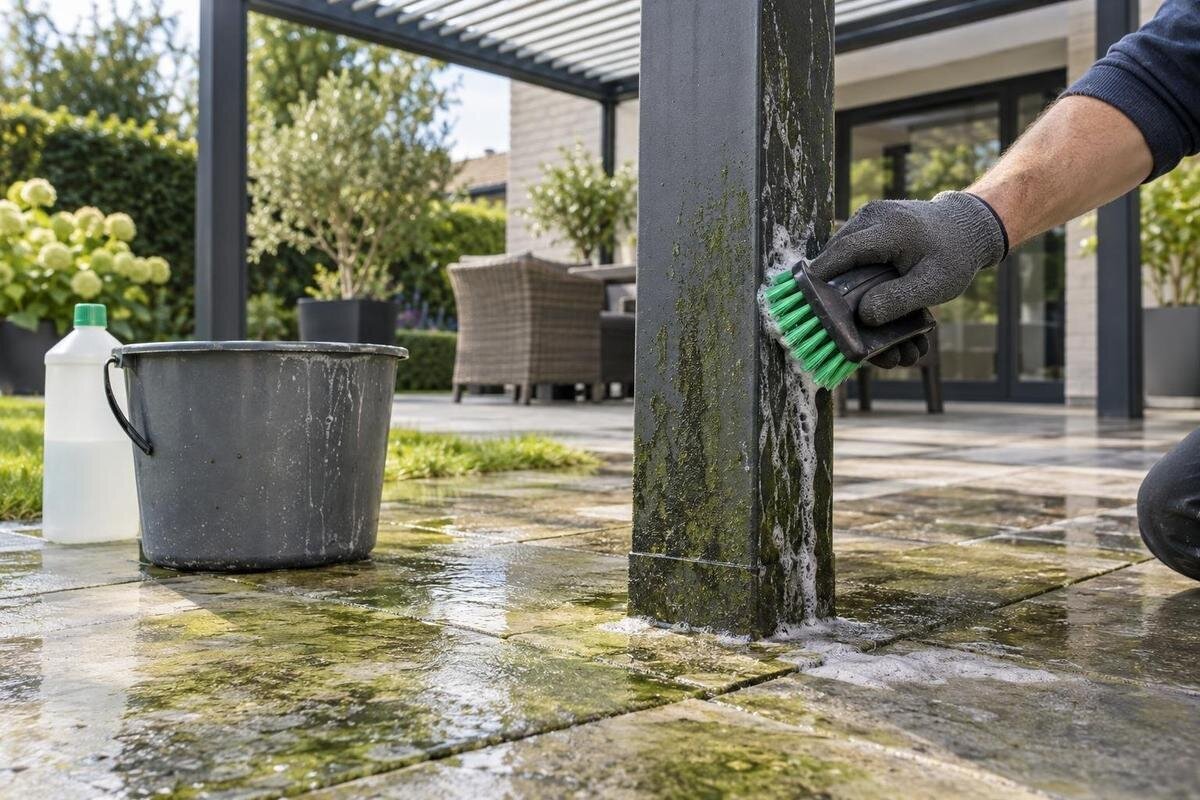
Pergola care
Algae on a pergola post and on the paving beside it may look like one cleaning job, but the surfaces need separate treatment. A cleaner that is acceptable for a particular paving material may be unsuitable for coated aluminium, and splashes can reach the posts even when you apply it to the ground. This guide explains how to identify the surfaces, begin with a gentle method, control rinse water and runoff, and know when a mark or damaged finish needs product-specific advice.

Before you clean 1
Treat the posts and paving as separate surfaces
Algae on adjacent surfaces should not be treated as one material problem. A pergola post may have a coated finish, while paving may be porous, sealed, glazed or divided by sand or mortar joints. Their tolerance to friction and cleaners can differ. A product that removes green growth from one spot is not automatically safe for the other. Plan a method for the posts and another for the paving, rather than spraying a general-purpose outdoor treatment over the whole area.
First check what you are seeing. Green film or a slippery patch may be algae, but dirt, residue and staining can look similar; aggressive scraping may leave a mark without identifying the cause. Note whether the area stays damp, sits in shade or follows regular splashing or runoff, and take a close-up and a wider photo. Identify the paving material and, if possible, the pergola model. A listing such as Bloomcabin Wall Pergola identifies a catalogue model only; it does not confirm the installed finish or a cleaning method.
Find the exact pergola finish and care instructions
Look for installation paperwork, a care booklet, an order confirmation or a label that identifies the pergola. The relevant detail is not just whether a post is aluminium: find the specified surface finish and its permitted cleaning method. Coatings can differ, and a photograph or a general description may not settle compatibility. If the paperwork is missing, ask the supplier or installer for instructions that apply to your exact model and finish. Do not dismantle a post or remove a cover to look for a label; use records or identification you can access safely.
Use the exact product name when requesting guidance, along with any order reference and clear photos. If your records identify the pergola as Bloomcabin Pergola, include that name in your enquiry and describe which posts are affected. Ask which washing tools and detergents are permitted for the finish, and whether the proposed paving treatment needs particular precautions nearby. Send the cleaner’s label rather than describing it simply as a patio cleaner. Keep the two questions separate: the pergola supplier can address care of the post finish, while the paving supplier can advise on the ground surface and jointing. Record the answers before starting so that you have a clear method for each surface, including any restrictions on rinsing or contact time.
Before you clean 2
Prepare the area before cleaning
Choose conditions that let you control the work and rinse promptly. Avoid windy conditions when using liquid cleaner, so droplets are less likely to drift onto the pergola, windows, plants or furniture. Follow the product label about weather, drying and contact time; do not apply a cleaner in conditions it rules out. Move cushions, fabrics, furniture and loose objects away from the work area. Keep other people and pets clear while products are in use, as directed on the label.
Gather clean water, a soft cloth or sponge for the posts, and a separate brush for the paving. Set the tools out separately so you can keep track of which has been used with each cleaner. Keep any paving cleaner in its labelled container, use it only as directed and do not mix it with bleach, vinegar, detergent or another treatment. Wear any protection specified on the label. Before you start, consider where rinse water will flow: do not let it pool around post bases or run across an area you have already cleaned. Decide where the first small cleaning area will end and how you will rinse it before moving on. This makes it easier to manage splashes without leaving cleaner elsewhere for longer than directed.
Clean coated aluminium posts gently
For coated aluminium, begin with the least aggressive method allowed by the care instructions. Rinse away loose grit with clean water, then use a soft, non-abrasive cloth, sponge or soft-bristle brush. If the manual permits detergent, use a mild one at the stated dilution; do not increase its strength because the film is slow to lift. Work gently over a small area instead of scrubbing one spot hard. Rinse away residue before it dries. Avoid wire brushes, scouring pads, abrasive powders and unapproved solvents, bleach or acidic or alkaline cleaners.
Check the finish as you go, particularly around the post base and joins where water may collect. Compare the area you have washed with an adjacent untreated area rather than judging only whether the green film has lifted. If the finish changes colour, becomes dull or powdery, lifts or shows scratches, stop instead of trying a stronger cleaner or harsher pad. Let the area dry and photograph it for the supplier or installer, noting the method already used. For an enquiry about a Bloomcabin Bioclimatic Pergola, include the model name alongside those observations. Explain whether the mark was visible before cleaning or appeared during the wash. This keeps the enquiry focused on the change in the finish rather than treating every remaining mark as algae.

Before you clean 3
Choose a cleaning method for the paving material
First identify the paving: natural stone, concrete, clay pavers, ceramic tiles and sealed products do not necessarily take the same brush or cleaner. Check the paving maker’s or installer’s guidance if available, especially if the surface is sealed or coloured, or has mortar, sand or resin joints. Sweep away leaves and loose grit before adding water. Start with clean water and a suitable non-metal brush on a discreet patch, using enough pressure to loosen the film without gouging the surface or pulling material from the joints.
Rinse the test patch and inspect it after it dries; a wet surface can hide a colour change, haze or residue. On uneven, cracked or loose paving, avoid forceful brushing until you know what holds the surface in place. Lift loosened growth and debris rather than pushing it into the joints. A stiff metal brush or concentrated chemical may appear effective but can scratch the surface or disturb jointing. If you cannot identify the paving or its sealer, pause before using an algae treatment and ask the supplier or installer.
Check the algae cleaner’s label for paving compatibility
Use a paving algae cleaner only if its label clearly includes your paving material and explains how to apply it. Read the warnings about coated or painted metal, nearby finishes, dilution, contact time, rinsing and weather. Some products must not contact particular materials or plants; follow the actual directions rather than assuming that a patio or outdoor label covers everything. Use no more than directed and do not combine treatments. If the product does not explain how to manage contact with the pergola, choose a non-chemical method or ask the manufacturer before proceeding.
Test in a discreet place, following the label directions, and wait until the patch has dried before judging the result. Do not test beside a post, where runoff could reach the coating. Compare the dry patch with the surrounding paving for changes in colour, haze or remaining residue before treating a larger area. If you are considering the regular Bloomcabin Pergola for an existing paved space, include your current paving treatment in the care questions you ask before buying. Obtain the proposed finish’s care instructions and compare them with the cleaner’s warnings about nearby materials. Keep the cleaner’s label, or take a photo of it, and note the dilution and application method used on the test patch. If a mark appears, those details give you a useful record without having to repeat the test.
Before you clean 4
Keep splashes and runoff away from coated posts
Keep the cleaner on the paving, not in the air. Apply it using the method on its label and a controlled amount, with a brush or applicator that limits splashing; do not mist or spray towards the posts. A temporary shield can protect the lower post and nearby finish, but it must be clean, stable and non-abrasive. Do not stick tape to a coated surface or let a cover rub against it. When planning cleaning around a wall-mounted Bloomcabin pergola, consider the adjacent wall as well as the posts. Check where splashes could land and whether you can reach the paving without directing the applicator towards either surface. Position the shield before opening the cleaner, and check it as you work rather than assuming it will stay in place throughout.
Consider the full path of the rinse, not just where the product is applied. Water may carry cleaner across paving joints, towards a post base, wall, planting bed or drain. Work in small sections and keep the flow away from pergola parts; do not flood a large area and hope the cleaner stays in place. If a splash reaches the coating, stop and follow the cleaner label’s directions for accidental surface contact. Where it directs rinsing, use clean water promptly and do not rub the spot. Note the product and contact the pergola supplier if the finish changes.
Rinse and inspect after cleaning
After the stated cleaning time, rinse the paving as the product label instructs, directing the water away from the pergola. Remove loosened residue with a brush and collect debris rather than sweeping it into a drain or planting bed. Check that no cleaner remains in joints or on the bottom of a post, but avoid flooding the area or washing joint material out. Let the paving dry fully before assessing whether the algae has gone; a wet patch can look darker and conceal residue. Keep people off it until it is no longer slippery.
For the pergola, use clean water and the method its own care instructions allow to remove ordinary cleaning residue. Do not assume paving cleaner left on the ground is harmless to the post once it dries, and do not leave a cover in place with liquid trapped against the finish. Take after-photos in similar light and from the same positions as your first images. Include both the post base and the adjoining paving so that any remaining marks can be located clearly. Keep these photos with the cleaning date and product details. If your order identifies a Bloomcabin bioclimatic model, use that name when sending the record to the supplier. Describe the result after drying, distinguishing remaining green growth from a change in the coating’s colour or appearance.

Before you clean 5
Reduce the conditions that encourage regrowth
Algae often returns where a surface stays damp, shaded or covered with organic debris, so repeated strong washing may not address the reason. Sweep away leaves and soil, keep the paving and post base clear, and notice whether irrigation overspray, a planter or a low spot is keeping one area wet. Remove loose debris where safe, but do not alter the pergola, its fixings or the paving fall to change water flow. If water repeatedly collects, ask an installer or paving specialist to assess the cause.
A simple visual check after wet weather or when you notice slippery growth can help you deal with a small patch before it needs more forceful treatment. Note whether the same patch returns or whether growth appears elsewhere: this gives you a clearer picture of which areas remain damp. A gentle method approved for each surface is preferable to frequent chemical applications. Do not seal paving or apply a preventative product unless it is intended for that exact material and its supplier confirms it is suitable. When comparing options such as Bloomcabin’s regular pergola, consider the ongoing care of the surrounding paved area as well as the structure. Ask for the care guidance before buying so you can plan separate, compatible cleaning routines rather than expecting one treatment to maintain the whole space.
Know when to stop and get product-specific help
Stop cleaning and seek product-specific advice if the finish peels, blisters, becomes chalky, develops a persistent colour change or shows a damaged area. Stop as well if the paving loosens, flakes or loses joint material. Do not use abrasives to remove a mark that may be a coating change, and do not try to repaint, seal or repair a pergola post as part of algae removal. Send the supplier or installer a close-up and a wider photo, plus the model and finish if known, the cleaner’s label and the steps you followed. Those details help distinguish growth from a surface problem.
If the issue needs a replacement component, coating repair or structural attention, cleaning is not a substitute for the relevant service assessment. Do not dismantle a post or change its fixings to get behind algae; obtain product-specific instructions and use qualified service where repair is required. For a parts enquiry, a reference such as the Bloomcabin Wall Pergola listing can help identify the model, alongside your order details and photographs. State which post or component is affected and what happened during cleaning, rather than selecting a replacement by appearance alone. Ask the supplier to establish the appropriate part or repair method for the installed unit. Keep the affected area out of further cleaning work while that question is unresolved; another treatment would make the sequence of events harder to explain.
Frequently asked questions
Can I use bleach on algae beside a pergola?
Do not assume bleach is suitable for either surface. Use a paving treatment only if its label covers your paving material, and keep it off coated aluminium. Follow the label’s directions for dilution, contact time and rinsing, and never mix it with another cleaner. If the instructions do not address nearby coated metal, use a gentler method permitted by the care instructions or ask the relevant supplier.
Is a pressure washer suitable for the posts or paving?
It should not be the default method. A forceful jet can mark a coating, disturb paving joints or send water and cleaner onto the posts. Start with a hose and suitable brushes if the care instructions allow. Use a pressure washer only if the guidance for both the pergola finish and paving permits it; do not guess a setting.
Should I clean the posts or the paving first?
There is no universal order, because the method and runoff matter more than the sequence. If the posts need only an approved gentle wash, clean and rinse them first. Then shield them before treating the paving, particularly if you are using a chemical cleaner. When cleaning the paving, direct rinse water away from the posts.
Why does algae return soon after cleaning?
A patch that stays damp, shaded or covered with debris may develop growth again. Look for leaf build-up, irrigation overspray, a planter that keeps the area wet or water collecting in one spot. Remove loose debris where safe, but do not change the paving fall or pergola fixings as a cleaning measure. Ask a relevant professional if water repeatedly collects.
What should I send the supplier if the finish changes?
Stop cleaning and take a close-up and a wider photo. Note the model and finish if known, the cleaner’s name, its label directions, how you applied it and where contact occurred. Do not polish, scrape or repaint the area. Share those details with the supplier or installer before trying another treatment.
The safest approach is to identify the post finish and paving before choosing a method, then clean each surface separately and keep paving treatments away from coated aluminium. Gentle brushing, a discreet test and controlled rinsing help avoid turning algae removal into a finish or jointing problem. If the growth persists, look for the source of dampness; if the coating changes, stop and seek guidance for the exact product.
