
Buying a Freestanding Pergola on Black Friday: Choose the Right Size
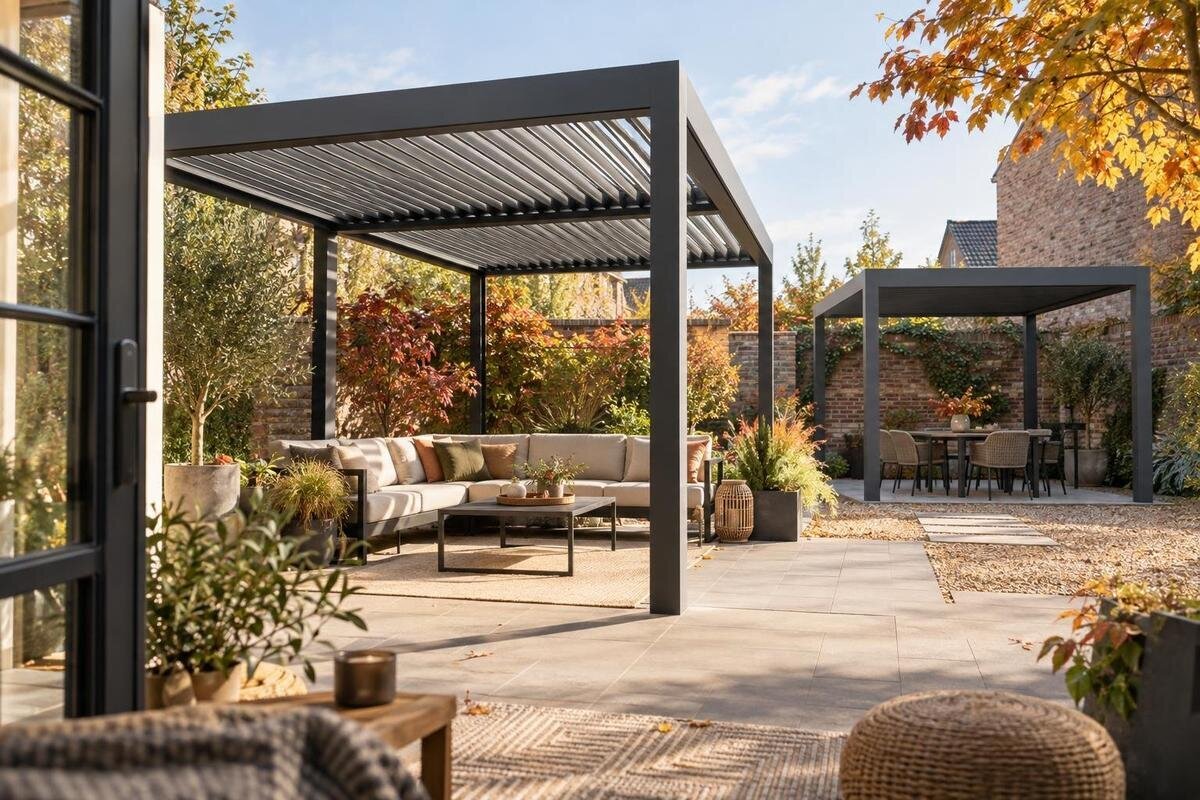
Pergola size guide
Buying a freestanding pergola on Black Friday is easier when you begin with a measured plan, not a promotion headline. The size must fit the clear part of your terrace or garden, leave room for people and furniture, and match the dimensions and installation information published for the exact listing. This guide explains how to measure, test the footprint and compare seasonal listings without assuming a particular offer is available or that a photograph proves a product will fit.

01
Measure the clear footprint first
Begin by measuring the part of the terrace or garden that can genuinely take a pergola, rather than relying on the total outdoor area. Record the clear width and depth at several points if the boundaries are uneven or not square, and note the narrowest usable section. A rectangle measuring 4 metres by 5 metres has 20 square metres, but an irregular area with the same total area may not contain a rectangular footprint of those dimensions. The usable shape matters as much as the area figure. If some of the surface is planted, sloping or already occupied, measure the part you can actually allocate separately.
Put the measurements on a simple sketch and label the sides, doors and fixed edges. Keep a separate figure for any section you do not want covered, and use the same unit throughout your notes. When checking the Bloomcabin pergola product listing, rely only on dimensions and diagrams stated on that page. Check what each number measures: the overall outer width and depth may differ from the spacing between supports. Do not infer a footprint from a photograph or product name. If a key dimension is missing, ask before using the page to decide whether it fits.
Size the layout around how you will use it
Decide what the covered area needs to accommodate in normal use. A dining setting, a pair of loungers, an outdoor sofa or an open area for children will call for different layouts; there is no single pergola size that suits every patio. Measure the actual table, chairs and other large pieces you intend to keep there, including furniture already on the terrace. The number of seats alone is a weak guide because table sizes and chair shapes vary. If you mainly use the area as a route between the house and garden, mark that route rather than filling the whole plan with furniture.
Compare the stated size of a Bloomcabin pergola listing with the complete furniture outline, not just the tabletop. Draw chairs in their usual positions and show where they sit when pulled out; add room to walk past and reach a door. A compact plan can look adequate when only the table is drawn, then feel cramped once people sit down or carry dishes through. If you have not chosen furniture yet, use the measurements of the pieces you expect to buy and leave the remaining floor area visible on the sketch. This helps reveal a layout that fits on paper but does not work for your regular use.
02
Include boundaries, obstacles and access routes
Add the features that reduce the clear area to your sketch. Mark boundary walls, fences, steps, raised beds, trees, drain covers, downpipes, exterior doors and fixtures that cannot readily move. Measure the gap between these features where the frame or supports might sit, rather than assuming a pergola can go anywhere inside the outer boundary. If the patio narrows, changes level or has a corner cut out, draw that shape as accurately as you can. A rough outline that shows an obstruction is more useful than a neat rectangle that hides it.
Treat access routes as part of the plan. Mark the path from the house to the garden, gate, seating or storage, and note doors that open outwards or gates that need their full swing. Also show any access point you need to keep clear, such as a drain or service point. A frame may fit on paper yet make the everyday route awkward if it sits across a narrow passage. Keep this sketch beside the measurements for the Bloomcabin pergola catalogue entry and compare the stated footprint with each fixed feature, not just the patio’s outer dimensions. If the site shape or level makes placement uncertain, seek an assessment before choosing a size.
Read the stated pergola dimensions carefully
Product dimensions need context before you compare them with your site. Check whether width and depth refer to the outer frame, roof edge or another stated point, and whether the page shows where the supports sit. Packaging measurements describe the package, not necessarily the assembled pergola. If a drawing gives several measurements, copy each exact label into your sketch rather than treating the figures as interchangeable. Do not estimate an unshown projection from a product image. When your available space is close to the listed footprint, understanding what each measurement represents can make the difference between a useful comparison and a misleading one.
Check the published overall height as well as the ground dimensions. Consider nearby eaves, upper windows, lights and other fixed features; do not assume that the frame or roof will clear an obstruction just because the ground outline fits. A page identified as a wall pergola, such as the wall pergola product page, should not be treated as a freestanding option unless its stated installation details confirm the independent arrangement you need. If dimensions, support positions or site requirements are unclear, ask the retailer or a qualified installer rather than guessing from a photograph.

03
Keep room for people and furniture to move
Leave room for people to move in the way the outdoor area will be used. Trace the route between the door, seats and garden exit, and check whether the proposed pergola position creates a pinch point. Include space to pull out chairs, open a storage box or move a portable item that belongs there. There is no universal clearance figure for every layout: a broad walkway may matter more than extra covered space, while a quiet sitting area may need room around the seats. The sketch should reflect the routes and habits that matter in your own home.
Use the Bloomcabin pergola product page only after checking its stated outer dimensions against those routes and furniture positions. If the listed size leaves little room on the sketch, do not count a narrow gap as practical just because the frame’s corners fit inside the paving. Consider how people will pass each other, bring items in or use the door during an ordinary day. If the product information does not clarify a clearance needed for installation, ask the supplier or a qualified professional; do not invent a standard buffer and assume that it applies.
Mark each possible footprint on the ground
Before ordering, mark a candidate footprint on the ground with removable tape, string or another temporary marker. Use the assembled dimensions shown for the product, not the size of the box, and include additional projections only if the product information states them. Walk around the outline and view it from the house and the garden. This visual check can reveal that a support would sit close to a step, a route becomes narrow, or the usable centre is smaller than the sketch suggested. It is a planning check, not a substitute for installation guidance.
Try each possible orientation on the same site plan. Rotating a rectangular pergola may place it better along the terrace, but check that the entrance, furniture arrangement and nearby routes still work; do not assume a product can be altered or installed in a different configuration unless its information says so. Use the Bloomcabin product entry to note the exact published measurements, if provided, then compare that outline with the other sizes you are considering. Keeping one unchanged base sketch makes the comparison fair and prevents an attractive product image from setting the scale in your mind.
04
Balance covered space with the rest of the outdoor area
A pergola that is too small can leave a table or seating partly outside the area you meant to cover. One that is too large can take up the open terrace, garden beds or access space you wanted to retain. These are layout trade-offs, not reasons to choose the largest or smallest size automatically. Decide which furniture or activity must fit comfortably first, then see how much of the rest of the outdoor area remains. If your plan only works by giving up a useful path or open corner, the larger footprint may not be the better purchase.
Think about how the space is used over time, without planning around an occasional gathering that may never happen. You might want an area for dining now and a clear part of the terrace for another regular activity later. Draw both arrangements on the same measured outline and see whether a size supports them without taking over the whole space. A pergola listing for comparison can be assessed against this plan through the dimensions it publishes; a larger figure or more generous-looking photograph is not evidence that it suits your needs. Aim for useful covered space while keeping the parts of the outdoor area you want to leave open.
Compare Black Friday listings on equal terms
Black Friday is a time to compare listings, but a seasonal label does not settle the size question. Put the exact product name or model, stated width and depth, height, installation type, included components, displayed price and any stated conditions in one comparison note. Check that you are comparing the same product and size, rather than a different configuration or package. A price reduction, if one is shown, does not make an unsuitable footprint a good fit, and a deadline should not replace the measurement check. Do not assume a discount, voucher or delivery offer applies unless the live listing says so.
Open each page you are comparing and read its current terms before ordering. Verify what is included, whether delivery or other charges are shown separately, and what the seller states about returns and warranty; an image does not establish these details. For instance, use the exact Bloomcabin wall pergola listing when recording that page’s product and terms, rather than carrying information over from a different listing. Keep a note of the page and configuration you assessed so that a later price or size comparison refers to the same item.

05
Check delivery and installation arrangements
Check the route from the delivery point to the intended site before choosing a large footprint. Measure gates, paths, corners, steps and narrow passages that a package or its components would have to pass through, then compare those figures with package dimensions if they are published. A pergola may fit the final outdoor area yet be difficult to bring to it. Ask the retailer how delivery is handled and whether access affects the service offered. Do not assume that the assembled dimensions describe how the product arrives; if package measurements are not provided, ask for them.
Read the order details to understand what you will receive and what is not included. Check whether assembly or installation is part of any offer, whether you need to arrange it separately, and what the seller states about warranty and returns. Do not infer package contents from a lifestyle photograph. If the installation needs to account for uneven paving, nearby walls or site-specific support conditions, confirm the requirements with the supplier and a qualified professional before buying. The product listing alone cannot determine whether a particular surface or location is suitable.
Run a final size check before ordering
Before checkout, place the product page beside your site sketch and confirm that both refer to the exact item, not a similar-looking image. Recheck the clear width and depth, the stated assembled dimensions, support positions, height, furniture plan, movement routes and delivery access. If a seasonal price or offer is shown, check its displayed terms separately; it does not change the physical size or the space needed to use the area. This final pass can catch a mismatch between a site measurement and a product measurement taken from a different edge or configuration.
If an essential dimension or installation detail is missing, pause rather than filling the gap with an estimate. Ask the retailer for the relevant product information and, where site compatibility needs assessment, consult a qualified installer. Once the measurements and everyday layout agree, choose the footprint that covers your planned use while preserving the routes and open area that matter to you. That gives you a clear basis for deciding whether an advertised option is worth considering.
Frequently asked questions
How do I choose the right size freestanding pergola?
Measure the usable area in both directions, then compare it with the product’s stated assembled dimensions and support positions. Add your planned furniture and walking routes to the sketch, and check the height and installation type as well. The right size is the one that works with your real layout, not simply the largest option or the lowest displayed price.
Should I measure square metres or length and width?
Record the shape and the width and depth, not just the total area in square metres. Two spaces with the same area may not fit the same rectangular footprint. Measure narrow points and fixed obstacles, use the same units throughout, and check what the product’s dimensions refer to before comparing them with your notes.
How much space should I leave around a pergola?
There is no single clearance figure that suits every site and layout. Account for the stated installation requirements, support positions, doors, furniture and the routes people use. If the product information does not explain a requirement, ask the retailer or a qualified professional rather than applying an assumed standard margin.
Can I compare a wall pergola with a freestanding pergola?
Compare installation types separately unless the product information confirms that a particular option can be installed in the freestanding arrangement you need. A product name or photograph does not establish how it must be supported. Check the exact listing and its installation information before treating its footprint as a freestanding option.
What should I check when buying a pergola on Black Friday?
Match the exact product and size, then compare the stated dimensions, installation type, included items, displayed price and any terms shown. Check delivery, returns and warranty information on the live listing. Do not assume a discount, voucher or delivery offer applies unless the current page says so, and do not let a deadline replace the size check.
A useful Black Friday pergola purchase begins with the site, not the event. Measure the clear footprint, plan the furniture and daily routes, check how the product’s dimensions are defined, and test the outline on the ground. Consider any displayed promotion only after the size, installation type and access make sense for your space. The result is a decision based on the outdoor area you actually have and the way you intend to use it.
