
Black Friday Pergola Offers: Compare Wind, Rain and Snow Specifications
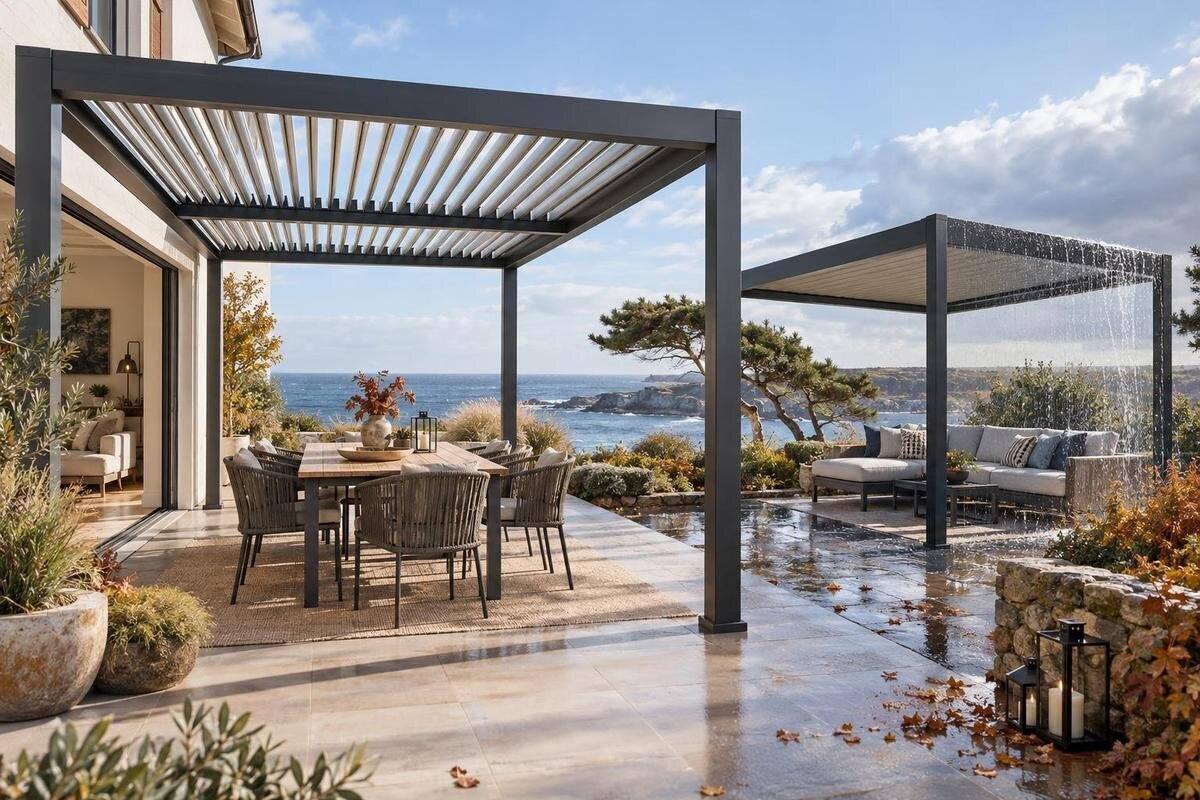
Pergola buying guide
Black Friday can make a pergola’s price the first figure you compare, but wind, rain and snow claims are useful only when they refer to the exact configuration you intend to buy. A roof description or broad phrase such as weather-resistant does not tell you the tested conditions or permitted installation. This guide explains how to read those details side by side, what to ask when they are missing and how to keep seasonal pricing separate from technical evidence. No offer or specification is assumed to be current: compare the documentation for each actual candidate.

01
What to compare beyond a Black Friday pergola price
A seasonal Black Friday offer can make the price the first figure you compare, but it cannot tell you how a pergola handles wind, rain or snow. A lower price does not establish greater wind resistance or better rain protection, while a higher price is not proof of a stronger rating. First record the exact item and configuration shown on each listing, then set the price aside while comparing the supporting information. If the offer page gives no clear link between the item and a weather document, the comparison is incomplete, even when the headline uses broad phrases such as weather-resistant or outdoor-ready.
The aim is not to find one pergola that wins every weather category. Wind, water and snow act on a structure in different ways, and information about one does not establish performance in another. A sheltered courtyard can raise different questions from an exposed position, while nearby buildings or walls may also affect what a professional considers. Record where the pergola will stand and how you expect to use it, but do not turn a general setting or category label into a technical conclusion. A local forecast is not a product rating: the useful question is how the exact installation is documented for the conditions it may face.
Match each weather claim to the exact pergola configuration
Weather information can vary with dimensions, roof arrangement, attachments and the way the structure is supported. A figure for one configuration should not automatically be carried over to a wider version, a different roof position or a setup with panels or screens. Check that the product name, drawing, data sheet and installation notes all identify the same version. If the listing uses a short name that leaves variants unclear, ask which exact item the specification covers before comparing it with another offer. You can use the Bloomcabin pergola product page to identify the listing under consideration; the page name alone is not a weather rating.
Make a configuration record for each candidate: its stated dimensions, the roof type or position covered by the document, any included or optional attachments relevant to the claim, and the required supports or fixings. Leave a field blank if it has not been confirmed. Distinguish an included component from an accessory that may be sold separately; a change to the setup can affect which test or installation information applies. If an accessory is described separately, do not assume it forms part of the documented configuration. Photographs cannot establish hidden fixings, materials or a roof mechanism. This record helps prevent a complete tested setup being compared with an unverified variation.
02
Wind resistance: check the rating’s basis and conditions
Wind resistance is easiest to assess when the documentation names the value, its unit, what was tested and the limits of the result. A speed figure and a pressure figure are not interchangeable: they describe different quantities, and a maximum value without test conditions gives little basis for a like-for-like choice. Look for a clear link to the exact pergola configuration and ask whether the result applies to the whole assembly or only to a component. When recording a candidate from a Bloomcabin pergola listing, keep the wind evidence separate from the listing title or a visual impression. Note whether the information comes from a technical document, a test report or general sales wording.
Ask how the stated result relates to the planned installation: which supports and fixings were used, which roof or side arrangement was tested, and whether the document sets limits on placement or use. Wind can act differently at an open edge, between buildings or in a sheltered courtyard; a general figure is not automatically a site-specific assessment. Do not choose fixings or estimate a safe wind speed from an online conversion. Where the evidence is unclear, or the site is particularly exposed, ask the manufacturer or a suitably qualified professional to interpret the specification for that exact location and arrangement. Keep their advice distinct from a general product claim.
Rain protection: check the roof, drainage and exposed sides
Rain protection needs a more precise question than simply asking whether a pergola will keep rain out. Find out whether a claim concerns the roof surface, the area directly below it or a fully enclosed space; those are not the same scope. A roof may channel water while leaving open sides exposed to wind-driven rain, and performance may depend on the roof being in a specified position. If a document uses terms such as water-resistant, waterproof or weatherproof, ask which component and conditions each term covers. Use the Bloomcabin page in your comparison to match the exact item, then look for a separate explanation of its rain performance.
Check the drainage description as carefully as the roof description. Look for where water is intended to flow, whether outlets or gutters form part of the stated setup, and whether the information addresses pooling or only run-off under the conditions tested. Ask whether the route for water depends on an unobstructed outlet or a particular direction of discharge. Do not assume that rain protection means the space will stay dry from every direction, or that an adjustable roof has the same performance in every position. If the documents omit the roof position, water route or relevant limits, ask for clarification before relying on the pergola for a particular use. This matters most when dry cover is central to the purchase.

03
Snow load: verify the figure, roof arrangement and conditions
Snow-load information should identify a load or direct you to a document that does, along with its unit, the roof configuration covered and relevant conditions. A number by itself is not enough: ask whether it describes a design limit, a tested arrangement or another measure, and whether the load is assumed to be evenly distributed. Snow can collect unevenly, and a roof’s appearance cannot confirm how much it can carry. If the Bloomcabin listing you are considering has no visible figure, that does not prove either that it is unsuitable or that it can carry snow; it means the evidence still needs to be clarified.
Check whether the stated figure applies with the same supports, roof position and attachments you would use. Ask what the manufacturer says about accumulation and any conditions under which the structure should not be relied on. Do not make your own load calculation or infer capacity from another model. If snow is a realistic condition at the intended site, or the pergola may be installed elsewhere, have the model-specific documents reviewed by a qualified professional. A low likelihood of snow is not a substitute for a specification when safe use depends on it. Keep the document’s version and any stated limits with your comparison notes.
Compare weather figures only when their bases match
Comparing figures from different pages is useful only if they refer to the same kind of result and comparable test conditions. Put each value beside its unit, source document, configuration and stated limits. A wind-speed figure cannot be ranked against a wind-pressure figure by simply comparing the numbers, and a snow-load number says nothing about wind or rain. Even two values in the same unit may use different assumptions. If you cannot establish the basis, ask for the test method or technical note instead of converting the figure or treating extra decimal places as evidence of greater reliability. Record the document version too; information for an older product version may not cover the item on offer.
Give each claim an evidence status: documented for the exact model, confirmed in writing for that model, unclear or not supplied. Keep sales wording and technical evidence in separate columns so that a phrase such as strong in wind does not stand in for a stated basis. Use the same blank fields for another Bloomcabin product page and every other candidate; otherwise, the page with the most confident wording may seem to win simply because it gives fewer details. Where documents use different terms, do not assume they describe equal performance. Ask the manufacturer to explain the scope, and seek professional interpretation if you need to judge whether a rating fits the site.
04
Installation conditions can change how a rating applies
Weather ratings often depend on how a pergola is assembled and supported, not just on the frame shown in a photograph. Check that the document assumes the same attachment method and support arrangement planned for the site, and that the installation instructions identify the required components. For a wall-attached design, the supporting wall is part of the question; do not assume that any wall or fixing can provide the support a rated assembly requires. If the Bloomcabin page you are assessing is on your shortlist, request installation and weather documents for the exact configuration before judging its rating.
Treat a published result as conditional on the installation it describes, not as a guarantee for every build. Changes to supports, assembly, anchoring or side elements can affect whether the published test remains relevant. A qualified installer or engineer can advise whether the proposed arrangement matches the documents and whether the site calls for a separate assessment. This is not a reason to calculate loads or select hardware from general guidance; it is a reason to consider the exact product instructions alongside the site conditions. Keep this question separate from a general delivery or assembly plan: here, the issue is whether the weather evidence applies to the finished structure.
Missing weather specifications need a clear answer
Specifications may be absent from the main listing or expressed only in general language. Before ordering, ask for the manufacturer’s technical sheet or written confirmation for the exact item, including the wind basis, rain scope and any snow-load information relevant to the intended site. A reply about a product family may not answer for a particular size or roof arrangement. Do not assume that not listed means zero capacity, but do not fill the gap with an estimate either. Mark each missing item as unknown until a document or clear response resolves it. If a specification is available elsewhere, confirm that it refers to the same product version shown in the offer.
Useful follow-up questions are specific: which configuration does this figure cover; what assembly and supports were assumed; which roof position does the rain claim require; and are any exposure or use limits stated? Keep the reply with the product details so it can be checked again if the offer page changes. Apply the same standard to a second Bloomcabin listing: an unanswered field is not a reason to reject a product automatically, but it is not evidence that it meets a requirement. If the response remains vague, compare a candidate with clearer documentation or seek technical advice before relying on the claim.

05
Use one comparison sheet for every Black Friday candidate
A simple comparison sheet helps keep a seasonal price from overshadowing technical gaps. Use one row per exact configuration and columns for the product identifier, dimensions, wind value and basis, rain claim and scope, snow figure and unit, installation conditions, document version and unanswered questions. Add the price only after recording those fields, then note whether it relates to the same configuration you have assessed. A higher number in one column is not automatically better if the test basis or scope differs. If one more Bloomcabin pergola listing is a candidate, enter it in the same format rather than giving it a different standard.
An evidence column can use straightforward labels such as document supplied, written answer needed and not stated. These labels describe the state of your comparison, not a safety approval. Highlight any condition that would require a change to the planned site or setup, then ask whether the proposed version and its documentation cover that arrangement. Keep product claims, price and site-specific advice distinct: an offer may look financially attractive while an important weather question remains open. A comparison sheet does not replace manufacturer instructions or professional judgement, but it makes omissions and mismatched figures easier to spot before you decide.
When weather information is too unclear to compare
Pause when the advertised item cannot be matched to a specification, a claim has no unit or conditions, or the seller answers for a different configuration. Other warning signs include a rain statement with no description of the roof or drainage, a snow figure with no stated unit, and a wind claim that omits how the assembly was tested. Those gaps do not prove that a pergola is poorly made; they limit what you can conclude from the information supplied. Do not let a short offer period turn uncertainty into an assumption about performance. If the page changes during the promotion, make sure the documents still refer to the item you intend to order.
A sound comparison may leave one candidate ahead, or show that none is ready for a decision. If wind exposure, rain cover or snow capacity is essential to the planned use, treat unresolved questions as a reason to wait for model-specific documentation or professional advice. If a feature is not needed, record that distinction rather than assigning an unsupported rating. The best Black Friday choice is not the page with the most confident wording; it is the offer whose exact configuration and evidence can be assessed against the conditions you need to accommodate.
Frequently asked questions
What should a useful pergola wind rating tell me?
It should identify the value and unit, what was tested, the configuration covered and any installation conditions or limits. A number without that context may not help you compare models. If anything is unclear, ask for the relevant technical document or a written explanation for the exact pergola you are considering.
Does a rain-protection claim mean the whole area will stay dry?
Not necessarily. Find out whether the claim covers the roof surface, water run-off or the space beneath it, and whether it depends on a particular roof position. Open sides can remain exposed to wind-driven rain, so check the drainage description and the limits stated in the documentation.
Can I compare two snow-load figures directly?
Only if they use comparable units, configurations and stated conditions. A figure alone does not explain how the load was assessed or whether it applies to your planned setup. Ask the manufacturer to clarify differences; do not calculate a safe capacity from figures with different bases.
What if a Black Friday listing gives no weather specifications?
Ask for model-specific documentation or a clear written answer before relying on a weather claim. Treat missing information as unknown: it does not prove that the pergola is unsuitable, but it also does not establish its performance. Broad phrases such as weather-resistant are not a substitute for the relevant details.
Do weather ratings still apply if I change the planned installation?
Do not assume they do. Ratings can depend on supports, fixings, assembly and the configuration tested. Check the manufacturer’s instructions and ask whether the proposed arrangement matches the documented one. A qualified professional can advise whether the site or installation needs a separate assessment.
A worthwhile Black Friday pergola offer is one you can assess on matched terms: the exact configuration, the basis for its wind rating, the scope of its rain protection, any snow-load figure and the installation conditions. If a key detail is absent, that is unresolved information, not proof of either capacity or failure. Keep price and weather evidence separate in your notes, and let the documentation—not the seasonal headline—guide your comparison.
