
Buying a Pergola for a Coastal Property in Malta
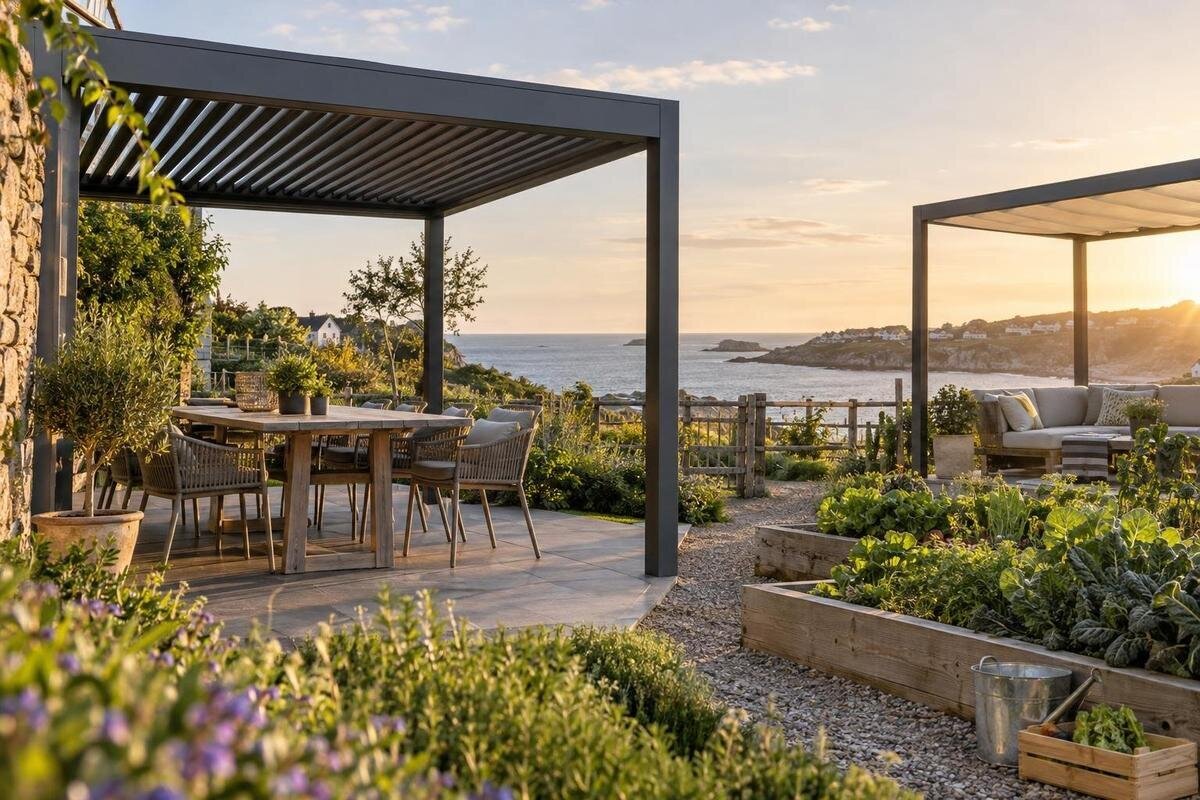
Pergola buying guide
Buying a pergola for a coastal property in Malta calls for more than choosing a frame and roof that suit the terrace. Salt carried in sea air can reach exposed metal and fittings, while wind exposure and supporting surfaces vary from one property to another. The useful comparison is therefore the complete assembly: frame material and finish, fasteners, roof configuration, site-specific wind information, fixings and the maintenance the supplier expects. This guide explains what to ask before ordering, so a product description or photograph is not mistaken for evidence of coastal suitability.

Why salt exposure changes the buying decision
At a coastal address, salt does not affect every outdoor spot equally. An open frontage exposed to sea spray, a breezy corner and a sheltered courtyard can experience different conditions even within the same property. Distance from the shoreline by itself is not a reliable way to judge exposure; orientation, shelter, wind paths and how readily salt residue is removed all matter. Before looking at colours and roof styles, write a brief description of where the pergola will stand and how open the site is. Existing corrosion on nearby outdoor metalwork is a reason to ask further questions, but it does not predict how another product will perform.
Salt can settle on visible surfaces and small connections that buyers may overlook in a product photo: screws, brackets, joints, hinges and moving fittings. A frame described as corrosion-resistant is not enough if the details of its finish and accompanying hardware remain unknown. When browsing the Bloomcabin pergola listing, separate the facts the page states from the questions it leaves open. Use it to identify the item you are comparing, not to assume an unlisted material, coating or coastal rating. This distinction helps keep a shortlist honest: an attractive product image cannot establish what will withstand the exact exposure at a Maltese property.
Build a brief for the exact location
Make the site description more precise than by the sea. Note whether the proposed position is open to the coast, shielded by neighbouring buildings or set within an enclosed courtyard, and whether walls or planting interrupt the wind. Record what surrounds it: paving, garden soil, a boundary wall, doors, drains and routes people use. These observations do not replace a survey, but they help a supplier understand the setting and let you spot features that affect access or layout. If the position may change, describe each possible location separately; a sheltered spot and a sea-facing one should not be treated as interchangeable.
Take clear photos from several angles and mark the intended footprint on a simple plan, including the nearby wall or surface on which the installation would rely. Avoid assuming that a decorative layer is the structural base; the support beneath it needs to be identified by a competent installer. A page such as the bioclimatic pergola listing can help identify the product under consideration, but the listing alone cannot establish that the proposed position is suitable. Send the same site information to each shortlisted supplier and ask them to respond to the same points. Comparable answers are more useful than broad claims about coastal use.
Compare the complete corrosion protection
Ask what the frame is made from, but do not stop at a single material name. Aluminium and steel raise different questions about alloy, grade and protective finish; timber has its own treatment and upkeep requirements, and its metal connections still need corrosion protection. If a description uses terms such as powder-coated, anodised or galvanised, ask for the precise specification and what parts it covers. A finish label alone does not explain how edges, cut ends or concealed areas are protected. Ask whether the stated protection applies to the whole supplied assembly or just the main visible members.
Check whether bolts, brackets, connectors, hinges, tracks or other components use the same material or compatible metals and finishes. Where different metals meet, ask the manufacturer or installer how that junction is protected; do not improvise a solution on site. A coating can also be damaged during transport, assembly or later use, so request guidance on inspecting and repairing chips or exposed edges. The wall pergola page is a product reference, not evidence of any particular fastener or finish. For each candidate, compare the written details for the entire assembly, including parts that are difficult to see once installed.
Ask for evidence, not just a coastal label
A useful supplier reply names the exact model and configuration, states the material and finish, and explains what information supports its intended exposure. Ask whether any corrosion test or performance statement applies to all parts or only to a sample or surface, and what environmental conditions it covers. You do not need to interpret test methods on your own: request the relevant document or a plain explanation, and have a qualified professional review it if suitability is uncertain. The important point is that the claim applies to the model and finish you would actually order, rather than a different product in the same range.
Read the warranty wording alongside that information. Ask whether coastal or salt exposure is excluded, whether the stated cover concerns the finish only or also the components, and whether maintenance or prompt repair of damage is required. Warranty wording tells you what is covered; it is not itself a corrosion test. The page for the Bloomcabin pergola can be part of your product comparison, but any unanswered question about its exact finish or protection needs a direct, written response before you rely on it. Keep the supplier’s answer with the order paperwork.

Match wind information to the configuration
Coastal sites can also be exposed to strong or changing winds, but a generic claim that a pergola is wind-resistant does not tell you whether it suits your position. Ask for the stated wind design conditions and supporting information for the exact model, dimensions, roof and accessories you plan to buy. The supplier should be able to clarify what the figures mean, what assumptions they use and which configurations they apply to. Do not compare headline numbers unless they describe the same type of design information and conditions. A competent professional familiar with the site should assess whether those details address the actual exposure.
Ask about any limits on using the selected roof or optional screens in particular weather, and who provides instructions for changing or securing components if the product includes moving parts. A roof or screen can alter how wind acts on an assembly, so information for one configuration should not automatically be read as approval for another. When reviewing the Bloomcabin bioclimatic pergola listing, first establish exactly which configuration is offered; then ask whether any published wind information covers it. If the supplier cannot relate the information to the chosen size and site, treat the answer as unresolved rather than guessing from the pergola’s appearance.
Confirm the fixing system and supporting surface
Corrosion protection and wind information only help if the installation can transfer forces safely into a suitable support. Before ordering, establish whether the model is intended to stand independently or rely on a wall, then request the model-specific fixing drawings and written guidance. The person installing it must assess the real substrate, not simply the visible finish: paving, stone cladding or tiles may conceal a different support layer. Do not assume that an existing wall, slab or garden surface is adequate because it looks substantial. A qualified installer or structural professional should determine what the particular design and location require.
Ask which anchors and brackets are included, which materials they use, and whether they are the same fixings the installer plans to fit. If they differ, ask for a documented reason and confirmation that the alternative is suitable for the product and salty exposure. This matters especially at connections where incompatible metals, trapped moisture or damaged coatings can undermine the protection you expect. The listing for the wall pergola may help you identify an option, but its name does not confirm that your wall is suitable or that a fixing kit is included. Put responsibility for assessing the support and providing any required design advice in writing before work is scheduled.
Compare roof details and water management
Coastal buying is not only a frame question: roof construction affects which parts are exposed, how they are reached for cleaning and inspection, and where rainwater goes. Ask whether the selected roof is fixed or has moving components, what materials and finishes are used in those parts, and which service or replacement parts may be needed over time. If the design directs water off the edge, ask where it will discharge and whether gutters or other water-management pieces are included, rather than assuming they form part of the package. Make sure any quoted accessories match the exact model and size.
Salt and airborne dirt may collect at overlaps, joints or tracks, though the places to inspect depend on the design. Ask the manufacturer for cleaning and inspection instructions for the exact roof, including methods to avoid and what to do if the finish is damaged. Photographs may show a roof’s appearance but do not usually explain how it drains or is maintained. On the Bloomcabin pergola product entry, note whether those details are explicitly supplied; if not, ask before deciding whether the assembly is convenient for the way you will use and care for it. Keep the focus on the whole installed roof rather than a sample image.
Plan maintenance for a salty environment
A coastal pergola needs a care routine that matches its materials and construction; there is no universal interval or cleaning product to assume for every finish. Ask how often the manufacturer expects the frame, joints, fasteners and any moving components to be checked, and what signs of corrosion or coating damage call for attention. Request written cleaning instructions, including what to avoid, and ask whether the finish can be repaired locally or whether a replacement component is needed. The answers affect the practical cost and effort of ownership, even if they do not appear in the initial product description.
Consider access as part of the purchase. Can the exposed surfaces and roof connections be inspected without awkward reaching, and can the recommended upkeep be done safely by the owner or will it require a professional? Ask what replacement parts are available and whether maintenance conditions affect warranty coverage. When you review the bioclimatic pergola product page, use it to confirm the exact option, then obtain its care information from the supplier if the page does not provide it. Do not transfer cleaning advice from another finish or model simply because the structures look similar. Keep the instructions with the final order.

Compare like-for-like quotations
Request a written quotation that identifies the product, size, frame finish, roof configuration and any accessories, not just a general pergola description. Check whether it includes the full fixing system, delivery, installation, a site visit, removal of packaging and any work needed to prepare the surface; these items may be offered separately. Clarify who measures the final location, who confirms the substrate and who is responsible for resolving a mismatch between the product drawings and the site. Comparing quotations is meaningful only when the scope is comparable, including the finish and hardware that matter in a salty setting.
Before placing the order, confirm the agreed colour or finish, the exact model and configuration, included components, care documents and any conditions attached to coastal suitability. Ask how changes are handled if the installer finds that the site differs from the information supplied; do not assume a change is covered by the original quotation. Check access for delivery and assembly, including narrow entrances or steps, and agree who will discuss any access problem with you. These details are practical buying points, not decorative extras: a well-chosen product can still become an expensive mismatch if dimensions, fixings or installation scope are vague.
Compare each option against the same requirements
You can reduce the decision to three questions: is the corrosion protection described for the full assembly, does the wind information match the actual model and configuration, and has a competent person confirmed that the fixing system suits the support at the chosen location? Treat an unanswered item as unknown, not as a reassuring yes. The information should be specific enough to compare candidates and clear enough for your installer to work from. If a supplier cannot provide a direct answer, ask whether additional documentation or a site assessment can resolve it before you commit.
Then weigh the care routine against the way you expect to use the space. A finish that needs regular attention may still fit your plans if the maintenance is clearly described and accessible; a lower price is less persuasive when coastal protection, fixings or future care remain uncertain. Keep a simple record of the model, finish, wind conditions, fixings, upkeep and warranty answers for each quotation. That gives you a fair basis for choosing, or for pausing until missing information is supplied. It also helps ensure that the delivered product is the one you assessed, rather than a similar-looking alternative.
Frequently asked questions
What matters most when buying a pergola for a coastal property?
Look at the complete assembly rather than the frame alone: the materials and finish, fasteners, roof configuration, wind information and fixing system. Then check that the details apply to the exact product and site you have in mind. Coastal suitability cannot be established from appearance or a general product label.
Does a marine-grade label guarantee that a pergola is suitable?
No. Ask what the term means for the exact frame, finish, brackets, fasteners and other components, and what information supports the claim. Confirm any coastal limits or maintenance conditions in writing. Treat the label as a prompt for questions, not as a complete material specification.
How close to the sea is too close for a pergola?
There is no single distance that answers this for every property. Exposure varies with the position, shelter, wind paths and whether the location is open to sea spray. Describe the precise site and ask the supplier and a suitably qualified local professional to assess it.
What wind information should I ask for?
Request the stated design conditions and supporting information for the exact model, size, roof and accessories you plan to order. Ask what assumptions the information uses and whether it applies to your configuration. A qualified professional familiar with the site can help assess whether it addresses the actual exposure.
Can I fix a pergola to an existing wall or paved area?
Do not assume that a wall, slab or surface is suitable because it looks solid. Ask for the product-specific fixing guidance, then have a qualified installer or structural professional assess the actual support beneath the visible finish. Confirm which fixings are included and which will be used.
At a Maltese coastal property, a convincing choice is one whose corrosion protection, wind conditions, fixing plan and upkeep are documented for the exact option and site. A sheltered courtyard and an exposed frontage can call for different answers. Once those practical points are clear, style and roof preference can distinguish the candidates without being asked to prove that a product is coastal-ready.
