
Buying a Pergola With Lighting for Evening Use
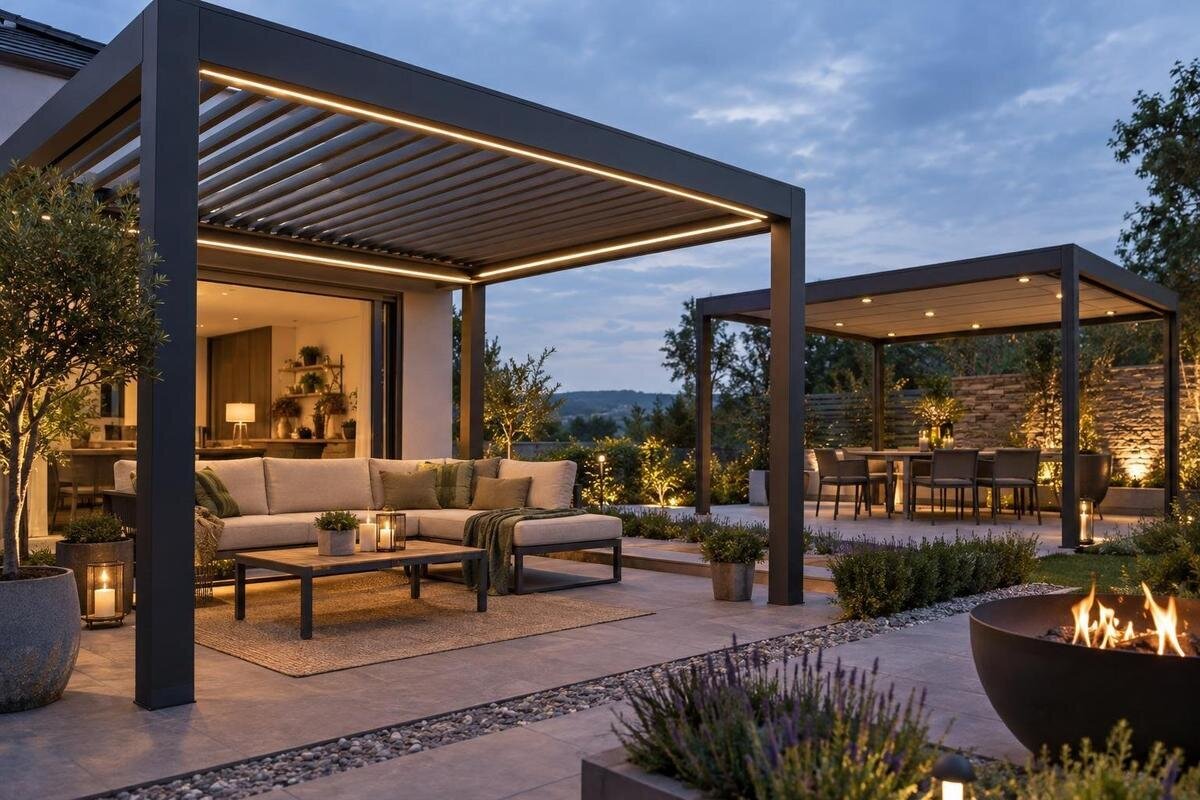
Pergola buying guide
Buying a pergola with lighting starts with the evenings you want to spend beneath it, not with a photograph of glowing beams. The choice depends on the activity, how the light falls on seating and paths, what the package actually includes, and how the system will be controlled and maintained. Use those points to compare listings and quotations without assuming every pergola comes with lights.

Decide how the pergola will be used after dark
Before comparing pergola styles or lighting packages, decide what people will actually do after sunset. A dining table needs usable light for seeing plates and faces; reading or games call for more concentrated visibility; relaxed conversation may suit a gentler general glow. These needs are not interchangeable, so a decorative fitting alone may not serve every activity. Note the main use, the usual number of people and whether the space should work for a quick weekday meal as well as a longer gathering. Include occasional uses, but give the most frequent one priority. This turns “bright enough” from a vague preference into a question you can put to a seller.
Draw the proposed pergola footprint on a simple plan and place the furniture where you expect to use it. Allow for chairs being pulled out, a route between the house and garden, and doors, steps or other fixed features. Mark existing exterior lights too: they may already illuminate one route or wall, while a new fitting could duplicate them or leave a dark patch elsewhere. Note where people will put down drinks, serve food or leave bags, as these everyday habits can affect where useful light is needed. If children or older relatives regularly use the space, consider the routes they are most likely to take after dark. If the structure is too small for the way people sit and move, adding more light will not solve the layout. Compare the dimensions in product information with your measured space rather than judging by a photograph’s perspective.
Check what “with lighting” includes
Do not rely on the title alone when a product is described as a pergola with lighting. It might mean lights are included in the base package, an optional accessory is available, or a separate system appears in the images. Only the written specification or quotation settles which applies. Look for the stated light components, controls and power equipment, and whether assembly or electrical work is included. If a detail is absent, ask for it in writing before treating it as part of the purchase. For example, the Bloomcabin pergola product page should be read for its stated options; the product name itself does not confirm that lighting is supplied.
Separate the lighting package from the impression created by a staged photograph. Ask whether the pictured fittings are the ones offered, whether a control or power component is sold separately, and which parts are included in the price quoted. If several configurations are available, have the seller identify the one covered by your order rather than using a general description. These details matter even when the lights look simple: a fitting, its control and the work needed to install it may be treated as separate items. Keep the answer alongside the quotation so you can compare the same scope with other options.
Match the light to the activity
Think in layers when considering pergola lighting for evening use. General light helps people see the space as a whole, while a more focused source near a table or reading seat can make that activity easier. A decorative glow may add atmosphere, but it should not be the only consideration if you also want to dine, read or move around. Decide which areas need useful illumination and which are mainly for ambience. This makes it easier to explain the desired result and assess whether a proposed arrangement covers the places where you will actually sit.
Brightness and colour appearance are personal, so compare the options described by the supplier instead of assuming that every light will look or feel the same. If adjustable output or separate controls are offered, consider whether you will use them for different activities; if not, a simpler arrangement may suit you better. Ask for product information or a demonstration where possible, rather than judging from an edited evening image. A listing such as a Bloomcabin pergola product listing can be checked for explicitly stated options, but its name alone does not establish what kind of light or control it provides.
Consider glare, shadows and light spill
Consider the view from the places where you will sit and stand. A light that shines directly into someone’s eyes can be uncomfortable, while furniture or parts of the structure may cast shadows across a table or route. Think about the position of the fittings in relation to faces, the tabletop and the edges of the space. A fitting above a circulation route may help people move safely, yet still leave the centre of a table poorly lit if it is too far away. Conversely, a source intended for a table can make a nearby seat feel overly bright. If a display or demonstration is available, look from more than one seat and angle. Otherwise, ask the supplier for a clear description of where the proposed lights sit and how their output is directed; a photograph may not show those details reliably.
Look beyond the pergola as well. A bright area can draw attention from the rest of the garden, shine towards windows or reach a neighbouring space. Decide which routes need light and whether every corner needs to be illuminated, rather than assuming that more fittings are always useful. Ask whether the arrangement can be aimed, screened or adjusted, if those options are available and compatible with the structure. Existing exterior lights may already provide some coverage, so consider how the new arrangement will work alongside them. The goal is a comfortable view of the space, not unnecessary spill into places you do not intend to light.

Compare complete packages and quotations
Once you know what a lighting package contains, compare offers on the same basis. A product page, such as the published Bloomcabin pergola details, can help you identify what is explicitly described, but do not assume that every item shown is included. Set out the pergola configuration, the lighting components and any controls that each quotation covers. Then note separately priced accessories or work. Record the date of each quotation and any assumptions stated by the seller, because a later revision can alter the scope you are comparing. If one proposal uses general wording, ask for a revised written description before treating it as equivalent to a detailed offer. This avoids comparing a structure-only figure with a package that includes additional items, and makes it clearer whether the lighting you want is actually part of the proposed order.
Ask each supplier to itemise the work as well as the products. Clarify who supplies and installs the lights, whether assembly is included, and whether any additional site work is excluded from the quotation. Check that the quoted configuration matches the product information you reviewed; a broad description may not identify the exact arrangement. Delivery, access and assembly details can also affect what you need to organise, so get the responsibilities clear without assuming that one seller’s terms apply to another. A written breakdown gives you a more useful comparison than a headline price alone.
Choose controls that suit everyday use
Think about how you want to switch and adjust the lights on an ordinary evening. Depending on what is offered, options might include a wall switch, remote control, app, timer or dimmer. Consider who will use them, where the control will be kept and whether you want a simple on-and-off arrangement or different settings for dining and relaxing. A sophisticated control is not automatically an advantage if it adds steps you are unlikely to use. A page such as the Bloomcabin pergola page cannot confirm any control that it does not explicitly describe, so check the exact arrangement before making a comparison.
The power source is a separate buying question. If the seller offers different arrangements, ask what each requires and how it is operated; do not assume that a wired, battery-powered or solar option will behave in the same way. Clarify whether power equipment is included and who is responsible for any installation. A qualified electrical professional should confirm the suitability of the proposed supply and connections for the location. This is a matter to agree before ordering, not something to infer from a photograph or solve from a product description alone.
Confirm compatibility with the structure and setting
Check that the lighting proposed is compatible with the exact pergola configuration you intend to buy. Fittings may depend on the structure’s layout or on particular options, so ask whether they suit that specific version and whether any additional parts are required. If the offer includes more than one configuration, have the supplier identify which one has been checked. When reviewing the listed Bloomcabin pergola, use only the details that are actually stated; the listing name does not establish which lighting accessories, if any, are compatible.
Consider the conditions where the pergola and its lights will be used. Ask for documentation that describes the lights’ intended outdoor use and any limits, especially if the area is exposed to rain, strong sun or wind. Do not assume that the structure’s appearance proves what protection it offers, or that a lighting feature makes it weatherproof. If the pergola has a cover or other configuration options, check what those provide separately. The seller or a qualified professional can help confirm whether the proposed light system and the chosen structure are suitable for the setting.
Plan for cleaning and replacement
Before buying, ask what happens when a light needs attention or replacement. A light source may be replaceable on its own, or a larger component may need to be changed; do not assume either arrangement without product information. Ask about access to the fittings after assembly, the parts that can be replaced and whether replacement components can be obtained. It is also useful to ask how the exact component will be identified later, particularly if several light positions or controls form part of the arrangement. Keep the product reference, lighting description and any care information with the order paperwork. If the Bloomcabin pergola listing does not state these details, treat them as questions rather than promises. Clear answers help you judge whether the lighting setup is practical for the years you expect to use the outdoor space.
Ask how the fittings should be cleaned and whether routine care differs from caring for the pergola itself. Dust, insects and outdoor residue can affect how a light looks, but the appropriate method depends on the equipment supplied. Check whether any parts need to be handled by a qualified person, and whether changing a fitting has implications under the seller’s stated terms. Avoid planning to dismantle or alter electrical components yourself. A clear care guide and a way to identify replacement parts are useful points to compare, without assuming that a particular product includes a service or warranty.

Compare running costs and ordering details
The purchase price is only one part of the decision if you expect to use the lights often. Where the supplier provides energy-use information, compare the stated figures alongside how frequently and for how long you expect to switch the lights on. Do not assume a particular running cost without both reliable product information and a realistic pattern of use. Also consider whether the controls or light components may need replacement over time, using only costs the seller can confirm. Reading the Bloomcabin pergola entry alongside an itemised quotation can help you keep the structure and any stated lighting options separate in your comparison.
Before placing an order, make sure the paperwork identifies the product configuration and lighting arrangement you have chosen. Check what is included, what is optional, who handles assembly or electrical work, and which items are excluded. Make sure that any later changes you request are recorded in the same description, rather than agreed only in conversation. Confirm that the quoted dimensions and configuration match the space you measured, and ask about access or preparation needed for delivery and assembly. Keep the written description of the lights and controls with the order details so there is no ambiguity about which arrangement was agreed. No delivery date or installation commitment should be assumed unless it is stated in the terms you receive.
Review the lighting plan before ordering
Review the arrangement against the places you will use, not just the product image. Mark the table, seats, doors and walking route on a simple plan, then note where the proposed lights would fall in relation to them. If you can inspect a comparable display, look from sitting and standing positions, ideally with the lights on; a daylight photograph or evening render cannot prove brightness, glare or colour in your own space. For a candidate such as this Bloomcabin pergola listing, rely on its stated configuration and confirm separately whether the lighting you want is included.
Then decide whether to buy a lighting package with the pergola or treat the lights as a separate choice. A separate purchase can make sense only if the fittings and installation are confirmed as compatible with the structure and location. If an important detail remains unclear, do not count it as part of the offer or base your decision on an assumed feature. A good order is one where the pergola fits the measured space, the stated lighting arrangement meets your evening needs, and the written terms describe the same setup you intend to receive.
Frequently asked questions
Does a pergola advertised as having lighting always include the lights?
No. A title or photograph may show an optional accessory or a separate lighting arrangement. Check the written product details and quotation for the exact fittings, controls and work included; treat anything not stated as unconfirmed.
What lighting works best for dining and relaxing?
It depends on how you use the space. A dining area usually needs clear light on the table, while conversation may suit a softer general glow. If both matter, ask whether the proposed arrangement can be adjusted and compare its stated features.
Is integrated lighting better than adding lights later?
Neither is automatically better. A package supplied with the pergola may simplify coordination, while a separate choice can offer flexibility. Compare the full cost and confirm compatibility, installation responsibility and replacement arrangements before deciding.
Can any outdoor light be fitted to a pergola?
Do not assume so. The fitting must suit the chosen structure and the conditions where it will be used. Ask the supplier about compatibility and have a qualified professional confirm any installation or power requirements.
Who should confirm the lighting power requirements?
Ask the supplier to identify the proposed equipment and who is responsible for installation. A qualified electrical professional should confirm whether the power arrangement and any connections are suitable for the location.
Choose a pergola that fits the measured space and a lighting arrangement that supports the way you will use it after dark. When the included fittings, controls and installation are clearly described, it is easier to compare options and order a setup that matches your plan.
