
Buying a Pergola with Side Screens: Privacy and Weather Considerations
Pergola buying guide
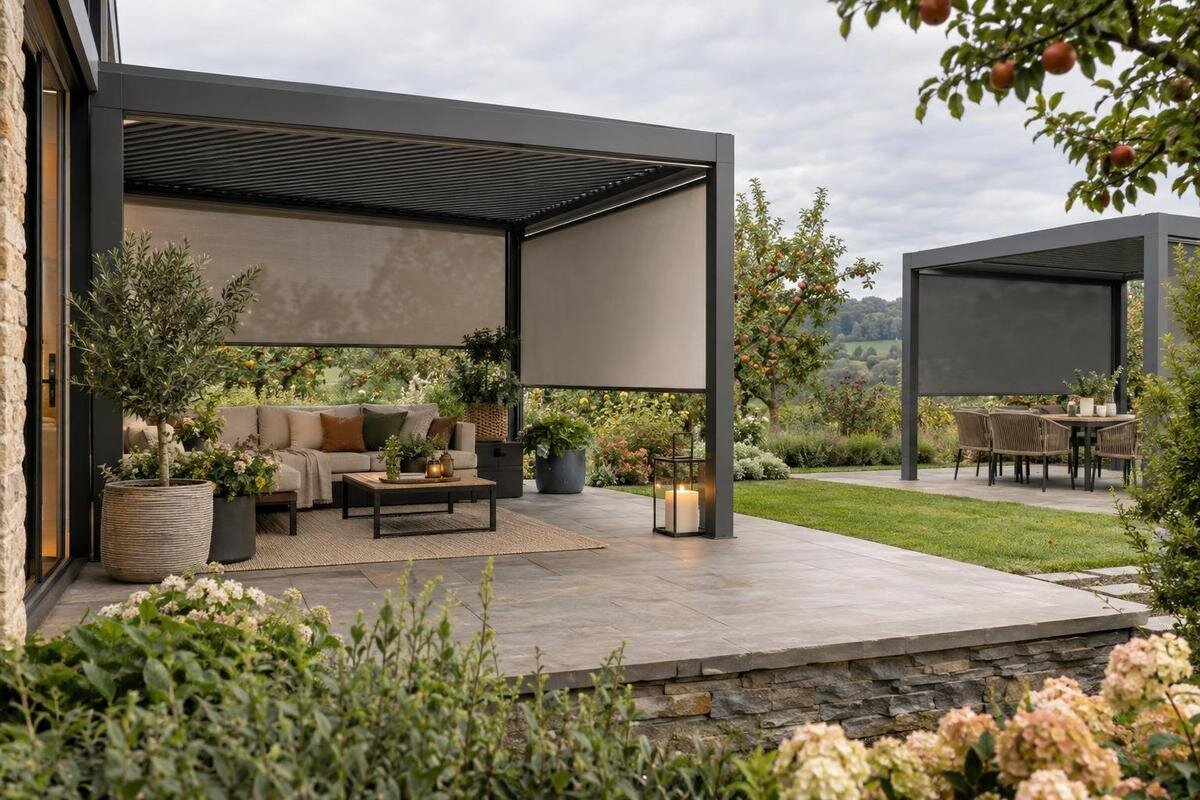
A pergola with side screens can make an outdoor area more private, but the right choice depends on what you need the screens to do and how exposed the site is. A panel that blocks a neighbour’s view may also cut off a breeze or make a narrow patio feel enclosed; in an exposed position, a closed screen raises questions about the pergola and its fittings. Treat the pergola, screen arrangement and written use guidance as one purchase decision. Before ordering, map the views you want to block, check where wind reaches the area and confirm exactly which screens and fittings are included.

Decide what the side screens need to do
Begin by naming the main job you want the screens to do. You may want to block a direct view from a neighbouring window, make the seating area feel less exposed, reduce a cross-breeze or soften low sunlight. Those aims call for different choices. A dense panel can usually conceal more than an open mesh, but it also cuts off more of the view. A screen that lets you see out may not conceal people or activity equally well from the other side. Treat a label such as privacy screen as a starting point, not a precise description of performance. Ask what the material and construction provide, in which positions and under what lighting conditions.
Think about when and where you use the pergola, rather than judging privacy from a photograph. Sit in the usual place and note which windows, paths or neighbouring seating areas have a clear view of it. You might need coverage on one side in the afternoon but prefer an open outlook elsewhere. Write down your first priority and the trade-off you can accept, such as less view or airflow. The pergola range can be a reference point, but neither its name nor a staged image establishes which screen function is included; look for written details about the screen itself.
Map the sightlines you want to block
Check sightlines from more than one position. A screen that interrupts a view from a seated spot may leave a direct view from a standing area, a garden path or a neighbouring upper window. Mark the regular seating position and the relevant viewpoints on a simple sketch of the pergola. Then compare those lines with the screen’s stated height, width and placement. If the product information does not give enough detail to judge the coverage, ask the supplier for dimensions or a drawing before choosing. Privacy depends on the actual relationship between the screen and the people looking towards it, not simply on how many sides appear covered.
Material transparency can change how a screen feels, and lighting matters too. An open weave may preserve more of the view, while a denser surface may offer more concealment; neither description alone tells you what happens in every setting. A panel that seems difficult to see through in daylight may look different when the pergola is lit at night and the surroundings are dark. Do not rely on a so-called one-way effect unless the supplier explains the conditions it depends on. When comparing options such as the pergola configuration details, use the written screen details and dimensions rather than assuming a photograph will represent your own sightlines.
Choose how many sides to screen
Decide whether you need a single screen, coverage around a corner or a more enclosed arrangement. Covering one carefully chosen side can address a particular view while leaving other directions open. More panels can block more sightlines, but may also reduce the outward view, affect through-breezes and make it harder to enter from different directions. Look closely at corner arrangements: a gap between panels may leave a view unobstructed, while overlapping or joined panels need to be described clearly in the product information. Check whether each panel is full-height or partial rather than assuming the word screen describes the whole side.
Label the sides on your sketch and note the number of panels you expect on each one. This makes it easier to compare configurations and spot a mismatch between the plan and the order. When reviewing screen options for the pergola, look for the stated screen quantity and the side or sides each screen fits. A general mention of optional accessories is not confirmation of a complete set. Ask whether each panel, guide, fastening component or other required part is included, supplied separately or unavailable for the configuration you are considering.
Check wind exposure before choosing enclosed sides
Consider how exposed the intended site is before deciding how many sides to close. Wind can behave differently around open ground, buildings, walls and corners, so a sheltered position elsewhere is not a reliable guide to conditions at the pergola. A closed side panel presents a surface to the wind and can affect the screen fittings and supporting structure. The effect depends on the particular system and the site; it is not something to estimate from appearance. Ask the manufacturer or supplier for the wind-use guidance that applies to the exact pergola and screen arrangement, rather than assuming every screen is suitable for every exposed location.
The operating instructions matter as much as any general product description. Ask whether the screens have to be opened, secured or removed in particular wind conditions, and whether the same guidance applies when panels are only partly closed. Find out how the panels are meant to be stored when not in use and whether they can be reached easily from the normal access point. Do not rely on an informal test or guess at a safe wind limit. For a particularly exposed site or a configuration that is difficult to assess, seek advice from the supplier or a qualified installer. For an option in the wall-pergola selection, confirm guidance for the exact installation and screen setup.

Separate privacy from weather shelter
A screen that blocks a view does not automatically provide the same level of shelter from wind, sun or rain. Mesh, fabric and more solid panels behave differently, and openings, seams and the lower edge can affect what passes through. Ask what the screen is designed to do in the weather conditions you expect at the site, including whether the guidance covers wind-driven rain. Do not assume that a privacy screen is waterproof, blocks all sunlight or makes the entire pergola weatherproof. If weather protection is a deciding factor, look for information about the screen itself, not just a broad description of the pergola.
Check how the stated use conditions relate to your outdoor space. If the pergola gets strong sun, ask about the screen’s weather and UV suitability, care requirements and any advice about leaving it in place when not in use. If the site is close to the sea or regularly exposed to salt, ask whether the screen material, fittings and finish are intended for those conditions. These are questions to put to the supplier, not properties to infer from colour or appearance. A clear answer helps you compare the privacy benefit with the maintenance and weather limits you will need to manage.
Understand how the screens operate
Find out whether the proposed screens are fixed, retractable or removable; do not assume that all pergola screens work the same way. For an opening system, ask how the panel moves, where it sits when open and how much space its travel requires. For removable panels, check where they are meant to be stored and whether taking them down is part of the normal care guidance. If possible, view a demonstration or ask for the operating instructions before ordering. A system that is awkward to reach or stow may be less useful in everyday life, even if its coverage looks right on a plan.
Confirm compatibility with the exact pergola configuration, including its model, size and the side where each panel is intended to go. Do not assume that an accessory described for a different pergola will fit, or that a screen can be moved from one side to another. In the product’s pergola options, check the screen information against the particular option you plan to buy, and ask for the relevant product references if compatibility is unclear. If the screen system has locks, guides or other operating parts, ask how these are used and what needs to be kept accessible.
Keep entrances and daily movement clear
Plan how you will enter and move around the pergola with the screens in both their open and closed positions. A panel may reduce the usable opening or change the route between the seating area and the house, garden or path. Check that people can pass comfortably without brushing against a screen or having to move furniture. If the pergola has more than one approach, decide which opening needs to remain convenient and make sure the proposed screen arrangement does not leave you relying on a less practical route. This is especially important in a compact space, where a small change in the clear opening can affect how the whole area works.
Place the table, chairs and other regular items on your sketch before settling on screen positions. Check whether a panel’s movement conflicts with a chair, a doorway or the space needed to reach the screen controls. You can mark the planned footprint and furniture positions on the ground with removable tape or another temporary marker to help picture the layout. Consider how you will clean around the screens and reach the sides of the pergola, too. The goal is not to enclose every available side, but to choose coverage that provides the privacy you want without making ordinary access inconvenient.
Ask about materials, care and replacement parts
Ask what each screen is made from and how that affects cleaning and routine care. Mesh, fabric and rigid panels can have different maintenance needs, so do not assume that a familiar-looking material can be treated like one you already own. Request the care instructions, including whether the screen should be kept dry for storage, how it should be cleaned and whether any products or methods should be avoided. If colour, visibility or light transmission matters to you, ask for material information or a sample rather than relying on a small image on a screen. These details help you judge whether the system will suit the way you use the outdoor area.
Before purchase, ask whether replacement screens and individual fittings can be obtained for the exact configuration, and what the applicable warranty terms cover. Do not assume that a replacement panel will remain available or that parts from another version will fit. If the wall-pergola details are on your shortlist, compare their written screen and care details with those for any alternative you are considering. Ask the supplier to clarify anything not stated on the product page, including how to identify compatible replacement parts. This can help you understand the longer-term upkeep without assuming that every component has the same service conditions.

Confirm dimensions and order contents
Measure the proposed space and compare it with the pergola’s stated overall dimensions, while allowing for the area needed to enter and use it. Note nearby doors, walls, paths and other features that could affect where a screen sits or how it moves. Check the stated screen dimensions and required clearances separately from the frame dimensions; an overall measurement does not tell you the usable opening or the exact coverage. If the support surface, mounting position or site conditions need assessment, ask the supplier or a qualified installer to confirm what is appropriate. Avoid making assumptions about fixings or installation suitability from a photograph or a product name.
Ask for the order details to name the exact pergola configuration, screen quantity, intended sides and any required fittings. Confirm which parts are included in the quoted package and which, if any, are separate options. A written order based on the selected pergola configuration should state the arrangement you have chosen, rather than relying on a general product title. Check that any drawings label the sides consistently with your plan, and ask for the relevant installation and care information. Before paying, review the seller’s stated delivery, return and warranty terms for the complete order; do not assume they are identical for the pergola and its accessories.
Compare complete configurations, not just product names
For each option, compare the full screen arrangement in writing: privacy coverage, open views, access, operating method, care requirements, dimensions and wind-use guidance. Keep unknown details visible rather than filling gaps with assumptions. If the complete screen package has a separate cost, compare the total for the configuration you actually want, not just the base pergola price. When looking at pergola specification information, judge the stated information on that page on its own; do not transfer screen options or measurements from a different product. A simple side-by-side comparison makes it easier to notice when one supplier has not answered a question that matters to your decision.
Choose the setup that meets your main need while preserving the access and weather-use conditions you are comfortable with. If privacy is the priority, decide which sightlines need coverage and how much view you are willing to give up. If the site is exposed, treat clear manufacturer guidance for the complete arrangement as essential to your comparison. Do not assume that screens can be added later, moved between sides or replaced with a different type; confirm compatibility first. When an important detail remains unclear, pause the order and ask the supplier or a qualified installer for the information needed to make a sound choice.
Frequently asked questions
Do side screens make a pergola private?
They can block particular views, but privacy depends on screen material, height, gaps and the angle people are looking from. Map the views from the places you use most, and check how the screen looks in daylight and when the area is lit after dark.
Is a pergola with side screens suitable for a windy area?
That depends on the pergola, the screen system and the site. A closed panel can catch wind, so ask for the manufacturer’s guidance for the complete configuration, including when screens should be open, secured or removed. Do not infer a wind limit from a product photo.
Will side screens keep out rain?
Not necessarily. Materials, seams, openings and the angle of wind-driven rain all matter. Ask what conditions the screen is intended for and do not assume that a privacy screen makes the pergola weatherproof.
How many sides should I screen?
Choose coverage around the specific sightlines you want to block, while keeping the entrance and everyday routes clear. One targeted screen may be enough; adding more can reduce open views and change how the space feels. Check the exact number and position of screens in the order.
What should I confirm before ordering?
Confirm the exact pergola configuration, compatible screen type, quantity and sides, dimensions, fittings and anything sold separately. Also ask for written wind-use guidance, care instructions and the applicable terms for delivery, returns and warranty.
The best pergola with side screens for your space is not necessarily the one with the most coverage. It is the configuration that addresses the sightlines you care about, leaves a practical way in and has clear guidance for the weather conditions at the site. Compare the complete screen package, confirm compatibility and dimensions, and get the order contents and operating information in writing. With those details settled, you can judge the privacy benefit against the effects on view, access and everyday upkeep before committing to a setup.
