
Buying a Pergola for a Small Patio: What to Consider
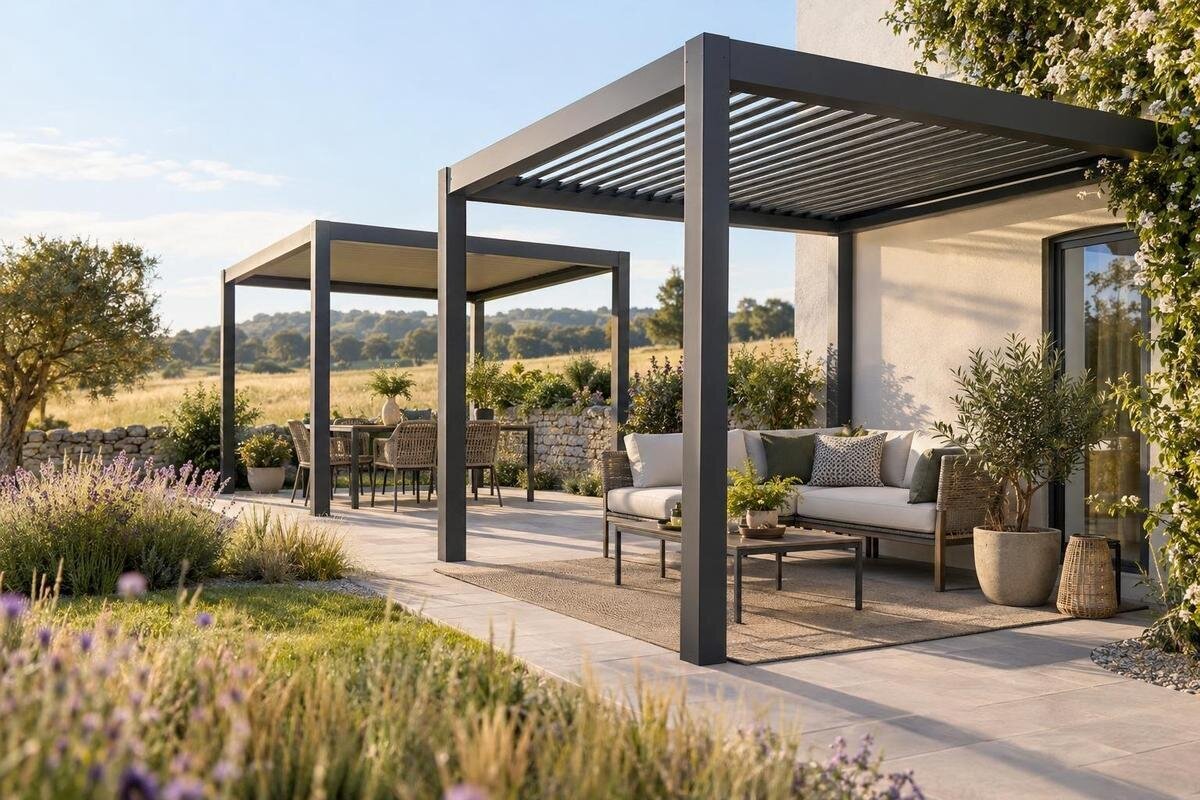
Pergola buying guide
A pergola can make a compact patio more useful, but only if its footprint leaves room for the way you move, sit and open doors. Measure the usable area, plan the furniture and decide what kind of shade you want before comparing product details.

01
Set priorities for a compact patio
A small patio may need to work as a dining area, a place to sit with a book and the route between the house and garden. Before comparing pergolas, decide which use matters most. Think about how many people will usually sit outside, whether you need space for a table and whether you want to keep part of the paving open. Also consider whether the patio needs to accommodate everyday tasks, such as bringing shopping in, hanging washing or tending containers. A structure chosen around the main activity is easier to assess than one chosen from a photograph and fitted around everything afterwards. It can help to rank these uses in order of importance, because a patio rarely accommodates every possible activity equally well. That order gives you a sensible way to resolve compromises when one layout protects a seating area but reduces circulation space.
Separate everyday needs from occasional ones. If the patio is mainly a spot for two chairs, allow for them to be used comfortably rather than planning around a large table that rarely comes out. If meals outdoors are the priority, include the table and the room needed to sit down. Make a note of items that cannot move, such as a fixed planter or a route to a gate. Consider where cushions, a barbecue or a drying rack are normally placed, too, if they regularly occupy the patio. This gives you a practical brief for comparing pergola dimensions and helps prevent the covered area from feeling overfilled.
Measure the usable patio, not just its widest span
Measure the available width and depth at several points, especially if the patio narrows, has a recess or is not a simple rectangle. Record the position of walls, steps, door frames, drains and other fixed features on a quick plan. Include the area you actually use, rather than counting paving that is blocked by a doorway or has to remain clear as a route. Mark changes in level and low walls as well, since these can limit where furniture or supports can sensibly sit. A sketch with measurements is often easier to compare against product information than a single figure for the patio’s overall size. Note the measurement date and use the same units throughout the sketch, particularly when dimensions from different sources need to be compared. Taking a few photographs of the empty patio can also help you remember the position of less obvious features when reviewing product information later.
Check a pergola’s full external footprint, not only the space described as covered. Posts, frame edges or other projections can affect whether it fits, and product images do not provide reliable measurements. Compare the stated dimensions with your plan and look for any clearance requirements in the product information. You can use the pergola product page as one page to inspect, but assess its written dimensions and installation details rather than judging fit from the image. If a dimension is not clear, confirm it before ordering.
02
Check how the pergola would meet the house or patio
The position of a pergola’s supports matters more on a compact patio, where a post can interrupt a doorway route or take up space beside a table. If you are comparing a wall-mounted arrangement with a freestanding one, map where the structure would sit and what it would be close to. Consider nearby windows, vents, outdoor taps and wall-mounted lights, as these may affect the proposed position or access around it. A wall-mounted design still has an overall projection into the patio, while a freestanding layout needs space for its supports. Neither arrangement is automatically the better fit; the site and the specific design determine what is practical.
Do not assume that a nearby wall, paving surface or patio edge is suitable for a particular installation. Check the instructions for the exact design and ask a qualified professional to assess the proposed position, support points and fixing requirements. The wall-pergola listing can be included in your comparison, but its name alone does not confirm that your wall or layout is suitable. Keep this assessment separate from the footprint check: a pergola can appear to fit on a plan while still requiring an installation arrangement that needs professional review.
Test the furniture layout before choosing dimensions
Draw your regular outdoor furniture to scale, or measure each piece and mark its outline on the patio with removable tape. Add the pergola footprint to the same plan. For chairs, include the space needed to pull them out and sit down; for a table, check that people can pass it without having to move everything. A pergola that fits around furniture when nobody is using it may leave too little room once chairs are occupied or pulled back.
Consider whether the layout still works when the patio is being used in its other everyday ways. A clear route between the house and the garden may matter more than squeezing in an extra seat, and a door should not open into a chair or post. Check whether someone carrying a tray, shopping bags or garden tools can pass without shifting furniture. Try more than one furniture arrangement before settling on the pergola’s position. If you are comparing another pergola listing, use the same furniture plan for each candidate so the comparison is based on usable space, not on how differently the products happen to be photographed. Include the furniture you use most often, rather than substituting smaller pieces simply to make a plan look workable. If the intended table changes with the season, test the larger usual arrangement as well as the everyday one.

03
Decide which part of the patio needs shade
Think about when you use the patio and where you would like shade at those times. The sun’s position changes through the day, and the shaded area can move with it. You can observe the patio at the hours when you are most likely to sit outside and note which seats or table positions receive sun. Notice whether neighbouring buildings, walls or planting already create shade at part of the day, as this may change which area needs cover most. If you only need shade over one seating area, you may not need to cover the whole patio; if the table is the priority, make sure its position is part of your plan. Repeat the observation on another day if possible, since a brief snapshot can make one corner seem more consistently sunny or shaded than it is. This is especially useful where walls or taller planting cast shadows across a narrow patio.
Compare the area you want shaded with the coverage described for the pergola, rather than assuming that the frame’s outer dimensions represent a fully shaded floor area. Leave room for the possibility that shade will not fall in the same place throughout the day. the Bloomcabin pergola page may be one candidate to review, but the listing details are what matter for coverage and configuration. If the available information does not explain what area the top covers, ask for clarification instead of treating the product photograph as a coverage plan.
Check what the top provides
Pergolas can have different top configurations, so decide what you mean by shade before comparing them. You might want a defined shaded area during certain hours, or prefer a more open feel above the patio. Some designs may have an adjustable or more covering top, while others may leave more sky visible; do not assume which applies to a product unless its details say so. Think about whether your priority is reducing direct sun at the table, creating a calmer seating corner or retaining daylight indoors. A picture can show the appearance of the top without making clear how it works or what is included.
Shade and protection from rain are not interchangeable expectations. If cover from rain matters to you, check whether the exact product information makes that claim and what conditions it describes. Likewise, if you want to vary the amount of shade, confirm whether the design can do that and how, rather than inferring it from a model name. Use this pergola product page as a comparison point only after checking its stated configuration. Your intended use should guide the questions you ask; the word pergola by itself does not settle them.
04
Keep doors and everyday routes clear
On a small patio, a few centimetres can affect whether a door, chair or walkway remains usable. Note which way hinged doors open and where sliding doors need a clear approach. Include gates and the route you normally take between the house and the rest of the outdoor area. Consider less frequent but important movements, such as taking out bins or carrying larger garden items through the space. Then place the pergola outline on your plan and check for clashes with door leaves, handles, furniture and any fixed features. Allowances should come from the actual door and product details, not from a generic clearance figure.
Think about access after installation as well as movement through the patio. You may need room to reach surfaces for routine cleaning or to move furniture in and out. If a proposed position puts the structure close to doors, windows or other parts of the house, have the exact arrangement reviewed before you commit. The wall pergola page can help you compare a wall-mounted option with other layouts, but it cannot establish what fits your property. Check the final position against your measurements and the installation information for that specific design.
Compare product details on the same basis
Make a short comparison of the details that affect your patio: external width, depth and height; the position of supports; any required clearance; and the stated coverage. Note whether a top or other component is included, rather than assuming that everything visible in an image forms part of the order. Record the source of each measurement so that you can return to the relevant product information if two figures appear to differ. This makes it easier to distinguish a genuinely suitable footprint from a product that simply looks compact. If information is missing or uses unclear terms, ask for an explanation before comparing one design with another.
Use the same site plan and list of requirements for each candidate. the alternative pergola listing is another page you can examine, but do not infer dimensions, materials or features from its URL or name. Check that the information you compare relates to the exact product and configuration you intend to buy. Also find out what the order includes and whether any separate assembly or installation arrangements are needed. Clear answers make it easier to rule out designs that do not fit your space or use, even if their appearance appeals to you.

05
Consider how the pergola will look in a small space
A large overhead frame can draw the eye, so think about its proportions in relation to the patio, house and furniture. View the proposed position from the doorway as well as from the seating area; those perspectives can make a structure feel quite different. Consider sightlines from inside the house if the patio is visible through regularly used windows or doors. A simple plan or a marked outline helps you judge how much paving remains open and whether the supports interrupt the view across the patio. The aim is not to make the structure disappear, but to choose one that feels balanced with the space you have.
Consider the frame’s visible finish and colour only after checking what the product actually offers. A photograph can be affected by lighting and may not show a finish accurately, so consult the product information or ask whether a more representative image or sample is available. the Bloomcabin pergola listing can be compared visually with the rest of your outdoor setting, but do not assume its materials or finish from its appearance. Choosing a look that suits the patio is useful; it should not take priority over a workable footprint, clear routes and the right configuration.
Confirm order and installation details
Before placing an order, check that the product name and configuration you have compared match the one you intend to buy. Recheck the full external dimensions against your patio plan, confirm what is included and read the stated installation requirements. Ask about any details that affect your particular site, such as the proposed position near a wall or the type of surface involved. If the installation information is unclear, seek guidance from the supplier or a qualified professional rather than making assumptions based on the product category.
Consider how the product will reach the patio and what assembly arrangements are needed. A structure may fit in its final position but still require planning for access through a doorway or narrow passage during delivery and installation. Walk the route from the property entrance to the patio and note tight corners, steps, gates or overhead obstructions that should be raised before ordering. Confirm any separate costs or services in the order information, and make sure you understand who is responsible for assembly. If your property has particular exposure or other site conditions that affect suitability, ask the supplier or installer to confirm that the exact design is appropriate. These checks help keep the buying decision tied to the real space, not just the dimensions on a page. Keep a copy of the final plan and the product details you relied on, so you can check that the selected configuration has not changed before the order is completed. A final comparison between the plan, the order summary and the installation information can catch a mismatch in dimensions or included components.
Frequently asked questions
What measurements should I take before choosing a pergola?
Measure the patio at several points, then note doors, steps, wall projections and any other fixed obstacles. Compare those figures with the pergola’s full external dimensions, including posts and any projections, and check the required clearances in the product information.
Is a wall-mounted pergola always the best choice for a small patio?
No. It may be worth comparing if the patio meets the house, but the overall projection, attachment points and wall suitability all matter. Ask a qualified professional to confirm whether the specific design can be installed at your property.
Will a pergola shade the whole patio?
Not necessarily. The shade you get depends on the top configuration, its dimensions and the sun’s position. Decide which part of the patio you want shaded, then compare the stated coverage and ask what the selected design actually includes.
How can I tell whether a pergola will leave enough room to move around?
Mark its footprint on a plan or with removable tape, then add your table, chairs and usual route through the patio. Include the space needed to pull chairs out and open doors, rather than judging the structure by its footprint alone.
What should I confirm before placing an order?
Check the exact model’s external dimensions, included parts, required clearances and installation requirements. Also confirm delivery access and what assembly or installation arrangements are needed for your site; do not rely on a product image to answer these points.
The right pergola for a small patio is the one that fits the measured space and supports how you actually use it. Check the full footprint against furniture and routes, be clear about the shade or cover you expect, and confirm the installation details for your site. That gives you a sound basis for comparing designs without relying on appearance alone.
