
Buying a Pergola for a Snowy Climate: What to Check
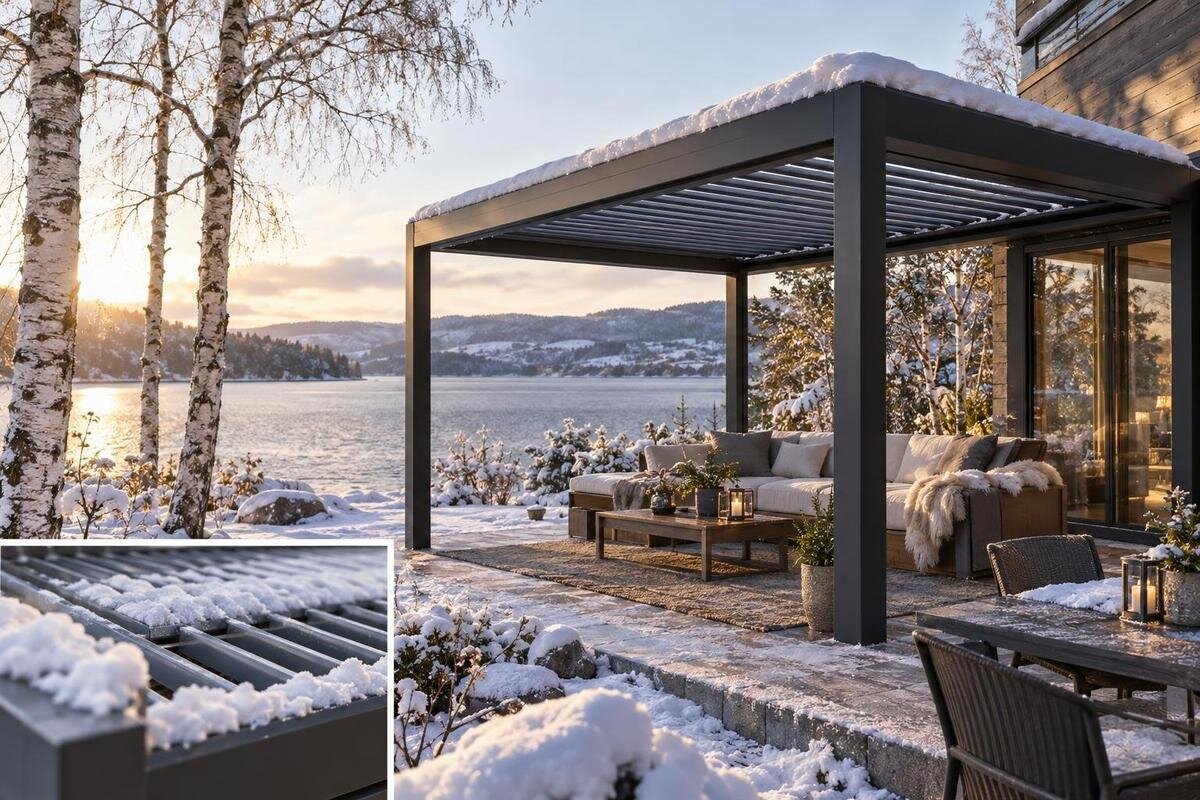
Pergola buying guide
Buying a pergola for a snowy climate calls for more than comparing styles. A frame that looks substantial, or a roof that appears easy to clear, does not show whether the completed structure can carry local winter conditions. First consider where snow will collect or slide at the intended site, then check the rating and installation assumptions for the exact configuration. This guide explains what to request, how to compare product information and when a structural professional should resolve an unanswered question.

Describe the winter conditions at the site
Snowy climate is too broad to serve as a design brief. Snowfall, the way it drifts around nearby buildings, the height of adjoining roofs, and whether the pergola is sheltered or open can change what lands on its roof. Wet, compacted snow can behave differently from light fresh snow, so do not reduce the question to whether snow falls in the area. Before shopping, note the site location, ground and roof context, usual winter conditions and any local design criteria already supplied for the project. If you have a site survey or project brief, keep it with your notes; a regional average cannot describe every plot. This gives the supplier or structural professional a defined case to assess, rather than an unspecified request for a pergola that is good in snow.
Pay attention to snow that could arrive from somewhere else. A pergola under a house roof edge may be exposed to sliding snow or an eaves dump; a courtyard corner or a gap between buildings may collect drifts. Consider whether the slope directs snow towards the installation area and whether clearing access will remain practical in winter. Take photographs of the proposed position and nearby rooflines, noting their relationships without trying to calculate a load yourself. Give those details to the professional assessing the structure and its base. Also record nearby roof or site changes that could alter where snow accumulates over time. The point is to describe the site accurately before comparing products, not to decide suitability from a photograph or general weather description.
Ask for a snow-load capacity that matches the model
If you are choosing a pergola for heavy snow, the clearest buying evidence is a stated snow-load capacity for the pergola as supplied, backed by technical documentation. Ask what capacity is declared, how it is expressed, and whether it applies to the exact roof, span, post layout and accessories you plan to order. Confirm whether the documentation covers the complete assembly or only a component. Ask whether the figure comes from a calculation, test or another documented assessment, and what assumptions it relies on. Make sure the supplier distinguishes documented capacity from a general description such as all-weather or built for outdoors. A product photograph, material name or broad climate claim is not a substitute. If no rating is published, request written confirmation and supporting documents before treating the model as suitable for further consideration.
Record the model and proposed configuration beside the answer, because a rating may be conditional on a particular arrangement. Evidence for one roof, span or support layout may not apply if you add panels, extend the structure or use another position. When reviewing the Bloomcabin pergola product page, use it as a starting point for asking which technical documents apply to the exact item under consideration; do not infer a snow-load rating from a name or picture. If the page does not make the load information clear, ask the supplier directly and keep the reply with your order notes. Check the date and version of the documents, particularly if the online listing or specification is later updated. Where the reply does not resolve site suitability, ask a qualified structural professional to assess the proposed arrangement.
Check the roof design and snow movement
Roof shape matters because it affects whether snow is likely to remain in place, move towards an edge or collect unevenly. A roof that sheds snow is not automatically safer: snow may slide onto a path, seating area or entrance, and a design that retains snow must be assessed for the load it can carry. Neither a flat-looking cover nor a pitched outline tells you the permitted load on its own. Ask how the stated capacity relates to the roof design, whether accumulation at particular edges or uneven build-up has been considered, and where any shedding is expected to go. Have site-specific concerns checked by a professional before choosing the location.
If the roof includes parts that open, fold or move, ask for written winter instructions rather than guessing from its mechanism. Find out which roof position the capacity applies to, whether snow or ice must be cleared before movement, and what the manufacturer says to do during accumulation. Do not assume that opening the roof removes structural risk or that moving parts can be operated under a load. If instructions specify a resting position, confirm whether it is also the position intended for winter. For a candidate such as the listing for the Bloomcabin pergola, compare the written guidance with the roof arrangement specified for that exact model. Missing instructions are a reason to pause and ask, not to improvise.
Review the frame and its connections
Snow has to pass through the roof and frame into the supports and base, so the whole load path matters. Review the technical description for the structural members, joints, connections and support arrangement, not just the visible thickness or apparent weight of a post. A substantial-looking beam may still be unsuitable for a long span if the manufacturer has not approved that arrangement. Connection details matter at junctions where roof parts, beams and posts meet. The same applies to a material label: timber, steel or aluminium alone does not establish how much snow a completed pergola can carry. Ask for documentation that connects the stated capacity to the listed configuration, including its frame and roof connections.
Check whether the written specification covers the same frame arrangement, roof parts and connections that will arrive, and whether an optional screen or accessory changes the configuration. Keep part names and model identifiers together so a brochure image is not confused with the version you intend to order. The Bloomcabin pergola page can be assessed in the same way as any candidate: look for a clear technical specification rather than judging capacity from its appearance. Ask whether the rating changes if a part is omitted, replaced or fitted differently. If a joint, span or connection is not covered, ask the supplier or project engineer before choosing. Avoid modifications unless they are approved for that system.

Confirm the base and anchoring requirements
A suitable frame can still be a poor choice if the specified supports cannot be provided at the site. Ask what foundation, base and anchoring arrangement the snow rating assumes, including any site conditions that matter. In a cold location, ground movement during freezing and thawing may affect a foundation; the actual risk depends on local ground and design. Ask how runoff is managed around the base so the layout remains practical to maintain. Do not choose a base by copying a product photograph or a general rule of thumb. The supplier should provide compatible requirements, while a qualified professional can assess whether the proposed support suits the ground, nearby structures and planned layout.
Check whether the design is freestanding or connects to another structure, if that applies to your shortlist, and make sure the documentation covers the actual installation. A wall connection should not be assumed to transfer loads safely without checking both the pergola details and the building substrate. Keep the foundation drawing, anchoring specification and any site-specific confirmation together with the product record. When comparing the Bloomcabin pergola product listing, mark anchoring as confirmed only if the information is documented for the configuration you plan to buy; a blank field is a question for the supplier, not an invitation to substitute generic fixings. The installer should receive the same approved documents before work, not just a screenshot or verbal summary.
Understand snow removal before buying
Ask before purchase how snow is meant to be managed if it accumulates. The answer should come from the manufacturer or supplier and match the exact roof: it may define when to seek help, whether removal is permitted, and any restrictions on access or tools. Do not treat manual clearing as a way to compensate for an unknown or inadequate snow rating. Climbing onto a pergola or applying force can add risk, while clearing one area unevenly may alter how load is distributed. Follow product-specific instructions instead. Consider who would carry out the task if you are away or snowfall continues for several days. If the supplier cannot explain what to do after heavy snowfall, that gap belongs in the buying decision.
Ask how the stated capacity relates to the maintenance advice. If clearing is recommended, request the approved method and who should carry it out; if the structure has limits on accumulated snow, find out how those limits are communicated. Include access in the plan: reaching the roof may be difficult after snow falls, especially where surfaces are icy. Ask under which conditions access should be avoided and whom to contact for a model-specific answer. For a candidate such as the product page for the Bloomcabin pergola, record the answer beside its rating rather than relying on a general winter-care leaflet that may cover several products. A clear, model-specific procedure makes ongoing responsibilities easier to judge before ordering.
Consider where snow may fall or be stored
Snow safety around the pergola is part of the layout decision. A roof that releases snow can place it where people walk, enter a home, store equipment or park a vehicle; snow from a neighbouring building may also fall or slide into the proposed footprint. Mark likely fall zones and keep routes, doors and access points in mind when comparing positions. A narrow route that works in summer may become the only practical winter passage, so consider seasonal use as well. If you cannot confidently identify how snow may behave, ask a building professional to assess the site rather than choosing a spot by appearance alone. This is separate from whether the pergola itself can carry the expected load.
Consider what happens after snowfall as well: can the structure be inspected from ground level, will cleared snow have somewhere appropriate to go, and could a snow pile obstruct drainage or access? Mark the intended place for removed snow on the site plan alongside the structure and paths. Do not let a convenient place to deposit snow push it against posts or over a route without checking the manufacturer's guidance. Put the Bloomcabin pergola entry on a site plan as a proposed product, not proof that its placement is suitable. Use clearances only when they are confirmed for the exact option, then have uncertain distances and support conditions reviewed by the relevant professional.
Check winter maintenance and material care
Materials and finishes matter for long-term ownership, but they should be assessed after structural suitability. Ask how the specified material, coating, fasteners and any seals are intended to be maintained through cycles of moisture, frost and thaw. Check whether the care instructions call for inspections, cleaning, touch-ups or replacement of components, and what signs should prompt service. Separate routine seasonal care from checks after unusual weather, so both are included in the ownership plan. These details affect the work you must plan for, but do not establish snow-load capacity. A low-maintenance claim without product-specific guidance is too vague to compare; request the written care schedule for the exact pergola and its expected exposure.
Look for conditions that may change performance over time, such as damage, corrosion, loose connections or unauthorised alterations, and ask what inspection is advised after severe weather. Do not assume that a material described as suitable for outdoor use carries a guarantee for snow exposure; read the actual terms and ask about relevant exclusions, relying on written wording rather than verbal reassurance. For a page such as this Bloomcabin pergola listing, separate confirmed facts from questions still awaiting an answer. If repair or replacement parts matter to your decision, ask how they are identified, but do not infer their availability or lifespan from an image. Also ask whether a repair or replacement could affect the documented configuration and what review might then be needed.

Compare the documents for each candidate
Create a short comparison table for each candidate: stated snow capacity; roof arrangement covered by the rating; span and support layout; foundation and anchoring assumptions; winter operating and clearing instructions; care requirements; and any limitations. Add a column for the evidence source and leave unanswered items visibly blank. A yes-or-no tick alone can hide conditions, so retain the exact wording and date of each response. This prevents a confident product description, a sales conversation and a technical document from being treated as equivalent. Ensure all answers refer to the same model and version. A manufacturer drawing and a supplier's general statement may serve different purposes, so ask who is responsible for the technical confirmation.
Use Bloomcabin's pergola product page as one entry only after identifying the exact configuration you are considering. Do not treat a link, title or promotional image as evidence of a rating; fill the table from published technical details or written answers. If you receive a capacity figure but cannot tell whether it applies to the roof position, anchors or site, ask for that relationship to be clarified. Save the product page, technical documents and replies together. If answers conflict, ask for a reconciled version rather than choosing the more reassuring sentence. That record will help an installer or engineer review the same specification rather than working from an outdated picture or incomplete description.
Resolve open questions before ordering
Before placing an order, summarise the intended site and exact configuration in one written enquiry. Ask the supplier to confirm whether the product is designed for the relevant snow conditions, which documents support that answer, what site conditions it assumes, and whether the supplied setup includes the required supports and roof parts. Send a site plan or photographs if helpful, but do not mistake those for a professional's formal review. Seek independent structural advice where the supplier cannot assess the site or the answer is unclear. A professional should confirm any decision that depends on local loads, soil or building connections; this guide is not a substitute for a site-specific assessment.
Treat missing evidence as a decision point. You can compare another pergola, ask for a compatible configuration or delay the purchase until the technical question is resolved; do not proceed on the assumption that a later modification or routine snow clearing will make an unverified structure suitable. Read the order description carefully so the version purchased matches the one whose documents you reviewed. Use a supplier's answer only if it identifies the product and conditions it addresses. Keep a copy of the confirmation and installation requirements for the person responsible for the work. A sound decision is not simply choosing the strongest-looking design; it is knowing what the stated limits cover and whether they fit the real site.
Frequently asked questions
Does a pergola need a snow-load rating if snowfall is occasional?
Do not treat occasional snowfall as automatically negligible. Ask for documentation stating the snow-load capacity of the exact pergola configuration, then check whether its assumptions match your site. If the answer is unclear, seek a site-specific assessment rather than relying on a general description of the local climate.
Is a sloped pergola roof always safer in a snowy climate?
No. Roof shape can affect whether snow stays in place or slides away. A roof that sheds snow may send it towards a doorway or path, while a roof that retains snow still needs a suitable documented capacity. Compare the rating with the roof design and ask where any shedding is expected to go.
Can I rely on clearing snow instead of checking the rating?
No. Snow removal may form part of winter care, but it is not proof that the pergola suits the expected conditions. Ask for the actual capacity and model-specific written guidance, including any limits on access or roof operation. Do not assume you will be able to clear the structure safely after snowfall.
What if the seller cannot provide a snow-load figure?
Ask for written technical documentation that identifies the model, configuration and assumptions behind its capacity. If the supplier cannot provide it, or the information does not address your site, do not assume the pergola is suitable. A qualified structural professional can advise whether further assessment is needed.
Which roof position should I use during snowfall?
Use only the position specified in the manufacturer’s written winter guidance, and confirm that the capacity applies to that position. Do not assume an open or closed roof is safer, or move roof parts under an accumulated load. If the instructions are missing or unclear, ask about the exact model before buying.
Snow suitability belongs to the complete, correctly installed arrangement under the conditions stated for it, not to a style or material label. Compare written ratings, roof and support details, winter instructions and site requirements, then have unresolved structural questions checked by a qualified professional. If the answers are unavailable, keep the pergola off your shortlist until they are clear. This lets you compare appearance among options with a credible basis for use at the intended site.
