
Buying a Pergola for an Outdoor Kitchen: What to Consider
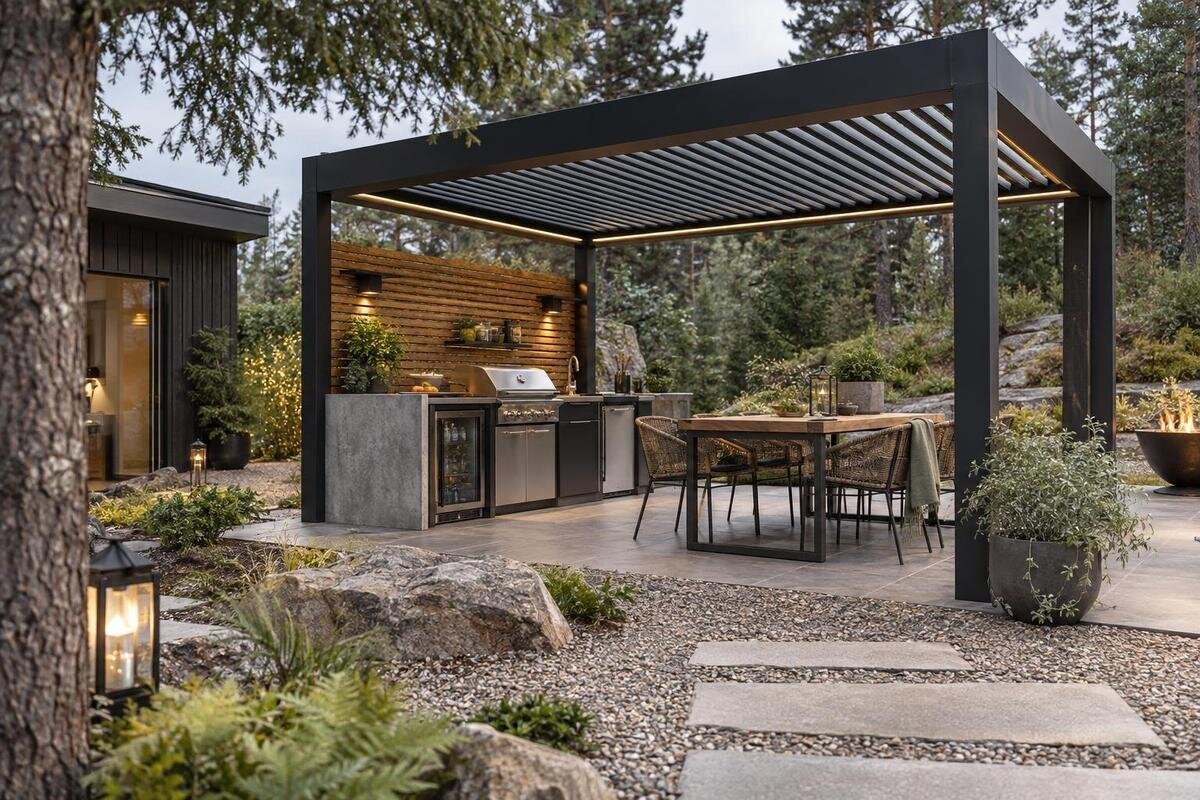
Pergola buying guide
An outdoor kitchen needs more than a roof over the cooking appliance: preparation, serving, circulation and dining all compete for space, while heat and smoke raise compatibility questions. If you plan to buy a pergola for an outdoor kitchen, base the decision on a measured layout and the written requirements for both the pergola and the appliance. Think about the position, the cover you expect, the site and the complete order before comparing appearances. This guide sets out the checks that can help you choose a structure that fits the way you cook and eat outside.
Before you buy 1
Measure the full cooking and dining area
Begin with a measured plan of the whole outdoor-kitchen area, not a guess based on the cooker alone. Mark the proposed pergola footprint, including where any posts or supports would sit, then place the cooking appliance, preparation surface, storage, serving point and dining furniture on the same drawing. Use the dimensions of the actual items, and show the space needed for oven doors, drawers, lids and chairs to move. An appliance may fit on paper while its opened lid or a pulled-out drawer blocks the route through the space. A roof outline is not the same as usable floor area: supports may reduce the clear space beneath it.
Trace the way people will use the area: carrying food from the house, preparing it, cooking, serving and clearing away. Note where diners enter and whether guests would need to pass directly through the cook’s work area. If the space must work for both a quick meal and a larger gathering, draw a second arrangement rather than assuming everything will fit in one layout. Mark the corners at full size and try the intended chairs or table in place. This can reveal cramped turns that a small sketch hides. Record the minimum usable area you need and decide whether the pergola should cover both cooking and dining or mainly one; a wider cover is not automatically better if it constrains another route.
Choose a position that works with the house and garden
Choose the position in relation to the house, existing kitchen access and the rest of the garden. A short route for carrying groceries and prepared food may make serving easier. Note whether an exterior door will be held open during meals and whether a post or queue could narrow that threshold. Check views, privacy and how people will move around the structure, but give priority to appliance requirements, access and working space. Also note nearby walls, windows, doors, roof edges, drains and planted areas; these can affect where smoke goes, where water falls and which locations remain practical. Visit the exact spot at the times you expect to cook and eat.
Decide whether a freestanding arrangement or one that relates to a wall suits the site, but do not assume a wall can support an attachment or that existing paving is an adequate base. These are product- and site-specific questions. Ask for the required footprint and support or fixing details, and have a suitable installer assess the proposed location when the documentation calls for it. When comparing the Bloomcabin pergola page, match any published information to your measured position and ask about details that are not shown; a photograph or product name does not prove that a structure will fit. Mark service routes and access paths on the plan before settling on the location.
Before you buy 2
Check the pergola against the cooking appliance
An outdoor cooking appliance introduces compatibility questions that ordinary shade planning does not answer. Start with the exact appliance you intend to use, including its fuel type and any likely replacement, and consult the manufacturer’s instructions for use beneath overhead structures, required clearances and ventilation. The pergola documentation must also state what the structure allows. Neither a roof that looks open nor an appliance described as suitable for outdoor use proves that the combination is appropriate. If a manufacturer’s guidance is unclear or the two sets of requirements appear to conflict, ask the relevant manufacturer or a qualified installer before buying. A general picture of a barbecue under a pergola cannot resolve the question.
Consider what the cover is expected to do while cooking. A fixed roof, open framework or adjustable cover can provide different levels of overhead shelter and airflow, but the label alone does not explain how a particular model behaves or whether it can be used above your appliance. Look for explicit information about the roof arrangement, its operating conditions and restrictions, including whether changing its position affects the requirements. A page such as this Bloomcabin product listing can help identify a candidate, but it is not evidence of cooking clearance. If your preferred appliance changes later, revisit the compatibility check rather than assuming the original decision covers every cooker.
Plan for smoke and nearby openings
Smoke and cooking odours need a route away from people and openings; a pergola does not automatically contain or direct them. Consider windows and doors, any air intakes, neighbours’ seating and your own dining area as well as the appliance position. Observe how air moves through the proposed spot on more than one occasion, because wind direction and strength vary. If smoke tends to pass over the table, through an open window or towards a neighbouring area, reconsider the appliance’s position or the overall layout before setting the pergola footprint. The spot that works for the cook may also affect diners, so consider where people will sit. A single calm-day observation is not a guarantee for all conditions.
Include smoke and ventilation in product and installation discussions. Some cooking arrangements may call for specific ventilation or extraction, and the permitted solution depends on both the appliance and the structure. Ask the appliance and pergola suppliers what their respective documents allow, and involve a qualified installer if services, a hood or ducting form part of the plan. Do not assume fittings can be added to a frame or roof. A listing such as a Bloomcabin pergola page can identify a product to compare, while written technical information—not an illustrative arrangement—should answer questions about smoke, heat and fittings.

Before you buy 3
Separate cooking, preparation and dining routes
Plan the work sequence so preparation, cooking and serving do not compete for the same narrow strip of floor. Place the appliance where the cook can use it without crossing the main route between the house and dining area, then allow space for the surfaces and storage you genuinely intend to use. Consider whether someone needs to pass behind the cook, whether two people will work there at once and where dishes can be set down. These are layout questions, not a standard clearance figure: test them with the actual furniture and equipment, and confirm any safety distances with the appliance manufacturer.
Draw cupboard, fridge and drawer doors in their open positions, and include sinks or counters if they are part of your plan. Think through where plates, utensils, refuse and serving trays will go; otherwise the cook may have to turn into the dining route for routine tasks. Include space for cleaning and waste, which can be overlooked on an empty-site sketch. Keep guest seating outside the busiest work zone if that suits your use, and check that chairs can move without blocking access to the appliance. Ask for the exact pergola measurements and compare them with this full arrangement; do not rely on the roof outline alone when considering the listed Bloomcabin pergola.
Check the base and service routes before ordering
The surface beneath the pergola is part of the buying decision. An existing terrace or patio may look suitable yet still need professional assessment for the particular structure, its supports and the ground below; appearance alone does not establish that it can be used. Check the product documentation and ask the seller for the support and fixing requirements, as well as who is responsible for confirming the site conditions. Note slopes, paving joints, drains, thresholds and any buried services before finalising post positions. If changes to paving or kitchen equipment are planned, tell the installer because they may affect the layout. For a candidate such as this Bloomcabin pergola listing, request the requirements that apply to that product rather than relying on a similar-looking installation.
Plan water, drainage, gas or electrical services for the kitchen alongside the structure, not after its location is fixed. Routes and connection points may constrain posts, work surfaces or access, and a later change can affect cost and timing. Have appropriately qualified tradespeople determine and carry out service work, and ask what information they need from the pergola supplier before you order. If the kitchen is being built in stages, mark intended future services and equipment now so the pergola does not close off a useful route. A written sequence for site preparation, pergola installation and kitchen work can clarify what needs to be ready before delivery.
Before you buy 4
Set expectations for shade and weather cover
Decide what coverage you want at the hours you will actually use the kitchen. Sunlight changes through the day and year, so note its position at likely meal times; a midday impression will not show whether the cook or table gets shade later. Consider the preparation surface separately from the dining area, since each may have different priorities. If you value daylight or an open feeling, weigh that against the protection you expect. The balance should reflect your site and routine, not a general promise that a pergola provides all-day shade.
Rain protection also varies with roof design and site exposure. Ask whether a product is intended to provide the level of shelter you need, where water is directed and what limitations apply in wind or heavy weather. Do not assume an open or adjustable roof is watertight or that any pergola suits every exposed position. Check the maker’s written specifications and, where necessary, ask a qualified professional to assess the location. When reading the Bloomcabin pergola listing, separate features actually stated from what a photograph suggests. If reliable cover is essential for dining, decide whether a pergola alone meets that aim before ordering rather than planning around an unverified expectation.
Measure access and confirm what the order includes
Measure more than the advertised roof size. Ask for the external dimensions, the positions of supports and the clear area underneath, as well as the overall height and any projection beyond the posts that matters at your site. Compare these with walls, doors, gutters, windows, branches and the appliance’s dimensions and operating space. Check the final position at ground level and above it: a layout can clear the patio but interfere with a door swing or an overhang. If the product has an adjustable element, obtain its dimensions and clearance requirements in the relevant positions rather than measuring only when it is closed.
Ordering checks matter too. Confirm exactly which parts and components are included, whether items shown separately need to be ordered separately and what work is excluded from the quoted price. Ask the seller to set out delivery arrangements, installation availability, any preparation expected from you and how changes or missing information are handled. Check that the route from the delivery point to the site can accommodate the items, including gates, turns and any narrow passages. If an installer is separate from the seller, clarify who confirms the site and coordinates the work. Compare complete written quotations rather than headline figures, including relevant costs for preparation, assembly or services.
Before you buy 5
Compare specifications, not product images
Compare shortlisted structures against the same set of facts: usable footprint, overall dimensions, cover configuration, permitted use above your chosen appliance, installation requirements, care instructions and any support or warranty terms stated by the seller. Include screens, accessories or service integrations you expect, checking whether they are part of the quoted item or separate purchases. A product name or URL label is an identifier, not a specification, and photography cannot verify dimensions, materials or performance. A Bloomcabin pergola product page belongs in a comparison on the basis of its available details and the answers you obtain for your intended layout, not an assumption based on how it looks.
Keep notes in a simple comparison table, with one column for each candidate and another for unanswered questions. Distinguish confirmed information from assumptions, and note where each important answer came from, such as a technical document or a written response from the seller. Ask which parts are included, what maintenance is expected, how repairs or replacement components are handled and what a warranty actually covers if one is offered. These points affect ownership and total project cost as well as the initial order. If a key detail remains vague—especially appliance compatibility, installation or weather protection—seek clarification before treating a verbal impression as a firm basis for comparison.
Make the final checks before placing the order
Bring the plan and product information together before placing the order. Confirm that the measured footprint leaves room for cooking, preparation and seating; that the intended appliance is allowed beneath the chosen cover; and that smoke, services, access and installation requirements have been considered. Check the written order against the exact product and parts you intend to receive. For a candidate such as the Bloomcabin product page, use its documentation and the seller’s written answers, not the name or image alone. Resolve any mismatch between your site plan, the stated requirements and the order before committing to delivery or arranging work.
Rank what matters most to your household: appliance compatibility, the area covered, movement around the kitchen, shade at meal times, shelter, appearance and total project cost. A structure that looks impressive but forces compromises on an essential need may not be the right purchase; a simpler option may suit you better if its verified details match the plan. Leave room for qualified site advice and any location-specific permission checks that may apply, without assuming every site follows the same process. If you may add equipment later, check whether the layout can accommodate it before choosing a footprint. Once the practical requirements are clear, you can compare design and cost with a more accurate picture of what the order will provide.
Frequently asked questions
Can I put any barbecue under a pergola?
Do not assume that every barbecue is suitable beneath every pergola. Check the exact appliance instructions and the pergola documentation for permitted use, clearances and ventilation. If either document is unclear, ask the manufacturers or a qualified installer before buying; an open-looking roof or an illustrative photo does not confirm compatibility.
Should I choose a wall-mounted or freestanding pergola?
That depends on the site, the product’s installation requirements and how you need to move between the house and kitchen. Do not assume a wall or paved surface can support a particular structure. Check the product-specific requirements and have the proposed location assessed when needed.
How big should a pergola be for an outdoor kitchen?
There is no single size that suits every layout. Measure the cooking, preparation and dining areas together, including supports, opened appliance doors or lids, chairs and the routes people use. Compare that plan with the actual pergola dimensions and any appliance clearances specified by its manufacturer.
Will a pergola keep the cooking and dining area dry?
Not necessarily. The level of shelter depends on the cover design, the site and its exposure to wind and rain. Check the manufacturer’s stated performance and limitations rather than relying on a product image or roof label. If dependable shelter is essential, confirm that the proposed structure meets that need before ordering.
What should I confirm before ordering?
Confirm the exact product and dimensions, the appliance’s compatibility with the pergola, site and installation requirements, and which parts are included. Ask for a written breakdown of delivery, installation and any preparation or services relevant to your plan. Resolve unclear details before placing the order.
The right pergola for an outdoor kitchen is the one whose documented use, dimensions and installation requirements agree with your space and appliance—not simply the one that appears to cover the most area. When layout, smoke, support, services and ordering details are settled, you can compare design and price with a clearer picture of what the purchase will provide.
