
Buying a Pergola for Malta’s Strong Summer Sun
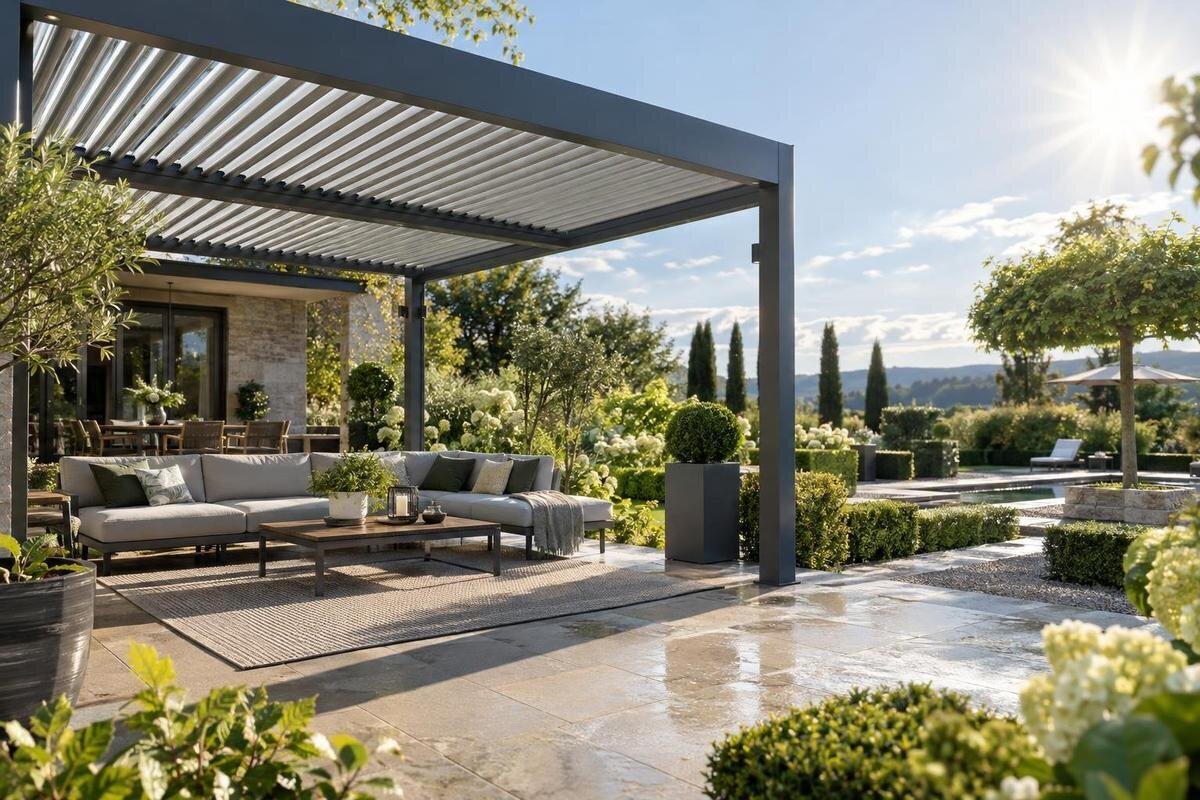
Pergola buying guide
Buying a pergola for Malta’s strong summer sun is mainly a question of matching the shade to the place and the hours you use it. Begin with the patio or terrace layout, then compare each option’s documented roof design, dimensions and installation requirements. A product photograph can help you judge its appearance, but it cannot show how much of your own space will be shaded at the times that matter.

Before you buy 1
The shade area and hours of use
Before comparing styles, identify the activities the pergola should support and the times they take place. A table used for lunch, a seating area occupied later in the afternoon and a route beside a doorway call for different shaded footprints. Mark the part of the patio that must remain usable rather than treating the full paved area as one target. Note how many people normally gather there, whether chairs need room to move back and whether you need to pass through while others are seated. If the area serves several purposes, separate essential shade from extra coverage that would be welcome but is not necessary.
Write down your priorities in plain terms: shade over the table at a chosen time, an open outlook, or daylight in an adjoining room. Rank them, because one configuration may not satisfy every preference at once. When you assess the pergola product page, compare its published measurements and roof information with this brief; a lifestyle image alone cannot confirm that the shaded area will cover your table or seating. Be precise about what counts as success: should the whole table stay shaded, or is a smaller covered area enough? If the product description does not show the footprint or explain the roof arrangement, ask for those details before deciding.
How sunlight reaches the site
Observe the spot at the times you expect to use it, not only when you happen to shop. On more than one day if possible, note where direct light falls in the morning, around midday and later in the afternoon. Photograph the ground with the time recorded, or sketch the moving shadow of a wall, balcony, tree or neighbouring building. Mark which edges remain open to the sky and which already receive shade from nearby structures. The sun’s height and direction change through the year, so a single observation cannot describe every season; decide whether the purchase is chiefly for summer use or for a longer period.
A pergola roof shades from above, but light can still reach the space from open sides, particularly when the sun is low. Compare your notes with a plan drawing that shows the roof edges and supports, not just one overall dimension. If you inspect the listing labelled as a bioclimatic pergola, treat that wording as a product identifier, not an explanation of its shade pattern. Look for written roof details or ask how the components are arranged and what part of the ground they are intended to cover. If no diagram shows the relationship between roof and frame, request clarification before estimating where the shade will fall.
Before you buy 2
Measurements for the pergola and surrounding space
Measure the usable area and the restrictions around it separately. Record the width and depth you can allocate, then note fixed features such as doors, windows, steps, parapets, wall projections and planters. Check the height available below eaves or balconies, and mark anything that needs regular access. On a drawing, identify whether the stated product dimensions refer to the roof edge, frame or support positions; these boundaries can differ, and the figure you need depends on what you are checking. Confirm the ground footprint as well as the overall dimensions so you do not mistake a roof measurement for the space occupied by the supports.
Put furniture where you expect to use it and mark a possible outline on the ground with tape or string. Leave room to pull chairs back, carry dishes, open doors and move between the house and the rest of the outdoor area. Check whether supports would sit beside a table, block a cupboard or storage door, or narrow a route. The wall-pergola listing can be part of a comparison if you are considering a wall-connected layout, but its name alone does not establish the size or fit of your site. Match the current drawing to your measurements, including support positions, overhead clearance and any stated installation gaps.
Roof designs and the amount of daylight
Roof type affects whether shade is continuous, filtered or adjustable, but the exact result depends on the design and arrangement. A fixed cover, an open or louvred roof, and a retractable cover do not create the same daylight underneath. Gaps may let some sun through; a fixed cover may block overhead light within its coverage while leaving side light. A movable arrangement is useful only if its documented settings provide the adjustment you need. Compare the expected light with your notes about when the space is used, and decide how much daylight you want when the pergola is unoccupied. More shade is not automatically a better match if it leaves an adjoining space darker than you want.
Descriptions such as bioclimatic are not a substitute for a roof diagram or an explanation of how a particular product works. On the bioclimatic pergola page, check what is actually stated about the roof components, positions and operation, and ask about anything missing. If the roof can change position, confirm the documented range and whether it can provide the shade you want at the times you have identified. Review the manufacturer’s drawings and any stated limitations before comparing options. Treat sales imagery as an illustration of appearance, not a measure of coverage or a guarantee of the light you will have beneath the roof.

Before you buy 3
Low-angle sun at the sides
Strong sunlight can reach the space from the side even when the roof shades the area directly beneath it. Walk around the site and note the direction from which light enters at the times you care about. An adjacent wall may shade one edge already, while an open boundary may leave another exposed. If side shading is important, check whether the design supports a separate screen or panel and whether that item belongs to the configuration you are considering. Side elements can also change the view, daylight and airflow, so decide whether you need shade on one side or more than one. Do not assume an overhead roof will manage every angle.
Ask the seller to distinguish included components from optional accessories and to confirm measurements and compatibility in writing. Check how any side element can be positioned and whether it would interfere with windows, doors or the route to the garden. If you use the Bloomcabin pergola listing as a reference, count only what is clearly specified for the configuration you are pricing; a screen in a photograph may be illustrative or optional. When side-shading details are not stated, leave them out of your assessment until clarified. That way, you can compare the roof on its own merits and avoid expecting the order to meet a shade requirement that depends on an unconfirmed extra.
Materials, colour and care
The roof and frame materials, finishes and colours matter beyond appearance. Sunlight and outdoor exposure can gradually affect some surfaces and fabrics, but the extent depends on the material and its finish; a photograph or colour swatch cannot establish long-term resistance. Look for the maker’s stated material names, care instructions and any specific information relevant to sun exposure. Consider what maintenance you are prepared to do and how easy it would be to clean the visible parts. Do not choose a colour on the assumption that it changes the shade footprint: the roof’s design and position determine where its shadow falls.
Ask for the exact description of the frame, roof and any fabric or moving parts in the configuration you are pricing. If colourfastness, a UV-related rating or a particular cleaning method matters, look for it in the technical information rather than reading it into a material label. When reviewing the product details page, distinguish information expressly stated from details that are simply visible in a photograph. Keep the care guidance with your order records, and check whether the maker describes any routine inspection or upkeep. Do not assume that similarly named products use the same finish or components; compare the written details for each option.
Before you buy 4
Wall-connected or freestanding placement
Consider where the structure can go before settling on a wall-connected or freestanding arrangement. With a freestanding layout, supports must fit within the intended footprint; a wall-connected design needs to align with an appropriate section of the building. Neither description by itself establishes whether an option suits a particular patio. Check the position of doors and windows, available headroom and the effect on light in the adjoining room. A layout that fits on paper may still be awkward if it narrows a route or blocks something you need to open. The shade already cast by the building may also affect how much additional coverage you want.
A wall-pergola label does not confirm that the wall at your home can support a proposed connection or that the dimensions work around an opening. For a product such as the wall pergola product page, check the actual installation documents and ask a qualified installer to assess the building surface and connection requirements before you commit. Treat uncertainty about wall condition, attachment points or clearance as a site question, not a detail to guess from a product photograph. The same principle applies to a freestanding design: follow its documented installation requirements and arrange a professional assessment where needed. A product drawing can guide that discussion, but it cannot replace an assessment of the actual site.
What the pergola order includes
Compare the complete order, not just a headline model name. Ask for an itemised written description showing the selected size, roof configuration, frame and finish, quantity and any accessories. Confirm whether supports, fixings, side screens, lighting or other pictured items are included, optional or excluded; list only the parts actually agreed. For shade, the configuration and its documented coverage matter more than the number of add-ons. If the initial proposal assumes a different layout from the one you measured, have it revised before agreeing. A precise description also makes it easier to compare quotations for different options.
Use the same checklist for each quote: product details, supplied items, any separate fitting or assembly charges, delivery and access arrangements, and the terms that apply to the order. Ask whether components needed for your intended shade are included or must be bought separately. For this listed pergola option, rely on the named configuration and documentation supplied for it, not on a general description of the category. No listing title resolves unanswered questions about size, operation or package contents. Ask for missing details in writing and read the order terms before placing an order, without assuming that a pictured accessory is part of the quoted price.

Before you buy 5
Site access and installation checks
Check access before you commit, particularly if the pergola will need to pass through a narrow passage, stairwell or shared entrance. Measure the route and note gates, turns, overhead limits and places where an installer may need to work. Ask the seller or installer what access is required and how the parts will be handled; a photograph of a completed structure does not show the size or handling method of delivered components. Confirm that the proposed area is clear of obstructions and that doors, windows, service access and everyday routes will remain usable. These practical constraints can affect which configuration is realistic even when its shade dimensions look suitable.
Have the proposed location and fitting requirements reviewed by an appropriate installer or qualified professional, particularly where the design connects to a building or depends on a specific base. If the property is rented, shared or subject to management rules, check any approval requirements with the responsible person or authority rather than assuming they do or do not apply. Confirm who is responsible for the site assessment, assembly and any preparation, and what information they need from you. This does not replace the manufacturer’s installation instructions; it ensures the product, location and planned work are considered together before you buy.
A fair comparison before purchase
Once you have a shortlist, compare the options on one page rather than trying to remember separate product descriptions. Use rows for the target shaded area and times, roof type, relevant dimensions, side coverage, preferred appearance, care requirements, installation checks and the quoted scope. Mark each point as confirmed, unanswered or unsuitable. A missing specification should not be treated as a positive, and a low price cannot compensate for a mismatch in footprint or installation plan. Ask the same questions about each option so that you are comparing like with like, not different assumptions or incomplete descriptions.
Make the final decision against the use you identified at the beginning. A model with a broad roof may block light you want to keep, while another layout may leave a table exposed at the hours you use it. Recheck the written plan, dimensions and quoted inclusions against your measured site; if they do not agree, resolve the mismatch before confirming the order. Give the greatest weight to the criteria you cannot compromise on, then compare appearance and other preferences among the options that meet them. This keeps the purchase focused on the shade your own outdoor layout needs.
Frequently asked questions
Will a pergola shade the whole patio throughout the day?
Not necessarily. Shade depends on the roof’s coverage and the direction of the sun; light can reach the area from open sides, and the sun’s position changes during the day. Compare a roof drawing with the times you plan to use the space rather than relying on an overall dimension or product photograph.
What should I measure before buying a pergola?
Measure the area available, the height around it and the positions of doors, windows, steps and other fixed features. Mark where furniture and supports could go, and allow room for people to move and open doors. Check which boundaries the product dimensions refer to, since a roof measurement may differ from the space occupied by its supports.
Is a bioclimatic pergola automatically the best choice for summer sun?
No. The label alone does not explain how a particular roof is arranged or how much shade it provides. Check the product’s written description and drawings, including any stated positions or adjustments, then compare those details with the area and times you want shaded.
How do I know whether a wall pergola will suit my home?
The product name does not confirm that your wall, openings or available space are suitable. Compare the documented dimensions and installation requirements with the actual site, and ask a qualified installer to assess the proposed connection before you place the order.
Can a product photograph show how much shade I will get?
A photograph can illustrate appearance, but it cannot establish the shade pattern at your home. Images depend on the time and angle of the light and may not show what is included in the order. Use your site observations and the product’s written drawings, and ask the seller about any unclear details.
Choosing a pergola for summer shade in Malta comes down to its fit with the sun path, the space available and the way you use the area. Compare documented roof coverage and layout first, then settle on a configuration only after checking dimensions, installation requirements and what the order includes. When those details match your site and priorities, you can make the purchase on a clear, practical basis.
