
Buying a Replacement Pergola: Can Existing Foundations Be Reused?
Pergola buying guide
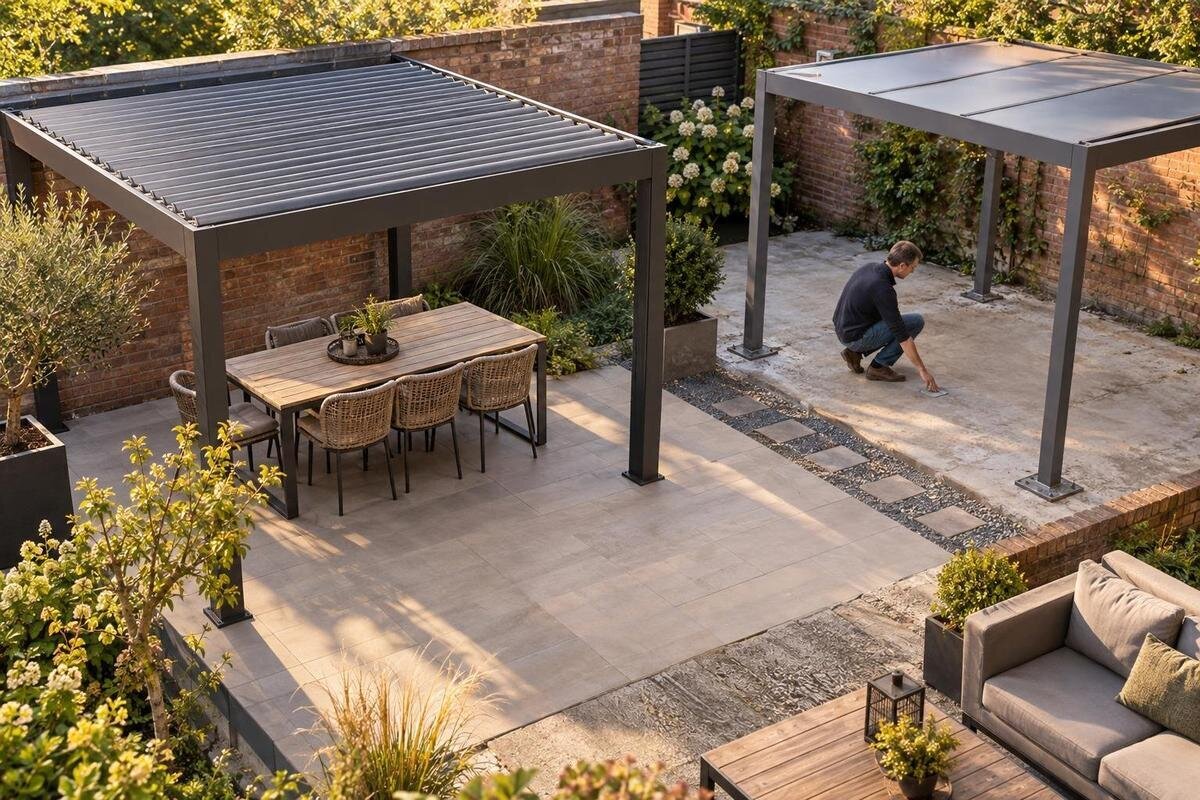
Replacing a pergola can look like a straightforward swap when the old footprint is still there. The foundations are a separate question: visible supports may be intact yet sit in different positions from the new frame or have fixings that do not match. Before you order, identify what is actually on site, compare measured positions with the new installation documents and get the condition assessed if anything is uncertain. The decision may be to reuse, alter or replace the foundations; the aim is to settle that before relying on them for a new pergola.

When can existing pergola foundations be reused?
Reusing the old supports is possible only if the replacement pergola’s installation requirements accept their position, form and condition. A model that looks similar, or fits within the same outline, may have different post centres, base plates or fixing points. Even a similar product name does not confirm a match if the version or installation plan differs. Treat the Bloomcabin pergola listing as a candidate to compare, not evidence that your foundations can be retained. The decisive information is the current installation documentation for the exact pergola you intend to order, matched against what is actually on site.
Think of the decision as three separate questions: are the supports in the right places, are they in suitable condition, and do the new installation requirements allow the type of support and fixing already there? A yes to one does not answer the others. If the product page does not give enough detail to compare the support arrangement, request the relevant information before committing. Until all three questions have an answer, record the foundations as unconfirmed rather than reusable. That avoids turning a visual resemblance into an assumption about installation. It also helps separate information supplied by the seller from findings that can only be made at the property. Keep a list of unanswered points, so they can be resolved before an order or installation date depends on them.
Identify the parts already in the ground
The word “foundation” can refer to several different parts of an old pergola setup. There may be a slab or separate supports, with anchor bolts, post bases or sleeves above them; some visible parts may belong to the patio rather than the pergola. Establish which components are intended to support the structure and which are simply surface finishes. A visible metal fitting does not show what lies below it. Begin with any old drawings, invoices or installer notes. Do not remove or disturb embedded components just to identify them; if their purpose is unclear, make a note of that uncertainty and seek an appropriate assessment.
Make a simple record of what you can see at ground level. Photograph each support, note its position, and record visible repairs, missing parts or changes since the old pergola was installed. Ask a previous owner or installer whether supports were moved or altered, if that information is available. A photo of the old structure alone can be misleading because its posts may have hidden the foundations. Keep pictures and notes together with the replacement pergola’s documents so that a supplier or installer can see what is known, and what still needs checking, before you place an order. Date the photographs and take wider views as well as close-ups, so the relationship between each support and the surrounding patio, wall or edge remains clear.
Measure the fixing points against the replacement plan
Measure the existing support positions, not just the outside dimensions of the old frame. Record the distance between fixing points, their offsets from a clear reference such as a wall or patio edge, and any differences in height that are visible. Mark each point on a simple sketch and label the measurements; a photograph with a tape measure can help explain the layout, but should not replace written figures. Keep the drawing orientation clear so that left and right are not accidentally reversed when comparing it with the new pergola’s plan.
Compare your sketch with the installation drawing for the exact model and version under consideration. Check that the number and position of the supports shown match what is on site, and note any differences rather than assuming they can be adjusted. A pergola’s overall width and depth do not tell you where its posts or fixings sit. If you are weighing up another Bloomcabin pergola listing, ask for the installation information for that particular item. Any unresolved difference is a point to discuss with the supplier or installer before purchase, not a measurement to work around by guesswork. Repeat key measurements if possible, particularly where a reference edge is uneven, concealed or difficult to reach. A second check can reveal a recording error before it shapes the buying decision.
Compare the new pergola’s fixing requirements
Look for the documented connection between the pergola and its supports: the location of the post bases, the fixing pattern and the kind of supporting surface the installation requires. Compare those details with the existing arrangement, including any plates or anchors that would remain in place. Do not assume that old holes, bolts or fittings will suit the replacement simply because the posts appear close to the same positions. Use the Bloomcabin pergola product page to identify a candidate, then request the current installation information needed to assess its requirements; the product name alone cannot confirm foundation compatibility.
A match in position is not the same as confirmation that the foundation is suitable. Its condition and the support it can provide are separate matters from whether the new fixing points line up. Do not enlarge, move or adapt fixings on the basis of a rough measurement or a photograph. If the documents do not clearly cover the existing type of support, ask the supplier what an installer needs to verify. Where suitability depends on details that cannot be assessed from the surface, arrange for a qualified professional to examine the site rather than trying to resolve structural questions yourself. This is especially important where previous alterations make it unclear whether visible fittings are original, later additions or simply remnants that will need removal.

Check whether a change of layout alters the supports
A replacement may use a different layout from the old pergola: the overall size may change, posts may move, or the new design may be intended to relate to a wall. Each change can affect which support points need checking. For a wall-related design, confirm from the actual installation documents which parts attach to the wall and what support is required at ground level. The name on the Bloomcabin wall-pergola listing is not enough to establish that arrangement. Ask for the plan for the specific item you are considering, and have both the proposed wall fixings and existing ground supports assessed where relevant.
Check how the proposed footprint sits in the space as well as whether the fixing points align. Note nearby doors, steps, drains, edges and other features that could affect where posts can go or how the area is used. A new frame that looks as though it fits within the old outline may still place a support in a different spot. If the pergola needs to move to avoid an obstruction, treat that as a new layout to assess, not as a minor adjustment to the old foundations. The site plan and installation drawing should describe the same arrangement before reuse is considered. Allow for access during installation too: stored items, planters or fixed outdoor furniture can hide relevant features or make it harder to inspect the existing support locations accurately.
Look for signs that need professional assessment
Before deciding, look for visible changes around the old supports: cracking, crumbling, movement, loose fixings, signs of repair or water collecting nearby. These observations are useful to report, but they do not diagnose the cause or establish whether a foundation is suitable. Some parts may be hidden, and an apparently tidy surface cannot confirm what is below it. Record what you see rather than deciding that a single mark makes reuse impossible—or that the absence of obvious damage makes reuse safe. If anything appears to have shifted or deteriorated, pause the decision and ask a suitable professional to assess it.
Give the person carrying out an assessment the replacement pergola’s current installation information, not only a picture of the old structure. If you are considering the other Bloomcabin pergola listing, include the documents for that exact candidate as well. Ask the professional to distinguish what can be concluded from a visual inspection from what would need further investigation, and whether the existing support positions match the proposed arrangement. This helps you understand the limits of the assessment without asking a retailer to judge buried foundations from photographs. It also makes clear which questions remain open before you order. Tell them about any past water pooling, repairs or changes to the patio surface, since these details may explain observations that are not apparent in a current photograph.
Give the supplier information they can use
A useful enquiry is more specific than asking whether an old foundation can be reused. When discussing this Bloomcabin pergola option, provide the exact product or version you are considering, a labelled sketch of the supports, measurements and clear photographs. Include any information you have about the old installation or repairs, while marking anything you cannot confirm. Ask for the current installation drawing and the details that show the required support positions and fixing arrangement. This lets the supplier respond to the proposed model rather than giving a general answer that may not apply to your site.
Ask the supplier to clarify what they can confirm from the documents and what needs an on-site assessment by an installer or other qualified professional. Check what parts and fixings are included, what is not included, and whether the installation requirements say anything about using existing supports. If the answer depends on a measurement, ask which measurement and reference points are relevant. Keep important replies in writing with the product documents. A clear record of the assumptions and limits is more useful than an informal assurance that the new pergola should fit. Avoid sending unlabelled images alone: linking each photograph to a point on your sketch makes the enquiry easier to interpret and reduces the risk of discussing the wrong support.
Compare the full cost of reuse and replacement
Reusing existing foundations may avoid some new ground preparation, but it is not automatically the cheaper option. Include any assessment, changes to the old supports, replacement fixings, removal of parts that cannot remain, and the installer’s work when comparing alternatives. Ask for separate estimates for reusing the supports, replacing them, or changing the pergola layout if those are realistic options. For a further Bloomcabin pergola listing, compare the cost only after you know what the installation arrangement requires; the listing itself does not establish the work your site will need.
Consider uncertainty as well as the quoted work. If the foundations cannot be assessed until a later stage, ask what could change the plan and when that would be discovered. Check the seller’s order terms and agree who is responsible for confirming site suitability before treating a purchase date as settled. An old foundation should not be counted as free simply because it is already there: inspection, adaptation or replacement may still be needed. Comparing complete options helps avoid choosing reuse just to preserve money or effort already spent on a previous installation. Set the alternatives out on the same basis, including preparation, removal and any work needed to leave the surrounding area usable after the old arrangement is changed.

When to pause before ordering
Pause if you cannot identify the existing supports, do not have measurements, or cannot obtain the installation information for the replacement pergola. The same applies if the measured points do not match the plan, the site has visible signs of movement or deterioration, or the person assessing it needs more information. None of these points alone dictates the final answer, but each leaves a question that should be resolved before you rely on reuse. You can continue comparing pergolas while that work is under way; avoid making the purchase depend on a foundation decision that has not yet been confirmed.
Take particular care when the proposed arrangement differs from the old one. A wall-pergola product page identifies a type of candidate to investigate, but its title does not establish which wall and ground fixings are required or whether existing supports can be retained. Ask for the actual installation plan and have relevant fixing points considered together. If the supplier’s information and the site assessment do not agree, seek clarification before proceeding. Do not try to bridge a gap between the two by altering the old supports yourself or asking the installer to rely on an unverified assumption. Waiting for clarification can be less disruptive than discovering, after delivery or removal of the old structure, that the proposed layout cannot use the available supports.
Record what the reuse decision covers
Once the measurements and assessment are complete, put the decision on a drawing or written site record. Identify which existing supports, if any, are accepted for the proposed pergola, which need work or replacement, and which remain uncertain. If only some can be retained, the final installation plan needs to account for every support point; do not assume that a mixture of old and new supports is acceptable without confirmation. This record prevents “reuse the foundations” from being treated as a general approval when the assessment may apply only to specific locations or conditions.
Keep the chosen product information, installation drawing, measured layout, professional advice and supplier replies together. Make sure they relate to the same model and version, and note any conditions or exclusions attached to the decision. If the product, position or site changes after the assessment, ask whether the conclusion still applies before ordering or arranging installation. With that record in hand, you can compare a reuse plan with replacement or a different layout on clear terms. The right answer is the one supported by both the site information and the new pergola’s documented requirements. It also gives everyone involved a shared reference if the installation is planned later, rather than relying on memories of an earlier discussion.
Frequently asked questions
Can I reuse the foundations if the replacement pergola is the same size?
Not on size alone. The post positions, base plates and specified fixings may differ even when the overall footprint is similar. Compare the new installation drawing with the measured foundations and have their condition assessed before treating them as reusable.
Can I use the old anchor bolts with the new pergola?
Do not assume so. Their positions, condition and compatibility with the new fixing arrangement need to be confirmed against the installation documents. Ask the supplier or installer what fixings the new pergola requires and whether the existing ones can be accepted.
What should I measure before ordering?
Record the position of every existing support, including distances between fixing points and offsets from nearby walls or edges. Compare these with the support positions on the drawing for the exact pergola you plan to buy. Overall pergola dimensions alone are not enough.
Can I tell from a visual inspection whether a foundation is sound?
No visual check can confirm every part of a foundation or what lies below the surface. Cracking, movement, loose fixings or crumbling are reasons to seek a professional assessment, but their absence does not prove that the foundation suits a replacement pergola.
Should I order the pergola before checking the foundations?
If reusing the foundations is important to your decision, establish compatibility first. Get the current installation information, record the existing layout and ask a suitable installer to assess any uncertainty. Also review the seller's order terms rather than assuming changes will be possible later.
Treat the old foundations as an unknown part of the project until their position, condition and compatibility have all been considered. A replacement may allow reuse, or the assessment may point to new supports or a different layout. What matters is that the decision matches the actual site and the installation requirements for the exact pergola being considered, rather than relying on its appearance or on the old frame’s footprint.
