
Choosing Pergola Furniture for Malta’s Climate
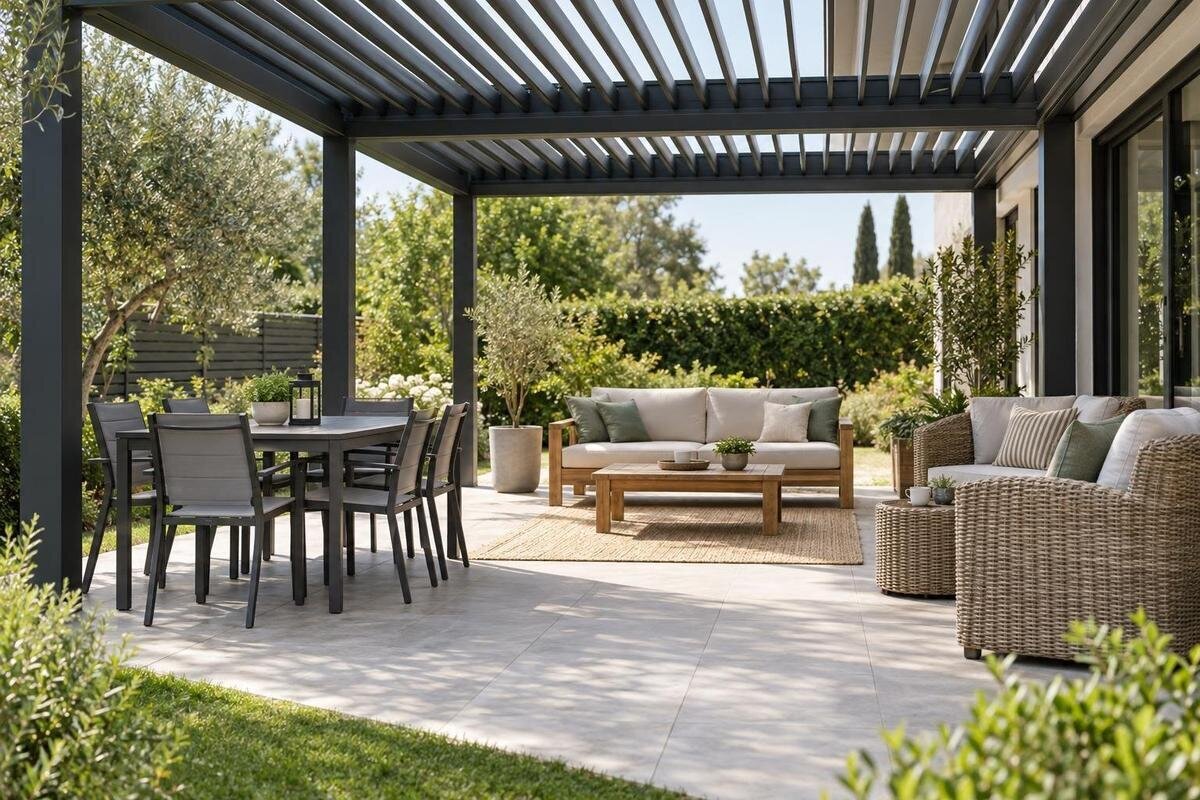
Pergola furniture for Malta
Choosing pergola furniture in Malta is less about finding a material that never needs care than matching the frame, finish and cushions to the sun, salt and moisture the terrace actually receives. Aluminium, wood and wicker can all suit outdoor living, but they age differently and fit different routines. Compare the complete set, including its fabrics, cleaning access and measured footprint, rather than relying on a material label alone.

Before you buy 1
How much shelter does a pergola give furniture?
Furniture under a pergola remains outdoor furniture. An overhead covering can reduce direct sun when its position and configuration block it, but open sides leave chairs and tables exposed to low-angle sunlight, breeze-driven rain and dust. Shade moves over the day, so a place that feels sheltered at lunchtime may be bright later. In Malta, strong sunshine can warm exposed seats and fade fabrics; at coastal sites, salt may settle on metal parts. Nearby walls and buildings can create extra patches of shade, but exposure may still differ from one end of the terrace to the other. Treat the pergola as partial shelter, not as an indoor room or a guarantee of weatherproofing.
Before comparing materials, note which surfaces receive direct sun at the hours you use the area, whether rain reaches the furniture and how close the site is to the sea. Check the intended furniture positions rather than judging the terrace as a whole: one chair may sit in shade while another is exposed. Decide whether pieces will stay outside or be moved, covered or stored. The Bloomcabin Pergola listing gives a stated area range from 9 to 24 m²; use this as the structure’s listed area, not as clear room for a table, chairs and passage. Put the exact configuration and furniture measurements on the same plan, including side tables or storage.
Aluminium furniture: finish, comfort and upkeep
Aluminium outdoor furniture often suits buyers who want a frame that is relatively straightforward to clean and move. Weight depends on the design and construction, so do not assume every aluminium chair is easy to lift; compare the individual pieces if they will be moved regularly for cleaning or storage. Aluminium does not produce the familiar red rust associated with ordinary steel, but outdoor performance still depends on the finish, joints and fasteners. Salt residue, scratches and trapped dirt can affect fittings or coatings over time, particularly where different materials meet.
For routine cleaning, follow the maker’s advice; mild soapy water and a soft cloth are often a sensible starting point, while abrasive pads or strong cleaners may damage a finish. Rinse compatible surfaces where the instructions allow and dry spots that are prone to marking. Also test comfort at the point of use. Metal in direct sun can feel hot, and a narrow edge or firm seat may call for a cushion. When considering the Bloomcabin Bioclimatic Pergola, plot the aluminium furniture in its intended position. Check which seats and armrests would receive direct sun during meals or other regular use, rather than assessing comfort from the frame material alone.
Before you buy 2
Wooden furniture and its care requirements
Wooden garden furniture varies by timber, joinery and finish, so the material name alone does not tell you how it will age. Different woods can respond differently to sunshine and moisture, and even pieces made from the same timber may need different care if one is finished and the other is bare. A surface may fade or weather to a softer grey tone; that change is not automatically a fault. Look for splits, loose joints, rough splinters or a lifted finish, which may indicate that the piece needs attention. Wood can feel less sharply hot than bare metal, but a dark or sunlit seat can still become warm.
Check the care instructions for the specific wood and finish before buying. Oil, stain, sealant and varnish are not interchangeable, and applying a new finish can change the look as well as future upkeep. Ask whether the item is meant to weather naturally or be treated, and which parts need attention, including the underside, end grain and feet. Allow furniture to dry after rain and avoid leaving its legs in standing water. Inspect screws, joints and slats as part of ordinary care. If the recommended routine involves sanding or recoating, consider whether you have a suitable place and time to do that work.
Natural and synthetic wicker need different care
Wicker describes a weaving method, not one material. Natural rattan or another plant-based weave is different from synthetic resin wicker, sometimes sold as synthetic rattan, and the two can respond differently to sun and moisture. Natural weave can be less forgiving of repeated direct exposure or damp; a synthetic weave sold for outdoor use may be easier to wash, but that does not mean it cannot fade or crack. Check the actual material and the maker’s instructions rather than inferring outdoor suitability from appearance. Ask whether the furniture should be covered, moved or allowed to dry in a particular way.
Inspect the frame as carefully as the visible strands. A woven seat may have metal supports, connectors and feet that encounter salt or puddled water. Look for secure ends, an even weave, comfortable seat edges and access for cleaning between strands. Brush away dust and use the maker’s recommended cleaner; aggressive pressure or solvents can damage some finishes. If you are considering the Bloomcabin Wall Pergola for seating beside the house, include space to pull woven furniture away from the wall. Check that you can reach the back, underside and feet for cleaning and inspection without having to dismantle the seating arrangement each time.

Before you buy 3
Outdoor cushions and upholstery need their own checks
The frame is only part of the comfort decision. Cushions and upholstery are the surfaces people touch most, and they can still receive sun, dust and moisture beneath a pergola. Look for clear care instructions for both fabric and filling, and distinguish water-repellent fabric from a waterproof cover. Wording about UV resistance is useful when the maker explains the intended outdoor use, but shade does not prevent all fading: open sides and reflected light can still expose fabric. Check whether covers can be removed, whether replacement covers are available and whether seams and fastenings will be practical to clean.
Try the cushion for firmness and fit. One that slides or overhangs the seat can feel awkward and collect dirt around the edges. Removable covers help with cleaning only if the filling can dry fully and the care label permits washing. Decide where cushions will go when not in use; a storage box takes up floor space and may need ventilation, while a cover should not trap damp fabric. When planning seating for the Bloomcabin Pergola, mark the cushion storage as well as the chairs and table. Check that you can open the storage box and carry cushions to it without moving the dining furniture or blocking a doorway.
Sun, salt, rain and wind affect the whole set
Sun exposure is often the most visible climate issue on a Maltese terrace. UV light can fade fabric and finishes, while direct heat can make a seat uncomfortable before the frame shows obvious wear. Light and dark colours may show dirt differently; neither removes the need for care. At a coastal site, salt deposits add another reason to inspect screws, joints and metal feet as well as the main frame. Rinse salt from compatible surfaces in line with the care instructions. How much shade reaches a particular seat depends on the exact covering, orientation and time of day, not on the furniture material.
Rain and humidity matter where water stays in seams, weave or cushions. Dry items before covering them and allow covered furniture to ventilate as the maker advises. Wind is another practical consideration: a light chair may be easy to move for cleaning, but that same low weight can be inconvenient on an exposed terrace. Ask whether each piece should be moved or stored in particular conditions; do not improvise a fixing to the pergola. If you are comparing the Bioclimatic Pergola listing, consider where movable furniture would go when it needs storing. A sheltered seating position and a practical storage location are separate considerations, so account for both when choosing the set.
Before you buy 4
Measure the furniture in use
Measure each piece as it will be used. Start with the maker’s stated width and depth, then allow for the movement needed to pull a chair back, sit down, recline or carry a tray. If a dining table has leaves, include its expanded size; if chairs have arms, measure across the outside of the arms. Mark the outlines on the terrace with tape and open any doors or gates that share the route. A plan with every chair tucked neatly under the table will not show the space needed when people are seated or getting up.
Mark the route people use to reach the seats and any narrow points created by the table, sofa or plant pots. Rather than relying on a generic gap, test the arrangement with the number of people and tasks that matter in your household. Allow room to move pieces when sweeping underneath them. If the furniture is beside a house wall, compare the layout with the exact structure plan: Bloomcabin Wall Pergola configurations are listed across 9 to 24 m², but the listed area does not show where clearances fall. Check the selected configuration before settling on furniture positions.
Match the furniture to how the terrace is used
Think about the activity that happens most often rather than buying a coordinated set by habit. A table used for meals needs enough top space for the usual place settings and chairs that are comfortable to pull in and out. A lounging arrangement prioritises seat depth, back support and room for side tables. Sit in the actual item if possible, since the frame material alone does not tell you whether the seat angle suits you. If the furniture will move between uses, check how easy each piece is to lift and where it can be put down without blocking the route.
Mixing materials can be practical: an aluminium dining frame may be easy to shift, while a wooden bench or woven chairs provide a different look and feel. The trade-off is mixed care, because surfaces, fasteners, cushions and feet may each need different attention. When comparing Bloomcabin Pergola options, draw the arrangement for your most frequent activity before adding occasional seating. Show where an extra chair would stand during a meal and where it would be kept afterwards. This helps you judge whether a mixed set genuinely supports everyday use or simply adds pieces that need cleaning, moving and storing.

Before you buy 5
Compare the complete maintenance routine
Compare the care you will realistically do, both during ordinary use and over time. Aluminium usually calls for surface cleaning and attention to the finish and fittings; timber can need more deliberate finish care; woven furniture has narrow gaps where dust collects, while cushions may need washing and drying. These are general patterns, not guarantees: construction, coating, weave, fabric and location all affect the work. A low-care frame may still come with cushions you do not want to leave outside, and an intricate weave may take longer to clean than a plain surface.
Ask for care information for every part of the set, including the underside, screws, feet, weave, fabric and filling. Check whether the instructions call for particular products, seasonal treatment or storage, and whether those jobs suit your routine. Do not rely on a broad label such as weather-resistant to answer every question. Alongside your comparison of Bioclimatic Pergola configurations, note the care tasks for each furniture option and where you would carry them out. Include access for cleaning underneath a table, space to dry cushions and somewhere suitable for any recommended timber treatment. Compare the complete workload, rather than choosing a frame that is easy to wipe while overlooking its upholstery.
Which material suits your terrace?
Aluminium may suit you if you prefer a relatively straightforward wipe-down routine and are prepared to check the finish, fittings and surface temperature. Wood may be a better match when its natural look and feel matter enough for you to follow the care instructions for its particular species and finish. Outdoor-rated synthetic wicker can suit a preference for woven texture, provided you confirm the actual resin, frame, exposure guidance and cleaning method. Natural wicker needs careful verification before it is left in an open outdoor setting. No material is automatically the best choice for every terrace.
Compare complete pieces rather than sample swatches or headline material names. Sit in the chair, feel the armrest and seat in the likely conditions, move it as you would for cleaning and inspect the joins, feet and cushion covers. Match the measured furniture footprint to the route and storage you need, then choose a finish and care routine you will maintain. That is a more dependable basis for a purchase than appearance alone, a broad weather-resistant label or the pergola’s total area.
Frequently asked questions
Which pergola furniture material is easiest to maintain?
Aluminium is often straightforward to clean, but its finish and fittings still need attention, especially where salt settles. Outdoor-rated synthetic weave can also be simple to wipe down. The exact construction and care instructions matter more than the material name alone.
Can natural wicker stay outdoors under a pergola?
Only if the maker says that particular weave is suitable for the conditions. A pergola may reduce some direct exposure, but open sides can still admit sun and rain. Check the material, care instructions and whether the furniture needs to be brought inside or covered.
Does a pergola keep furniture out of the sun?
Not necessarily. The amount of shade depends on the structure’s configuration, orientation and the sun’s position, while open sides leave furniture exposed to low-angle light. Check where the chairs and table will be at the times you use them.
Will aluminium furniture become hot in Malta’s sun?
A metal surface left in direct sun can feel hot, though colour, finish and shade affect how it feels. Try the actual chair in the intended position if possible, and consider the seat, armrests and whether you will use cushions.
How often should wooden garden furniture be treated?
There is no single interval for every type of wood and finish. Follow the maker’s care instructions and inspect the surface, joints and feet as the furniture is used. Ask whether the wood is meant to weather naturally or needs periodic treatment.
Good pergola furniture for Malta is not simply the set with the boldest weather claim; it is the one that stays comfortable and manageable in the conditions your terrace actually gets. Aluminium, wood and wicker each bring different care demands. A measured layout, clear instructions and a realistic place for cushions or stored pieces make the choice easier and keep it centred on how you use the space.
