
Greenhouse crop rotation: keep soil healthy
Soil memory / greenhouse file 32
Greenhouse crop rotation: keep soil healthy
A productive greenhouse bed never starts spring as a blank page. It retains root paths, nutrient removal, crop debris, moisture patterns, salt traces, pests and every soil improvement from earlier crops.
Crop rotation means reading those records before the next season begins. Under glass, where the same sunny bed may grow tomatoes, peppers, cucumbers and salads for years, that memory matters greatly.
The practical overview
Read the bed before planting again.
- What crop rotation can – and cannot – do
- Plant-family fingerprints
- Roots, residues and nutrient demand
- Build a four-year rotation ribbon
- Adaptations for two or three beds
- Pots, grow bags and mixed systems
- Green-manure windows, compost and recovery
- Soil tests, salts, hygiene and growing breaks
Why soil remembers
Every harvest leaves an instruction.
Tomatoes and peppers are both nightshades. Switching from one to the other may look like change, yet it continues the same family sequence for many shared risks. Cucumbers, melons and courgettes are related too; cabbage, rocket, radish and mustard form another family. These botanical links come first in planning because related crops often share site needs and susceptibilities.
But greenhouse rotation is more than keeping a family list. Fruiting crops occupy beds for a long time, demand water and nutrients heavily, and leave substantial root and stem residues. Quick salads often use only the upper soil briefly. Legumes can bind nitrogen through root nodules, but do not automatically provide all the nitrogen needed by a demanding following crop. Their real contribution depends on species, growth, root mass, residues, soil life, timing and later bed cultivation.
Treat the bed as a small, intensively tended landscape. Change crops to reduce repeated host pressure. Vary root depth and nutrient demand. Test soil before fertilising again and remove diseased residues. Plan living roots, short rests or fresh growing medium where space is tight. This keeps a greenhouse productive without treating soil as disposable.
Plant-family register
Change the relationship, not only the name.
These groups are practical greenhouse guides; they do not claim every crop within a family reacts identically. A specific diagnosis, local plant-protection advice, varietal resistance and the bed’s recorded history always take priority over a general scheme.
01Nightshades
02Cucurbits
03Brassicas
04Legumes
05Leaf crops
Nightshades. Tomato, pepper, chilli, aubergine and potato are related. Tomatoes after peppers are therefore not an effective family break. Where tomatoes have grown for years or a disease has been diagnosed, choose a clearly different crop group or move fruiting crops into carefully managed containers.
Cucurbits. Trained cucumbers, melons and courgettes can be highly productive under glass. Yet they make dense growth, need regular watering and leave much plant material. A following window with salads, beans, alliums or another suitable non-host crop changes roots, cropping time and care.
Brassicas. Cabbage, Asian salads, rocket, radishes, mustard and oilseed rape belong to the wider brassica family. These fast crops are useful but should be recorded together. Where brassica diseases or a brassica-heavy sequence are relevant, mustard is not a neutral green manure.
Legumes. Beans, peas, clover and vetch add diversity and may fix nitrogen through root nodules. How much becomes available later varies. Their place in the plan replaces neither a soil test nor a needs-based nutrient decision for the next crop.
Salads and short crops. Lettuce, lamb’s lettuce, spinach, chard, carrots and alliums create useful windows before or after long main crops. They are not automatically easy: clean seed, suitable spacing, even watering, drainage and hygiene still matter. Their strength is temporal and spatial flexibility.
Family is only the first filter. Root depth, nutrient demand, diseases, pests and whether a bed is occupied for weeks or seven months are separate planning decisions.
The rotation register
Plan a ribbon, not a rigid wheel.
A linear ribbon suits a greenhouse because permanent beds are real places, not abstract quarters. Give each zone its own row and move crop groups on each year. Add a brief salad or green-manure window when the calendar allows. Record actual crops, fertiliser, compost, symptoms and yield, not merely the intended category.
Bed
Year 1
Year 2
Year 3
Year 4
N
F
L
B
R
S
R
F
L
B
O
B
R
F
L
W
L
B
R
F
F – Fruiting-crop phase. Tomatoes or peppers represent long, nutrient-hungry main crops. Check the allocated bed before planting, inspect water distribution and do not carry earlier fertiliser applications into a new season without review.
L – Legume phase. Beans followed by an autumn crop alter rooting space, canopy density and occupancy. Remove problematic residues promptly. Regard nitrogen fixed by legumes as a possible contribution to check, not a complete fertilising programme.
B – Leaf phase. Salads, spinach, carrots or suitable brassicas offer a flexible seasonal window. With known brassica diseases, however, another non-host crop is wiser than blindly following a general rotation ribbon.
R – Recovery window. This can hold phacelia, a suitable grass mix, short salad sequences, alliums or a carefully selected non-host crop, matched to season, light and available time.
The ribbon is an example, not a mandatory order. Replace crops to suit Maltese conditions, available light and the season. Choose cover crops and sowing dates especially carefully after a specific plant disease.
Soil profile
0–5 cmResidues
5–25 cmRoots
25–45 cmTransition
BelowDrainage
Sequence of root depths
Healthy soil is not only fed; it is observed.
Shallow-rooted salads, medium-rooting beans and deeper fruiting crops explore a bed differently. This does not mean their roots work neatly separated layers or that one crop repairs every effect of the last. Different root architectures can diversify water uptake and biological activity, while a long run of the same crop often repeats pressure in the same soil zone.
At the surface: Watch for dry compost layers, spilled fertiliser, algae, white salt crusts, compacted mulch and harvest debris that should be removed. Surface signs are easy to spot but cannot alone provide a reliable diagnosis.
In the active root zone: Check old roots, planting holes and moisture along the irrigation line. Repeated fruiting crops can concentrate water and nutrient demand in the same narrow corridor for years.
At depth: Slow infiltration, compacted planting trenches, natural soil type or a hard layer all affect crops above. Rotation cannot compensate for an undiscovered drainage problem.
Walk the beds after clearing. Are old roots decomposing? Does water enter evenly? Is there a dry strip beyond the drip line? Such observations turn a calendar into real soil care.
Greenhouse note: Rain does not regularly flush covered soil. Intensively used greenhouse beds should therefore be tested repeatedly for pH, main nutrients and, where needed, salt loading. Compost adds valuable organic matter, but generous annual applications can accumulate nutrients and salts under glass, especially from heavily fertilised source materials.
Practical limits
When perfect rotation is impossible, create genuine breaks.
Case file A / fixed beds
Two soil beds
Move the main fruiting crop between beds, while also using Malta’s warmer and cooler growing periods deliberately. One bed may carry tomatoes during the main warm-season window; the other cucumbers, beans or peppers if family and disease history fit. In cooler periods, lamb’s lettuce, spinach, alliums or suitable cover crops provide a different use instead of leaving soil bare.
- Keep records for at least three to four years.
- Manage soil improvers for each bed using test results.
- Clean trellises, canes, clips and irrigation parts so crop history does not move with the plants.
Case file B / mobile containers
Grow bags and pots
Containers allow a clearer restart because rooting medium can be maintained or replaced separately. Grow tomatoes, peppers or cucumbers in adequately sized vessels and reserve permanent beds for salads, beans, herbs or cover crops. Fresh medium still does not replace hygiene: saucers, benches, tools, supports and drip lines must also be kept clean.
If medium is to be reused, check its structure, root debris and visible salt deposits. With suspected disease or heavy loading, separate treatment or replacement is sensible. Used soil should not become an undocumented bridge between crop groups and seasons.
Case file C / mixed system
Let the layout do some work.
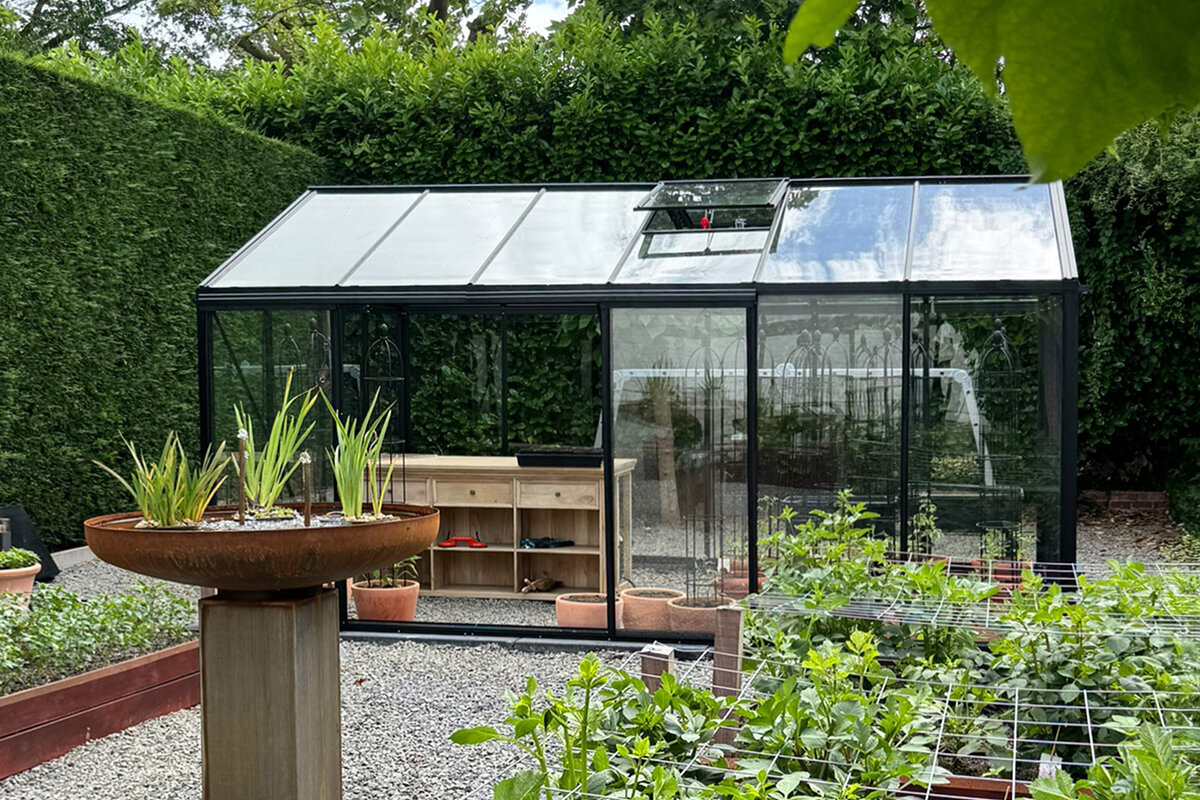
A long soil bed on one side, a propagation table and a row of large containers can work together calmly and productively. The Classic aluminium greenhouse provides room to plan fixed beds, paths and mobile crops as one system. Use that flexibility to separate repeated fruiting crops from permanent bed soil.
If you want to consider light, usable roof vents and deliberately divided zones from the outset, discover the Classic aluminium greenhouse.
Break transmission chains
Crop rotation works better when the greenhouse stays clean.
Some risks travel in plant debris, others on tools, supports, pots, moving water or soil. Their survival varies greatly by pathogen, host, climate, material and growing method, so general time promises would be unreliable. With recurring wilt, root rot or unexplained collapse, seek as accurate a diagnosis as possible from local plant-protection advice or an appropriate specialist before choosing the next crop.
For clearly structured growing zones over the long term, the Classic aluminium greenhouse offers a suitable foundation, particularly when tomatoes as a long summer crop are combined with mobile containers, paths and separate bed areas.
Harvest
Remove
Between
Clean
Planting
Pause
After harvest
Remove spent plants, fallen fruit and visibly diseased tissue consistently. Infected residues are not suitable mulch. Whether material belongs in well-managed compost, municipal green-waste collection or another disposal route depends on diagnosis and local guidance.
Between crops
Remove soil from hand tools and clean clips, canes, benches, trays and supports. Repair leaking lines. Ventilate after watering and, where the crop allows, avoid splashing and persistently wet leaves; both can encourage disease under glass.
Before planting
Choose a different plant family where possible and plant only robust, healthy young plants. Suitable resistant or grafted plants can help with certain problems, but replace neither diagnosis and hygiene nor good drainage or a genuine growing break.
A realistic protocol
Three greenhouse sizes, three honest plans.
Use the following sequences as planning help, not rules. Nightshade fruiting crops may mean tomato, pepper or aubergine; another family member must not simply count as crop change next year. Every plan needs room for Malta’s seasonal window, favourite crops and problems actually observed or diagnosed.
Before planting: Write three details in your soil notebook: What grew here? What problem occurred? Which botanical family comes next? This short habit prevents the common greenhouse-rotation mistake of relying on memory alone after a busy season.
| Greenhouse format | Simple sequence | What makes the plan effective |
|---|---|---|
| One bed plus containers | Bed: salads and radishes → beans or herbs → suitable cover crop. Containers: tomatoes or peppers in selectively renewed or carefully managed medium. | The regularly repeated nightshade crop stays out of permanent soil. Clean containers, saucers, supports and tools carefully between seasons. |
| Two fixed beds | Bed A: nightshade fruiting crop → salad or legume → cucurbit. Bed B follows later and receives a less intensive autumn or winter window. | Use preceding and following crops as genuine intervals. Avoid tomato after pepper and cucumber after melon in the same bed. |
| Three or four zones | Fruiting crop → leaf-root phase → legume → cucurbit or recovery window. Move each group one zone every year and record catch crops. | This arrangement offers the greatest scope for family breaks, varying roots and targeted soil care. Test beds separately where their use histories differ. |
When planning a new growing space, start with a structure that can be divided permanently: the Classic aluminium greenhouse and the Classic aluminium greenhouse create space to coordinate seasonal windows, paths, containers and fixed beds before the first planting.
Compost, cover crops and tests
Regenerate with measurements, not excess.
Compost can add organic matter, improve soil structure and support water retention. More compost is not, however, a reliable fertilising strategy under glass. Because rainwater does not leach soil as it does outdoors, salts and individual nutrients can accumulate more easily. Take representative samples from beds with different use histories. Useful results include pH, phosphorus, potassium and magnesium; intensive use may also call for professional assessment of salt level, nitrogen status and irrigation water.
Use findings to choose between mature compost, targeted fertiliser, a feeding break or other corrections. Incorporate suitable soil improvers in ways that suit the crop and soil rather than repeatedly laying down dry new layers. If salt readings are high, extra compost is not the solution. Seek test-led advice on the roles of fertiliser, source material, irrigation water and poor drainage.
Green manures regenerate meaningfully only when they fit the rotation. Grasses put roots into soil and can take up available nutrients; legumes can fix nitrogen; mixtures combine functions. Brassicas such as mustard or oilseed rape are unsuitable where cabbage diseases or a brassica-heavy sequence must be considered. Do not let cover crops set seed unchecked. Even a short period with living roots can be valuable in a home greenhouse, but sowing, water demand and termination deserve as much planning as a tomato crop.
Questions from practice
Frequently asked questions about crop rotation
How long should I wait before growing tomatoes in the same bed again?
There is no universal interval for every greenhouse. Where enough space exists, the same botanical family should preferably not return to the same bed for several seasons. A diagnosed disease may require a longer, precisely planned non-host break; containers can offer a clearer medium change. The deciding factors are plant family, actual disease picture, crop management and local professional advice, not a fixed number of years alone.
Can I alternate tomatoes and peppers?
Not as a family break. Tomatoes and peppers, like chillies and aubergines, are nightshades. They can share soil-borne risks and nutrient demands. If both are essential in a small greenhouse, move one crop into large pots or grow bags with managed medium and use the permanent bed for a clearly different plant family.
Do beans replace fertiliser for the following crop?
No. Beans and peas can fix nitrogen with root-nodule bacteria. How much becomes available to a later crop depends on plant growth, nodulation, roots, residues, soil life and timing. Use legumes as a valuable part of diversity and soil biology, but continue to determine the following crop’s needs through testing and observation.
Must all greenhouse soil be replaced every year?
Usually not. Permanent beds benefit from rotation, appropriate organic matter, good drainage, hygiene and recurring soil tests. Container medium is more likely to need replacement when it lacks structure, is saline, heavily rooted or suspected of disease. With a diagnosed soil-borne problem in a permanent bed, seek professional advice before major soil replacement, because causes such as irrigation or drainage may also need correction.
Which green manure suits a small greenhouse?
The choice depends on the free period and plant families planned afterwards. Phacelia or a suitable mix may work; grasses add roots, while legumes can fix nitrogen. Avoid brassicas such as mustard or oilseed rape as supposedly neutral breaks before a brassica-heavy sequence. Begin with a manageable window and sow only when the cover crop can grow sufficiently and be controlled before the next crop.
Sources and further reading
Develop your plan further.
These German specialist sources discuss crop rotation, compost, soil testing, salinity and crop hygiene. With suspected disease, a crop-specific diagnosis and locally suitable recommendations are especially important.
More from Bloomcabin: Setting up a greenhouse · Buying an aluminium greenhouse for years ahead · frequently asked questions about aluminium greenhouses
- LWG Bavaria – plan vegetable growing and crop rotation through the garden year
- North Rhine-Westphalia Chamber of Agriculture – plan vegetable-garden rotation properly
- German Environment Agency – garden sustainably with compost and compost soil
- German Environment Agency – nutrients and soil testing in the garden
- LWG Bavaria – symptoms on greenhouse vegetables
- North Rhine-Westphalia Chamber of Agriculture – greenhouse-soil salinity
Write the next season
Plan the next entry before clearing the bed.
A greenhouse rewards consistent care. Healthy soil requires recognising that continuity is not repetition. Keep records, vary pressures and give every bed a credible phase of recovery.
Classic aluminium greenhouse