
Hedges or Pergola Screens: Choosing Privacy for Your Space
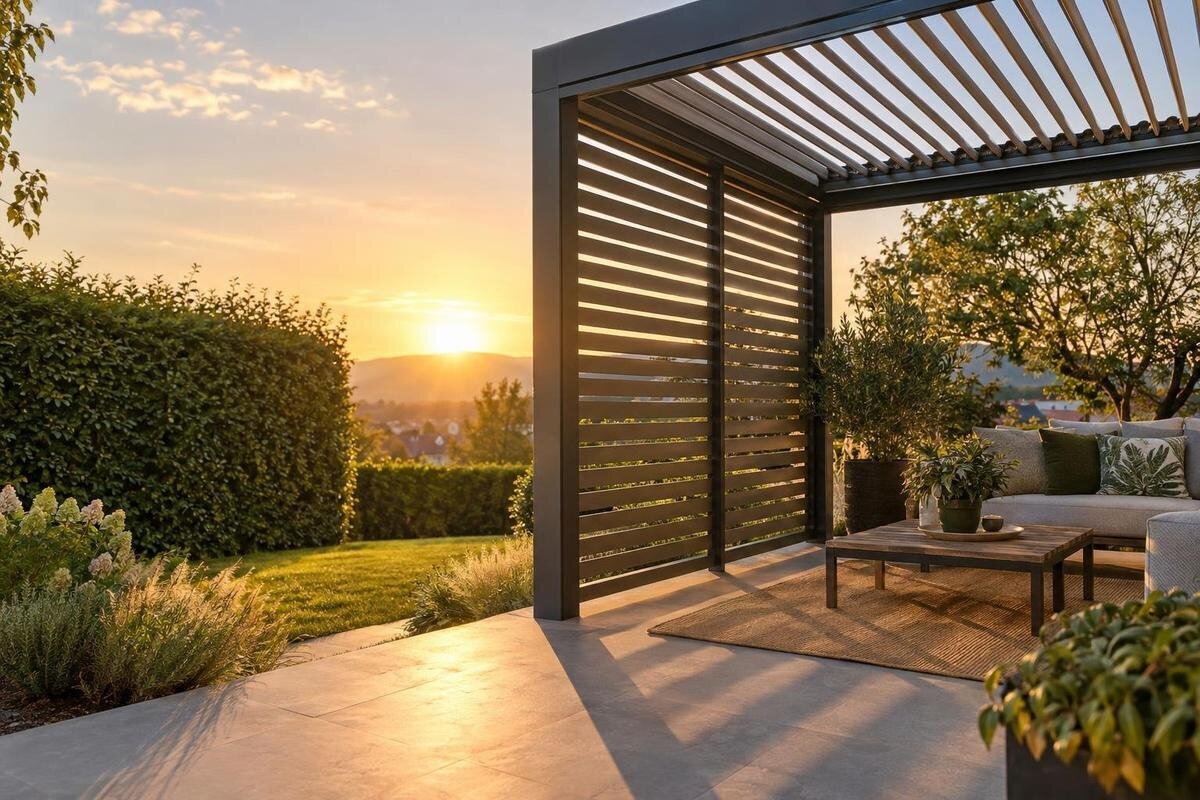
Garden privacy
Choosing between a hedge and a pergola screen is mainly a choice about timing, space and the coverage you need. A hedge becomes a living boundary but must grow into its intended shape and be maintained. A compatible pergola screen can provide coverage as soon as it is installed, but only across the area and sightlines it actually covers. Compare both on a site plan before committing to a planting strip or a side configuration.

Privacy planning checklist 1
Identify the views you want to screen
Privacy is not one all-round property of a terrace. A view from an entrance, a neighbouring garden, a balcony or an upper window comes from a different angle, so one barrier may solve one concern and leave another untouched. Note where the view begins and the part you want screened: a dining chair, a lounge seat, a door or a route across the patio. Mark those positions and draw arrows towards the observer. This simple sightline sketch can show whether you need a complete boundary or coverage on one pergola side.
Record when privacy matters and what you are doing at the time. A concern while seated at the table may involve a different sightline from one that arises when standing or walking. A higher viewpoint can also see over a barrier that appears sufficient at ground level. Describing the specific view is more useful than saying the whole garden feels exposed. A hedge may suit a long boundary, while a screen can be directed at one angle, provided its planned position actually interrupts that line of sight. Also note which views you want to keep open.
Allow room for a hedge to grow and be maintained
A hedge needs a strip of ground, suitable growing conditions and room for the chosen plants to reach their expected mature size. Use information about mature spread, spacing and height from a reliable nursery or plant label, rather than judging by the size of young plants at purchase. Keep access for routine care in the plan. Trimming can be awkward if the hedge is squeezed against a wall, fence or furniture, and the needs of roots and water vary by plant. If the planting is close to paving or another fixed feature, ask whether that position suits the species.
The planting strip takes up terrace space even before the hedge fills out. Measure it against the routes to doors, steps and seats, and avoid leaving a narrow gap that will be difficult to reach. On the plan, distinguish the edge of the bed from the expected outer edge of the mature foliage: they are not necessarily the same line. Planter boxes do not remove the space requirement either. Include their full width and access, and ask whether the chosen plants suit container growing. If a pergola is part of the same project, account for its area separately from the planting bed. The Bloomcabin Bioclimatic Pergola is listed for areas from 9 to 24 m²; that range does not include an allowance for a hedge. Showing both footprints on the same drawing helps you see how much usable terrace would remain rather than comparing the pergola area with the planting bed in isolation.
Privacy planning checklist 2
A hedge needs time to establish
Newly planted shrubs do not create an instant screen. The time needed depends on the species, the size of the plants when bought, their spacing, growing conditions, water and the way they are pruned. A general growth estimate cannot promise when a particular boundary will become dense. Ask a nursery familiar with the site about expected mature dimensions and seasonal coverage. Consider the gaps that will remain between plants at the outset, too; do not assume that neighbouring crowns will close evenly or at the same pace.
Seasonality matters as much as establishment. Some hedges retain foliage through the year, while others lose leaves or become less dense in particular seasons. The result depends on the actual species and conditions, so a living boundary may not give the same visual cover every month. If privacy is needed before the plants establish, decide whether temporary cover is acceptable and how it will fit into the layout. Choose a hedge for the mature form and seasonal behaviour you want, rather than relying only on a promise of quick growth.
Pergola screens provide immediate, localised coverage
A suitable pergola screen avoids the establishment period: once fitted, it can obstruct the intended view straight away. Its effect is local, however. A panel covers the part of the side on which it is installed; it does not automatically screen an open end, the opposite side or a view from above. Confirm whether the proposed screen is included, an optional accessory or a separate product. Ask about compatibility with the exact pergola model, since a product image does not establish what comes with a particular configuration.
Think about how the side is used before considering a fixed or adjustable arrangement. A fixed screen stays in its chosen position; a system that can open or retract, if available for the model, lets you vary how open the side is. Do not assume that every frame supports a particular mechanism. Check the space needed at the edges, whether access is affected and whether the covered area interrupts the intended sightline. For a wall-mounted layout, use the Bloomcabin Wall Pergola as the model reference when asking about supported side configurations. Describe whether you want the side screened throughout the day or only while the seating area is occupied. That distinction helps define what to ask about: permanent coverage, an opening arrangement, or simply a different screen position. Compare the proposed arrangement both in use and when the side is left open, rather than judging it only from a fully screened view.

Privacy planning checklist 3
Test the sightlines from more than one position
Trace the views that matter from the places where the terrace is used: seated at a table, standing beside the pergola, or approaching from a garden or entrance. Mark the height and direction of each view on a simple plan or side sketch. A barrier can look adequate when viewed square-on but leave a diagonal opening at its end. Include a raised balcony or upper window if it is part of the concern; a screen that blocks a ground-level view may not block a higher one.
Compare the screen’s proposed edges with the hedge’s expected mature outline. A screen has set edges once installed, while a hedge changes in width and density as it grows and is pruned. Use reliable mature dimensions for the selected plants and check the proposed screen dimensions with its supplier. A drawing or a safely placed temporary marker can help you assess the position before planting or installation. Check each end separately: extending coverage towards one corner may address a diagonal view without requiring a barrier along the whole boundary. Include any gaps you intend to leave for access, since those openings belong in the sightline assessment too. If you are considering the Bloomcabin Pergola, use that model name in your enquiry and show where the proposed screen would begin and end. The useful comparison is between the coverage of the two layouts, not simply their overall height.
Consider daylight, airflow and views as well as privacy
A privacy barrier can change how open the terrace feels. A dense hedge may reduce views and air movement across its boundary; an opaque screen may do the same on the side it covers, while a more open screen may leave some visibility. The effect depends on the plant’s density or the screen’s material and spacing. Do not assume that every screen provides a particular level of shade or airflow. Consider both the view you want to hide and the outlook or openness you want to retain.
Think about light at different times and about views from inside the home as well as from the patio. Covering one targeted side may preserve views through the others; a long hedge can change a broader edge of the garden. On your plan, distinguish an unwanted view into the seating area from a view out towards planting or an open part of the garden. They may cross the same boundary at different points, so they do not always require the same extent of screening. Compare the layout from the indoor seats you regularly use, rather than only from beside the pergola. When considering side options for the bioclimatic pergola from Bloomcabin, ask which configurations are approved for that exact model. A product photograph alone does not establish the screen material, its openness or whether it is included. Assess the proposed option rather than assuming all screens affect daylight and outlook in the same way.
Privacy planning checklist 4
Compare the upkeep each option requires
A hedge involves recurring care. Depending on the species and site, plants may need more attention while establishing, followed by watering, pruning, weeding or removal of cuttings. The chosen outline also affects the work: a hedge kept closely shaped may need a different routine from one allowed to grow more naturally. Plan access for tools and for carrying away garden waste, and consider who will do the work. If regular maintenance would be difficult, include that in the choice rather than treating the hedge as a one-off planting job.
A pergola screen avoids plant pruning but is not automatically maintenance-free. Cleaning methods, access to fixings and care for any moving parts depend on the screen and its instructions. A separate product may have different requirements from an approved accessory. Check the guidance before choosing a surface or mechanism, especially if the screen will be difficult to reach once the furniture is in place. For the wall-mounted pergola from Bloomcabin, ask about the care requirements of the compatible side option you are considering. Then compare the practical tasks with the hedge routine: what needs attention, how it is reached and whether furniture must be moved. Keep that comparison specific rather than labelling either choice simply as low-maintenance. The important question is whether you can comfortably carry out the expected work in the space available, not just whether one option involves plants and the other does not.
Compare the full cost and effort
Compare the complete scope rather than only the first purchase. For a hedge, an estimate may need to include plants, preparation of the bed, any watering provision, planting labour and future trimming or replacements; which items apply depends on the site. For a screen, ask for separate costs for the pergola, any compatible side accessory, fitting and later care. Ask explicitly whether the screen is included in the selected configuration or priced separately. Without the exact scope and measurements, there is no reliable like-for-like comparison.
Time and future changes matter as well. A hedge can be shaped by pruning, but moving it means dealing with established planting. A fixed screen may be removable or changeable only if its design and fixings allow it; an adjustable system may have different care needs. Treat these as questions to verify, not general promises. Request itemised proposals that describe the planting plan or screen configuration, then compare initial outlay, ongoing work, access and flexibility on the same basis. Use the Bloomcabin Pergola listing to identify the structure in an enquiry, not as a quote for an unlisted side accessory. Keep optional items separate in your comparison so that a basic pergola price is not set against the cost of a fully planted hedge. If one proposal includes fitting or preparation and another does not, note the difference before deciding which offers better value for your intended layout.

Privacy planning checklist 5
Plan around access and everyday use of the terrace
On a narrow terrace, the position of an obstruction can matter as much as its size. A hedge uses ground-level width and can narrow a passage or take room from a dining area. A screen sits on a selected side, but its particular design may also need space at its edges or fixings. Do not infer clearances from a catalogue photograph. Draw the pergola, furniture, door and main route in their actual positions, then reserve the proposed planting strip or screen space using verified measurements.
A mixed layout can work when each feature has a distinct job. A hedge might define the garden boundary where there is planting room, while a compatible pergola screen addresses a specific view beside the seating area. Putting both along the same short edge, however, can use space twice and make access harder. Label each feature’s purpose on the plan: boundary planting, coverage beside the table or screening from an entrance. If two features address exactly the same view, consider whether both are needed or whether one could be shorter. Also show where the hedge ends in relation to the screen, so the combination does not leave an overlooked gap. If planting and the pergola compete for room, weigh a green boundary against open floor space and privacy sooner. For a layout using the Bloomcabin Bioclimatic Pergola model, confirm the proposed side arrangement separately rather than assuming the combination shown on your plan is available.
Use a site plan to confirm the choice
Bring the decision together in a plan showing the source of each unwanted view, the seating and standing positions, the space reserved for planting and the routes that must remain clear. Note whether privacy is needed immediately or whether there is time for plants to establish. Record the seasons when coverage matters and how much maintenance you are prepared to undertake. Separate essential coverage from preferences: an exposed dining seat may be the main concern, while screening a less-used corner may be optional. Seeing sightlines, footprint and everyday access together makes a more useful comparison than choosing from a single image or a general claim about growth.
Before ordering plants, confirm their expected mature width, height and seasonal cover with a knowledgeable nursery or landscaper, and check that the planting position suits the ground and exposure. For a pergola screen, ask the supplier to identify the compatible side option for the exact model and say whether it is included or an additional item. If the frame under consideration is wall-mounted, use the Bloomcabin Wall Pergola model as the reference for that enquiry. Compare the confirmed proposal with your plan rather than assuming that a similarly sized option will cover the same view. The final choice should explain both what will be screened at the outset and what may change later. For a hedge, that means allowing for establishment and mature spread; for a screen, it means knowing the extent and position of the installed coverage.
Frequently asked questions
Which option gives privacy straight away?
A pergola screen can provide privacy as soon as a compatible screen is installed, but only across the part of the side it covers. A hedge needs time to establish and fill out, and the timing depends on the plants and site conditions.
Does a hedge need more space than a pergola screen?
A hedge needs a planting area, room for the plants to reach their expected mature size, and access for care. A screen uses space around the pergola side and its fixings, depending on the design. Compare actual measurements rather than assuming one option always takes less room.
Will a pergola screen block every view?
No. Its coverage depends on its position, height, width and the direction of the view. Gaps at the ends or a higher viewpoint may leave sightlines open. Sketch the views that matter and check them against the proposed screen position.
Can I use both a hedge and a pergola screen?
Yes, if there is room for both and each has a clear purpose. For example, planting might define a garden boundary while a compatible screen addresses a specific view beside the pergola. Check the screen’s compatibility and whether it is included or an additional option.
Will a hedge provide privacy throughout the year?
That depends on the species, its density and the conditions where it is planted. Some hedges retain foliage through the year; others provide less cover in certain seasons. Ask a knowledgeable nursery about the seasonal coverage of the particular plants you are considering.
The better choice depends on when privacy is needed, which side needs it, and how much ground and care you can give a living boundary. A hedge brings planting and seasonal variation into the garden; a compatible pergola screen offers quicker, more localised control once fitted. If both strengths matter, give each feature a clear role. A clear plan of the sightlines and a realistic allowance for upkeep are more useful than choosing by appearance alone.
