
Can You Add Screens or Lighting to a Pergola Later?
Pergola upgrades
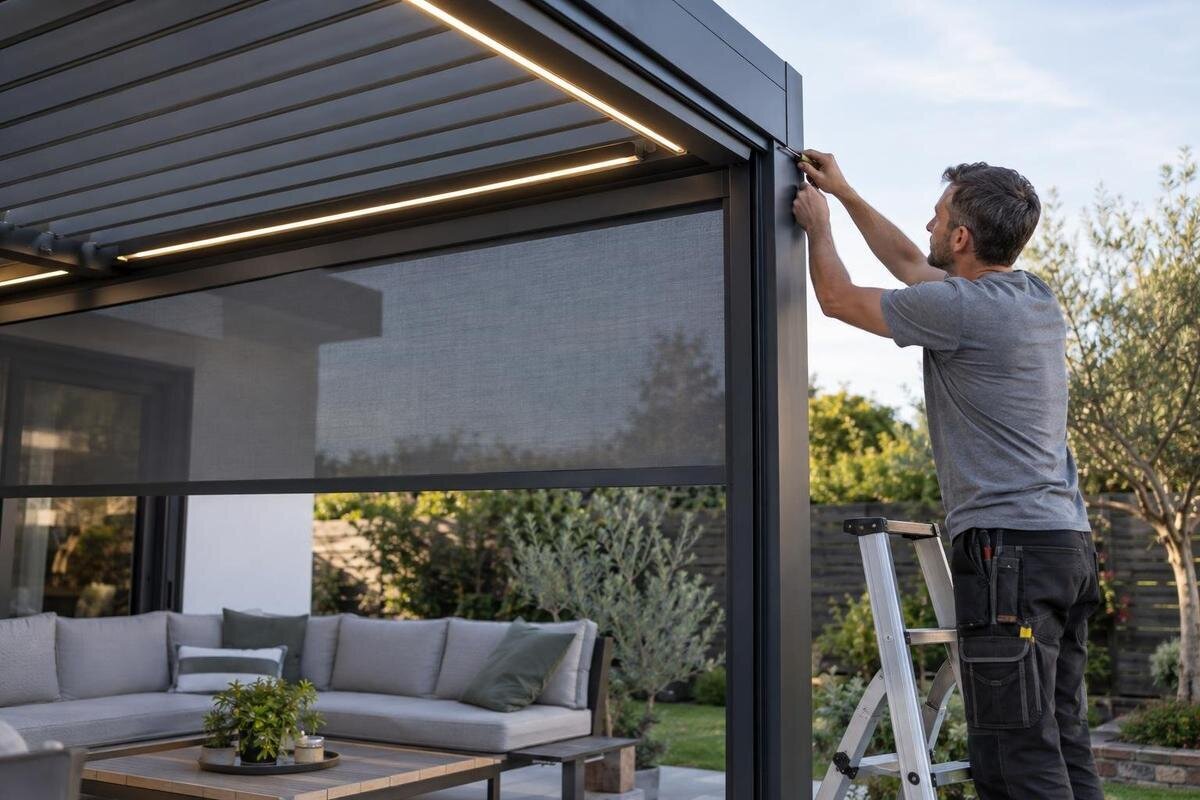
Adding side screens or lighting after a pergola is installed may be possible, but the frame’s appearance does not show whether either upgrade is supported. Screens need compatible fixing points and room to operate; lights need a suitable electrical arrangement and a serviceable cable route. The answer depends on the exact model and version, what was included originally and how the pergola was installed. Check those details before buying a kit or asking someone to drill or wire the frame.
Can screens or lighting be added later?
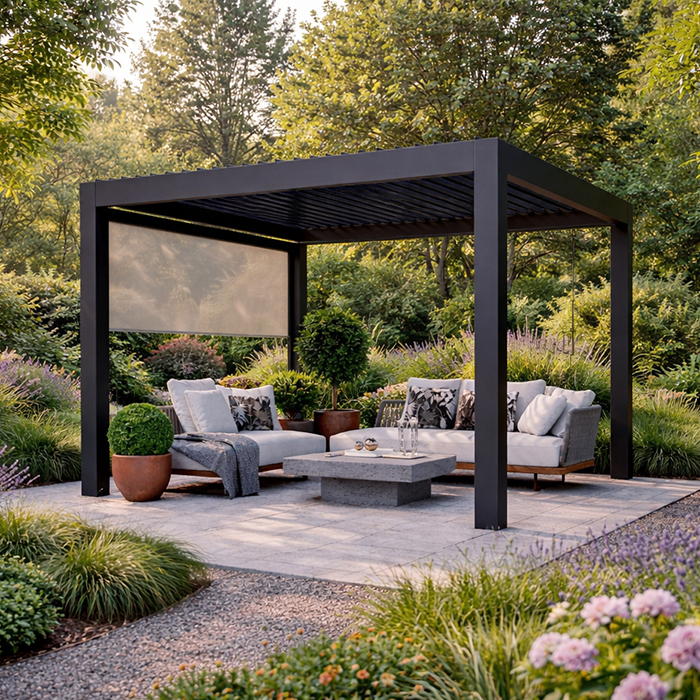
Sometimes, but there is no universal retrofit rule. A side screen and pergola lighting are separate compatibility questions: the screen needs suitable fixing points and clearance to operate, while lighting needs a compatible electrical arrangement and an approved cable route. Existing beams, grooves or spare-looking space do not prove that these provisions are present. The answer can differ by model version, original configuration and installation, even when two pergolas look alike. Ask about the exact screen, the exact lighting system and their combination; approval for one does not automatically cover the other.
If you are still choosing a structure, use the Bloomcabin Pergola product page to identify the regular range, then ask about any accessories you intend to add later. Separate essentials from optional additions: if a screen is central to how you plan to use the space, establish its compatibility before committing to the pergola. Ask what needs to be included in the original order and what can genuinely wait. For an existing installation, use its order record and matching documentation rather than the current catalogue alone. Your enquiry should distinguish between supplying an accessory and completing the work needed to fit it. Ask whether the proposed upgrade includes all necessary fittings, any changes to the existing arrangement and professional installation. This gives you a clearer basis for deciding whether to proceed now, postpone the upgrade or leave the pergola unchanged.
Identify the exact pergola version
Start with the paperwork rather than a guess based on appearance. Find the full product name, order confirmation, invoice, approximate installation date and any model or serial reference shown on the frame. Keep the matching manual, technical drawing, parts list and installer notes together. Record what was included originally and any later changes, such as replacement rails or added fittings. A broad product-family name or a photograph may not distinguish production versions, and an older drawing may not show a changed component. If an identifying label is present, photograph it in place; do not remove covers or dismantle parts to find one.
Write down which side needs a screen, the kind you want, the planned light locations and the position of existing controls or power supplies. Take an overall photograph and close-ups of the proposed fixing areas, the label and any existing cables or controls. Use consistent descriptions of each side so that the supplier can relate your photographs to your sketch; for example, identify the side facing the house rather than simply calling it the front. Include relevant manual pages if they are legible, and note who installed or altered the pergola. The Bloomcabin Bioclimatic Pergola listing can help you state the product family correctly, but it cannot identify the version of your installed unit. If the name on an invoice differs from a label or manual, include both references and flag the discrepancy rather than choosing whichever seems closest.
Check the screen type, fixings and clearances
Be specific about what you mean by a screen. Mesh, shade fabric and opaque privacy screens can differ in their attachment and the space they occupy; fixed and retractable systems also have different clearance needs. Tell the supplier which side or sides you want to cover, the approximate opening and whether the screen needs to move out of the way. Ask which reference points to measure and how to take those measurements. A rough opening size helps describe the job, but it does not establish that the pergola has the matching channels, brackets or screen mechanism.
Check where the screen’s guides and fittings would sit in relation to doors, handles, existing lights, walls, furniture and planters. Consider both the space occupied when the screen is in use and where its components sit when it is retracted or stored. Ask how much clearance the proposed mechanism requires in each position. On your sketch, show door-opening directions and the routes people use to move between the house, seating and garden. A screen may fit an opening on paper yet obstruct a door or control in practice. If your records identify the Bloomcabin Wall Pergola entry, include that exact name in your enquiry; being wall-mounted does not itself establish screen compatibility. Resolve any conflict before ordering, and distinguish movable obstacles, such as furniture, from fixed features that the proposed screen must accommodate.
Confirm the frame can support the proposed screen
A suitable fixing needs more than an available-looking surface. Ask which part of the pergola is designed to receive the screen brackets, whether the original version has the required provision and whether extra supports or a separate frame are needed. The fixing position matters because it determines where forces are transferred; visible trim or a groove should not be treated as an anchor point unless the documentation says it is one. A deployed screen can also change the forces acting on a structure, so ask whether the proposed configuration is suitable for the frame and its anchorage.
Find out whether fitting the screen requires drilling, removing covers or changing an existing component, and who is qualified to carry out that work. Do not drill into a post or beam based on appearance or a measurement from another model. If you are comparing a replacement with a retrofit, the regular Bloomcabin Pergola listing identifies a product family, not the structural provision of an older installed unit. Ask for model-specific documentation or a professional assessment where fixing or support requirements are unclear. The proposed work should distinguish between fittings supplied with the screen and any additional supports or alterations needed for your installation. Ask who will assess those requirements and whether they are included in the quotation. This helps you compare complete proposals rather than treating the accessory price as the cost of the whole upgrade.
Check the lighting system before buying fittings
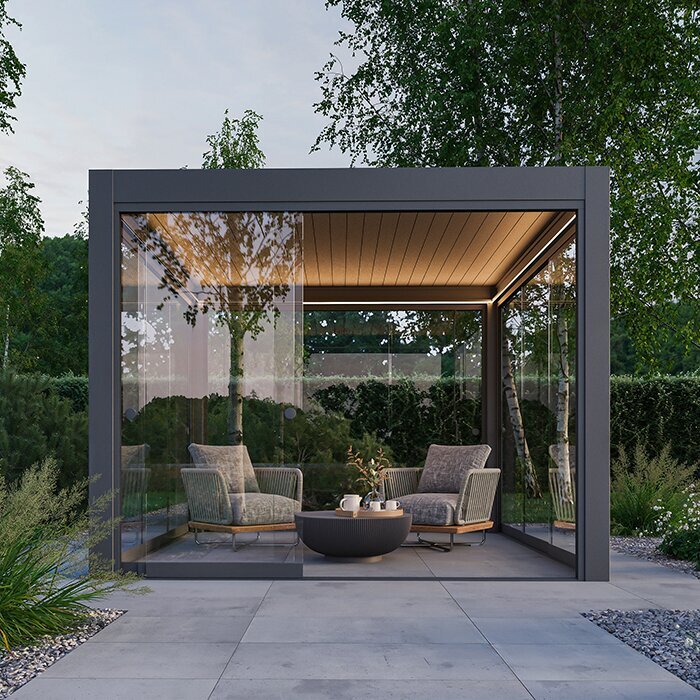
Treat lighting as a system, not simply a lamp attached to a beam. Identify the type and location of the lights you want, then ask whether a compatible kit is specified for the exact pergola model and version. Check what power supply and controls it needs, how the components connect and whether they are suitable for their intended positions. A nearby socket or spare switch does not show that the pergola’s wiring, connections or controls are suitable. Have a qualified electrician assess the proposed system and installation before you buy or fit electrical components.
Ask whether the lighting kit is intended for your installed unit, whether additional equipment or controls are required, and whether it can work with controls already in place. Explain how you want to use the lighting: illuminating a table and providing light along an access route are different requests. State where you want to operate it and whether retaining an existing control is important. Ask which of those preferences the proposed system can accommodate rather than assuming a particular function is included. If any part of the pergola moves or adjusts, the route and fittings must be approved for that arrangement; a cable cannot simply be placed out of sight. Use the Bloomcabin Bioclimatic Pergola page to identify the product family in your enquiry, then have the proposed equipment and control arrangement checked against your installation.
Plan the cable route and controls with a professional
Map the proposed lighting locations, power supply and controls before discussing installation. A simple sketch of the pergola, nearby wall, existing controls and intended light positions helps explain what you want, without deciding how the wiring should be installed. Ask where a documented cable route is available, how the arrangement will remain accessible for service and whether it conflicts with fixings or any moving parts. A concealed route may look neater, but hiding wiring inside a post or beam can interfere with other components or make it harder to inspect.
Do not drill, chase or feed cable into the frame yourself. Ask the supplier or installer for the approved routing information and have a qualified electrician assess the proposed work. For a wall-mounted model, a wall connection does not by itself establish a suitable route into the pergola. The Bloomcabin Wall Pergola product page identifies the product family; the route for your unit needs to be established from the installation documents and professional assessment. Explain whether visible cables would affect your choice, but leave the routing method to the professionals. Ask which areas need to remain accessible and whether reaching them later would require removing a screen or another fitting. Also clarify what access the installer needs around the pergola so that furniture and other movable items can be cleared without dismantling anything yourself.
Check screens and lights as a combined upgrade
If you want both upgrades, ask about the combined layout rather than checking each accessory in isolation. A screen may alter the daylight beneath the pergola or block light from a nearby fitting; its housing or guide could also overlap a fitting or control. Conversely, a light fitting or cable might interfere with the screen’s movement or attachment. Note which areas you want lit, when you expect to use them and which side the screen will cover. A simple sketch can show the proposed positions more clearly than a general request for “screens and lights”.
Confirm that the proposed screen and lighting components can be fitted and used together, and ask about the installation order and access for future servicing. If the work will be done in stages, show both upgrades on the same plan even if you are ordering only one initially. Ask whether the first installation would need to be altered when the second accessory is added, and whether any shared space is needed for their fittings or controls. If replacing the pergola is also under consideration, the Bloomcabin Pergola sizes from 9 to 24 m² provide a starting point for comparing the listed range, not evidence that your existing accessories can transfer to a new frame. Keep the comparison practical: weigh the complete proposed arrangement against a retrofit, including the work needed for each, rather than comparing accessory prices alone.
Review the existing installation and the space around it
Before requesting a quote, note the visible condition of the pergola from a safe position. Look for signs such as movement, distortion, damaged or missing parts, previous drilled holes, altered cables or repairs, and photograph what you can see. These observations do not establish structural or electrical condition, but they can help a service professional decide what information is needed. If there is visible movement or damage, pause the upgrade and have the structure assessed before adding components. Do not remove covers or climb onto the structure to improve your photographs.
Also consider how the proposed screen will affect access to doors, paths, controls and the areas you use beneath the pergola. Mark nearby walls, furniture, planters and existing fittings on a simple plan, and note where a screen would sit and where light is wanted. These details help identify practical conflicts early; they do not replace the product’s fitting requirements. If the proposed layout would obstruct access or make controls awkward to reach, resolve that with the supplier before settling on a screen position or lighting arrangement.

Check whether matching parts are still available
An accessory for an older pergola may have been discontinued, revised or replaced by a different part. Similar-looking components and newer kits are not automatically compatible: their brackets, channels, controls or connection points may differ. Ask whether the exact screen or lighting system is available for your model and version. If it is not, ask whether there is a documented successor and whether it is approved for the frame you have. Avoid assuming that a generic accessory or a part for another pergola will fit safely or work as intended.
When you make an enquiry, ask which component is no longer supplied, whether a replacement has a specific identifier, and whether the alternative needs extra fittings or changes to the installation. Clarify whether the proposal replaces one component or the complete screen or lighting assembly; those are different scopes of work. Ask for an itemised description so that brackets, controls and other required parts are not left as assumptions. Request the relevant documentation and requirements for professional installation before agreeing to the work. The Bloomcabin Bioclimatic Pergola product family can help identify the range, but its current page does not establish accessory availability for an older version. Keep any replacement identifiers with your original records, along with a note of what was changed, so a later enquiry does not rely on the original parts list alone.
Send a model-specific upgrade enquiry
Make the enquiry precise enough for someone to check the actual installation. Include the product name, order or model reference, approximate installation date, relevant manual pages, photographs and any known modifications. Describe the screen type and the side or sides you want to cover; for lighting, give the intended locations and say whether you want new controls or to use existing ones. If you are considering both, state that clearly. Share measurements only when requested or when you can take them safely, using the reference points supplied by the manufacturer or installer.
Ask for a clear response on compatibility for that exact version, required fixing or structural provision, the electrical system and cable route, and whether matching parts are available. Request the applicable instructions and confirmation of who should carry out structural or electrical work. You can also ask whether the proposed modification affects any relevant service or warranty terms. If the reply only says that the kit “should fit” without identifying your model or version, ask for clarification before ordering. Keep the response with the pergola’s original records.
Frequently asked questions
Can a screen kit from another pergola be used if the opening is the right size?
Not on size alone. The fixing method, frame provision, clearances and approved operating conditions also need to match. Ask for confirmation for your exact model and version before buying a kit.
Does a nearby outdoor socket mean I can add pergola lights?
No. A nearby socket does not confirm that a light kit, its controls or its proposed cable route are suitable for the pergola. Have a qualified electrician assess the proposed system and installation.
Can I drill the frame to fit a screen or hide lighting cables?
Do not drill or conceal cables based on appearance alone. Check the exact installation documents and obtain approval for the proposed work; ask a qualified professional to assess structural or electrical work.
Should I order screens and lights separately?
Only after checking that the proposed systems can be used together. Their fixings, movement, cable route, controls and access for servicing may interact, so ask about the combined arrangement.
What if the original accessory has been discontinued?
Ask whether there is a documented, compatible replacement for your exact pergola version. A newer or similar-looking part is not automatically suitable; avoid buying a generic substitute without confirmation.
Treat a later screen or lighting installation as a compatibility check, not a straightforward accessory purchase. Identify the pergola, confirm the mounting and structural requirements, review the electrical proposal with a qualified professional, and check that matching parts are still available. If those details cannot be confirmed for your exact version, pause before adapting the frame. A verified retrofit—or the decision to leave the pergola unchanged—is a better outcome than fitting a component that does not belong there.
