
Night-Time Pergola Privacy: How Lighting Changes Visibility
Pergola privacy guide
A pergola that feels sheltered in daylight can become more exposed after sunset. The key difference is not simply whether a side is fabric or glass: it is the contrast between inside and outside, the direction of each sightline and where the lights fall. To assess evening privacy, check the seats and viewpoints that matter, use the lighting you expect to keep on, and compare a realistic sample or confirmed side configuration rather than relying on a daytime impression.

Why night-time pergola privacy changes
Daylight can mask a weak privacy boundary because the terrace, garden and nearby buildings are all visible. After sunset, a lit room or pergola may be much brighter than its surroundings. That contrast changes what an observer can pick out through a fine-weave screen or clear pane: movement and outlines may stand out even when details are difficult to distinguish. The eye also adjusts to its own surroundings, so someone sitting inside may see the garden poorly while a person outside sees the lit seating area clearly. People may be easiest to notice as they move into or out of the lit area. A daytime impression, or a quick look at dusk, is therefore not a reliable night-time test.
Think of privacy as a relationship between a viewpoint, a line of sight, a surface and the light on both sides, rather than as a fixed property of fabric or glass. Distance and angle matter: an oblique view can differ from a direct one, while a light behind a person can reveal a silhouette. An opaque barrier blocks a straight view only where it covers; its edges and any entrance can still expose the seating area. If the Bloomcabin Pergola is on your shortlist, use those sightlines to identify which sides you would want to screen before discussing the available configurations.
Map the sightlines around the terrace
Draw the seating area and mark the places from which someone could look in: the house, neighbouring windows or balconies, a shared or public path, a driveway and the garden entrance. Include elevated viewpoints where they are visible; a screen that blocks a view from someone standing at ground level may not conceal a seat from a person looking down from a window. You do not need to guess how often a neighbour uses a room. The useful question is whether the sightline exists during the hours you plan to sit outside, and which part of the pergola falls within it.
Repeat the exercise from inside the house, looking out through doors or windows towards the seating. Privacy works in both directions: a clear line through a glazed side may expose people outside to someone indoors, while reflections can make it hard for the person inside to judge what is visible beyond. Mark the seat, standing position, posts, entrance and any proposed side panel on a simple sketch. When considering the Bloomcabin Wall Pergola, use this sketch to explain which views you want to preserve from the house and which you want to interrupt. Keep these separate from views into the terrace from neighbouring properties.
Test visibility under the lights you actually use
Carry out the first check after sunset, when the terrace is in its normal evening state. Switch on the lights usually used in the pergola, the adjoining room and the approach to the house; leave curtains or doors as they would normally be. Test more than one combination if those lights are often used separately. A view assessed in twilight can be misleading because the outside may still be bright, and a room that is dim during a quick inspection may be brightly lit later. Include ordinary activities such as entering, serving food or getting up from the table: movement can attract attention even where faces are not clear.
Look from each relevant viewpoint, not only from your preferred chair. Note what an observer can distinguish: a moving shape, a seated outline, a face or objects on the table. Ask a trusted helper to stand on your own property or at an appropriate public viewpoint; do not treat a phone image as a substitute for direct observation, since its exposure may brighten or darken the scene. Repeat with pergola lights on and off and with the adjoining room in its usual state. If you are considering the Bloomcabin Bioclimatic Pergola, these observations give you a clearer brief for discussing side treatments than a general request for more privacy.
How fabric screens behave after dark
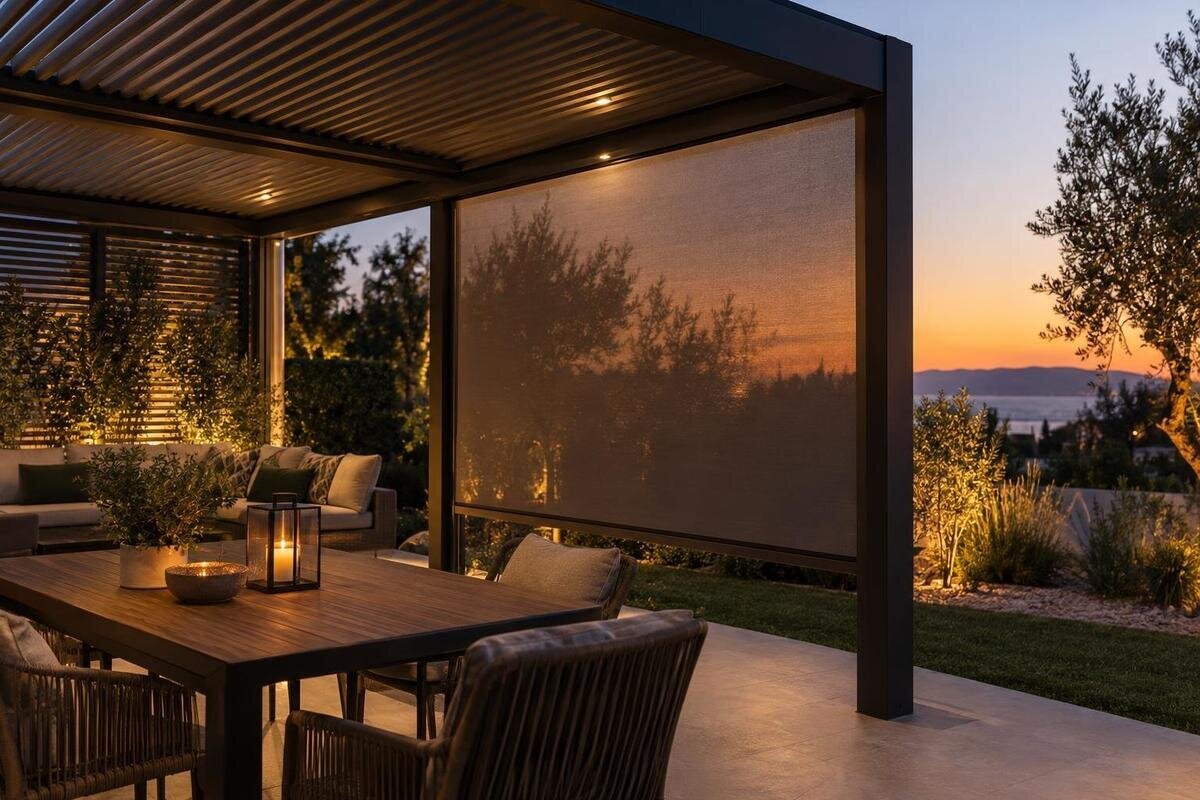
Fabric can range from open mesh that preserves a view to a tightly woven or opaque panel that blocks a more direct view. A screen described or chosen for shade is not automatically a night-time privacy screen: weave openings, seams, gaps at the edge and the viewing angle all count. Colour alone is a poor guide. What matters is whether a person or object remains visible through the material under the expected light, and whether the panel also interrupts the view from the direction you care about. A sheer fabric may soften a view without concealing movement, while light from behind it can make outlines more noticeable.
Use the largest representative sample you can, held at the proposed height and position; a small swatch cannot show how a full side interrupts sightlines or how its edges meet a post. Check from both sides after dark, with interior and pergola lights in their usual settings. Look for visible faces, moving shadows and gaps around the panel, not just whether the fabric looks dense when held close. If the sample is lit from one side, note whether it glows or outlines people behind it. Before selecting an accessory, confirm the compatible options for the regular Bloomcabin Pergola model; a fabric sample by itself says nothing about fit.

Clear, frosted and patterned glazing at night
Ordinary clear glazing should be treated as a view-through surface, not an opaque privacy screen. At night, a brightly lit interior may be plainly visible from a darker garden or neighbouring viewpoint. A reflective appearance in daylight does not guarantee privacy after dark, because the balance of light can change and reflections vary with angle. From inside, reflections of lamps or the room can make it difficult to see outside; that does not mean the pane is equally difficult to see through from the other direction. Check the actual view from the outside as well as from the seating area.
Obscured, patterned or frosted glazing can reduce detail, but it may still show silhouettes or movement when a person stands close to it or is backlit. The effect depends on the particular pattern and lighting, so judge the proposed pane or a representative sample rather than assume all obscured glass behaves alike. Curtains, blinds or other coverings may be a separate way to add privacy if they suit the layout; do not assume they are included with a pergola. When enquiring about the Bloomcabin Bioclimatic Pergola model, explain whether your priority is concealing detail, reducing visible silhouettes or retaining an outward view, then ask which compatible options are available.
How light placement affects silhouettes
Look at where the light falls in relation to a person and the screen. A lamp behind someone from the outside viewer's perspective can make their outline stand out against a bright room or panel. A lamp aimed directly at fabric or glass may create a luminous patch or glare; neither effect is the same as concealing the people in front of it. Changing a seating position, shielding a source from the viewing axis or using softer, indirect light can alter the view. The right arrangement is one that remains comfortable and usable for the household, rather than a privacy test that depends on keeping the space unusually dark.
Check the house as well as the pergola: light spilling through a large window may reveal people outdoors, while a bright window behind the seating can make terrace users conspicuous. If the room has curtains or blinds, test them in the state you would realistically use; an arrangement that depends on closing every curtain may not suit a home where people move between inside and outside. Also look for glare in seated users' eyes and reflections in any glazing. For a Bloomcabin Wall Pergola layout, include the adjoining room in your lighting assessment rather than treating the outdoor seating as an isolated space.
Which pergola sides need screening?
Privacy often depends on one or two exposed directions rather than every side. A panel across the line from a footpath may address that particular view while leaving the garden open, but a diagonal look from a neighbouring balcony could still reach the seating. Mark each line separately and note whether it passes through an open end, a side gap or the panel itself. A pergola roof should not be counted as a side screen: it may cover the space above, but it does not remove a horizontal or elevated view through an open edge. Plan for real observer positions, not just a straight-on product view.
Then compare privacy with how people use the space. A fully enclosed feeling may not be wanted during the day, while a fixed screen may narrow a view that matters from the table. If a treatment opens or closes, the privacy result depends on the position in which it is actually used; consider who will operate it and whether the relevant opening is left uncovered when people enter. Keep access routes and the usual seating arrangement on the sketch. When discussing side options for the regular Bloomcabin Pergola model, distinguish the sides that need screening throughout the evening from those where an open view is more important.
Check side-panel compatibility before choosing
A product name or illustration does not establish that a particular fabric screen, curtain or glazed panel is supplied with a pergola or approved for it. Ask for the exact model and side configuration, and separate items that are included from optional accessories or products that need independent checking. Confirm whether the privacy treatment is compatible with the side you have marked and whether it covers the required area, including any entrance. If a proposed accessory is not a verified fit, do not base the design on it until the supplier confirms the pairing. The Bloomcabin Bioclimatic Pergola product page identifies the product for a model-specific discussion, but does not itself verify an accessory.
Give the supplier a sketch showing seats, doors, house windows, visible sightlines, planned lights and the side you hope to screen. Ask what drawing or configuration information can confirm the compatible arrangement, and whether open gaps or different operating positions change the view. If privacy depends on a particular fabric density or type of glazing, request that precise description rather than relying on a broad label such as screen or glass. Keep third-party products separate from the pergola specification; their presence in a photo or beside a model does not show they are included. This makes it easier to compare options against the conditions you will face after dark.

Account for dusk, darkness and normal use
Evening conditions are not identical from one day to the next. A screen's apparent opacity at dusk may differ from its appearance after full dark, when lights from the house, garden or nearby properties create a different contrast. The seating area may also be used differently at dinner, when guests move around or when doors stay open. Include these ordinary changes in your assessment rather than judging only a quiet moment with one lamp on. This does not require predicting a neighbour's routine; it means identifying the times and conditions that form part of your own use, including the brightest indoor setting you normally use.
Decide what level of visibility is acceptable during each activity. You may be comfortable with movement being visible while people enter or leave, yet want faces and table activity concealed during a meal. Someone using the adjoining room may also want to retain a garden view rather than keep the curtains closed throughout the evening. Discuss these preferences within the household before choosing a treatment. A movable screen requires people to put it in the intended position, whereas a fixed treatment remains in place when you want an open outlook. The useful comparison is between arrangements you would actually live with, not between their most private possible settings.
Compare night-time privacy test results
Bring your observations together in a simple comparison, with one entry for each material and lighting arrangement you assessed. Record the viewpoint, whether the person was seated or standing, which lights were on and what the observer could distinguish. Separate movement, silhouettes, faces and table activity rather than giving every result a single label such as private. Include any exposed entrance or edge: a panel may conceal its centre well while leaving a clear view beside it. If you could not assess an important viewpoint safely or appropriately, mark it as untested rather than assuming the result matches a nearby position.
Compare the options under matching conditions wherever possible. A sample seen with a dim room behind it is not a fair comparison with another assessed against bright indoor lighting. Record what each option does to the outward garden view and whether reflections affect people seated inside. Keep the exact fabric or glazing description with the results so that a favourable impression is not later attributed to a different material. Your shortlist should reflect both the privacy achieved and the conditions needed to achieve it. Retain the notes as a useful reference if furniture or lights move, since those changes may alter the sightlines you originally assessed.
Frequently asked questions
Why can a pergola feel less private after dark?
The light balance can change: a bright room or pergola may be easy to see from a darker garden. Movement or silhouettes can then stand out through a fabric or pane that seemed to screen the area in daylight. Check the view after dark from the places that matter.
Can people see through a fabric privacy screen at night?
It depends on the weave, the angle, gaps around the panel and the light on either side. A screen can soften a view without concealing movement. Test a representative sample at the intended height with the usual evening lights switched on.
Do glazed pergola sides provide privacy?
Clear glazing should be treated as a view-through surface, not an opaque screen. Frosted or patterned glazing can reduce detail, but may still show silhouettes. The result depends on the particular pane and lighting, so assess the proposed type at night.
Will reflective glazing hide a lit terrace?
Do not rely on a reflective appearance as a guarantee of night-time privacy. The effect can change with the relative brightness on each side and the viewing angle. Check what is visible from outside when the interior and terrace lights are in normal use.
How can I test a side screen before buying?
Use the largest representative sample available, place it at the intended height in a stable, safe position, then check from both sides after dark. Recreate ordinary room and pergola lighting, inspect the edges and entrance, and note whether people, movement or table activity remain visible.
The dependable answer comes from the finished evening scene, not a sample's appearance in daylight. Map the important views, test representative fabric or glazing with the usual room and pergola lights, and decide how much of the garden view you are willing to trade for screening. Then confirm the chosen side arrangement against the exact pergola model. This keeps privacy expectations grounded in visible sightlines and how the terrace is actually used, rather than in a material label or product photograph.
