
Should You Repair or Replace an Older Pergola?
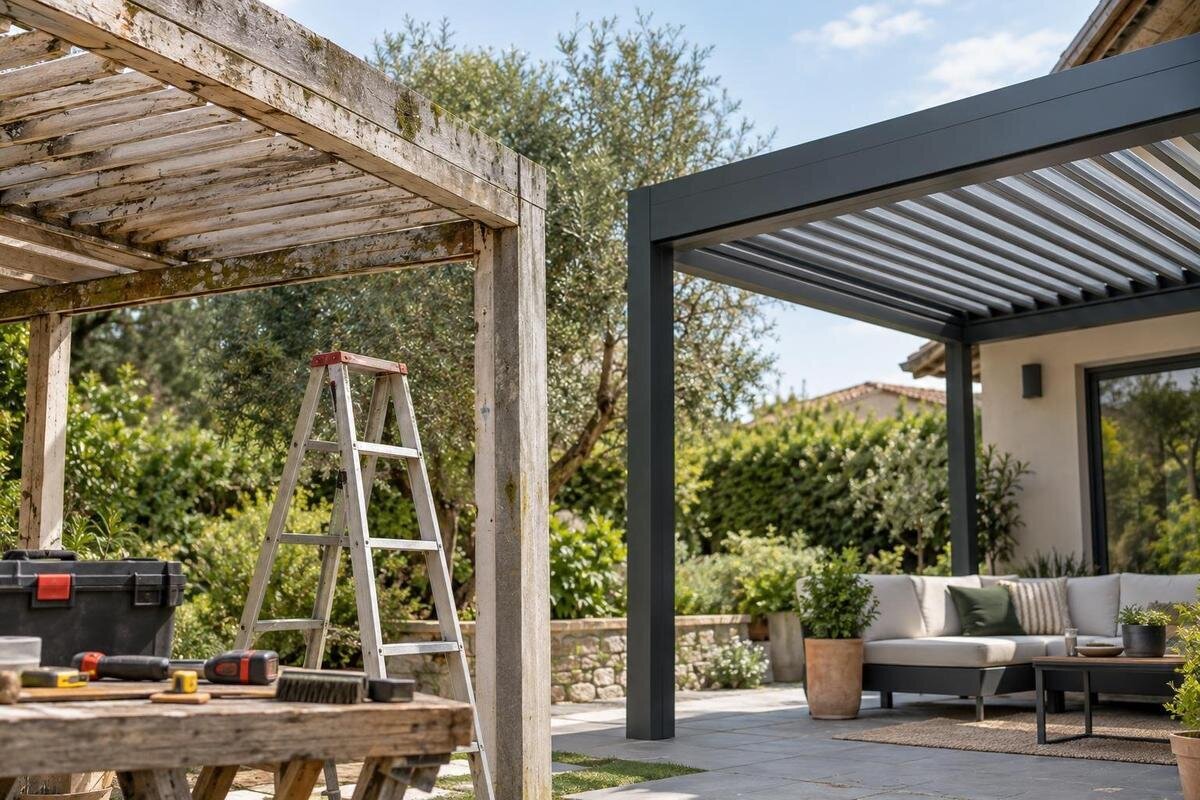
Pergola repair and replacement
An older pergola does not need replacing simply because it has been in place for years, but repeated repairs are not automatically better value either. The useful question is whether the fault is confined to one area and has been diagnosed, with a compatible part confirmed, or whether it affects the frame, mechanisms, fixings or building connection more widely. A structured review of condition, repair history, parts support and the full scope of each option gives you a firmer basis for choosing—and better information for a repair or replacement enquiry.

How age and condition affect the decision
Use age as background, not as a verdict. Pergolas differ in construction, exposure, maintenance history and use, so two structures installed in the same period can need very different work. A single damaged component may be replaceable while the rest remains serviceable; conversely, a neat finish does not prove that joints, supports or a connection to a wall are sound. Consider what the structure is doing now, what has failed before, and whether a competent inspection can identify the cause. A repair repeated without lasting improvement is different from a first, clearly located fault. The extent to which a problem interferes with your intended use also matters.
Treat any sign that could affect safe use as an assessment issue, not a reason to test the structure. Visible movement, a distorted member, a connection that appears loose, cracking, a component out of position or an unpredictable mechanism are reasons to stop using the pergola and contact a qualified service professional. Do not stand beneath or operate a system with suspected structural or mechanical failure to reproduce a symptom. Leave diagnosis and repair of electrically connected or motorised parts to appropriately qualified service personnel. A professional can advise what, if anything, may safely remain in use while the fault is investigated.
Record the fault before requesting an assessment
Before contacting anyone, gather the information that can identify the pergola. Note the brand and model, and copy any serial number or product reference shown on a label. Record the purchase and installation dates if you know them, who supplied or installed it, and any changes made since installation. Keep the invoice, manual, technical drawings and previous service records together. If you cannot find an identifier, say so rather than guessing from appearance. An old sales description or photograph may help narrow down what the product is, but it cannot confirm the compatibility of a replacement part.
Describe the symptom in plain terms: which area is affected, what you observe, when it began and whether it happens every time or only occasionally. Note what still works, what has stopped working and whether the fault has changed since an earlier repair. Take clear photographs from several angles, including the surrounding connection or component, without dismantling anything. If a sound or movement is part of the problem, describe it rather than operating the pergola to demonstrate it. A concise timeline and unaltered photos help a service professional decide what information or inspection is needed next.
Assess the frame and connections, not only the finish
Look at the main frame, joints, supports, mounting points and moving elements separately. Note visible cracks, distortion, unexpected movement, gaps that seem to have changed or persistent staining around a connection. A surface mark alone cannot establish that a structural member has failed, and a clean-looking face cannot establish that a concealed connection is sound. Photograph any change and ask a qualified professional to assess the relevant part and its connections. Do not tighten anchors, alter the frame or remove structural covers as a test; that can change the condition being assessed and make it harder to identify the original problem.
Keep the condition assessment separate from your replacement shortlist. For example, the Bloomcabin Bioclimatic Pergola listing gives a model name and a stated area range from 9 to 24 m². Those details can identify an option to investigate, but they do not tell you whether the existing frame needs replacing. Ask the assessor to distinguish parts that remain serviceable from those needing attention, and to explain whether the faults are confined to one area or affect several connected elements. This gives you a clearer basis for comparing a limited repair with replacement of the whole structure. Record the space available as well, so that a replacement enquiry describes both the condition of the current pergola and the site a new one would occupy.
Look for recurring faults and the underlying cause
A fault that returns after a repair needs a different conversation from an isolated problem. Write down how often it has happened, which parts were repaired or replaced, and whether the symptom changed afterwards. Ask the service professional to explain what is causing it and whether the proposed work addresses that cause, rather than only restoring operation temporarily. Repetition does not automatically mean that the whole pergola has failed: the diagnosis may still point to a limited component. But if the cause remains uncertain, another repair quote is difficult to compare with replacement because it may not describe the full problem.
If the recurring fault concerns an attachment, record whether each repair dealt with the same connection or a different part of the structure. Ask whether the latest proposal changes the approach or repeats work that has already proved temporary. If you are also considering the Bloomcabin Wall Pergola listing, explain the attachment history in the replacement enquiry rather than requesting a new model in isolation. The assessor needs to distinguish a problem with the existing pergola from one involving the surface to which it is attached. A replacement comparison should make clear how the identified cause would be addressed. Otherwise, you would be comparing a known recurring fault with a proposal that has not yet explained what it would resolve.

Confirm the exact part and model compatibility
For a repair, ask how the required component has been identified. The model, product reference, serial number, component number and any version information can all help distinguish parts that may look alike. Tell the supplier or service professional about previous repairs or modifications, since these may affect what is currently fitted. Ask them to confirm the part is intended for the exact pergola and to explain whether it is available and whether its installation requires qualified service. A visual match or a general description such as a bracket, motor or panel is not enough to verify that a component is interchangeable.
If the original part cannot be identified or sourced, ask whether there is a confirmed, supported alternative for that exact model. Do not improvise a substitute or combine components based on appearance; get compatibility confirmed before agreeing to the work. Ask whether the alternative replaces only the failed component or requires changes to other parts, and have those changes included in the repair scope. A current product reference, such as the Bloomcabin Pergola listing, belongs in a separate replacement enquiry: it is not evidence that a component will fit an older pergola. Keeping the two enquiries distinct helps you establish whether a workable repair is available, rather than mistaking the availability of a new pergola for continued parts support for your existing one.
Compare the full scope of repair and replacement
Request an itemised repair scope rather than a figure that leaves the work unclear. It should state what has been diagnosed, which parts are proposed, the labour involved, and whether access or additional inspection is included. Ask whether the quoted work is intended to address the identified cause and what is excluded. If further work may be needed after inspection, find out how that would be agreed before it is carried out. These questions make it easier to distinguish a limited, defined repair from an initial step that may lead to more work.
Compare like with like: a repair figure for one part should not be set against a replacement figure that includes removal, fitting and site work without separating those items. The Bioclimatic Pergola listing can identify a candidate for a new-system comparison, but it is not a quote for the complete project. Ask for the proposed model and configuration, removal of the old pergola, fitting, disposal and necessary finishing or site work to be set out clearly. Mark which items are included, excluded or still awaiting assessment in each quote. If one proposal leaves an item unresolved, do not count it as having no cost. This comparison shows whether the difference in price reflects a different product, more extensive work or an incomplete allowance for the project.
Check site dimensions and the type of attachment
Measure the space available for a proposed replacement and note practical constraints around it. Record the usable width and depth, clear height, nearby doors and windows, routes for access and any features that might affect removal or installation. Note whether the existing pergola is attached to a wall or supported elsewhere, and describe the condition of the adjoining surface and the area beneath it. These observations help make an enquiry more specific, but they are not a structural assessment. Do not assume that old holes, supports or fixings are suitable for a different model just because they are already in place.
For a wall-mounted option, use product information and a site assessment rather than the name alone. The Wall Pergola product page identifies a model, but does not establish whether your wall or existing fixings are suitable. Ask for technical information for the proposed configuration and have a qualified professional assess the actual attachment point. Make sure the enquiry identifies nearby doors and windows, as well as any uncertainty about the adjoining surface. If the pergola is not wall-mounted, describe its support arrangement just as carefully. Keep your own measurements clearly distinguished from dimensions confirmed during the assessment, so that preliminary notes are not mistaken for an agreed installation layout. The replacement should be evaluated as a new installation, not assumed to be a drop-in substitute.
Include removal and site work in a replacement quote
A replacement comparison should cover more than the new pergola itself. Ask who will assess and remove the old structure, how disposal is handled and whether access restrictions affect the work. Find out whether the quote includes making good any affected paving, decking, wall surface or other surrounding area, and whether any finishing is excluded. If only part of the current system is to be removed or retained, ask for that scope to be described precisely. Do not dismantle components yourself to reduce the quoted work; a qualified professional can advise on safe removal and what condition the remaining area may be in.
If the Bloomcabin Pergola page is one option you are assessing, include the model in the replacement enquiry and ask for the installation scope separately. Have the installer distinguish work needed for the new pergola from remedial work on the existing site. Also establish who is responsible for each stage if removal, surface repairs and fitting are to be handled by different people. Ask what must be completed before installation can begin and whether the quote covers leaving the surrounding area finished. These details help you understand the practical disruption as well as the price. They also make it easier to compare a repair that leaves most of the installation in place with a replacement project that involves work beyond the pergola itself.

Parts support and disruption from repeat repairs
Include the repair history in your decision, not just the latest symptom. Repeated visits, delays while a part is identified and periods when the pergola cannot be used may all affect whether another repair is practical. Record what has actually happened rather than assuming how often work will be needed in future. Ask what information, parts and service support can be confirmed for the existing model, and whether the proposed repair leaves any known fault unresolved. If the answer depends on further inspection, include that uncertainty in your comparison instead of treating the repair as complete.
For a proposed replacement, ask about support for the exact model and configuration being quoted. The Bioclimatic Pergola product page can identify one option for that enquiry. Ask what documentation would be supplied, how replacement components would be identified and whom you would contact for service. Apply the same questions to the older pergola where the information is available, without assuming that either option guarantees trouble-free use. Keep confirmed answers separate from unanswered questions or general sales descriptions. If your present difficulty is identifying parts, a clear explanation of the proposed model’s support arrangements is more useful than a broad assurance about future reliability. Consider that information alongside your recorded experience of repair visits and periods when the pergola could not be used.
When repair or replacement makes sense
Repair is easier to justify when a qualified assessment identifies a limited fault, the correct part can be confirmed, and the proposed work addresses the cause without leaving a known issue unresolved. Replacement deserves more attention when damage affects several areas, faults return without a clear explanation, compatible parts cannot be confirmed, or the work needed would involve replacing much of the existing pergola. These are comparison points, not automatic rules. A professional must assess any concern about the frame, supports or attachment; appearance alone is not enough to decide that a structure is safe or beyond repair.
Bring the comparison together in a short decision record: the assessed fault, the proposed repair, the replacement scope and the questions still unanswered. For each option, note what it would resolve and what would remain unchanged. If Bloomcabin Wall Pergola is on your shortlist, record that exact model and the configuration being considered, rather than comparing the repair with an unspecified new pergola. You do not need an arbitrary age limit or a fixed percentage of replacement cost to organise this decision. You need a clear account of the work and its limits. If an unanswered question could materially change the scope, leave it visible in the comparison instead of treating the estimate as settled. This keeps the choice tied to your actual pergola and site.
Frequently asked questions
Can I decide whether to repair a pergola based on its age?
No. Age does not show whether a fault is limited, whether the frame and connections remain sound, or whether suitable parts are available. Base the decision on an assessment of the current condition, repair history, compatibility and the scope of the work.
Can I replace only the part that has failed?
Possibly, if the exact model and component can be identified and a supplier or qualified service professional confirms that the part is compatible. A similar-looking component is not enough to establish a match, particularly if the pergola has been modified or repaired before.
What should I do if the same fault keeps returning?
Record when it happens and what has already been repaired, then ask for the underlying cause to be assessed. Compare the cost and likely scope of a repair that addresses that cause with the cost and site work involved in replacement.
Can the old wall fixings or base be reused for a replacement?
Do not assume so. A qualified professional should assess the existing attachment and the requirements of the proposed model. Ask for confirmation based on the specific product information and the actual site, not on the position of old fixings alone.
What information should I send with a repair enquiry?
Provide the model or identification details if available, photos of the fault, a clear description of when it occurs, and any manuals, invoices or previous repair records. Mention modifications and earlier work, and say if you cannot identify the model.
A sound decision comes from separating what is known from what still needs checking. Establish the fault, confirm whether a suitable part and repair are available, and compare the complete scope with a replacement assessed for your actual site. If safety, compatibility or the cause of repeated problems is uncertain, leave that judgement to a qualified professional. The pergola’s age may help explain its history, but its assessed condition and the work required now should guide the choice.
