
Choosing a Pergola Floor: Porcelain, Timber or Natural Stone
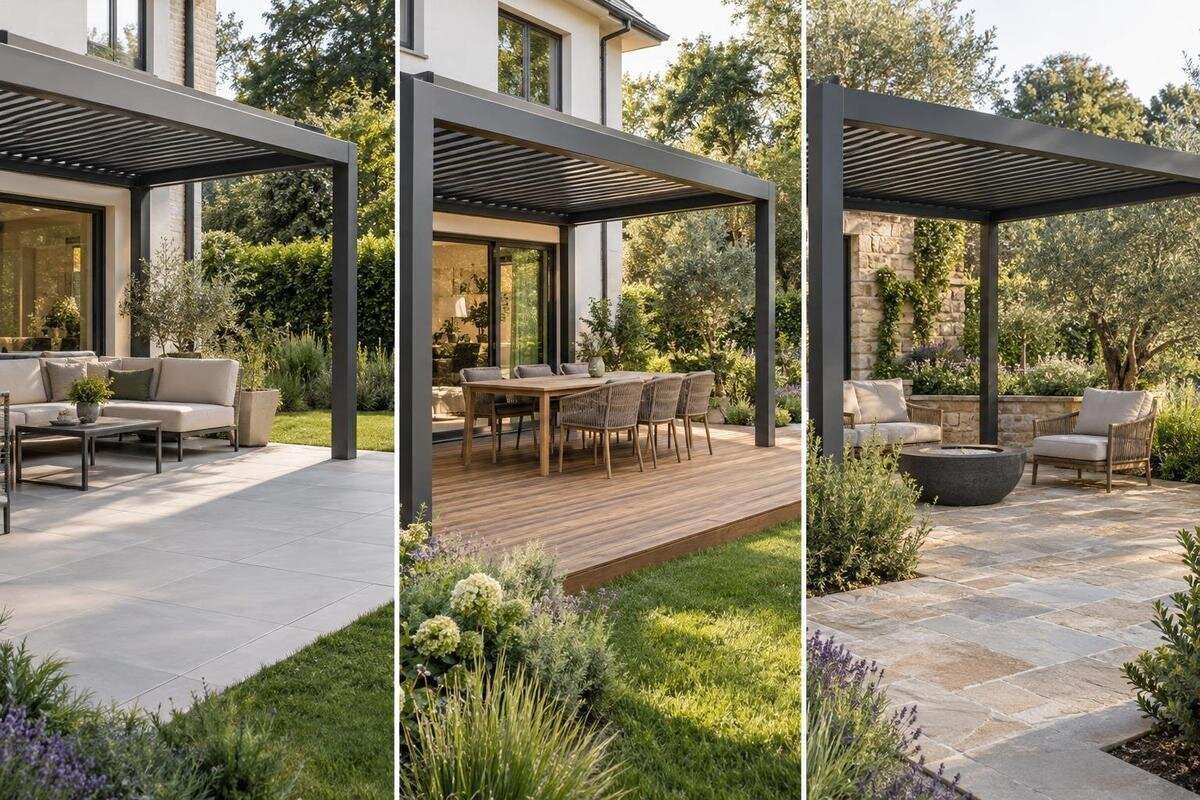
Pergola flooring guide
Choosing a pergola floor is a practical decision as much as a design one. Porcelain paving, timber decking and natural stone differ in the way their finishes feel, warm in sunshine, collect dirt and need care. A surface that looks attractive in a catalogue may feel quite different when walked on barefoot, beneath dining chairs or where rainwater and garden grit reach the joints. Compare the exact product—not only the material name—with how the area is used, where it receives sun and how it meets doors, paths and planted edges. The pergola's visual style matters, but day-to-day use should help determine the surface.

How the pergola floor will be used
Before comparing colours, map the activities the surface must support. A dining area needs room for the table and for chairs to move; a route from the house needs a clear line without awkward changes in surface. Barefoot use makes texture and heat more noticeable, while grit carried in on shoes can settle at joints. If the pergola area also serves as a passage to the garden, keep that route legible instead of filling the whole footprint with furniture. Think about how many people will use it at once, whether chairs are often pulled out and where dirt is likely to enter. These details help establish whether the priority is a smooth walking surface, a tactile finish, a particular look or easier cleaning.
Draw the door opening, intended furniture, walking path and paved or decked boundary on a dimensioned landscape plan. Allow for chairs pulled back, not just their position when pushed under the table; leave a practical route around seats and avoid narrow leftover strips that are awkward to clean or lay out. If you are considering the Bloomcabin Wall Pergola, show the threshold, floor edge and water-management detail together where the structure meets the house. Keep the structure, furniture and finished surface as separate decisions within one coordinated drawing: the pergola's footprint need not define the floor boundary. Confirm final measurements on site before ordering.
Porcelain paving: a consistent look, with details to check
Porcelain paving appeals to people who want a consistent colour and format. Surface options vary, from smooth faces to more textured finishes, but the product name alone says little about the feel or appearance underfoot. A small showroom sample cannot show the scale of joints or the effect of a repeated pattern across a seating area. Ask to see a larger sample or a laid panel, then view it from the house as well as from beneath the pergola. If a uniform appearance matters, decide tile format, joint width and joint colour together; the joints remain part of the finished design and determine how prominent the grid looks.
Check that the exact tile and finish are intended for outdoor paving, and request wet-grip information, test conditions and suitable cleaning products from the supplier. Texture can affect how dirt settles and how easy it is to brush away; grout and edge pieces have their own care requirements. When comparing paving for an area with the Bloomcabin Pergola, consider the whole tiled layout rather than a single sample. Confirm how cuts around posts, the perimeter and any border will be resolved, since these details can change the finished look. Match the paving specification to the site and installation plan, rather than choosing a finish solely because it resembles one in a product photograph.
Timber decking: board texture and ongoing care
Timber decking creates a linear visual surface, and the direction of the boards can influence how long or wide the area appears. Its grain and surface profile give a different tactile impression from tile or stone, but the exact feel depends on the timber, finish and board shape. Take a sample home and examine both the top and the edge in daylight; a photograph cannot show grain or texture accurately. Consider how board lines meet the door, pergola posts and garden path. A deliberate direction can make a route easier to read, while short or awkward cuts at the boundary may look busy and collect debris. Compare the sample with the actual furniture finish, rather than matching colours on screen.
Maintenance is part of the timber decision. Confirm which species and finish are specified, whether the supplier expects the surface to be oiled, stained or left to weather, which cleaners are suitable and how often inspection or renewal is recommended. Advice varies, so do not assume that all timber needs the same treatment or schedule. Ask how debris can be cleared from the board gaps and how individual pieces can be inspected or replaced if required. If timber is on your shortlist for an area with the Bloomcabin Bioclimatic Pergola, assess the boards and their care separately from the structure. Decide whether the expected upkeep is realistic for the household, including any work needed to maintain the colour you prefer.
Natural stone: variation and product-specific care
Natural stone is chosen for a surface with variation rather than a perfectly repeated appearance. Colour, veining, grain, edge and texture can differ between pieces, so the overall effect may be the quality you value or may feel visually busy in a compact area. Ask to see several pieces from the intended range and, if possible, a larger laid sample. View it dry and after it has been dampened, because the appearance can change when wet. Confirm with the supplier what degree of variation is expected and how pieces are selected or mixed across a batch. Check the finished edges as well as the face; both are visible where paving meets a path or border.
Care depends on the specific stone and finish. Check whether sealing is recommended, which products are compatible, how to remove ordinary dirt or food marks, and whether a textured surface needs a particular cleaning method. Do not assume that a rough-looking stone automatically provides reliable grip when wet; request information for the exact finish and its test conditions. The jointing material and edge treatment also influence appearance and cleaning. If maintenance instructions are vague, obtain a written care guide for the named stone before ordering. This helps avoid choosing a sample whose expected upkeep does not match how the household uses the pergola area. Include guidance for likely stains rather than relying on a generic guide for all stone.

How sunshine and moving shade affect comfort
Sun exposure affects comfort on all three surfaces, but the material name alone cannot predict how warm an installed floor will feel. Colour, exact finish, direct sun, shade, nearby walls and time of day all contribute. Darker colours generally absorb more solar energy than comparable lighter finishes, but this does not provide a reliable temperature prediction for a particular tile, board or stone. A pergola's shadow moves as the sun changes, so a floor that is shaded at one time may receive direct sun later. When considering the bioclimatic pergola model, assess the shade across the proposed floor area at the times you expect to use it. A model name alone does not establish the shade pattern or temperature beneath it.
Use samples in the actual place where the floor will go. Leave them in sun and shade during the hours the area is likely to be used, then compare alternatives; an indoor showroom sample or screen image is a poor substitute for seeing the surface outdoors. Consider the transition from a shaded interior or seating area to a sunlit walking route, and whether people will normally wear shoes or walk barefoot. If surface heat is a concern, investigate lighter finishes and the available shade, but still ask for product-specific information and assess the sample under realistic conditions. Separate parts of the same floor can feel different where sunlight and shadow change.
Wet grip, joints and clear walking routes
Grip should be assessed on the exact surface, particularly where it may get wet from rain, cleaning or spilled drinks. A material category or rough-looking appearance is not a substitute for product data. Ask what wet-use test or classification the supplier states for the selected finish, what the test covers and whether it applies to the actual product and surface treatment. Texture may improve the sense of grip, but pronounced texture can also collect dirt and need more brushing; compare these points rather than choosing by appearance alone. If you are considering two finishes, request information for both. Record the answer alongside the sample name so it is clear which finish the supplier's guidance describes.
Joints and transitions matter for day-to-day movement. Tile grout lines, stone joints and the gaps between deck boards each need a layout that suits the product and installer; they are not interchangeable details. Check for abrupt lips or awkward transitions at doors, around posts and along the garden route, as these can interrupt movement and complicate cleaning. Have the paving or decking installer confirm how finished levels, water run-off and the threshold interface are coordinated. Include the regular Bloomcabin pergola in the site plan alongside the walking route and joint layout. This allows the floor junctions and access around the structure to be considered together before work begins.
Cleaning and upkeep for each surface
Think about the clean-up that happens most often, not just an occasional deep clean. Dust, leaves, soil from nearby planting, food crumbs and drink spills can reach an outdoor floor. A smoother porcelain face may be quick to wipe, while texture, joints, stone variation or board gaps can affect how debris collects; the precise result depends on the chosen product. Consider where a brush can reach, whether furniture must be moved and whether routine cleaning can be done without damaging the finish. If the surface borders a planted bed, leave enough access to sweep along the edge rather than creating a narrow dirt trap. Ask the supplier which cleaning method suits the exact surface.
Request written instructions from each flooring supplier for routine cleaning, stain removal, sealing if applicable and products to avoid. Timber may need planned inspection or finish renewal; stone care depends on the named stone; porcelain still has joints and a surface finish that call for suitable products. These are points to confirm, not rules that apply identically to every product. For an attached arrangement such as the wall-mounted pergola model, include access to the wall-side edge and threshold in your cleaning plan. Think of upkeep as time and attention as well as cost: the best fit is a surface the household can care for correctly, not simply one that appears easy to maintain in a brochure.
Matching the floor to the pergola and house
Colour and layout determine whether the floor ties the pergola to the house or reads as a separate garden zone. Compare the tile, board or stone sample against exterior walls, door frames, existing paths and furniture, rather than relying on a styled catalogue image. A repeated tile grid creates a different visual rhythm from long timber boards or the natural variation of stone. When looking at the Bloomcabin Pergola model, decide whether you want the floor to contrast with the structure or form a quieter backdrop. Check whether the joint or board direction supports that choice, and use physical samples to judge the combination beside your house.
Small details can occupy a large share of the finished view: joint colour, an edge band, cuts around posts and the point where the floor meets existing paving. A narrow border may frame an area, but it adds another line and can make a small layout feel divided; continuing the same surface into a path can make the spaces read as connected. Request a dimensioned drawing of the whole finished area and view the proposed joint or trim with the main sample. If planting borders the floor, show the boundary and keep the edge accessible for cleaning. Compare the finish in both sun and shade so that its colour works through the day, not only in one photograph.

Thresholds, edges and furniture movement
The floor should meet the house and garden without creating a transition that is awkward to step across or clean. Note the door threshold, existing paving and route to a lawn or steps before selecting the finish. A tile's or board's stated thickness is only one part of that interface; the installed level also depends on the complete build-up and the installer's detail. For a layout incorporating the Bloomcabin Wall Pergola model, have the relevant professional confirm how the surface meets openings, walls and changes in level, and where water is intended to run. Record these junctions on the site-specific drawing rather than assuming the new finish can simply meet the existing floor.
Plan the edge around the way furniture will actually sit. Table legs can land close to joints, and chair feet can catch at poorly resolved changes in level; outdoor rugs or pots can hide debris or hold moisture if the product guidance does not allow them. Leave practical space to clean around posts, furniture and boundary edges, and decide whether the floor should continue into a path or stop at a clear border. Give the drawing to the flooring installer and ask them to mark cuts, any movement joints, edge pieces and transitions. Resolving these details before placing an order reduces the chance of last-minute compromises in the visible surface and clarifies what materials and accessories are required.
A practical comparison before you order
Make a comparison sheet for exact products rather than ranking material categories in the abstract. For each sample, note the exterior-use specification, finish, wet-grip information and test conditions, colour in sun and shade, joint or board detail, suitable cleaning products and whether sealing or finish renewal is recommended. Use the same headings for all three materials so that differences in appearance and upkeep are easy to compare. If a supplier cannot answer a maintenance question, record it as unknown rather than assuming all products in the category behave alike. Keep the information with the sample reference, so the product selected at ordering matches the finish you evaluated.
Choose according to the trade-off you are prepared to live with. Porcelain may suit a preference for a regular pattern and straightforward wiping, provided the exact outdoor finish, joints and grip meet your needs. Timber may be preferable when board texture and natural appearance are worth the care it may require. Natural stone may suit someone who values variation, if its finish and care instructions are acceptable. None is automatically cooler, safer or easier to maintain by name alone. Before ordering, agree the product reference, finish, floor area and layout, including edge pieces and accessories. This makes clear what is included and provides a more useful basis for installation than an inspiration image.
Frequently asked questions
Which pergola floor is coolest in direct sun?
There is no reliable material-wide ranking: colour, finish, shade and the site's conditions all affect how warm a surface feels. Compare samples outdoors in the area and at the times you expect to use it. A lighter colour may absorb less solar energy than a comparable darker one, but it does not guarantee a particular temperature.
Is porcelain paving always suitable for outdoor use?
No. Porcelain describes the material, not whether a particular tile and finish are intended for exterior paving. Confirm the product's outdoor-use details, wet-grip information and cleaning guidance with the supplier before choosing it.
Does natural stone need sealing?
That depends on the named stone and its finish. Ask the supplier whether sealing is recommended, which products to use and whether it needs to be renewed. Do not assume that care instructions for one type of stone apply to another.
How often should timber decking be treated?
There is no single interval for all decking. Species, finish and the supplier's care instructions matter. Check whether the boards are intended to weather untreated or need a particular product, and follow the guidance for inspection and renewal.
Should the finished floor match the pergola footprint?
Not necessarily. The area needed for chairs, walking routes and access can extend beyond the structure's footprint. Show furniture and circulation on a dimensioned plan, then confirm the finished floor area and edges with the relevant installer rather than using the pergola listing alone.
Porcelain, timber and natural stone each give a pergola area a different finished character, but the material category alone does not settle comfort or care. The exact product, shade, joints and threshold details shape what everyday use will feel like. Compare samples beside the house, review wet-grip and maintenance guidance, and agree the surface layout on a dimensioned drawing. When the finish suits the site's sun and the household's willingness to clean or renew it, the floor becomes a considered part of the garden design.
