
Pergola Insect Screens and Curtains: Understanding Their Limits
Pergola planning
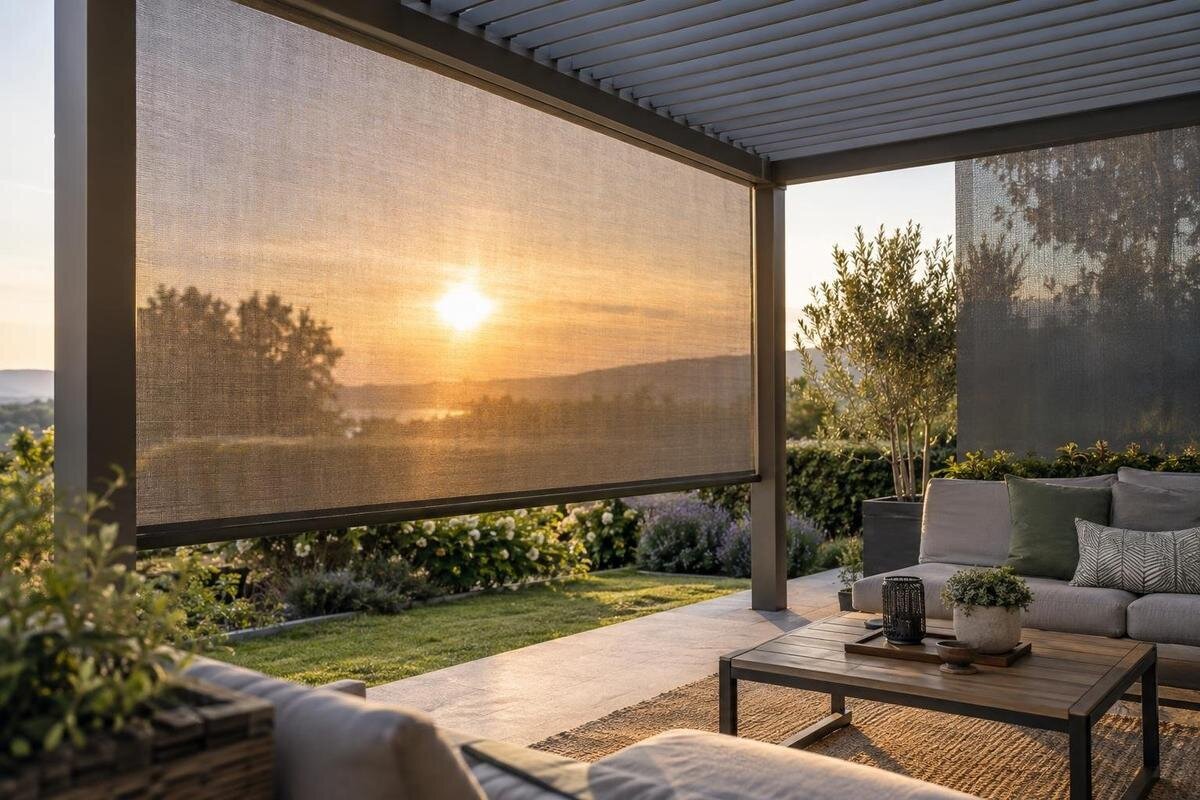
Suitable mesh screens can reduce insect access through the sides of a pergola they cover, while ordinary curtains mainly offer shade or privacy. Neither automatically encloses the roof, corners, floor edge or entrance, and a panel that is open for access cannot act as a continuous barrier. The choice depends on coverage, fit and daily use: which routes need closing, what kind of screen is suitable, and how much airflow, visibility and convenient access should remain.
A screen reduces access through one covered opening
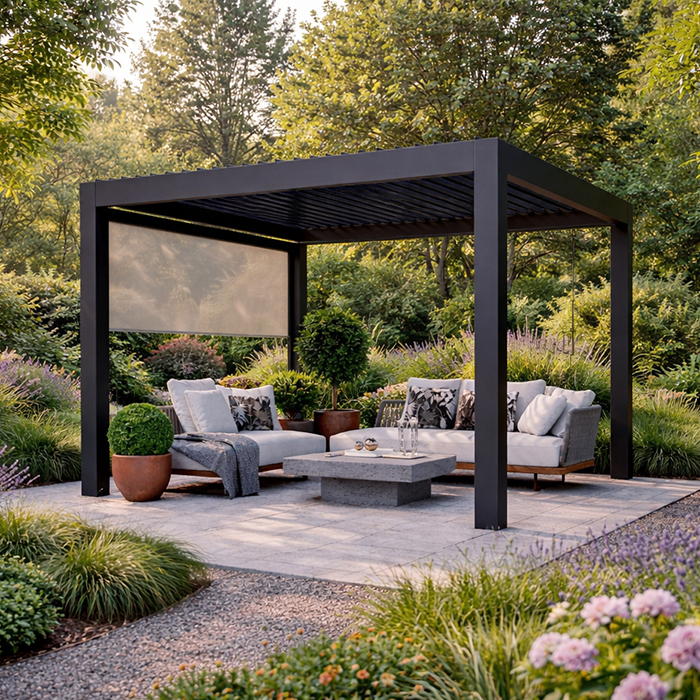
A fitted insect mesh is a barrier across one opening, not a treatment for insects already inside and not a seal around the whole pergola. If its mesh is suitable for the insects you want to deter and its edges meet the surrounding frame without gaps, it can reduce entry through that covered side. The result depends on mesh specification, installation and whether the panel stays closed. The word “screen” alone does not tell you which insect sizes it excludes, how much of the perimeter it covers or whether it is intended for outdoor use. A gap that looks minor may still matter for a small insect, so compare the mesh and closure with the nuisance you want to address.
Expect reduced access through the screened opening, rather than an insect-proof space. An insect can still enter through an uncovered side, around the top, below the panel or while someone passes through the entrance. Assess the screen in the position in which you will actually use it, including any edges left loose or held back. A panel that looks complete when closed may spend much of an evening partly open. If full enclosure is essential, ask about a purpose-designed enclosure rather than assuming a side accessory creates one. This distinction helps you judge whether covering a particular opening will address the nuisance or leave other obvious entry routes unchanged.
Mesh and curtains have different jobs
Mesh and curtains have different primary jobs. A close-weave insect mesh is intended to interrupt passage through a panel while allowing some air and view; the balance depends on its opening size and construction. An ordinary fabric curtain may shade a seating area or screen a view, but it is not a dependable insect barrier if its top, sides and bottom remain open. A curtain made from mesh is different, yet it still needs mesh suited to the target insect and an edge closure that meets the surrounding frame. A decorative drape tied away from the opening leaves the route exposed even when the fabric is nearby.
Compare the actual details: what kind of mesh or fabric is used, which opening it covers, how the panel closes and what happens at adjoining edges. Ask whether it is intended to deter the insects you have noticed, rather than expecting every weave to do the same job. If you are considering the Bloomcabin Pergola, distinguish the base structure from any proposed mesh or curtain in your enquiry. Establish whether the side accessory is included or supplied separately, and request a drawing showing its edges. A front view can help you picture the panel, but it does not explain how the perimeter closes.
Map the routes around the pergola
Map the routes rather than counting panels. Mark each open side, the point where a screen would meet a post or wall, the roof edge above it, the floor line below it and every way into the seating area. Include changes in level, projecting fittings or awkward corners that might prevent a panel reaching the boundary. A quick plan and side view can show an opening that is easy to miss when looking straight at a finished screen. Include where an access panel sits when open and the space it needs; the usable route may change once furniture is in place.
Use the map alongside observations of where insects approach: note which side is usually open, where people enter and whether access is also possible from above or beside the seating area. This helps avoid screening a convenient side while leaving a more direct route uncovered. When discussing a layout for the Bloomcabin Bioclimatic Pergola, use the plan to identify the openings you want to address, rather than assuming a particular side arrangement is available. Include any wall attachment, furniture positions and the route people need to use. Review the layout with panels and doors in their normal positions, not only with everything closed.
A side screen does not close the roofline
A side screen cannot block a route above the line where it ends. Some pergola roofs leave openings; others may have a more continuous surface, but a side accessory should not be assumed to close either type at the top. Flying insects can use open roof areas or gaps where a panel stops short of a beam. Even a covered top may have perimeter joints that need checking separately. Treat roof coverage and side coverage as distinct questions, and identify what the proposed system actually encloses rather than inferring it from the word “pergola” or from a picture.
Ask where the screen meets the upper frame, whether a gap remains when it is in its intended position and which component is meant to cover that junction. If you are considering the Bloomcabin Wall Pergola, include the meeting point between the building and pergola in this discussion. The wall-mounted model name alone does not establish how a proposed insect screen would close against the roof or building. Request a drawing showing the whole upper edge, including its ends at the posts or wall. This makes the question about a specific junction rather than the appearance of the mesh across the middle.
Check corners, tracks and the floor edge
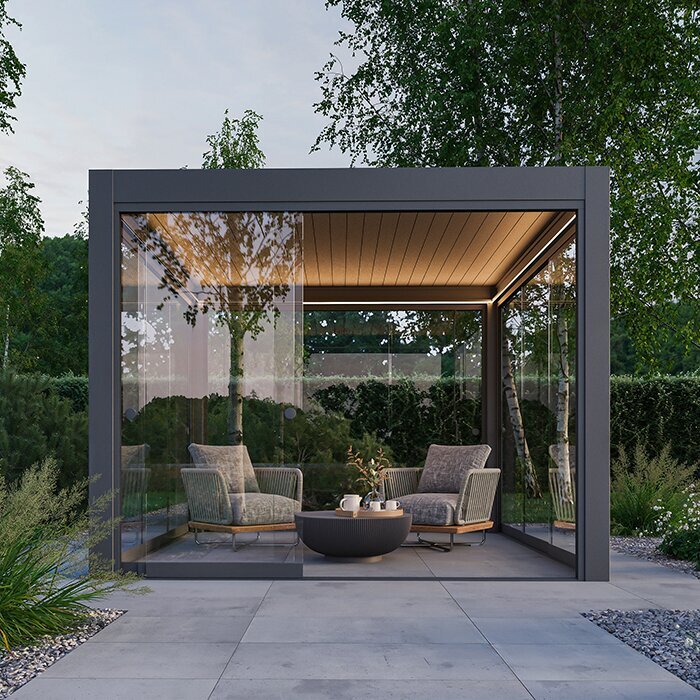
At a corner, two panels may meet without forming a tight closure. A post, wall bracket, beam return or vertical guide can prevent their edges from meeting continuously; a decorative overlap is not necessarily a closure. Look for gaps along both vertical edges and across the top, then check the bottom edge against the actual floor. A terrace may have joints, a small change in level or a threshold, so a screen shown straight in a diagram may not meet every point on site. Mark these transitions on the plan and ask how the proposed arrangement treats each one.
Do not focus only on the width of the mesh. Ask how each edge finishes, whether adjoining panels overlap or meet, and how much clearance the lower edge needs for everyday movement. For an enquiry about the regular pergola model, provide a simple drawing of the posts, floor and intended screen openings. Ask how the proposed lower edge would sit at each change in level and where a gap could remain. Keep this question separate from whether the panel is wide enough to span the opening. An uneven floor or raised threshold deserves a specific check rather than an assumption based on a photograph.
Plan the entrance for everyday use
An access opening is likely to be opened repeatedly, so plan its position and width around the usual route, not just the cleanest-looking elevation. Consider how people enter carrying food or chairs, where furniture sits and whether anyone can pass without pulling the mesh aside at another edge. The opening should remain convenient; an awkward arrangement tends to be left open, weakening its value as an insect barrier. A screen that closes only when no one is using the pergola is not continuous protection, so consider how often the entrance will be used during the times you want to deter insects.
Ask how the entry panel is meant to close after someone passes through and whether its operation suits the route you have planned. Do not assume a particular closure, overlap or return mechanism is available unless it is specified for the proposed system. Check that chairs, tables and the normal walking line do not obstruct the opening or encourage people to leave it held aside. If several people use the space, think through the routine rather than judging the entrance while it is closed and the area is empty.
Airflow and wind exposure
Even a mesh that allows air through adds a surface across an opening, so airflow can differ from that of an uncovered side. The effect depends on the weave, the amount of open area and how many sides are screened. Denser fabric and broader coverage may reduce the breeze more noticeably, while a curtain that is drawn back leaves that side open again. If insect reduction is the main aim, compare it with how you want the area to feel on still days. Do not assume that mesh preserves all the airflow of an open side or that covering more sides has no effect on comfort.
Outdoor fabric can shift or billow in wind, and the behaviour of a screen depends on its design and exposure. Ask the manufacturer whether the proposed side accessory may remain deployed in the conditions you expect, and follow its operating and removal guidance. Do not improvise attachments to hold a panel taut or assume that every accessory is suitable for every exposed position. If you are considering the wall-mounted pergola model, describe the position of the proposed screen and ask about its permitted use there. A qualified professional should check any attachment or installation concerns; the base model name does not answer those questions.
Insect control is separate from shade and privacy
Insect screening, shade and privacy are separate functions. Fine mesh can leave the view open while changing its clarity, and it is not automatically an effective sun screen. A denser curtain may provide more visual separation and shade, depending on its fabric and position, but it can also reduce breeze and block sightlines more than intended. Decide which outcome matters most at the times you use the pergola, and treat an accessory’s own specifications as evidence for its shade, visibility and insect performance. Do not infer one benefit from another.
Check the view from the seats as well as from outside the structure, and consider what happens when a panel is open or tied back. A curtain that gives privacy when drawn can leave the side exposed when moved aside for air or access; a mesh that preserves a view may not provide the same visual screening. When comparing side options for the regular Bloomcabin pergola, assess each proposed fabric against the function you need. Where possible, compare a sample or product information in the setting where it will be used rather than assuming the fabric will look the same against every background.

Confirm model and accessory compatibility
Compatibility is more specific than asking whether a screen can be attached to a pergola. Confirm the exact base model, the accessory’s intended opening, how its sides and top are guided or closed, and whether the attachment points are approved for that structure. Ask whether the accessory is included, optional or supplied separately; product photos and generic illustrations do not settle that. If you are considering a third-party screen, get confirmation that the proposed installation suits the actual frame and will not interfere with moving parts or access.
Give the supplier the model name and measurements of each intended opening, then ask for a model-specific drawing or a clear compatibility answer. With the bioclimatic pergola model, as with any base structure, do not assume that a generic track, mesh panel or curtain fits because its nominal width looks close. Ask whether the proposed arrangement closes the corners and upper edge as well as covering the central opening. Have a qualified installer check attachment and clearance questions where needed, especially if the fixing points or building interface are unclear.
Consider maintenance and when the screen is open
Mesh and fabric need periodic visual checks. Look for tears, separated seams, damaged edges or dirt that prevents a panel from closing as intended; a defect can create a route through an area that otherwise appears covered. Follow the maker’s cleaning and storage guidance because outdoor materials vary and a care method suitable for one may not suit another. Check tracks or closure points for obstruction without forcing the panel. If the system retracts, remember that the open position leaves the corresponding side available to insects; retracted screening is not active protection.
Consider whether the screen would normally stay in place or be retracted or removed between uses. Ask how it should be stored and refitted, rather than assuming those tasks are straightforward from a product image. For a proposed side accessory on the Bloomcabin wall-mounted model, keep the screen’s care instructions with its own product details so they are not confused with guidance for the pergola itself. Think about how you would reach the edges for inspection and carry out the recommended cleaning. A practical care routine matters: choose an arrangement you can maintain, not one whose closures are too awkward to check regularly.
Frequently asked questions
Will a side screen make a pergola insect-proof?
No. A screen can reduce access through the opening it covers, if its mesh and fit suit the insects you want to deter. The roofline, corners, floor edge and entrance may still leave routes in, and any screen that is open for access is not acting as a continuous barrier.
Is an ordinary fabric curtain enough to keep insects out?
Usually not. A fabric curtain may provide shade or visual screening, but insects can pass around its edges or through an opening when it is held back. A curtain made from mesh may help if the mesh is suitable and the edges close properly; check its actual specification and coverage.
Should I choose the finest mesh available?
Not without checking its intended use. Mesh opening size and construction affect which insects it may deter, while the weave and amount of covered area can affect airflow and visibility. Ask the supplier which nuisance the product is designed to address and compare that with how you use the pergola.
Do all sides need to be screened?
Not necessarily. First identify the routes you have observed, including the roof edge, corners and entrance. Covering more sides may reduce more openings, but it can also change airflow and access. A plan of the full structure helps you see whether the uncovered routes matter for your intended use.
Can any screen be fitted to a Bloomcabin pergola?
Do not assume so from a product name or photo. Confirm compatibility with the exact pergola model and the proposed opening, and ask whether the accessory is included or supplied separately. If a third-party screen is being considered, have a qualified installer check the proposed fit and attachment.
A screen is most useful when its mesh is suitable for the insects you want to deter, its edges close against the surrounding frame and users can keep it closed when needed. Curtains may provide shade or privacy, but should not be assumed to stop insects. Mapping the roofline, sides, corners, floor edge and entrance before choosing a screen or curtain gives a more realistic picture of what it can—and cannot—do.
