
Rain or Condensation Under a Pergola? How to Tell
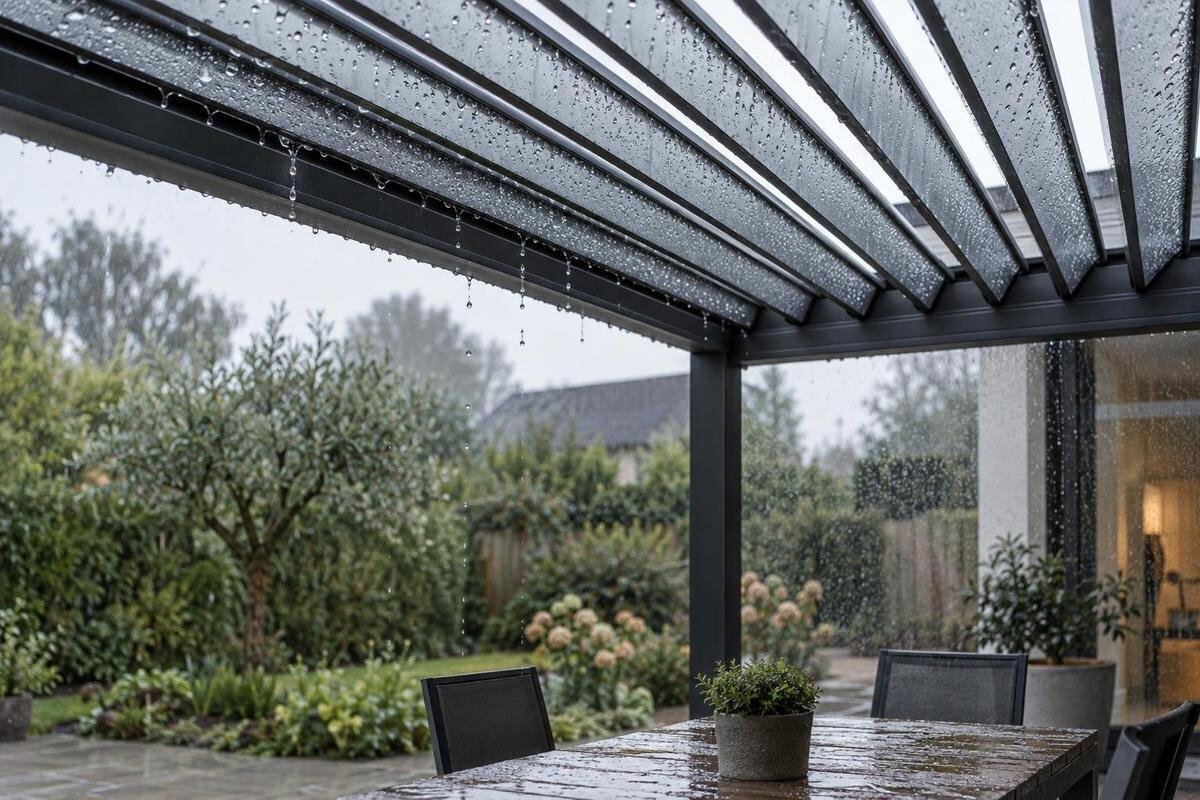
Pergola moisture guide
Water beneath a pergola can come from rain, condensation or water left on the roof after conditions have changed. A few practical clues help separate them: when the first drops appear, how they are distributed, which surface is wet and whether the roof has moved. Compare those details before treating every drip as a leak.

01
What a drip under a pergola can mean
A drip under a pergola is not, by itself, proof that rain has passed through the roof. Visible water may be condensation on a cooler surface, rain entering at a roof edge or joint, or water that remained on part of the structure and is now running off. More than one cause can be present at once: a rainy spell can leave surfaces wet while humid air also condenses on a cooler underside. Calling every drip a leak risks sealing the wrong place; treating repeated rainfall-linked wetting as condensation can leave a genuine entry route unresolved. A stain after it has dried may record an earlier event rather than the current source.
Begin by distinguishing the first wet surface from the place where a drop lands. Look for moisture on the underside of the roof, along a beam or joint, at a wall connection, or only at an outer edge. Water can travel before it drips, so a wet chair or floor spot is weak evidence on its own. From a safe position, make a quick sketch or take a wide and close photograph, noting the time and roof position. Include what was dry and what was already wet. Repeated observations reveal more than one isolated wet afternoon. Avoid touching or dismantling anything just to trace the water.
When the water appears
Timing is often the clearest first clue. Condensation can appear after a humid evening or overnight, especially when the roof surface cools below the temperature at which water vapour in the air condenses. It may show as beads in the morning even if there has been no rain. Dew-point calculations are unnecessary for an initial check: record whether the air felt damp, whether the underside was cool, and whether moisture was present before rainfall. A dry forecast at the moment you notice droplets does not rule out moisture from the previous night. If droplets fade as the surface warms and return after another damp night, that repeating cycle supports the condensation explanation, but does not prove it.
Water that starts during rainfall, particularly at the same seam or edge, makes rain entry more plausible, but timing alone is not a verdict. Wind can drive rain towards openings, and water may take time to travel along a roof or drainage route before falling. A drip after a shower may also be retained water, especially if the roof setting has recently changed. For a system such as the Bloomcabin Bioclimatic Pergola, distinguish drops that start during rain from those that begin after adjustment. Record the delay and whether they recur once the structure is dry; consult the matching operating instructions before changing the roof position.
02
How weather and wind help distinguish the causes
Keep a simple weather record for each wet event rather than relying on a general impression of the day. Note when rain began and ended, whether it was steady or intermittent, which direction the wind came from, and whether gusts pushed water towards one side. Add any dry interval and whether the pergola was wet before the shower. A nearby weather app can provide a useful timeline, but conditions at the structure may differ from a forecast or weather station, especially around buildings. The purpose is to spot a repeatable relationship, not to produce a formal weather measurement. One unusually exposed shower does not establish a pattern for every condition.
If moisture appears only when rain is blown from a particular direction, an exposed edge, connection or opening deserves closer attention. Fine droplets after a damp, rain-free night point more towards condensation. Neither clue establishes the roof’s performance limit. When considering the Bloomcabin Pergola product page, use these observations to frame specific questions about the roof and enclosure you are considering. Ask which weather conditions the model’s documentation covers and whether it addresses the proposed side configuration. This keeps the comparison relevant to your exposure rather than relying on a general description such as weatherproof.
Where the first droplets form
Condensation often presents as multiple small beads or a light film across a cool underside, rather than a single obvious point of entry. Rainwater can follow a narrow track and reappear below the same joint, roof edge, fixing or wall junction. Treat those descriptions as clues, not rules: a drop can run along a member and fall well away from its entry point, while a wet surface can gather into one large bead. Check the path above the final drip, including any intermediate underside or support, instead of looking only at the spot on the ground. Note whether the pattern is broad, linear or localised; the size of a drop is less useful than where it starts.
Map the first visible damp marks on a simple roof sketch and compare the pattern after different weather. Note whether several areas become wet together or the same line becomes wet first. Label wall connections, edges and supports so an installer can locate the marks. For a wall-mounted option such as the Bloomcabin Wall Pergola, distinguish moisture at the building junction from moisture farther across the roof. Do not climb onto the structure or dismantle a cover to follow the water; observations from ground level can help an installer decide where to inspect.

03
Why temperature and humidity matter
Condensation occurs when water vapour in the air becomes liquid on a surface that is cool enough. Warmth alone is not the trigger: moisture in the air and the surface temperature matter together. Cooking nearby, wet cushions or clothing, watering plants and limited air movement can add moisture to a covered area. At night, the roof underside may cool faster than the surrounding air, so a surface that felt dry in the evening can carry beads by morning. These are general clues, not a guarantee that any one source is responsible. Note recent use of the space as well as the weather; an air-temperature reading cannot tell you the temperature of the roof itself.
Think about whether the pattern changes when the space is more enclosed. Screens or other sides can alter how readily damp air moves away, but the effect depends on the exact layout and weather. Open sides do not prevent all condensation, and closing them does not prove rain is entering. If the configuration can be adjusted safely and according to its instructions, compare similar periods with one setting changed at a time. Keep other factors as steady as possible and record the result. This is a way to gather evidence, not a guaranteed cure or a reason to add an enclosure before the source is clear.
A simple log for dry and wet conditions
An observation log can keep a diagnosis from drifting into guesswork. For each event, write down the date and time, recent rain, wind direction, temperature if readily available, roof position, whether sides are open, and the first place where moisture appears. Add a photograph with a wide view and another showing the mark. A basic humidity reading can add context if you already have a meter, but air humidity does not measure the roof’s surface temperature and cannot confirm a leak. Consistent notes matter more than elaborate equipment. A phone note or paper table is enough, provided you record the same details each time and distinguish the first wet point from the later drip.
Start with a dry-weather baseline, then compare it with a rainy event and, if possible, another humid but rain-free period. Keep the viewing position and roof setting consistent. Include the model name in the log; the Bloomcabin Pergola listing can help you identify the product you are recording. Do not spray water over the roof, block a channel or move an unfamiliar mechanism as a DIY test. Those actions may produce results unlike normal use and complicate diagnosis. If no natural comparison occurs, ask an installer whether a controlled test would be appropriate.
04
How roof position changes the clues
Where a pergola has a moving or adjustable roof, record its position as part of the observation. Note whether it was fully closed, partly open or recently repositioned, using the terms in the manual. A change can alter where water runs and how air circulates below the roof, so the same weather may not produce the same pattern in every setting. Do not assume that one position will always prevent condensation or that a drip in another position proves a defect. If adjustable louvres are present, describe their position consistently so observations from different days can be compared.
If water appears just after a roof is moved, consider retained water or a changed flow path before concluding that fresh rain has passed through. Compare again after the structure has dried, without changing several settings at once. When reviewing the product page for the Bloomcabin Bioclimatic Pergola, check the matching operating guidance for the permitted roof-control sequence rather than inferring it from the name. Do not stand beneath a mechanism or operate it in conditions the instructions do not permit. Keep post-movement drips separate in your notes from moisture that appears without any roof adjustment.
What drainage drawings can reveal
Rainwater management follows the layout of the particular roof. Water may be directed along an edge, into a channel or towards an outlet, but the route and permitted conditions cannot be assumed from the word pergola. Compare the first damp point with the drainage drawing: is water coming from a designed collection route, appearing beside a joint, or escaping somewhere unexpected? A drawing can show intended flow paths; a product photo or model name cannot confirm how the installed structure is configured. A wet channel may be part of its intended route, so moisture there alone does not establish a fault.
Keep this check observational. From ground level, note visible debris, standing water or a changed route, but do not remove covers or probe an outlet if access or the procedure is unclear. A repeated drip near a wall connection deserves particular attention because the roof drainage path and the building junction are different details. For the model shown in the Bloomcabin Wall Pergola listing, ask for drawings that cover both details in the proposed installation. If a route is hidden or the drawing is unavailable, leave its assessment to the installer rather than guessing where the water should flow.

05
When a pergola installer should inspect it
Arrange a qualified installer or supplier inspection when a drip repeatedly starts at the same roof joint during rain, the pattern is worsening, or water is marking a wall or building fabric. An inspection is also sensible when the entry point is above a connection you cannot see safely, or when water appears near lighting or wiring; keep clear of the area and have a qualified professional assess it. Persistent moisture with no clear weather link may need a broader check for other sources rather than repeated attempts to seal the roof. Dated images and a repeatable pattern will make an inspection more useful.
Give the person inspecting it a concise summary: the exact model and configuration if known, installation details, dated photos, weather and wind direction, roof position, and the first point that became wet. If you are referring to the Bloomcabin Pergola model page, explain which roof and side arrangement is installed rather than supplying the product name alone. Ask the inspector to compare the pattern with the system’s operating guidance, weather-performance information and drainage diagram. Leave seals, channels and mechanisms unchanged until the source is understood, since alterations can obscure the original pattern.
What to verify when choosing a pergola enclosure
When choosing a new pergola or adding an enclosure, keep condensation and rain entry as separate questions. A roof that manages rainfall cannot by itself guarantee that a cooler underside will never collect condensation; ventilation, moisture sources, surface temperatures and the side configuration also matter. Conversely, changing airflow may not stop water entering at a roof or wall junction. Explain how you plan to use the space and ask which enclosure options are documented for the exact model, rather than relying on a general claim that a pergola is weatherproof. Ask which conditions and side positions the documents cover, and how these relate to your site.
Compare the configuration drawings, stated weather-performance limits, operating guidance and drainage route for the model you would actually install. If you are considering Bloomcabin’s wall-mounted pergola, include the building connection in that discussion. Ask how the selected side arrangement relates to airflow and rain exposure, and whether an installer needs to assess the junction. The information should cover the complete setup, not only the roof or one enclosure component. This allows you to consider rain management and condensation separately while choosing a configuration suited to the location and intended use.
Frequently asked questions
Can condensation form when it has not rained?
Yes. If moist air meets a roof surface that is cool enough, droplets can form after a damp night or during a change in temperature without any rain. Look for the same pattern after a dry spell. If water appears only after the roof has moved or been cleaned, retained water or another source may also be involved.
If drops appear during a shower, is it definitely a leak?
No. Wind can carry rain towards an edge or opening, but water may also be redirected along a roof or drainage route. Note where it first becomes wet and whether the same place gets wet again in similar rain. Then compare the observations with documents for the exact pergola configuration.
Why does a pergola drip after the rain has stopped?
Water may still be travelling along a roof detail or draining from a surface, particularly after a change in roof position. Condensation can also form as surfaces cool. Record the delay and whether droplets appear broadly across a surface or along a particular route; timing alone does not prove either cause.
Will opening the sides stop condensation?
Not necessarily. More air movement may help moisture disperse, but condensation also depends on the surface temperature, moisture in the air and exposure. Compare similar conditions with one permitted setting changed at a time. Opening the sides is a way to observe a difference, not a guaranteed remedy or a fix for rain entry.
When should I ask an installer to inspect the pergola?
Ask a qualified installer to investigate repeated rain-linked drips at the same joint, water near a wall connection, growing stains or a route you cannot see safely. Share dated photos, weather notes and model details if known. Keep clear and seek a qualified professional if water appears near lighting or wiring.
Use a sequence that separates the clues: note a dry baseline, record rain and wind, locate the first wet point, and include the roof setting. Fine, broad droplets in dry but humid conditions support condensation; repeatable trails that begin during wind-driven rain support rain entry. Neither pattern is conclusive, and a roof may hold water after a shower. Compare more than one event, then use the exact system’s operating, drainage and weather-performance documents—or a qualified installer where the source is hidden—to interpret what the evidence shows.
