
Creating a Reading Retreat Under a Pergola
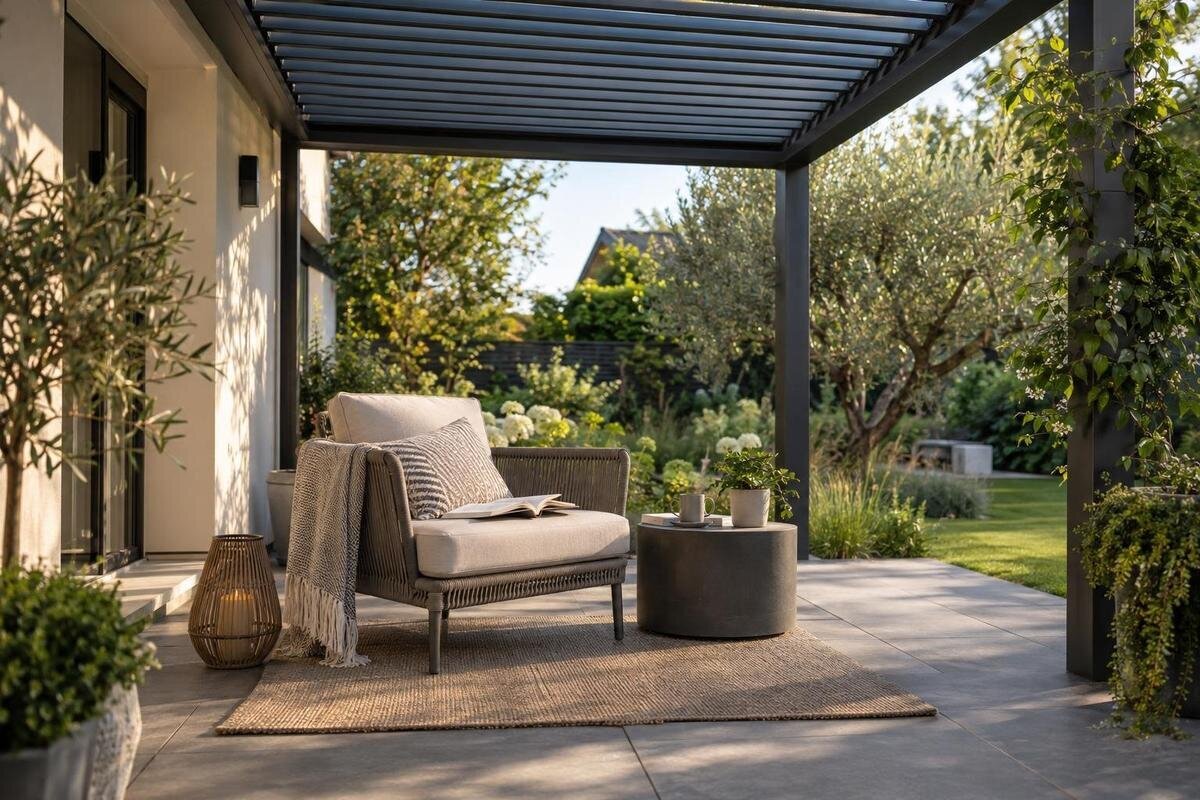
Pergola reading corner
A pergola reading corner works best when it is planned around the way you actually read, not just the look of a chair beneath a frame. Measure the seat and side table, observe the sun at your usual reading times, then plan light, quiet and book storage. Keep in mind that a pergola does not automatically keep books or cushions dry.

Decide how the reading corner will be used
Begin by deciding whether this is a one-person nook or a place for two, and whether you use it for ten minutes with a coffee or for a longer stretch with a novel. Paperbacks, large hardbacks and e-readers call for different surfaces: a device may need a steady place to rest, while a printed book is easier to manage with a bookmark and a table beside you. Note whether you read mainly in the morning, afternoon or after sunset, and whether you usually sit upright or recline. Those answers set the chair's direction, table size and lighting requirement before colour or accessories enter the discussion.
Decide, too, how the corner should work alongside the rest of the terrace. A tucked-away seat may suit someone seeking a quiet pause, while a chair angled towards a garden or courtyard keeps the view open. If the pergola also serves as a dining or social area, mark which items move and which stay; a footrest or book stack should not narrow the everyday route. If the spot is shared, agree whether it should remain ready for reading or clear quickly for another use. Write down two or three priorities, such as shade at a particular time, a lamp after dusk and a place to set down a book.
Measure the chair, table and walking route
Measure the chair in the position it will actually occupy, including its full depth when reclined, the space needed to swivel and the room to stand up. Put masking tape or chalk around those edges on the terrace, then add the real side table, lamp base and storage unit if you expect them. This builds a footprint from objects you know rather than a catalogue image. Try the arrangement with the chair facing the preferred view, and mark the clearance needed to move it for cleaning or to bring cushions indoors. A seat that fits only when pressed against a boundary may be possible on paper but awkward in daily use.
Draw the everyday walking line from the house door or garden entrance past the reading spot. Check door swings, steps, other furniture and access to any part of the terrace that must remain reachable. Leave enough room for someone to pass without stepping over a footrest or brushing the book table; a route that works only when people turn sideways is not a clear route. The listing for Bloomcabin Bioclimatic Pergola states options from 9 to 24 m². Treat that area range as a comparison point, not proof that a particular chair-and-route plan will fit. Confirm the actual dimensions of the option you are considering before settling on a layout.
Follow the sun during your reading hours
Make a simple sun record at the hours you expect to read, rather than judging the site from one visit. Note where direct light falls on the seat, page and table in the morning and late afternoon; the edge of the pergola's shadow changes over the day and across the year. Nearby walls, trees and neighbouring buildings can alter the result. A sketch or photographs taken from seated eye level help show whether glare comes from overhead, through an open side or from a bright surface beyond the pergola. Repeat the observation at another time instead of assuming one position will remain comfortable all day.
Where the corner sits beside a house, record the wall, windows and doors on the plan as well as the direction of the sun. Include a wall-mounted format such as Bloomcabin Wall Pergola in your comparison, and mark the intended chair position in relation to the building. Compare the shade at that position with the site record, including any light reflected from nearby windows. If you cannot observe every season, prioritise the hours you use most. Leave room to reposition the chair as the light shifts rather than expecting one spot to stay ideal all day.
Choose a chair and side table for the space
For a reading seat, pay attention to support and ease of use, not the product photograph alone. Try the chair with the kind of book or device you use and sit in it long enough to notice whether the seat depth, back angle and arm height feel right to you. If you like to change position, check that the chair can turn or recline without striking a post, wall or planter. Cushions can make a chair more comfortable, but they take up space and may need to be stored when not in use, so include them in the mock-up.
Place a side table where you can reach it without leaning across the walking route. It should have room for the current book, glasses or reading device, and a drink if that is part of your routine; a very small surface can become cluttered, while a large one can crowd the chair. When considering the Bloomcabin Pergola, include the table in your furniture plan rather than treating it as an accessory to squeeze in later. Test which side of the chair is more convenient, especially if you also need space for a lamp. Check that you can put down a book and stand up without moving the table.

Balance daylight with a reading light
Daylight is useful until it lands directly on the page or reflects into your eyes. When you test the chair position, hold a page or screen at normal reading height and check it from where you will sit. If the light is harsh, turn the chair slightly, move the table or adjust the reading time; a small change can work better than trying to cover the whole terrace. Think about contrast, too: a page in deep shade can be difficult to read when the rest of the view is bright. Aim for even light on the book rather than a dramatic patch of sun behind it.
For dusk and evening, plan a focused lamp separately from the pergola's roof or structure. A portable light made for outdoor use can sit on the side table or another stable surface, with its beam directed onto the page and away from faces. Check that its base and any cable do not obstruct the route, and do not assume that a beam or post is intended to carry a light. For a permanently installed fitting, consult a qualified electrician, and check with the manufacturer or installer before attaching anything to the structure. A portable lamp also lets you adjust the reading position without committing to fixed lighting.
Reduce distractions while keeping the corner open
Quiet often depends on positioning as much as on adding barriers. Put the chair away from the main doorway, barbecue route, bins or the part of the terrace where people gather, and angle it towards the view you want. If neighbours or passers-by can see directly into the seat, try turning the chair before adding a screen. This may solve the issue with fewer objects. Screens, curtains or planters can limit sightlines, but check that they are intended for outdoor conditions and do not block a route or become unsecured in an exposed area.
An open-sided pergola does not make outside noise disappear, so be realistic about what quiet means for the site. If a wall-mounted arrangement is on your shortlist, compare the Bloomcabin Wall Pergola option with the actual position of windows, doors and boundaries; do not assume the format provides acoustic privacy or a particular screen arrangement. Decide whether you want to face away from a busy area, gain a more private view or simply keep some distance from household activity. These are different needs, and a site plan can show which may be addressed by chair position alone.
Book storage and everyday essentials
Keep the reading materials close at hand, but keep the display small. A shallow shelf, compact cabinet or lidded box beside the chair can hold the book in use, a bookmark and perhaps a notebook without turning the corner into a second storage area. Draw the storage unit on the plan at its real width and depth, and check that its door or lid can open without hitting the chair. If you prefer a small shelf, keep loose items in a tray so they do not spread onto the table and reduce the space available for reading.
Books, paper and electronic devices should not be treated as outdoor furniture. A pergola may provide shade, but its presence alone does not establish that rain, wind-blown moisture or strong sun will be kept away from a shelf. Use closed storage intended for the conditions, or bring valuable items indoors when the space is not in use; cushions and charging accessories deserve the same thought. If you are considering the Bloomcabin Pergola listing, allow space for storage as a separate item in the layout. Decide what you want to keep beside the chair and what you will carry indoors after reading.
Treat shade and weather protection separately
Shade and weather shelter are separate questions. A pergola may reduce direct sun in one part of the day yet still leave the reading seat exposed as the sun moves or as wind carries rain through an open side. Decide whether the corner is intended for fair-weather reading or for use in a broader range of conditions, then check what the specific configuration is described as offering. Keep a practical plan for removing books, cushions and small electronics if conditions change. Do not treat a shaded seat as a dry storage area unless the product information expressly supports that use.
If your comparison includes the Bioclimatic Pergola product page, look for the exact specifications of the option under consideration rather than reading performance into the model name. Ask what the chosen configuration covers, how its sides are treated and what weather conditions the supplier's information actually describes; do not fill gaps with assumptions. At the site, note the direction from which sun and wind usually reach the chair and whether a nearby wall or hedge changes its exposure. That record helps you decide whether separate storage or a movable chair is still needed.

Choose a pergola format to suit the site
Choose a format around the features already present: a boundary wall, the house entrance, windows, shade from existing trees and the route through the garden. Draw them before choosing a model; a layout that looks balanced in an empty rectangle might place the chair in a doorway's path or leave too little room to pull out a seat. Use the exact product drawings to identify where the selected option's supporting parts or attachment points are shown. Have site-specific mounting or foundation questions assessed by a qualified professional. No single arrangement suits every terrace.
A wall-mounted option, including Bloomcabin's wall-mounted pergola, should be assessed against the real building openings and the position where the chair will sit, not just the available area on paper. Confirm mounting requirements and the selected dimensions with the product information and a qualified installer; a model name cannot establish that a particular wall or terrace is suitable. If a wall-adjacent arrangement is not suitable for the site, review other formats rather than altering access or forcing the chair into an awkward corner. Keep that professional review separate from the comfort test you can do yourself.
Test the complete layout before choosing a configuration
Make a full-scale test with tape, cardboard boxes or the actual furniture. Sit in the chair, open the book or device, put the lamp and storage in place, and walk past as another person would. Repeat the check at the times you are most likely to read; a view from standing height can miss glare at seated eye level or a footrest that blocks the route. Leave the mock-up in place for a while if practical, and see whether the intended view and sense of privacy still work when the terrace is in ordinary use.
Once the layout works, compare its measured width, depth and required clearances with the exact pergola option rather than only the total area. Use the listed Bioclimatic Pergola sizes to narrow the comparison, then check the selected configuration against your plan. Keep the reading essentials visible on that drawing: the chair in use, a reachable table, the lamp, storage and the route past them. Note which items can move if you share the terrace with others. This gives you a practical basis for choosing a configuration without losing the details that made the reading corner comfortable during the test.
Frequently asked questions
How much pergola space does a reading corner need?
There is no single area that suits every chair. Measure the seat in use, including any recline, footstool, side table and storage, then add the route past it. A product's stated area does not show whether those pieces will fit; compare the exact dimensions of the option you are considering with your drawn layout.
Will a pergola keep books dry?
Do not assume so. Rain and wind can reach an open side, and the details of the chosen configuration matter. Store books and devices indoors or in a closed unit designed for the conditions. Check the product information for any stated weather protection before leaving reading materials outside.
Which way should the reading chair face?
Choose by observing the seat at the hours you use it. Avoid direct light on the page or glare in your eyes, keep a view you enjoy, and consider privacy and the route through the terrace. There is no universal compass direction: walls, trees and neighbouring buildings all affect local shade.
What kind of light should I use after sunset?
Choose a lamp intended for outdoor use and place it on a stable surface so it lights the page without shining into the reader's eyes. Keep any cable out of the route. For fixed lighting, consult a qualified electrician; check with the manufacturer or installer before attaching a fitting to the pergola.
Can I attach a shelf or lamp to the pergola?
Do not assume that a beam or post is intended to carry accessories. Check the manufacturer's guidance for the specific configuration and ask a qualified installer where needed. A freestanding shelf and table-top lamp may be simpler, provided they are stable, suitable for outdoor conditions and do not obstruct the walking route.
A successful reading corner is a small, well-resolved part of the outdoor layout: the chair fits in its real position, shade has been checked at reading hours, the page can be lit after sunset, and books have a protected place when they are not in use. Test the arrangement with the actual furniture and ordinary walking routes before choosing a pergola configuration. If shade, privacy and shelter remain separate questions on the plan, treat them separately when comparing options. The result can be a comfortable place to read without crowding the rest of the terrace.
