
How to Work Out the Cost of Heating a Pergola Seating Area
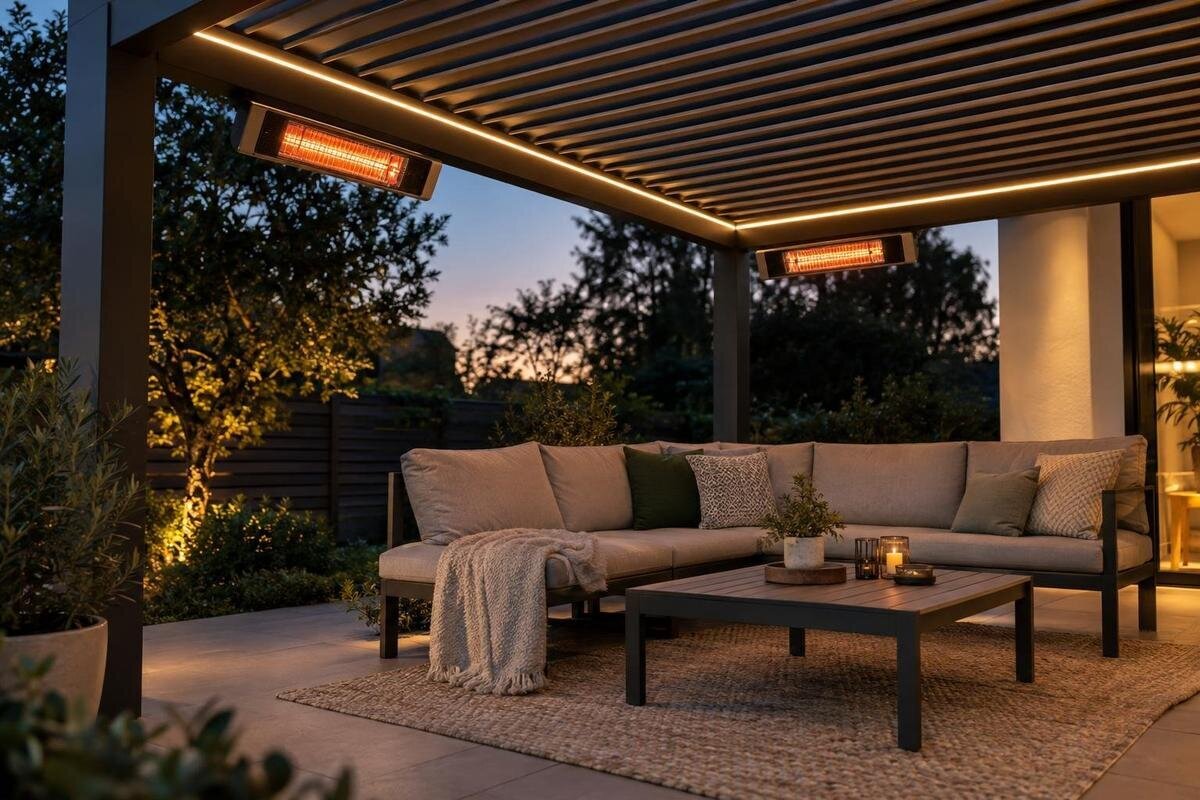
Pergola heating costs
An outdoor heater’s running cost comes from the electricity it draws and the time it operates. You can estimate it without guessing a price per square metre: convert the heater’s electrical input to kilowatts, multiply by hours, then apply the electricity unit rate that covers those hours. That gives you an energy charge, not the cost of buying or installing equipment. It also cannot tell you by itself whether the seating area will feel warm. Radiant comfort depends on where the heat reaches people, while the temperature of open air may change very little.

The cost calculation starts with electrical input
For a mains-powered electric heater, use the electrical input shown on its rating plate or in the exact manufacturer’s manual. It may be given in watts: divide by 1,000 to express it in kilowatts. A rating of 1,800 W becomes 1.8 kW. If a document lists both electrical input and heat output, use the input for electricity costing; the bill reflects energy taken from the supply. Where the heater has selectable power levels, note the input for the setting you intend to use, or calculate each setting separately. A sales description, heating-area claim or pergola size does not give you the necessary wattage. The figure should come from the heater model you are actually considering.
Multiply the input in kW by the hours the heater draws that power to get kilowatt-hours (kWh). An illustrative 2 kW unit running at full input for three hours uses 6 kWh. Multiply those 6 kWh by your tariff per kWh to find the session’s energy charge. If two units run at once, calculate each one and add their kWh; you can add their power ratings first only when both operate for the same number of hours. This is a full-input estimate, not a guarantee about comfort or actual use. The calculation is for electric heaters; a fuel-powered model needs its own fuel-consumption figure and fuel price.
Use the rate that applies when you heat the area
Use the per-kWh rate that applies during the hours you expect to run the heater. Check your current bill or tariff details, especially if the rate changes by time band or period. For a time-based tariff, split the session into blocks and calculate each one. For example, a 2 kW heater used for one hour at an illustrative €0.20/kWh and one hour at €0.30/kWh costs €0.40 + €0.60 = €1.00 for 4 kWh. These figures are arithmetic examples, not a current Maltese tariff. If one variable rate applies throughout, use that rate for the whole estimate.
Separate charges for each unit of electricity from fixed daily or monthly charges. A fixed charge does not increase because you run the heater for another evening, so it should not be multiplied by the heater’s kWh. Dividing the whole bill by total kWh can also give a misleading extra-use rate if fixed charges are included. For the running-cost estimate, use the per-kWh amount that applies to additional electricity and treat any per-unit charges consistently. Do not add a tax or other component twice if it is already included in the stated rate. If you use a bill-wide average instead, label it as a rough comparison rather than a precise extra cost.
Turn one session into a weekly or seasonal estimate
Estimate the time the heater will actually be on, not just the length of the meal or visit. If you switch it on before people sit down, that warm-up period counts. So does time when everyone leaves the table but the heater stays on. Write down a typical session length, how many evenings you expect to use it in a week, and how many weeks you expect to heat the seating area. Use your routine as a starting point, then make a separate allowance for busier or cooler periods rather than assuming the same pattern every week of the year.
For example, a 2 kW heater used at full input for three hours on four evenings each week uses 24 kWh a week. Across four weeks, that is 96 kWh; at an illustrative €0.25/kWh, the energy charge would be €24. This is a four-week example, not a fixed calendar-month total. If you are budgeting for a regular Bloomcabin Pergola, keep the expected heating schedule alongside the structure cost. For a seasonal total, count the weeks you actually expect to use the heater rather than multiplying a busy week by the whole year.
Base the estimate on the seating zone, not just the footprint
The pergola’s floor area does not appear in the electricity formula. Two electric heaters with the same input, used for the same number of hours at the same tariff, have the same estimated energy cost even if their structures differ in size. The footprint can still matter when you plan the seating arrangement: a larger or differently shaped area may lead you to consider more than one heater, a different operating pattern or a smaller heated zone. Those choices can change the bill, but there is no universal cost-per-square-metre figure that replaces the heater’s input and operating time.
Mark the chairs and tables people use most often, then decide whether you want heat directed at one group or across more of the seating area. Do not assume a single unit will cover every chair; check the exact heater’s instructions for its stated coverage and permitted mounting. The Bloomcabin Bioclimatic Pergola is listed from 9 to 24 m²; use that figure as a structure footprint, not as a statement of heater coverage or performance. The equipment manual, rather than the pergola’s area, is the place to look for the heater’s own specifications.
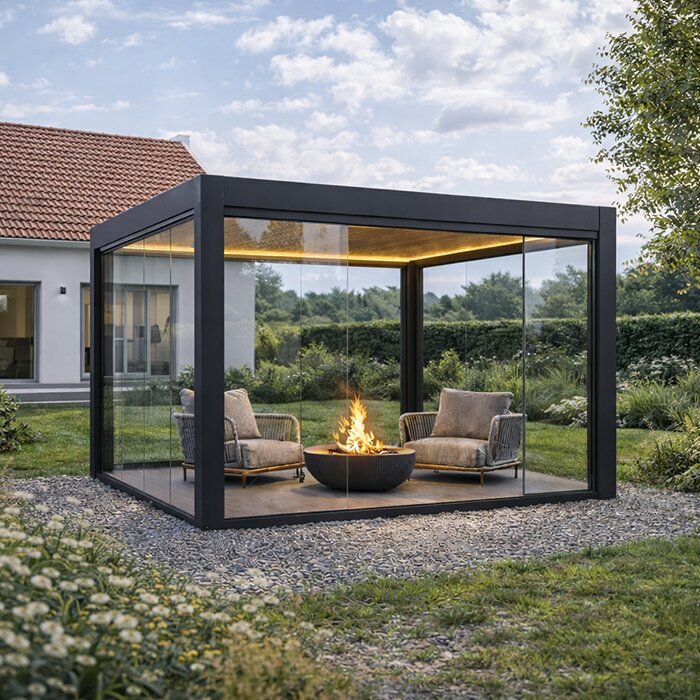
Radiant comfort and outdoor air temperature are different
A radiant heater can warm people and nearby surfaces in its path without raising the temperature throughout an open pergola. You may feel warmth at a seat while a thermometer in the open air records little change. That reading alone does not describe how comfortable someone is under the heater. The reverse is also possible: one chair may feel warm while other seats around the table remain outside the main area reached by the heat. For outdoor seating, where people sit in relation to the heater matters as much as the overall size of the structure.
Consider the usual seats, the direction people face, how they move around the area and whether furniture or other objects are between them and the heat source. Follow the heater manual for relevant distances and positioning rather than estimating from a photograph or a product name. In a wall-side layout, Bloomcabin Wall Pergola identifies a wall-mounted structure format; the name does not show where a heater can be fixed or which seats it will reach. Confirm the heater’s approved mounting, clearances and outdoor rating from its exact instructions and with a qualified professional.
Controls and operating patterns affect actual consumption
The rating gives you a useful full-input estimate, but the heater may not draw that input for the whole time you are using it. A selected lower setting, thermostat or other control can change how much energy it uses. For instance, a 2 kW heater drawing full input for 90 minutes of a three-hour session uses 3 kWh. A unit drawing 1 kW throughout those three hours also uses 3 kWh. These examples show the arithmetic; they do not predict how a particular heater’s controls will behave. Use the setting and consumption information for the exact model wherever it is available.
A timer only reduces energy use if it shortens the time the heater operates; a control does not justify assuming a particular percentage saving. When planning evening use of the Bloomcabin Pergola, give heating and lighting separate entries in your estimate. They may run for different lengths of time: switching the heater off does not necessarily mean the lights go off too. If you want to estimate the whole seating area’s electricity use, calculate each device from its own input and operating hours, then add the resulting kWh before applying the relevant tariff.
Wind and exposure can change how long you choose to heat
Weather does not change the arithmetic for a given input, duration and tariff, but exposure can change how comfortable the same heating arrangement feels. On a breezier evening, people may use a higher setting, run the heater for longer or decide not to use it. A seating area with some shelter may feel different from one that is fully open, but a roof, wall or screen should not be assumed to retain enough warmth to reduce running costs. Build separate estimates for an ordinary evening and a cooler or more exposed one if your use varies.
For a planned bioclimatic pergola seating area, note which evenings your estimate represents rather than attaching a single heating cost to the structure. Your ordinary-use estimate might cover the usual setting and session length; a second estimate can show the higher setting or longer use you would consider in cooler conditions. Include only settings available on the heater you are comparing, and do not assume that either estimate guarantees comfort. If you would simply stay indoors on an exposed evening, leave that session out of the expected total rather than automatically budgeting for extra heating.
Compare heater running costs on a consistent basis
When comparing electric heaters, use the electrical input and a realistic operating schedule for each one. An illustrative 1 kW heater running for four hours uses 4 kWh; a 2 kW heater running for two hours also uses 4 kWh. At the same tariff, those examples have the same energy charge, although they do not promise the same distribution of warmth or comfort. For a multi-heater setup, add the kWh for each unit. Keep the tariff and expected hours consistent between comparisons so that the difference you see comes from the assumptions you actually want to compare.
If you are comparing heating arrangements for a Bloomcabin Wall Pergola, give each arrangement its own entry showing the heater model, input, number of units and expected hours. Make clear whether a lower total comes from a lower power setting, fewer heaters or a shorter session. This helps you see whether you are comparing equipment for the same intended use or changing the way you would use the seating area. Compare the cost alongside the seats each arrangement is intended to serve: a lower energy estimate alone does not show that it will provide the warmth you want.
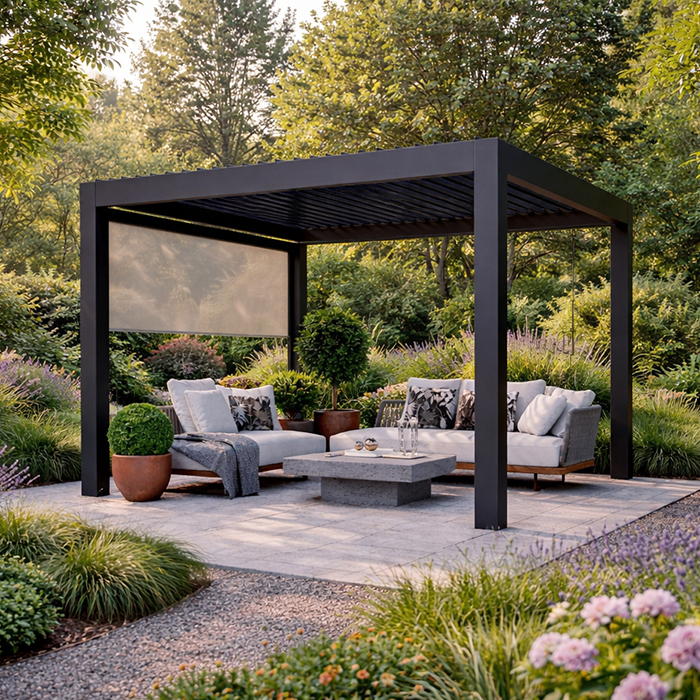
Keep equipment and installation costs separate from electricity
A running-cost calculation covers the energy charge, not the cost of buying a heater or pergola. It also does not include professional mounting or electrical work. Treat those as separate, one-off costs and obtain figures for the equipment and any work specified by the relevant supplier or qualified electrician. Do not assume that an existing supply, socket or pergola frame is suitable for the equipment you have in mind. The exact heater manual, outdoor rating and documented mounting approval matter when you plan an installation; a kWh estimate cannot confirm them.
If Bloomcabin’s Bioclimatic Pergola option is part of your plans, put the confirmed structure cost in its own row alongside the heater and any quoted professional work. Do not assume a heater or electrical work is included unless the current written specification confirms it. For a broader comparison, show the one-off costs separately from estimated weekly or seasonal electricity charges. State the tariff and usage pattern behind each energy figure so you can compare like with like without mistaking an illustrative running cost for a complete project budget.
Make a realistic estimate before choosing equipment
For a useful estimate, write down the exact heater’s electrical input, the number of units, the hours you expect to use them per session and the sessions you expect in a typical week. Add the tariff that applies at those times and note any controls or settings that may change actual consumption. Calculate the energy charge for one session first, then extend it to a week and the part of the year when you expect to heat the area. If use varies, make a normal-use estimate and a higher-use one instead of presenting one assumption as certain.
Keep a short usage record for your chosen Bloomcabin pergola configuration once the heating is in use. Note the number of heaters switched on, their settings and the session length, then compare those details with your original assumptions. Record whether the usual seats felt comfortable as a separate observation, not as a measure of electricity consumption. If you revise the estimate, identify what changed so that the old and new totals remain understandable. A longer session, an extra heater and a different tariff are separate reasons for a higher figure, even when they occur together.
Frequently asked questions
How do I calculate the running cost of an electric outdoor heater?
Convert the heater’s electrical input from watts to kilowatts, multiply by the hours it runs to get kWh, then multiply by your electricity rate per kWh. For more than one heater, calculate each unit’s use and add the kWh.
Does the size of a pergola determine the heating bill?
Not directly. With the same heater input and operating time, the estimated electricity use is the same whatever the pergola’s footprint. The area and seating layout may affect the equipment or running pattern you choose, so base your estimate on the actual heater and likely hours.
Will a radiant heater raise the temperature throughout the pergola?
Not necessarily. Radiant heat can make people and surfaces in its path feel warmer without significantly changing the temperature of the open air. Consider which seats are reached, and check the heater’s instructions for its intended coverage and mounting.
Should I divide my whole electricity bill by the number of kWh?
That gives a rough average, but fixed charges can make it a poor estimate of the extra cost of running a heater. Use the per-kWh rate that applies to the electricity you will use, including the relevant time band if rates vary.
Does the running-cost estimate include the heater or installation?
No. The calculation estimates electricity use only. Keep the heater, pergola and any professional mounting or electrical work as separate costs, and verify the exact heater model, outdoor rating and approved mounting with the relevant manuals and a qualified professional.
An estimate is most useful when it reflects the way you will actually use the pergola. Start with the heater’s electrical input and the tariff on your bill, then build a weekly or seasonal total from realistic hours and settings. Review it against actual use and the heater’s controls. If people at the seats still feel cold while the unit is running, changing the cost calculation will not solve the comfort issue: the radiant zone, seating position and approved setup need checking. Keeping energy, comfort and installation as separate questions makes the bill easier to understand and the buying decision more informed.
