
Squeaking Pergola Mechanisms: When Is Maintenance Needed?
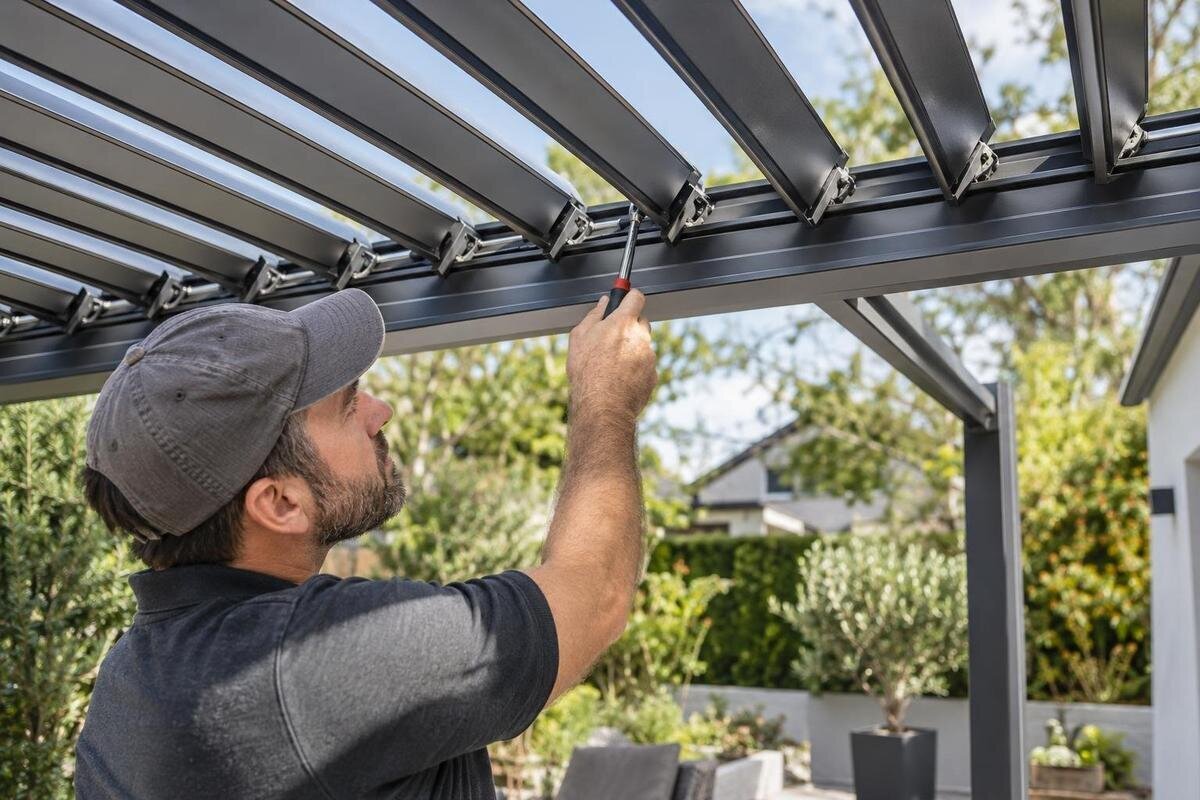
Pergola care
A squeak from a pergola is irritating, but the sound alone does not tell you whether a part is dirty, worn or due for lubrication. Its timing, apparent location and relationship to normal movement are more useful clues. Recording those details before arranging maintenance gives a supplier or qualified service person a clearer starting point. Begin with safe observation: do not force the mechanism, take it apart or try a household lubricant. Follow the instructions for the exact model, and ask for service if the noise persists or normal movement changes.

Before arranging maintenance 1
Why a squeak does not identify the fault
A squeak is a symptom, not a fault code. It confirms that a sound is occurring under certain conditions, but it does not identify the component or prove that anything is damaged. Sound can travel along a pergola frame, so the place where it seems loudest may not be where it starts. A moving mechanism, a connection, an object touching the structure or a nearby source can sound similar to an owner. Different systems use different arrangements, so another owner’s solution—particularly lubrication—is not a reliable guide to yours. A clear, high-pitched noise is still not a diagnosis.
Copy the product name from your order confirmation, invoice or manual rather than identifying the system from appearance alone. If your paperwork says Bloomcabin Pergola, use that wording when describing the issue. Keep the order reference alongside it so support can distinguish your installation from another product with a similar name. If the paperwork lists separate accessories, identify which part of the installation seems to be involved without assuming that the accessory is responsible. Where the model or version is unclear, say so rather than choosing the nearest-looking catalogue image. This separates information taken from your records from your own observations. Keep your first description factual: “one squeak during closing, heard near a corner” is more useful than “the hinge needs oil”. The aim is to identify the pergola and describe the symptom, not to select a repair before the cause is known.
Record when the noise occurs
Note the exact activity: ordinary opening, closing, a particular point in either action, or a time when the pergola appears still. If your model has a moving roof, describe whether the sound starts, continues or ends with its normal movement. Do not operate it repeatedly just to reproduce the noise. Record whether anyone was using a control normally or whether the sound occurred without a command; do not test settings or change the way the system is used to investigate. Simple notes such as “near the end of closing” are clearer than measurements you cannot verify.
Record whether the sound happens once, repeats during normal use, or varies with the position of the moving part. Note if you hear it in both directions or only one, and whether movement seemed to follow its usual pace. If the sound continues after operation stops, say so without touching the frame or trying to hold it still. For an installation identified as Bloomcabin Bioclimatic Pergola, attach these observations to that model name in your notes. Use a consistent description of the movement, such as “opening” or “closing”, rather than switching between the direction of the control and the position of the roof. Separate each occurrence by date so that several brief noises are not mistaken for one continuous event. If you did not notice the starting position or direction, leave that detail unknown; a gap in the record is preferable to a guessed sequence.
Before arranging maintenance 2
Locate the sound without taking anything apart
Listen from an ordinary, safe position and note the broad area where the sound is clearest: a corner, outer edge, centre or side near a wall, if those descriptions suit your layout. Compare what you hear from more than one accessible place only while the pergola is stationary; keep clear whenever it moves. A second listener may help confirm whether the sound seems concentrated or travels, but nobody should stand beneath or beside moving parts to do so. Record an area rather than naming a component as defective.
Do not climb onto the structure, reach into a joint, remove a cover or touch a component while diagnosing a squeak. Those actions may expose you to moving parts or interfere with an inspection. If your paperwork names Bloomcabin Wall Pergola, include that exact name beside your note about where the sound was heard; do not assume the wall side is the source. A ground-level photograph can provide a reference for your description. Mark the broad area on a copy of the photograph and note where you were standing, keeping the original available as well. Use fixed features to describe the position, such as “the corner nearest the doorway”, because “left” and “right” depend on where the listener stands. If you cannot narrow the sound down beyond one side, report that uncertainty. A photograph shows the layout, not the mechanical condition of a concealed part.
Describe the sound and any change
Use everyday words rather than a technical diagnosis. Is it a brief squeak, a repeated chirp, a scrape, a rattle, a click or a rough grinding sound? Does it happen once or continue through the movement? Is it steady, intermittent or changing in volume? A short recording may preserve what you heard, but a phone microphone can alter pitch and volume. Treat it as an example of the sound, not a test that identifies a fault. Note whether you heard the squeak alone or alongside another sound.
Record when you first noticed the noise and whether it has become more frequent or louder. Note if it appeared after cleaning, servicing, a storm or an impact, and whether normal movement has become hesitant, stopped short or changed unexpectedly. If you have an earlier note or recording, compare the circumstances as well as the sound; clips made at different distances are not a reliable measure of volume change. Avoid claims such as “the bearing has failed” unless a qualified technician has confirmed them. Specific observations give service staff a better starting point than a guessed cause.

Before arranging maintenance 3
Note weather and nearby objects
Weather and surroundings can affect when a sound is noticed, but they do not identify its source. Note whether it occurs only in wind, after rain, at a particular time or while nearby equipment is operating. From the ground, look for an object close to the pergola that might be making contact, such as a branch, cable, blind or outdoor furnishing. Treat this as a clue to report, not proof of a fault. Do not climb, push the frame or move anything lodged between moving parts to investigate.
Distinguish noise during normal operation from a sound heard when no control is being used. Wind can move nearby objects or mask other sounds; neither observation proves that a mechanism is loose or damaged. If debris is visible on an easily reached area, remove it only if your model’s instructions describe that as a safe owner task. Otherwise leave it for service. A short note such as “heard during breezy conditions” is useful context; a theory about what the weather has done to a component is not.
When to stop operating the pergola
Arrange an inspection rather than relying on routine cleaning if a new squeak persists, grows steadily worse or returns after care carried out exactly as the manual allows. A change in movement is a reason to stop and ask for help: binding, grinding, an uneven response, unexpected stopping, visible damage or a component that appears displaced should not be tested repeatedly. Stop operating the mechanism, keep people clear and follow the manufacturer’s safe-use guidance while arranging qualified service.
Do not pull, push or hold a part, force the mechanism, or remove a cover to see what is inside. If you are unsure whether it is safe to operate the pergola again, consult the manual or qualified service rather than making repeated trial runs. When using the wall-mounted pergola listing to help identify your product, distinguish the catalogue information from what you have observed on your own installation. Tell support whether you have stopped using the mechanism and describe the specific change that prompted you to stop. Ask what restrictions apply while you wait for an inspection, rather than assuming that avoiding one position or direction makes continued use acceptable. Explain any access difficulties when arranging the visit so that these can be discussed in advance. Even if movement still appears normal, a persistent new noise warrants model-specific advice rather than repeated attempts to silence it.
Before arranging maintenance 4
Use the model’s maintenance schedule
Maintenance is due according to the schedule and tasks in the instructions for the exact pergola, not according to one universal calendar or sound threshold. The tasks that an owner may carry out, and the parts that require a service visit, depend on the system. A new squeak can prompt an inspection or a request for advice, but it does not automatically mean lubrication is due. Equally, a quiet mechanism is not a reason to skip a task specified in the manufacturer’s instructions.
Find the manual that matches your model and installed configuration, and follow its maintenance section as written. If you cannot confirm that a document applies, ask the supplier, installer or manufacturer before using it. The regular pergola listing can help you identify the product in that request; include the name shown on your order and any available model reference. Once you have the matching instructions, distinguish scheduled owner tasks from work reserved for service personnel. Record when each applicable task was last completed and when it is next due under that schedule. Mark an unknown service date as unknown rather than treating the purchase date as evidence that maintenance took place. Keep a noise report separate from this routine record: it explains why you are seeking advice now, while the maintenance record shows what care has already been carried out. A general online video cannot replace the instructions for your installation.
Use only approved care products and methods
Use only cleaning products, lubricants and methods approved by the manufacturer for the specific component. Do not spray or pour household oil, silicone product, grease, penetrating fluid or cleaner into a mechanism because it squeaks. Systems vary, and some parts may not be intended to receive lubricant. The sound alone cannot tell you what is suitable or where it should go. If the instructions name an approved product and location, follow them exactly rather than applying it to nearby parts as well.
Do not take panels, motor covers or other components apart, tighten fasteners, adjust travel or alter wiring as part of noise diagnosis. That work may need a trained technician. For a care enquiry about Bloomcabin’s bioclimatic pergola, give the product name from your records and identify the component you are asking about, if known. Ask for clarification if the instructions mention a product type without making the approved choice clear. A useful answer should establish which product and method apply to that component, and whether the task is intended for the owner or a technician. Do not assume that approval for one part extends to every joint or surface. Keep the product details with your maintenance notes so that a later enquiry does not rely on a description such as “some spray”. If the manual is missing or unclear, leave the mechanism untreated while seeking guidance; a temporary reduction in noise does not establish suitability.

Before arranging maintenance 5
Prepare a useful maintenance enquiry
Make your enquiry concise and chronological. Include the exact model name from your paperwork, the approximate purchase or installation date if known, and any model or serial reference already available without moving or dismantling the pergola. Describe what was happening when the sound occurred, where it seemed clearest, the surrounding conditions and whether ordinary movement has changed. If the noise began after a repair or cleaning, give the date and describe what was done. Name any care product used, if you know it.
A short audio or video clip can help if you can record it safely during normal use; do not ask someone to operate the pergola just to make a recording. Add a note about the action and conditions shown, and keep the original file if possible. For an enquiry concerning the bioclimatic pergola product reference, use the exact name from your paperwork in the message itself so that the description remains clear without opening the link. Label attachments by date and subject, distinguishing a general view from a close view or a sound recording. State the main question plainly: whether the reported noise calls for an inspection, an approved owner task or another service response. Include what remains uncertain, such as the precise source of the sound. This gives support a focused enquiry without presenting a suspected cause as an established fault. Images alone cannot confirm replacement-part compatibility.
Confirm replacement parts and repairs before proceeding
Do not choose a replacement part or upgrade by matching a photograph, sound description or approximate size. Components can look alike while differing by model, version or installed arrangement, and a part that seems similar may not address the noise. Ask support to identify the relevant component and confirm compatibility with the exact pergola and its configuration before ordering. If the assessment involves a structural adjustment, drive or wiring, leave the work to qualified service personnel.
Share the observations you have already recorded and ask whether the recommendation is inspection, approved maintenance or a matched replacement. If your paperwork identifies the product as Bloomcabin Pergola, include that name and the order details alongside the Bloomcabin Pergola product reference. Before accepting a proposed repair or ordering a part, clarify which component is involved, what work is included and who will carry it out. Distinguish a proposed replacement intended to address the reported noise from an optional upgrade, so that the purpose of each item is clear. Do not treat a catalogue resemblance as confirmation that either is suitable for your installation. After service, keep the description of the work, any part reference and the approved care instructions provided. Note whether the original sound is still present during ordinary use without carrying out a separate stress test. That record provides a clear starting point if the same symptom returns.
Frequently asked questions
Does a squeak mean the pergola needs lubrication?
Not necessarily. A squeak does not identify its source or prove that a part needs lubricant. Check the maintenance instructions for your exact model before applying anything. If the sound persists, movement changes or the instructions do not cover it, ask the supplier or qualified service for advice.
Can I use a general-purpose oil or silicone spray?
Only if the manufacturer’s instructions approve that specific product for the relevant component and explain how it should be used. Products and mechanisms vary, so do not choose a lubricant from the sound alone. If you cannot confirm what is approved, leave the mechanism untreated and ask for guidance.
Should I operate the mechanism repeatedly to locate the sound?
No. Note what happens during normal use rather than cycling the mechanism to reproduce a noise. Keep clear while it moves, and stop operating it if it binds, grinds, moves unexpectedly or shows visible damage. A safe recording of an ordinary occurrence can help, but it is not essential.
Is noise during wind a sign of damage?
Not by itself. Wind may affect what you hear or draw attention to nearby objects, but it does not identify the source. Record the conditions and whether the sound occurs while the pergola is moving or apparently still. Ask for advice if the noise persists or normal movement changes.
How often should a pergola mechanism be serviced?
There is no universal interval that applies to every pergola. Follow the schedule and tasks in the instructions for the exact model. If you cannot confirm which instructions match your installation, ask the supplier or installer before arranging maintenance or using a care product.
A useful maintenance decision comes from the sound’s pattern, any change in normal movement and the instructions for the exact model—not from trying to silence it with an unapproved product. Record what you observe, keep clear of moving parts and ask for qualified, model-specific advice when the noise persists, movement changes or the manual does not cover the situation.
