
Planning Outdoor Film Nights Under a Pergola
Outdoor film-night planning
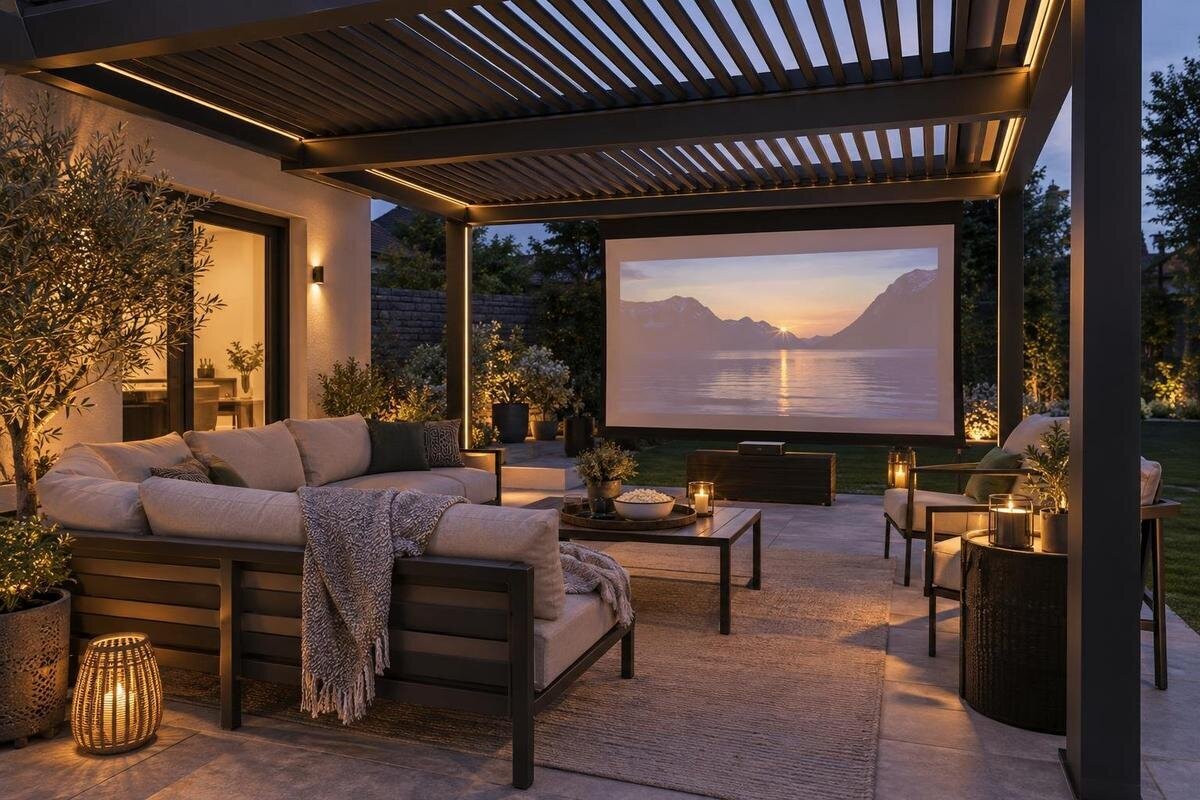
Planning an outdoor film night under a pergola is less about fitting in a large screen than keeping a clear view as daylight fades. The screen, seats, projector, safe route and nearby homes all affect where the structure can work well. A pergola alone does not guarantee darkness, protection for electronics or quieter sound. Check the site at the time you expect to watch, measure real furniture and equipment, and confirm outdoor use or attachments from the relevant product instructions. This guide focuses on those practical checks, so you can compare a layout with the actual requirements of your film night rather than relying on a plan that looks convincing only on paper.

01
Choose the screen position and viewing direction
Choose a likely screen position before buying a projector or moving heavy furniture. The screen is the visual anchor: seats need to face it, while the route from the house, gate or garden should remain open. Look at possible screen supports only after checking what is suitable for the chosen screen and outdoor conditions. Avoid placing the image where a pergola post, open door, tree or regular walking route cuts across the view. A quick concept sketch can show the screen, projector, seats and access line together. Mark the positions temporarily on the ground, then sit where each guest would sit.
Use the screen maker’s guidance on image size and viewing distance rather than relying on a universal rule, since screens and projectors differ. Decide whether the screen will be freestanding or designed for a particular support, then confirm its outdoor suitability and mounting requirements before including it in the pergola plan. For a portable screen, think through how you will carry it into position, assemble it and remove it afterwards. Check that its storage location is accessible without moving all the seating. These practical details matter if the terrace needs to return to everyday use after each film rather than remain permanently arranged for viewing.
Check sunlight at the time you will watch
Sunlight can affect the picture well before sunset. At the time you expect to start, note whether low-angle light reaches the screen, reflects from a pale wall or shines into viewers’ eyes. The sun’s path changes through the year, so do not judge from a midday visit or one season alone. Visit the proposed spot near the usual start time, or record how the light moves across the terrace during that period. Check both the screen and the seats: a bright view behind the audience can make a dark image harder to see, while direct light in someone’s line of sight can be distracting.
Decide whether you want guests to settle in while it is still light or to wait until the image has more contrast. A test with the actual projector and screen gives a more useful answer than guessing from a product description; follow the equipment makers’ advice on intended operating conditions. A pergola is not automatically a blackout enclosure, and light may still enter from the sides. The Bloomcabin Bioclimatic Pergola range is listed from 9 to 24 m², but that size span does not establish a particular shade pattern. Compare the chosen configuration with the sun position you recorded rather than assuming the model name answers the question.
02
Place the screen without blocking doors or paths
Keep the screen out of doorways and away from the route people use to move between the house and garden. Leave room for its support and for access around it if the screen instructions call for that; do not squeeze it against a structure simply because the spot looks tidy. A blank-looking surface may include a door, window, light or other obstruction. Check all of these at the screen’s full size, along with posts, plants and furniture. If the screen is portable, include its feet and any manufacturer-specified support in your concept sketch, and make sure they do not obstruct the walking line.
A wall-mounted pergola may bring screen planning close to a building wall, but that does not mean a screen can be fixed to the pergola or wall. The Bloomcabin Wall Pergola listing identifies a wall-mounted model and gives a range from 9 to 24 m². Use product information and any drawings provided to check the selected configuration, clearances and permitted attachments. The screen’s support requirements and the pergola’s installation details are separate questions. If you are considering a fixed screen, confirm the proposed support with the relevant supplier or a qualified installer instead of treating the structure as an approved fixing point.
Set out seats for clear sightlines
For a single row, place chairs so everyone can see the whole image without having to turn sharply. If you need more than one row, stagger the seats and check the view from each one; heads that line up can hide part of the screen. Look at all four corners of the image, not only the centre, and note whether a post, tall chair back or plant gets in the way. Ask people to sit in the planned places while you check the view. This is more reliable than judging a layout from a standing position or from a photograph of an empty terrace.
Allow people to enter and leave without stepping over legs or passing between the projector and screen. Measure each chair in the position it will actually occupy, including the space needed to pull it out or recline. The Bloomcabin Pergola range is listed from 9 to 24 m², which can help you compare stated footprints, but the range alone cannot show whether a particular row of seats will fit. Use the dimensions of the chosen configuration and a furniture plan to check the space for guests, access and equipment together.
03
Measure the usable space and furniture
Measure the proposed area and record fixed obstructions, door swings and the route through it before comparing pergola sizes. Add the actual screen, chair and table footprints, as well as the projector stand or table and any sound equipment. Include the space occupied when chairs are pulled out and people are seated; a plan based only on furniture outlines can make the finished layout feel cramped. If the structure has supports shown on a selected drawing, mark their positions too. The aim is to see where the film setup fits in the real space, not to make the terrace look full on paper.
A measured sketch also helps distinguish the overall terrace from the usable area for watching. When comparing the wall-mounted Bloomcabin option, use the exact dimensions of the selected configuration rather than treating its advertised area as seating space. Label the measurements clearly so you can distinguish the terrace boundary, the structure and the furniture. Keep access around the screen and seats visible on the drawing instead of counting it as spare space for another chair. Treat the sketch as a concept rather than an installation drawing: it can reveal likely clashes, but it does not establish mounting or site requirements.
Manage stray light without darkening the route
Once direct sunlight fades, nearby lights can still reduce picture contrast or distract viewers. Note which lights come from the house, garden or neighbouring properties, then test the image with the lights you expect to use switched on. Separate lighting needed to move safely from decorative or background lighting that can be reduced or directed away from the screen. Avoid leaving guests to find their way in darkness, and do not place lights where they shine into viewers’ eyes. If a change to outdoor lighting is needed, ask a qualified electrician to advise on suitable equipment and work.
Waiting for deeper dusk, choosing a different screen direction or reducing unnecessary light may be simpler than adding a shade or light-blocking screen. Any proposed outdoor screen or shade needs to suit the conditions and must not obstruct access. A pergola’s model name does not tell you exactly what will be included or how it will affect glare. If considering the bioclimatic Bloomcabin listing, check the stated configuration and ask for clarification about any feature you plan to rely on. Consider where unwanted light enters before deciding whether a proposed feature would address it.
04
Keep the projector clear of walking routes
Choose a projector position that gives it a clear path to the screen without putting people in the beam or making them walk around its stand. Follow the manufacturer’s instructions for placement, image alignment and distance, since these vary between devices. Put the equipment on a stable surface that is not easily knocked by a passing guest. Keep the projector’s ventilation clear as instructed; do not improvise an enclosure to hide it or assume that a sheltered-looking spot is suitable. A test from the intended position will show whether the screen is filled properly and whether people can move around without interrupting the image.
Keep the source device, sound controls and remotes somewhere guests can reach without crossing the projection path or shifting chairs. Arrange any leads so they do not trail across a walkway, and follow the equipment instructions for connecting and operating it. If you are comparing the Bloomcabin Pergola listing, check its stated configuration for any relevant mounting or accessory information. Do not treat a pergola as a projector or speaker mount unless the manufacturer confirms that use. The projector’s own requirements still determine its position, even when the furniture plan seems to leave a convenient spot.
Plan for weather and power separately
Do not treat a pergola as proof that electronics are protected from outdoor conditions. Exposure depends on the site and the specific configuration, including whether rain or wind can reach equipment from the sides. Check the permitted operating and storage conditions for the projector, speakers and screen, and follow their manufacturers’ instructions. A cover or case is not automatically suitable while equipment is running, so do not use one unless the maker says it is appropriate. Decide where equipment can be stored when the film ends and what you will do if conditions change, rather than leaving that decision until guests are outside.
Power supply is a separate planning question from pergola size. Consider where equipment needs to sit and how people will move before discussing outdoor electrical provision with a qualified electrician. Do not improvise wiring or create a layout that depends on loose leads crossing a route. The regular Bloomcabin Pergola page can be checked for its stated structure details, but it cannot establish the suitability of an electrical supply or of equipment left outdoors. Keep those decisions with the relevant product instructions and qualified professional advice.
05
Keep sound and light considerate of neighbours
Open-air sound can carry beyond the seating area, so test the volume from a point within your own boundary, not only from the chair nearest the speaker. Aim sound towards the audience, keep bass at a moderate level and use captions if they allow dialogue to stay clear at a lower volume. If possible, let neighbours know about the plan in advance and agree a finish time that works for the people involved. This is especially helpful when a film night may run later than a usual evening outside. Avoid turning up the volume simply to compensate for poor placement or background noise.
The screen and decorative lighting can affect nearby homes too. Face the image away from neighbouring windows where the site allows, and turn off lights that are not needed for the gathering. Keep late arrivals and post-film conversation in mind when you choose the route to the seating area; a layout that funnels people past a boundary can extend the disturbance after the credits. A simple plan to lower the sound and bring the gathering to a close helps the evening feel considered without making the viewing space difficult to use.
Rehearse the film night before deciding
Once you have a workable layout, rehearse the evening from setting up to packing away. Use the actual equipment if available, or mark its intended position and the screen outline at full size. Start near the planned viewing time and try the route guests will take to their seats. Check whether someone collecting a drink or leaving their chair interrupts the picture or needs equipment moved. Include a trial of the controls from the seating area, rather than checking only that the projector switches on. Note any changes on the concept plan; this practical rehearsal is not a technical installation assessment.
Use what you learn from the trial to compare your shortlisted configurations. For a wall-mounted layout, the Bloomcabin Wall Pergola product page lists sizes from 9 to 24 m²; compare the particular configuration with your revised plan rather than choosing by area alone. Separate changes you can make by rearranging furniture from those that depend on the structure or an attachment. Keep a short record of unresolved points so a convenient-looking position does not become an assumed solution. Before deciding, make sure the layout still works when the screen is packed away and the terrace returns to everyday use.
Frequently asked questions
Can I start a film while it is still light?
Possibly, but the picture’s visibility depends on the screen, projector, ambient light and the direction of the sun. Test the equipment from the planned seats at the time you expect to start. There is no single start time that works for every terrace or setup.
Does a pergola guarantee shade or protection from rain?
No. Do not assume a pergola will block low-angle sunlight or protect equipment from rain, especially from the sides. Check the specific configuration and its product information, then follow the screen and equipment manufacturers’ guidance for outdoor use.
How much space should I allow for an outdoor cinema?
Measure the screen, seats, projector position and clear route through the area, including space for occupied chairs and people moving around. Product listings in this range state sizes from 9 to 24 m², but that is not a universal recommendation or a substitute for checking the dimensions of a particular configuration.
Where should the projector go?
Choose a stable position that gives the projector a clear path to the screen without putting people or cables across a walkway. Follow the projector’s instructions for placement, ventilation and operating conditions, and do not assume the pergola is a suitable mounting point.
How can I make the film night more considerate of neighbours?
Point speakers towards the audience, keep the volume and bass modest, and check the sound from your own boundary at the level you plan to use. Captions can help keep dialogue clear at lower volume. Angle the screen away from nearby windows and agree a sensible finishing time with guests.
A successful pergola film night comes from matching the viewing layout to the site: the sun’s position, clear sightlines, measured seating and a safe place for equipment all matter. Test the picture and routes at the time you plan to watch, then check the chosen configuration and equipment instructions for the details a sketch cannot confirm. When those elements are considered together, the pergola can frame an enjoyable outdoor evening without making the screen, access or neighbours an afterthought.
