
Repairing Scratches on a Powder-Coated Pergola
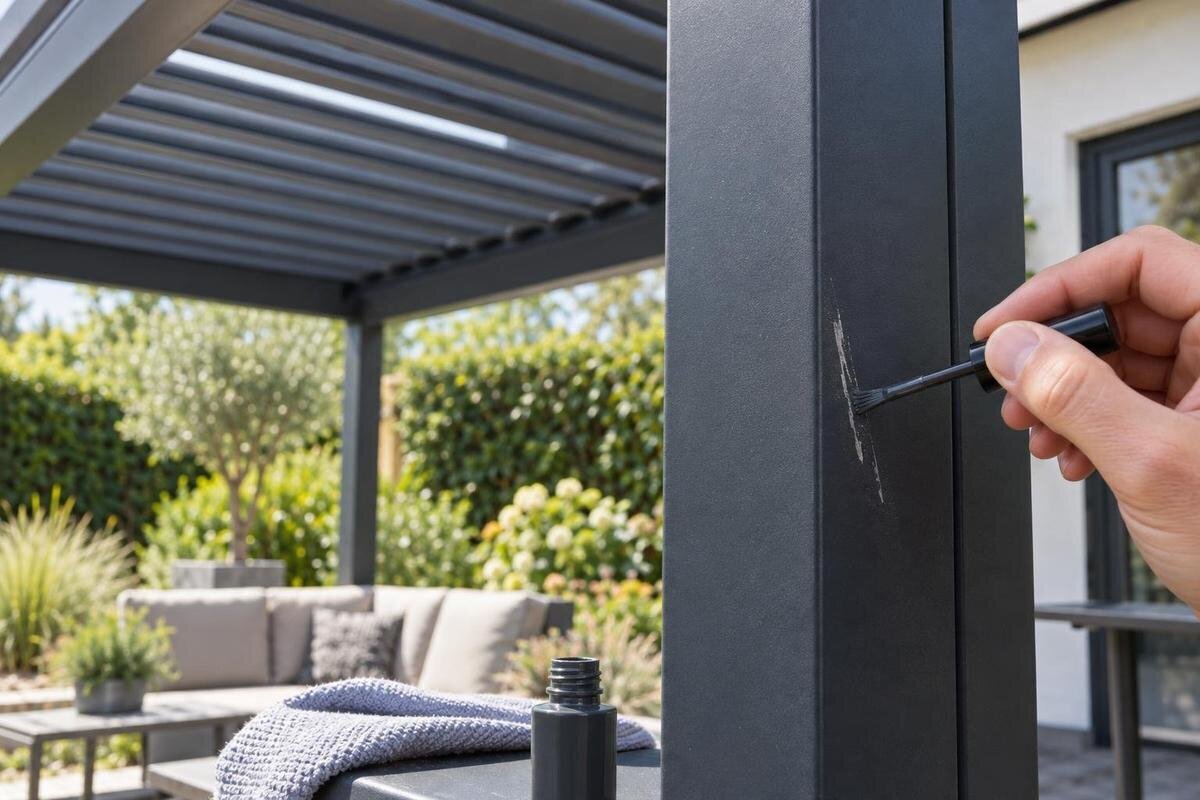
Pergola care and repairs
An apparent scratch on a powder-coated pergola may be a removable transfer mark, a rub that has altered the sheen, or a cut through the finish. Those conditions call for different responses. Clean and inspect the area without scraping it, record the product and location, then ask the manufacturer or supplier whether an approved repair system exists for the exact finish. A touch-up selected from a colour name or photograph alone may not match in texture or gloss, and a cosmetic patch should not conceal a loose or damaged component.

01
Surface marks and damage to powder coating
Powder coating is a finish applied to a component, so a visible line does not by itself show that the coating has been cut. A coloured streak may be material transferred from furniture, a tool or something moved during installation. A rubbed patch can look duller, brighter or smoother because it reflects light differently, even when the coating remains over the substrate. Distinguish transferred material, a change in sheen and a physical break rather than treating every mark as damage that needs paint. When describing the problem, separate what you can see from what you think caused it. For example, “a pale line on the outside of the post” is a useful observation; calling it a deep scratch without inspecting it may give the supplier the wrong impression. The aim is to establish what needs attention before choosing a treatment.
The important question is whether the finish appears continuous. Look for a defined groove, a chip, a lifted edge, blistering, a different material at the base or a corrosion-like stain; do not scrape the area to make it easier to see. If metal is exposed, identify the pergola’s substrate before choosing any protective product. A bent, loose or misaligned component is not just a coating problem, and paint cannot correct damage to the part.
Distinguish a scuff from a break in the finish
After cleaning the area safely, inspect it dry in indirect daylight and view it from more than one angle. A transfer mark may lift away, leaving a continuous finish underneath. A scuff can remain visible because the sheen or texture has changed, although there is no obvious exposed substrate or lifted edge. Compare the marked area with the surrounding finish on the same component, noting whether the difference is mainly colour, reflection or an uneven edge. If the mark looks different as you move, describe that in the enquiry rather than choosing one photograph as the definitive view. These observations help you explain the problem, but they do not establish the condition of the coating with certainty. A shallow-looking line can still need advice if you are unsure.
A scratch that has broken the coating may show a groove, a chip, a flaked edge or a contrasting material at its base. Do not test its depth with a fingernail, blade, coin or other hard object: probing can extend the mark and gives no reliable measure of the coating. Several defects, spreading discolouration, bubbling or peeling deserve closer attention. If you cannot tell, describe it as a possible coating break rather than carrying out a home test.
02
Clean the area without adding damage
Find the care instructions for the exact pergola before choosing a cleaner. Follow the stated method and avoid rubbing dry grit across the finish, as it can leave further marks. If the instructions permit it, start with a soft, clean cloth and water, using light pressure. Rinse away any permitted cleaner and let the area dry before judging the mark. Do not assume that a solvent, abrasive pad, polish or household product is suitable just because it is used on another outdoor surface.
If the product paperwork identifies a bioclimatic model, the Bloomcabin Bioclimatic Pergola listing can help confirm the family name before you request the relevant care instructions. If those instructions are missing, ask the supplier what is permitted instead of trying several products. Keep a note of any cleaning already carried out, including the product used, whether it was diluted and whether the mark changed afterwards. Include unsuccessful attempts too, so the person assessing the finish knows what has touched it. Keep cleaning limited to the accessible surface, and do not remove a panel or disturb a mechanism to reach a scratch. Let the area dry before taking the photographs you will use for comparison.
Why the scratch’s location matters
Note which component is marked and where the scratch sits on it. Its position near an edge, joint, fixing or moving interface can matter when someone assesses the damage, because the coating may be harder to inspect there. Record whether the part still sits as expected and whether anything feels loose or looks bent. Do not dismantle the pergola to look underneath; if the mark is hidden by another component, report that rather than removing it yourself.
Describe the mark’s direction and approximate length, and note whether there are nearby chips or stains. A ruler held beside the mark can help show scale without touching the coating. Use a location description that someone unfamiliar with your terrace can follow, such as the outside face of the front-left post when viewed from the garden. Use that same viewpoint throughout the enquiry, particularly if several similar components appear in the photographs. For a wall-mounted pergola, take the model description from your order records; the Bloomcabin Wall Pergola product page can help you cross-check the name. Record any change you notice after cleaning, using the same viewing angle where practical, and distinguish separate marks rather than describing them all as one damaged area.

03
Photograph the scratch clearly
Take one image that shows the whole pergola, another that identifies the affected component, and a close-up of the mark. Keep the camera steady and include a ruler or other scale beside the scratch without resting it on the finish. Use even daylight if possible; strong glare, flash and deep shadows can hide an edge or make a harmless change in sheen appear like a different colour. Check that the close-up is in focus before sending it. If one view shows the colour clearly but another shows the edge better, include both and explain the difference. Keep the original image files so the detail remains clear, and avoid filters or colour adjustments. Label the images so the supplier can connect each close-up to its position in the wider view.
Pair the photographs with the exact product name from your paperwork, the component’s position and the approximate size of the mark. If the paperwork says Bloomcabin Pergola, the Bloomcabin Pergola listing can help cross-check the family name. Include the finish information separately rather than expecting a photograph to identify it. Note when you first noticed the scratch and whether it followed a known impact or cleaning; if you do not know the cause, say so. Keep any earlier photographs that show the same area for comparison. Do not publish order and serial details in a public post; share them privately with the relevant support team.
Identify the exact pergola and finish
Use the invoice, order confirmation, product label, installation documents or manual to identify the pergola. Record the model name and any serial, batch or part reference shown in those documents. If a label is difficult to reach, do not dismantle the frame to find it; use the records you have and ask the supplier how to proceed. The name of a product family alone may not identify the exact part or production version installed at your home.
Look for a finish name or colour code in the documents, but do not guess from a screen image, a general colour description or a nearby component. Copy any recorded designation exactly, including a gloss or texture description if one is given. Make clear which details came from the original order and which are your own observations. Gloss, texture and weathering can affect how the finish looks, and a new touch-up may not appear identical to an older surface. The Bioclimatic Pergola product page can help check a model-family name, but it cannot identify the original coating. If your records contain only a broad colour name, include it as recorded and ask the supplier what further information is needed to select a matching system.
04
Ask for an approved matching repair system
Contact the manufacturer or supplier with the model details, finish information, damage location and photographs. Ask whether an approved repair system exists for that exact coating and substrate, and whether it is suitable for a local touch-up. A colour that looks close is not enough: the repair may differ in gloss or texture, and the coating product must be appropriate for the surface. Do not assume that every finish has an owner-applied touch-up option.
Ask what preparation and application instructions apply, which products or tools must be avoided, and what appearance to expect when the repair is complete. Establish whether the proposed option is intended for an owner to apply or requires a professional, and whether it is suitable for the particular location of the damage. If more than one option is offered, ask which addresses the damaged finish and which mainly improves its appearance. Clarify whether any suggested replacement means the whole component or a smaller identified part. If your paperwork uses the Wall Pergola family name, the wall-mounted model page can help you refer to it accurately. Keep the response with your order records so the selected material and instructions remain easy to find. If warranty or service cover may apply, check its terms before altering the finish.
Know when to involve qualified service
Ask for a professional assessment if coating is peeling or blistering across a wider area, if there is corrosion or exposed material you cannot identify, or if the damage is recurring. A mark on or beside a joint, fixing or moving component also merits care if its operation or alignment has changed. A coating touch-up is not a substitute for checking a part that is bent, loose or damaged in another way.
Do not dismantle components, force a moving part or work around wiring to reach a scratch. If the affected area is near a powered mechanism or electrical fitting, leave the repair to the qualified service person responsible for that equipment. Explain whether the concern is appearance alone or whether you have also noticed a change in movement, alignment or fit. This keeps the service enquiry focused on the whole problem rather than just the visible line. Share the photos and model details so the right part can be assessed. When identifying a unit from this range, use the Bloomcabin Pergola product information alongside your own order or installation records.

05
Avoid quick fixes that can complicate the repair
Do not sand, wire-brush, scrape or polish the mark unless the approved repair instructions specifically require a preparation step. These methods can remove more coating, alter the surface texture or make the damaged area larger. Avoid using marker pens, nail polish, automotive touch-up paint, household paint or clear varnish as a substitute for a matched system. A temporary-looking cover can make it harder to assess what is underneath and may leave a visibly different patch.
Sprays and strong cleaners can also reach nearby seals, glazing, fabrics, fittings or moving components, if your pergola has them. Protecting adjacent surfaces and managing any preparation are part of the repair instructions, not a reason to improvise with masking and paint. Before buying a repair product, make sure the supplier’s response refers to your installed model and the finish you reported. If you use the current Bioclimatic Pergola page to clarify the product name, distinguish that reference from your original order details. Do not treat a similar-looking finish on the page as approval for a generic paint. Keep the original mark visible until its condition and the suitable method have been assessed.
Choose whether to monitor, repair or replace the part
If gentle cleaning removes the mark and the finish looks continuous, there may be nothing to touch up; keep the photographs and watch for any change. If the coating is visibly broken, ask for the approved repair route rather than relying on size alone to decide whether it is safe to ignore. More extensive peeling, corrosion, repeated damage or a change in how the part sits calls for professional assessment before a cosmetic repair is considered.
A matched local repair may be appropriate in some cases, while professional refinishing or a replacement component may be more suitable in others. The choice depends on the exact part, finish and condition, so do not select a replacement by colour or appearance alone. Ask how much of the component each proposed option would affect and what visible difference may remain afterwards. This helps you compare a small touch-up with work covering a larger area without assuming either will be invisible. The Wall Pergola listing identifies a current model family; compatibility with an older installed unit still needs to be checked against its records. Before ordering, make sure the proposed part and finish are clearly identified. If monitoring is advised instead, retain a dated photograph and a note of what changes should prompt another enquiry.
Pergola scratch repair questions
Can I use ordinary touch-up paint on the scratch?
Not without checking first. A similar colour name does not confirm that a product is compatible with the coating or will match its gloss and texture. Ask the pergola’s manufacturer or supplier whether an approved repair system exists for the exact model and finish, and follow its instructions.
How can I tell whether the mark is only a scuff?
Use the care instructions to clean the area gently, then look at it dry in good, indirect light. A mark that lifts away while the finish underneath remains continuous may be surface transfer. A groove, chip, lifted edge or exposed material suggests a possible break in the coating. This visual check is not a technical assessment.
Should I sand the area before applying a touch-up?
Do not sand or scrape it as a first step. Preparation depends on the approved repair system, and removing more coating can enlarge the damaged area or make a match harder. Wait for instructions for the exact finish; if none are available, ask a qualified professional to assess it.
Will a matching repair be invisible?
It may remain visible. Even a suitable colour can look different if the sheen or texture differs, or if the existing finish has weathered. Ask the supplier what appearance to expect from a local repair and whether professional refinishing or replacing the affected component is more appropriate.
What should I send with a repair enquiry?
Include the exact model or order details, the part and its position, any recorded finish code, and clear photos from a distance and close up. Note the approximate size, when you noticed the mark, whether it changed, and how you cleaned it. Share order or serial details through a private support channel.
Understanding the mark helps you choose an appropriate repair. Remove dirt only by the method allowed for your pergola, look for signs that the coating is broken, and record the mark before it changes. With the model, finish details and clear photographs to hand, the supplier can advise whether a matched touch-up is suitable or whether the part needs a professional assessment. The aim is to address the damaged finish without overlooking a loose or damaged component, while keeping realistic expectations about how closely a local repair will blend in.
