
Can an Aluminium Pergola Be Dismantled and Reinstalled?
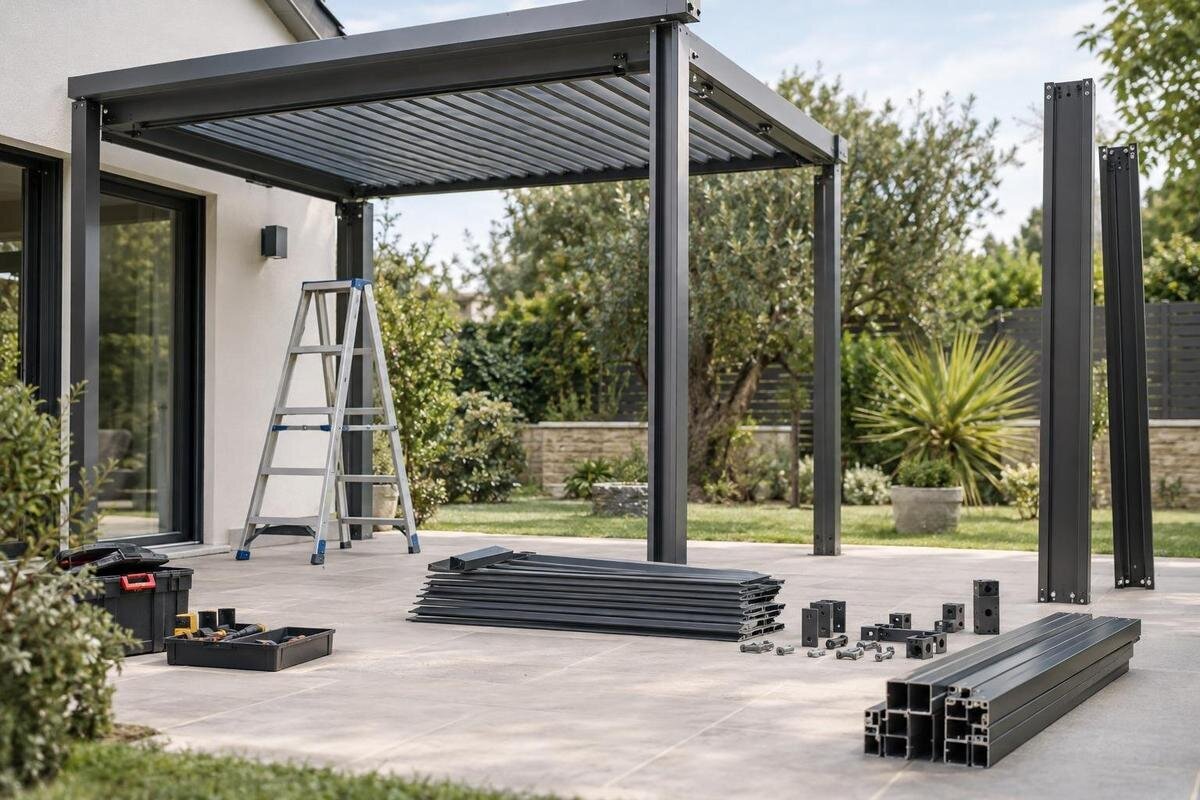
Pergola relocation
An aluminium pergola may be dismantled and installed again, but the material alone does not make it reusable. The answer depends on the exact model, how it was assembled and fixed, the condition of its parts, and whether the new site suits the original arrangement. Dismantling is only the first stage: old anchors, altered components and a different supporting surface can all change what is possible. Identify the unit and review its documents before arranging removal, transport or reassembly.

01
Can an aluminium pergola be moved?
Separate the relocation decision into two questions: can the existing assembly be taken apart without damage, and can its components be installed as intended at the destination? A frame may pass the first assessment but not the second. Before booking removal, establish which parts could be retained, which may need replacing and what remains uncertain about the new installation. This gives the supplier or installer a clear scope to assess, rather than leaving decisions about reuse until the pergola has already been dismantled.
Some pergolas are assembled from components that can be separated, so taking one down may be feasible. That does not mean the manufacturer intended repeated moves, or that every connection can be undone without damage. The installation may include parts that were trimmed, sealed, adjusted or attached to a particular wall or base. Screws can seize, joint covers can be disturbed, and a component can be bent while being released. A unit altered after purchase may no longer match its original assembly instructions. For an existing Bloomcabin Pergola, use the instructions for that particular model rather than assuming a similar-looking pergola has compatible parts. The installation history also matters: record any known alterations so that the person assessing the move can distinguish the original assembly from later changes.
Identify the exact model and its history
Before planning a move, identify the installed unit as precisely as possible. Gather the original invoice or order confirmation, model name, purchase date if known, assembly manual, drawings and any part or revision numbers on labels. Take clear photographs of the assembled structure, its connections, post bases, wall attachments if present, accessories and controls. Record its overall dimensions and current layout, but do not treat a rough measurement as a substitute for identifying the model. Products with similar appearances can differ in their supplied parts or assembly details. If a label is missing, photographs and order information may help a supplier identify the version.
Compare the documents with what is actually installed. A previous owner may have changed fixings, added panels, shortened or drilled a part, or replaced a component. Note anything that differs from the manual rather than assuming the paperwork describes the current frame. The Bloomcabin Pergola range is listed from 9 to 24 m²; use the regular pergola product listing as a reference when identifying the product, not as a record of your own installation. If you cannot identify the model confidently, send the supplier the documents and photographs before removing parts. Ask whether they can match the unit to the correct instructions and component information. Include any known alterations in that enquiry.
02
Check the frame's condition before reuse
Make a visual record while the pergola is still assembled and stable. From ground level, look for visibly bent or twisted members, damaged coating, corrosion or deposits around connections, and joints or parts that no longer meet squarely. Note missing covers, seals or fixings, but do not pull on a component to test it or force anything that feels stiff. Photograph each concern from a wider view and close up, with enough context to show where it is. Appearance can flag a question; it cannot confirm the condition of a concealed joint or establish whether the frame is suitable to reuse.
Once the structure has been safely taken down, add to the record and label each component before storage. Note whether removal has left a distorted end, damaged surface or enlarged-looking hole; do not straighten, drill or coat over a problem to make it appear ready for reassembly. Keep parts that look undamaged separate from those that need assessment, but do not treat appearance as approval for reuse. If you identify the unit as a Bloomcabin Bioclimatic Pergola, include its exact version details in any parts enquiry. Provide photographs of the relevant connections as well as the whole frame, so the supplier can assess both the component and its position in the assembly.
Why old fixings need a fresh assessment
Existing anchors deserve separate attention. They may have been selected for a particular support and fitted in a specific position, details that cannot always be confirmed by looking at the visible end. During removal, a bolt or screw may come out cleanly, seize, shear or damage its hole. An anchor left in the old base is not automatically reusable elsewhere, and a hole that looks intact does not confirm the condition of the material beneath the surface. Record what you can see and how the fixings are arranged. Do not plan the new installation around old holes until the relevant installer has assessed the actual support and fixing points.
The destination needs a fixing plan for its own support and layout, guided by the instructions for the exact model and a competent assessment where the substrate or connection is uncertain. Concrete, paving, masonry and timber are not interchangeable simply because each can be drilled or accept a fastener. Avoid substituting a different bolt, enlarging holes or adding a bracket to make parts fit without approval. When asking for help, show the old base and anchors, the proposed support, the manual and photographs of both sites. The Bloomcabin Pergola range is a product reference, not evidence that the original fixings suit a different location.

03
Assess the new site before dismantling
Measure and assess the destination before moving the frame. Check the intended footprint, orientation, post positions and overall height against the available space. Note nearby walls, doors, windows, drains, paving edges, steps and overhead obstructions, as well as access around the structure and the route for carrying its parts. Consider any accessories included with the particular model and whether there will be room to use or reach them. Look at the surface where the supports would sit: paving may conceal another substrate, and an uneven or sloping area may affect the installation requirements. These observations help a professional assess the proposal; they are not structural approval.
Consider how the new position changes the setting as well as the measurements. It may be more sheltered or more exposed, closer to a boundary, or affected by water running from a roof or across the ground. Record visible drainage paths, nearby planting, overhead features and any known services in the area, and explain how you intend to use the space. Do not choose anchor positions or alter the frame on the spot to solve a clearance problem. If you are considering an alternative from the bioclimatic pergola listing, have that proposed layout assessed separately. Compare the destination with the documentation for the actual model being considered, whether it is the existing pergola or a replacement.
Wall-mounted and freestanding pergolas need different checks
Establish whether the installed pergola stands on its own supports or is attached to a building. A wall-mounted arrangement depends on its attachment as well as its other supports; old wall holes and brackets may not suit a new wall, even if the positions look similar. Wall construction, condition, finish and any concealed services are questions for a qualified installer or relevant professional; they cannot be established by looking at the visible attachment alone. A change in wall position or height can also alter clearances around windows, doors or other features. Do not assume that moving a wall-side component preserves the original design.
Freestanding and wall-mounted arrangements therefore need separate plans. If the new site would change the arrangement, treat it as a design change and ask whether the exact system is intended for it. Do not improvise by omitting supports or adding wall attachments. Bloomcabin Wall Pergola is identified as a wall-mounted model, but that identity alone cannot validate a different wall, reuse of brackets or conversion of another pergola. Share measurements and clear photographs of both locations with the supplier or installer before committing to the move. They need to understand what is changing, not just see the frame that is being transported.
04
Protect parts during dismantling and storage
Agree the dismantling sequence before work starts, using the manual for the exact model. Label each rail, post, cover and bag of fixings with its position; take photographs before and during dismantling so that the original arrangement is recorded. Store fasteners with labelled parts rather than mixing items that only look alike. Use removable labels on visible surfaces, and keep an inventory of what is present, missing or damaged. A clear record makes it easier to spot a problem before reassembly and helps a supplier understand a parts enquiry. If the instructions are missing, request the correct documentation rather than relying on a generic guide.
Plan handling and storage to avoid adding damage. Protect surfaces from rubbing, support long pieces so they are not forced out of shape, and keep parts organised and dry. Keep fragile covers or any glazing, where fitted, separate and protected in line with the relevant instructions. If the particular pergola has powered or controlled components, do not pull, cut or reconnect wiring as part of general dismantling; arrange the relevant qualified service. When enquiring about a unit shown on the Bloomcabin Bioclimatic model page, specify which accessories are actually fitted to yours. Include them in the handling plan rather than considering only the main frame.
Confirm spare-part compatibility before reassembly
If replacement parts may be needed, prepare a list before taking the structure apart. Record the exact model and any visible part codes, describe each component and its position, and send clear photographs of the whole frame and the relevant connection. Include measurements where they are known and note whether a part is missing, damaged or simply difficult to identify. Ask specifically whether the proposed item matches the installed version, whether it needs to be used with another component, and whether the correct instructions are available. A part that appears to fit is not automatically an approved substitute. Confirm compatibility before paying to transport a frame that may be incomplete.
Consider the full assembly, not only its main rails and posts. Missing covers, seals, brackets, connectors or other model-specific components may affect whether it can be put back together as intended. Visual similarity is not enough to confirm a match, and modifying a part to make it fit can create a new problem. If the wall-mounted pergola listing identifies your model, include that reference alongside the details of the installed version. If the original model is unknown or no longer listed, ask for written confirmation of compatibility or a replacement recommendation before proceeding. Keep the part names, photographs and response together so that the installer can work from the same information.

05
When to involve a qualified installer
Professional help is particularly important if the pergola is attached to a building, its anchors or support are uncertain, parts are bent or connections are damaged, or removal could make the frame unstable. An installer with the correct manual can confirm the intended sequence, identify components that should not be reused and assess whether the proposed destination matches the specified arrangement. Where support conditions are unclear, involve a suitably qualified building or structural professional rather than asking the installer to guess. Make sure the person assessing the move knows which parts are original, which have been changed and what is proposed for the new site.
Electrical or powered accessories require a separate competent service if they are present; do not treat them as ordinary frame parts. Site preparation and fixing decisions also belong with the relevant qualified professional where they depend on structural conditions. Before work begins, agree who is responsible for dismantling, transport, storage, replacement parts and reassembly. Ask what the proposed work covers, what will be inspected and what remains outside the quotation. That makes it easier to compare offers on the same scope and avoids mistaking a removal-only service for approval of the new installation.
Compare relocation with replacement
Relocation involves more than transport. The work may include dismantling, packing, storage, replacement components, preparing the new support, installation and a separate specialist service. Ask for the work to be set out in stages so you can see which costs depend on the frame's condition or the destination. Do not compare a removal-only quotation with a full supply-and-install quotation. If the structure is altered, incomplete or missing its documentation, allow for the possibility that an assessment will identify further work. Age alone does not determine whether reuse is practical, and a favourable initial impression is not a parts or fixing assessment.
Compare the confirmed reuse plan with a replacement option against the same requirements for the new site. A replacement enquiry should describe the available footprint, whether the desired arrangement is freestanding or wall-mounted, the supporting surface, the intended configuration and any relevant constraints. This gives a supplier a basis to discuss an option without assuming that the old frame can be reused or that a new model can take its parts. Relocation is worth weighing only when the condition, compatibility, fixing plan and total scope are clear enough to compare with starting again.
Frequently asked questions
Can every aluminium pergola be dismantled and moved?
No. Some units may be reusable, but previous alterations, damage, missing parts or an unsuitable destination can make relocation impractical. Check the instructions for the exact model and have the condition and new installation assessed before arranging removal.
Can I reuse the existing anchors at the new site?
Do not assume so. Anchors and their holes relate to the original support and installation, and removal may damage them. The new site needs its own assessment of the support, layout and fixing method by the appropriate professional.
If the new area is the same size, will the pergola fit?
Not necessarily. Similar floor space does not confirm that the post positions, clearances, supporting surface or attachment points are suitable. Measure the destination and compare it with the exact model's instructions before deciding that the original arrangement can be repeated.
Can I take the pergola apart myself?
That depends on the model instructions, the assembly and the condition of the structure. If the sequence is unclear, the frame is attached to a building, parts are damaged, or powered components are present, involve the relevant qualified service rather than guessing or forcing a connection.
What should I provide when asking about compatible spare parts?
Share the model and any part numbers, order details or manual you have. Include a whole-structure photograph, clear close-ups of the relevant part and connection, the part's location, and any known dimensions. Explain which components are missing or damaged and ask for compatibility to be confirmed.
Before anything is transported, establish that the correct parts can be taken down without avoidable damage, that each component can be identified and assessed, and that the new site's support and fixing plan have been reviewed by the appropriate professional. If those points are unresolved, pause and document the unit while it is still intact; it is easier to investigate the model and original attachments before parts are mixed or lost. Reuse is a sound option only when the assembly, its components and the destination have been considered together.
