
What Can Solar-Powered Pergola Lights Realistically Provide?
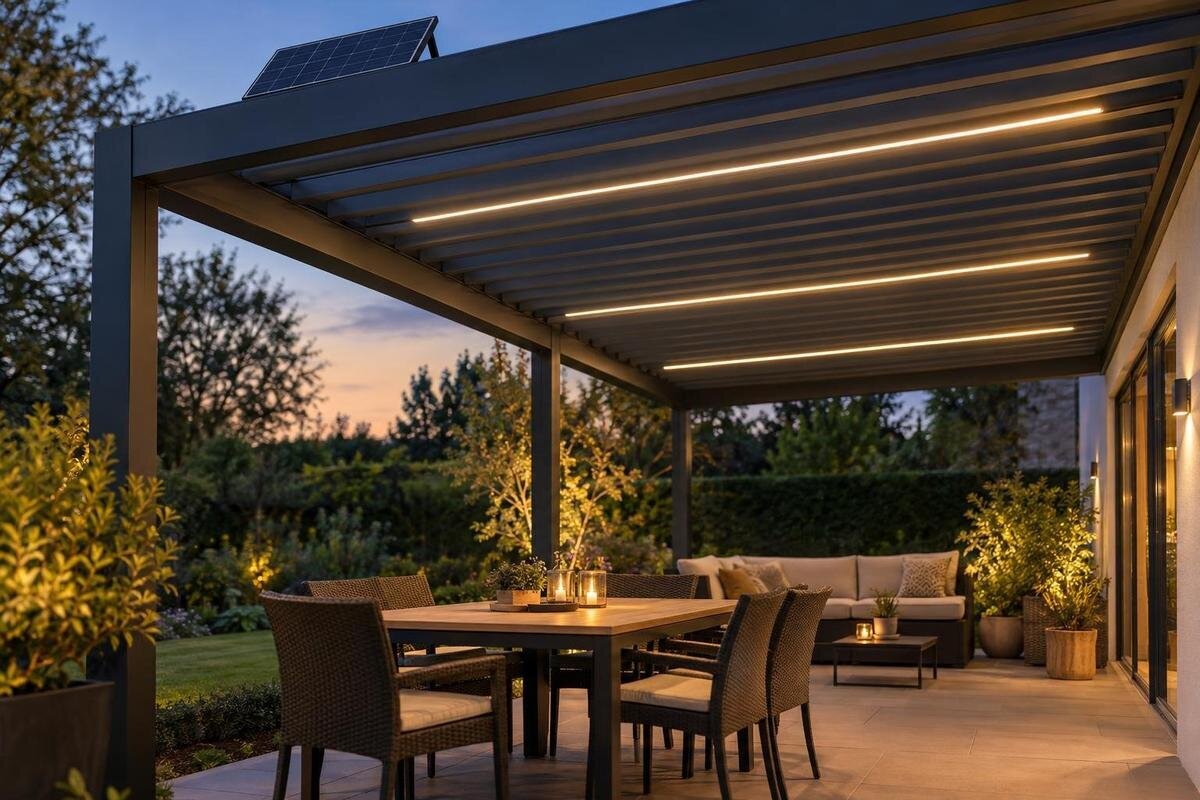
SOLAR PERGOLA LIGHTING
A solar-powered light can make a pergola more inviting after sunset, but its real contribution depends on a simple chain: the panel needs useful exposure, the battery must store enough energy, and the fitting must provide the kind of light you expect. A decorative glow, a lit dining table and dependable light for reading are different jobs. A sunny afternoon does not guarantee a particular number of bright hours later. Compare the task, panel position and documented runtime together, then decide whether solar alone is enough or whether it should be an accent to another lighting plan.

Define the lighting task
Decide what ‘enough light’ means before comparing lamps. A soft glow for conversation, a highlight on a feature, illumination over a dining table and a clear view of a route are different jobs. Small points of light can look attractive yet leave the table dim; a narrow bright beam can illuminate one area while nearby seats stay dark. Note the surfaces or routes that must be visible, who will use them and whether the light is for atmosphere, occasional visibility or a task carried out regularly. Do not judge only from a promotional image: the surroundings and camera exposure may not resemble your terrace. A useful brief says what must be visible, from where and for how long.
Write down the planned use, duration and season: a short meal now and then is different from several hours every evening or regular use beyond summer. Sketch the table, chairs, steps and entrances, then mark where people sit, look and move. If you are considering the Bloomcabin Bioclimatic Pergola, use the layout to identify the areas that need light before choosing fittings. Treat the pergola and its lighting as separate specifications: the structure’s name or area range does not establish that a solar fixture is included or compatible. Include any wall, screen or roof section that may affect panel exposure, so the same sketch shows both the lighting task and possible obstructions to charging.
How the panel, battery and lamp work together
A solar light works as a chain: the panel collects energy, charging electronics manage it, a battery stores it, and the lamp uses it after dark. The panel creates an opportunity to charge; the battery determines what is available later; the fitting determines how that stored energy becomes light. A panel’s rated output is not a runtime promise, because exposure, battery state and lamp demand interact. Equally, a bright LED specification does not show how long that brightness will be maintained. Compare charging input, stored energy, useful light output and operating time separately. A larger-looking panel or a high number of LED points is not a substitute for those figures.
Ask for the information as a set: panel specification, battery capacity, stated output, runtime by mode and the charging conditions used for that runtime. Clarify whether the figure assumes a full battery, continuous illumination, a dimmed setting or a sensor that waits between activations; if the battery is replaceable, ask how replacement is handled. Confirm whether the named item is the complete light, panel and battery set or only one component. When budgeting for a structure such as the Bloomcabin Wall Pergola, keep the lighting requirements together as a separate part of your purchase plan. This makes it easier to compare complete lighting systems rather than a lamp-only offer with one that includes a panel and battery.
Panel position and shade during charging hours
Panel placement is often the practical deciding factor. Daylight in a bright-looking spot is not the same as useful sun exposure, and a panel tucked under a roof or behind a screen may collect too little energy for the runtime you want. A pergola’s overhead structure can cast shade on a nearby panel as the sun moves. First identify whether the light has an integrated panel or a separate one: an integrated unit can limit where the light itself can sit, while a remote panel offers flexibility only if the exact design allows it. Do not assume any roof section is a suitable panel position.
Look at the intended spot over the period when the panel should be charging, not just at the time you take a photograph. Note shade from the house, parapet, trees, screens, neighbouring buildings and the pergola itself; these obstructions can change during the day. If a separate panel is supplied, check its permitted placement, cable reach and mounting method in the exact manual rather than improvising an extension or fixing. A practical position needs useful exposure and a secure, approved arrangement. If roof parts move, confirm whether the proposed location is allowed; do not infer approval from an installation picture.
Seasonal changes in charging
The panel’s charging opportunity changes through the year. Day length, sun angle, cloud cover and the position of shadows all vary, so a light that performs well after a bright summer day may not reach the same charge when it has less exposure. This does not mean every solar fitting will fail in another season. It does mean that a runtime quoted for ideal conditions should not be treated as a year-round promise unless the manufacturer explains the conditions behind it. A clear spell is one useful observation, not proof of what will happen throughout the season.
Judge the season in which you need the light most. If you mainly use the pergola for summer suppers, compare performance with the exposure available then; if autumn or winter use matters, assess those conditions too rather than relying on a summer result. When planning the position of a Bloomcabin Pergola, record shade at the proposed panel location as well as across the seating area. The listing’s 9–24 m² size range helps describe the space, but it cannot tell you how well a panel will charge there. Allow for day-to-day changes in weather rather than treating one sunny day as typical.

What runtime figures actually tell you
Read runtime statements as conditional claims. A phrase such as ‘up to’ may describe a best-case result, and a figure may apply only to a low brightness setting, a fully charged battery or a sensor that turns the lamp on intermittently. Continuous use at a brighter setting will usually draw on stored energy faster than a dim setting; sensor operation may appear to last longer because the lamp is not illuminated all the time. Compare the mode you expect to use, rather than relying on the largest number in an advert. If the manufacturer gives several figures, keep their conditions separate.
Translate the claim into your evening: what time will the light be switched on, how many hours should it remain useful, and is full brightness needed throughout? Ask what sunlight and charging period underlie the runtime, and whether the result assumes a new, fully charged battery. For a bioclimatic pergola for evening use, separate the time spent dining from any later period when you only want a background glow. Compare each period with the relevant operating mode, rather than applying one maximum runtime to the whole evening. Where possible, get the supplier to explain how the light behaves as the battery runs down, including whether the output changes or the lamp switches off.
Illuminating dining tables and routes
Light output needs to be judged where it lands. Lumens describe the visible light produced by a source, but they do not, on their own, show how bright a table or path will be. Beam spread, lens or diffuser, mounting height, distance and direction all affect how much reaches a surface. A narrow beam may create a noticeable pool of light, while a broader fitting may spread it more softly. Watts describe electrical power, not the useful brightness at a particular surface. Compare the product’s own output and coverage information, rather than judging only by a bulb rating or a photograph.
For dining, look for information about illumination at the table or the manufacturer’s coverage guidance. Check whether faces and serving areas are included, rather than assuming that light along the roof will reach them. If you are planning a wall-mounted pergola, include the table’s position relative to the wall when assessing where the light needs to fall. At a route, consider continuity: isolated bright points can leave dark gaps, while well-placed markers may be easier to follow. Avoid placing a visible source in the normal line of sight if glare is uncomfortable. A demonstration from seated and standing positions can help you judge coverage and glare in a way that a specification alone may not.
Good uses for solar pergola lights
Solar lighting is often a better fit for a modest, specific task than for a demand that depends on strong, consistent output every evening. A decorative outline, a feature accent or supplementary light for an occasional gathering may suit a system with good panel exposure and a realistic runtime. Solar can also serve a regular task if the manufacturer documents suitable output and operating time for that use. The useful comparison is not whether solar is always enough or never enough; it is whether the exact light meets the task. A string of small lights may add atmosphere without illuminating food, while a brighter fitting may cover only one area.
If you expect to read, prepare food or host long dinners under the pergola, define the necessary brightness and duration before deciding that a solar set is enough. When comparing sizes in the regular pergola range, mark the intended seats, tabletop and routes on your layout, then ask for lighting coverage information for those locations. Floor area alone does not show whether one fitting will reach all the places you use. For steps or changes of level, treat a solar marker as an aid rather than the only measure making a route safe, particularly when its charge may vary. A demonstration in a comparable position can help you judge whether the light serves the actual task rather than simply looking bright.
Controls, outdoor ratings and mounting
Controls affect whether the light suits everyday use. A manual switch, timer, dusk sensor, motion sensor or dimming setting changes when it runs and how long the battery lasts. A motion sensor can be a poor fit at a dining table if the lamp switches off while people remain still; a timer may stop while the space is still in use. Check which settings are available, how they are selected and whether the runtime claim applies to the mode you want. If it matters, ask whether the chosen setting remains saved after the light is switched off.
Check the exact fixture’s outdoor rating, battery and panel enclosure, connectors and care instructions against the place where it will be used. The word ‘outdoor’ alone does not show how each component is protected from rain, splash, dust or sun exposure; use the documented rating for the actual fitting. For a Bloomcabin bioclimatic pergola configuration, verify permitted attachment points for both the lamp and panel, especially where a proposed position could conflict with moving parts. Check the structure and fixture instructions together: permission to use a lamp outdoors does not establish where it can be attached to the pergola. Keep the selected mounting position in your lighting plan so it can be assessed alongside coverage and panel exposure.

When a hybrid lighting plan makes sense
When predictable light is a priority, a hybrid arrangement may be more realistic than asking one solar battery to do everything. Solar can provide decorative or supplementary light where the panel has good exposure, while a separately specified supply may serve a regular task area. A portable rechargeable light that can be charged elsewhere is another option to compare, although its runtime and suitability still depend on its own instructions. These are alternatives, not promises that any particular set-up will fit a pergola. Consider what you would use if several cloudy days reduce the solar light’s charge.
If a fixed electrical option is being considered, have a qualified professional assess the exact fitting, supply, outdoor rating and approved mounting arrangement; this guide is not wiring advice. For a project based on Bloomcabin’s wall-mounted pergola, explain which tasks the solar lights would cover and which would depend on another supply. Include the hours when both would be used, rather than presenting them as interchangeable options. This gives the professional a clear brief without assuming that the pergola includes electrical provision. Keep controls in the comparison too: decide whether you want decorative solar lights to remain on during a meal or whether the task lighting alone would meet your needs.
What to assess before buying
A practical pre-purchase assessment can be brief but specific. Record the task, the required hours after dark, the months of use and the points to illuminate. Then note the panel position and the shade it receives during the charging period. Ask the supplier for the exact lamp and panel specifications, runtime by operating mode, stated charging conditions, battery information, coverage guidance, outdoor rating and mounting approval. If an important figure is missing, ask rather than filling the gap with a general claim about solar performance. A pergola’s floor area and a quoted maximum runtime cannot substitute for these details.
If possible, assess a demonstration or sample in the intended position and at the time you will use it, following the maker’s instructions for charging and operation. Look at the table, faces, circulation route and dark corners from seated as well as standing positions. Assess performance under realistic seasonal conditions if year-round use matters; one evening after a sunny day is only one observation. If a trial is unavailable, rely on documented conditions and be cautious about claims without context. Check whether a lower brightness setting still provides the light you need or merely extends the runtime.
Frequently asked questions
Can a solar panel charge under a pergola roof?
It depends on how much useful sun reaches the panel. A panel under a shaded roof may charge less than one in an exposed position. Some lights are designed with a separate panel, but check the exact product manual for permitted placement and cable limits rather than assuming a remote panel can be added.
How can I tell whether solar lights will illuminate a dining table?
Check the light’s output and coverage information, including how it performs at the intended mounting position. A lumen figure alone does not show how much light reaches the table. If possible, view a demonstration from seated and standing positions, and check whether faces and serving areas are lit as well as the space above them.
Why does runtime vary between evenings?
The battery may not begin each evening at the same charge. Sun exposure, shade, cloud cover, the selected brightness and how often a sensor activates can all affect performance. Seasonal changes also alter the charging opportunity. Compare runtime claims with the conditions and operating mode stated by the manufacturer.
Does an advertised runtime mean full brightness throughout?
Not necessarily. A figure may refer to a particular setting, a fully charged battery or intermittent sensor operation. Ask which mode and charging conditions the figure describes, and whether the stated output is maintained for that period. If those details are missing, treat the runtime as an estimate rather than a guarantee.
Can solar lights replace mains-powered pergola lighting?
They may be suitable for accents or a modest, well-defined task if their documented output and runtime match your needs. For dependable task lighting over several hours, compare a hybrid or mains-powered option too. A qualified professional should assess any fixed electrical fitting, its outdoor rating and its approved mounting arrangement.
The right solar lighting system is one that meets your needs under the charging conditions available, rather than one with the longest advertised runtime. For atmosphere or supplementary route marking, assess how well it performs in those specific roles. If every seat needs predictable light through a long meal across several seasons, make that the basis of your choice and compare an alternative supply before relying on solar alone.
