
Keeping Outdoor Furniture Beneath a Pergola All Year
Outdoor living
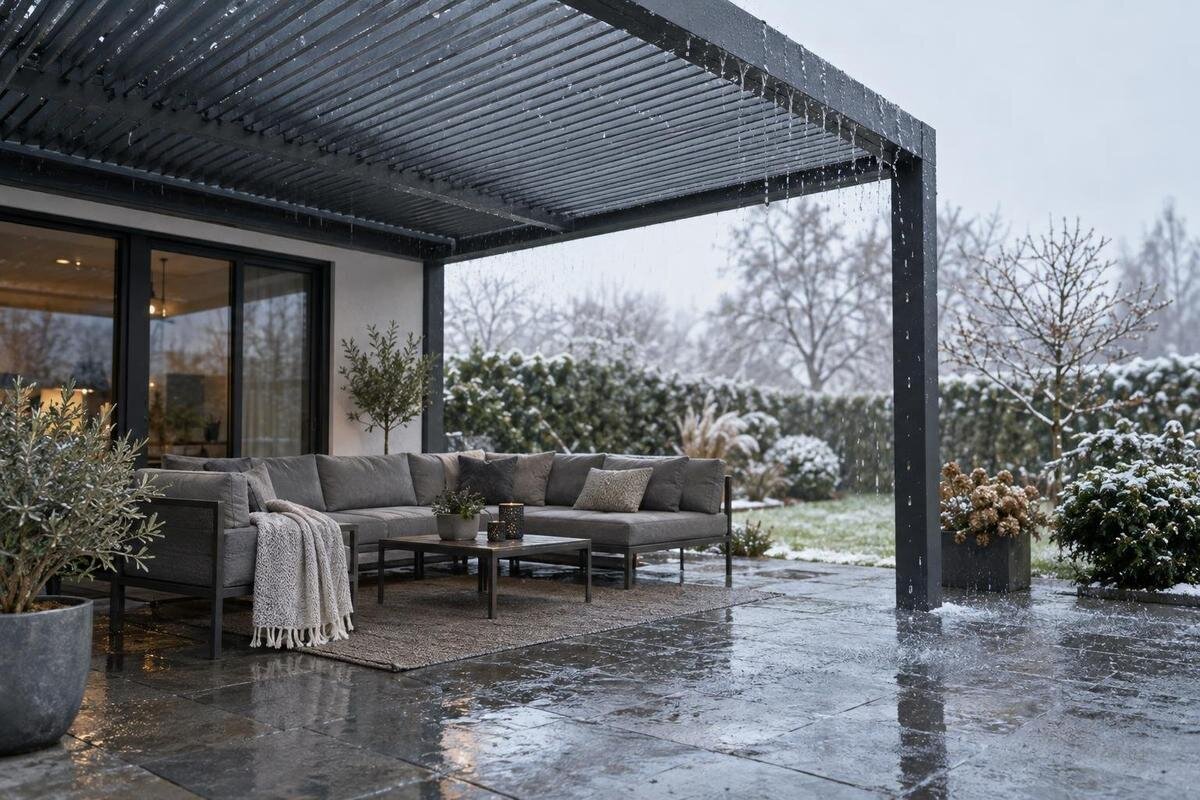
The pergola may keep direct sun and some rain off outdoor furniture, but it does not automatically turn a terrace into dry storage. Wind can carry rain through open sides, and humid air can leave condensation on furniture or covers even when no shower has reached them. Whether a table, chairs and cushions can stay in place depends on the roof arrangement, each item's care instructions and how quickly the space dries. Treat the roof, furniture, soft furnishings and covers as separate parts of the decision.

The answer depends on exposure and the furniture
There is no calendar-based rule that makes every garden chair or dining set safe to leave outside. A pergola roof may reduce direct sun or falling rain, depending on its design, position and operating state, but the furniture must still be intended for outdoor use. Even outdoor furniture can have care limits: some finishes need attention, and some pieces call for seasonal storage. The practical test is whether each item stays within its maker's guidance and can dry after becoming damp. One household may leave a table and frame in place while bringing in cushions; another may need to store more of the set.
Treat a set as separate pieces instead of making one all-or-nothing decision. Cushions, seat pads, table linen, umbrellas and lightweight accessories are usually easier to move than a heavy table, and they may have different care requirements. Adjacent chairs can also receive different exposure if one sits close to an open edge or a runoff point. A footprint figure helps plan space, not prove shelter: the Bloomcabin Pergola range is listed from 9 to 24 m², but area alone cannot show whether a specific seat stays dry. Decide item by item using the furniture instructions and conditions on the terrace, and consider how practical it is to move vulnerable pieces.
What the pergola roof does—and does not—cover
The roof is only one part of the weather picture. A fixed cover may behave differently from movable slats or a retractable roof; an adjustable system can expose furniture when open, while a closed overhead surface still may not stop rain blowing in from the sides. The useful question is the exact model's documented performance in the position you intend to use, not the broad label 'pergola'. If the manufacturer provides weather observations or a drainage diagram, use them to understand what is covered and where water is directed. A photograph of a dry patio is an illustration, not a performance specification.
Confirm which roof configuration applies to the exact model and whether separate instructions govern its operation. For example, the Bloomcabin Wall Pergola is a named wall-mounted model; neither the name nor mounting style establishes how its edges handle rain, whether the area below stays dry, or what side protection is supplied. Ask for model-specific weather documents and compare their stated conditions with the positions where your chairs will sit. If a document does not answer whether an edge or opening is protected, treat that point as unknown rather than relying on assumptions from a general product category or a similar-looking pergola.
How wind-driven rain reaches furniture
Rain does not always fall vertically. Wind can carry droplets beneath a roof from an open side; a neighbouring wall, parapet or screen may redirect them; and water landing on paving may splash onto low furniture. Exposure can vary across a small footprint: a table edge may be wet while a chair farther in stays dry, and a tabletop can hide a damp underside. Consider the directions from which rain reaches your terrace and the height and position of each item. The roof plan alone is not a reliable map of dry and wet zones, so do not assume every place beneath it receives equal shelter.
After ordinary rain, look at where water has reached and how long the furniture takes to dry; one observation cannot prove how it will fare in heavier rain or rain from another direction. Check legs, joints, undersides of cushions and the floor beside each planned position, not only the visible seat surface. When considering the regular Bloomcabin Pergola, use those observations to plan where each piece would sit. Compare the exposed edges with the more sheltered positions. If the weather documents do not cover your exposure, ask what limits apply to that exact model before relying on those positions for vulnerable pieces.
Condensation and slow drying beneath a pergola
Rain is not the only source of damp. Moist air can condense on cooler surfaces as conditions change, including furniture finishes or the underside of a cover. A roofed area can still have humid air, dew and slow drying; screens, solid side panels and close-fitting covers can reduce air movement, depending on their design. Textile filling, joints and woven sections may retain moisture differently, so a surface that feels dry can conceal dampness. Repeated wetting or prolonged damp may lead to odour, staining or material deterioration, depending on construction and care. A covered space is not automatically a ventilated room.
Note when the damp appears and which surfaces are affected. A broad film of droplets after a cool night differs from a wet line below a roof edge, although observation alone may not identify the cause. Allow cushions to dry fully according to their care labels, and do not put a cover over furniture that is still damp. If you are considering the Bloomcabin Bioclimatic Pergola, review the documented roof and side configurations rather than assuming the name indicates how well the space will dry. Use recurring dampness as a reason to reassess airflow, furniture position and the storage routine.
Roof runoff, paving and splash-back
Roof runoff is a separate issue from rain arriving through the sides. Depending on the design, water may be directed through a gutter, channel or another route, but the path and discharge point are specific to the model and installation. If water repeatedly leaves at an edge or outlet, furniture beneath it can be wetted even when the seat is otherwise sheltered. Pay particular attention to furniture feet, joints and upholstery that are difficult to dry. Use the manufacturer's drainage diagram, if available, to locate any discharge zones; do not infer the route from the roof's appearance alone.
Look down at the paving as well. Puddles or slow-drying areas around furniture feet can keep lower rails damp, and splashes can reach cushions placed near the ground. A walk-through after rain can show where water collects, but persistent drainage problems near a building or on a structure are for a qualified professional to assess. For the wall-mounted pergola, ask for the drainage diagram for the exact product and planned installation, then compare it with your furniture layout. Keep furniture out of a known discharge path and leave room around it for cleaning and drying.
Furniture materials and their care instructions
Furniture materials respond differently to moisture and repeated drying. Timber may swell, shrink or change finish, with the result depending on species, construction and coating. A painted or coated metal surface can be affected if its finish is damaged, while screws, joints and fittings may need attention. Natural and synthetic woven materials are not interchangeable, and a label such as weather-resistant does not necessarily mean continuous exposure without care. Read instructions for the exact piece and finish before deciding it can remain under a pergola all year. Material names alone are too broad to settle the question, especially when one item combines several materials.
Inspect less visible areas as well as the seat and tabletop: end grain or cut edges, feet touching the ground, screw heads, welds, joints, woven seams and the underside of a surface. Look for finish changes, loose fittings, trapped dirt or persistent damp, then follow the maker's cleaning and maintenance instructions rather than applying oil, polish or detergent by habit. Moving a piece under the pergola will not solve a problem if rain still reaches it or it cannot dry. Care guidance can also distinguish an item intended for occasional outdoor use from one made to stay outside between uses.
Cushions and protective covers
Soft furnishings often set the practical limit on year-round use. A roof may shade a cushion while rain still reaches its sides or underside, and seams can take longer to dry than the visible fabric. Fillings vary in how they release moisture, so use the maker's drying and storage instructions rather than assuming the cushion cover tells the whole story. A workable arrangement may be to leave a suitable table and frame in place, then take cushions indoors when the area will be unused or after they become wet. That mixed routine can be simpler than trying to keep every item outdoors.
A fitted cover can reduce exposure to dust, debris or some rain, but it is not a replacement for suitable furniture or dry storage. Choose a cover intended for that item and follow its guidance on fit and ventilation. A loose cover can flap and rub; one that holds water or traps dampness can create another problem. Put it over dry furniture, inspect it after wet weather and remove it when the maker recommends airing or cleaning. Do not assume a furniture cover is designed for every wind condition, or treat its presence as proof that the furniture underneath remains dry.
Side screens and enclosures
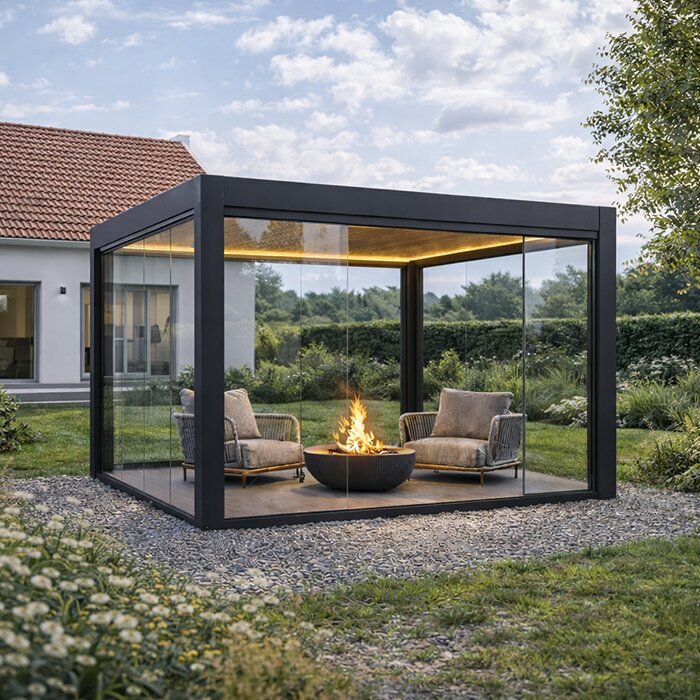
Side screens, curtains or glazing may reduce exposure from a particular direction if the pergola maker documents them as compatible with the exact model. They also affect airflow, access and drying, so an arrangement that blocks some rain can leave a humid pocket. A screen that fits visually is not proof that it is approved, included or weather-rated. Compare the side configuration with the pergola's weather documents and furniture care instructions together. The aim is to understand what the complete arrangement is documented to do, not what one panel seems to block when viewed from the patio.
When comparing options, distinguish an accessory that is available from one that is included, and ask which sides it can cover and what documentation applies. For the bioclimatic model, establish whether screens, curtains or glazing are offered for the configuration you are considering, rather than assuming they come with the pergola. Review their documented effect on rain protection and ventilation together. If a side closure makes the space more enclosed, check whether it affects roof operation or water management. Until you understand the complete arrangement, keep vulnerable textiles easy to remove and do not rely on it as a sealed storage room.

Furniture care is separate from winter roof operation
Leaving a dining set beneath a pergola and operating the roof during winter are separate decisions. Furniture instructions describe what the items can tolerate; the pergola manual describes the conditions under which its roof or moving parts may be used. Neither document replaces the other. A chair that stayed dry in mild rain is not evidence that the roof should be operated in strong wind, frost or another restricted condition, and a permitted roof position does not promise that cushions stay dry. Whether the structure itself is intended to remain in place through particular winter conditions is also a model-specific question.
Before a period when the terrace will be unused, decide separately what happens to frames, cushions, covers and accessories. Store soft items in the way their makers specify, and check any seasonal requirements in the pergola manual. If you are considering the Wall Pergola, identify the roof configuration and its operating instructions before planning to leave furniture beneath it through winter. Do not force a roof mechanism or improvise an override if it does not move as expected; use the instructions for that model. Plan furniture storage separately, so keeping a particular item dry does not depend on operating the roof in unsuitable conditions.
A practical check before leaving furniture out
Make a short record for each item: its maker's outdoor-use and care instructions; its exact position under the roof; whether rain, runoff or splash reaches it; how it dries; and whether a cover or indoor storage is recommended. If you are comparing the Bloomcabin Pergola with other options, record the exact model and configuration alongside that furniture checklist. Include its weather-performance information, drainage layout and any approved side enclosures you intend to use. Keeping these details together helps you compare the proposed shelter with each item's needs, rather than making a year-round storage decision from the furniture material or roof style alone.
Revisit the record after more than one type of ordinary weather, including rain from different directions or a humid night, and whenever furniture is moved or a side arrangement changes. One dry day is not a year-round test, but one wet spot does not mean every item needs to be stored. A sensible decision may be mixed: leave suitable frames in place, store textiles, and cover selected pieces only when they are clean and dry. If surfaces repeatedly stay damp, change the position or storage routine instead of expecting a cover to conceal the problem. Review the plan if the furniture shows signs of moisture-related wear.
Frequently asked questions
Can outdoor furniture stay under a pergola through winter?
It can, if the furniture maker permits outdoor exposure and the conditions where it sits are within its care guidance. A pergola does not guarantee dry storage. Decide separately whether the frame, cushions and accessories can remain outside, and check the exact pergola manual for roof operation and structural limits.
Does a pergola keep furniture dry in the rain?
Not necessarily. The roof design and position, open sides, wind direction and drainage all affect how rain reaches the furniture. Wind-driven rain can enter from the side, and runoff may wet particular spots. Check the weather documents and drainage information for the exact model rather than assuming everything beneath it stays dry.
Why is furniture damp when it has not rained?
Dew or condensation can form when moist air meets a cooler surface, and fabric may still hold moisture from earlier rain. Note when and where the damp appears, then dry items according to their care instructions. If it keeps happening, review the location, airflow and storage routine.
Are outdoor furniture covers enough protection?
Not automatically. A suitable cover can reduce some exposure, but fit, ventilation and the condition of the furniture matter. A loose cover may rub, while one that holds water or traps dampness can create another problem. Follow the cover and furniture instructions, and cover items only when they are dry.
Do side panels make the space dry enough for storage?
Not necessarily. Side panels may reduce rain from a particular direction, but they can also change airflow and drying. Check that the configuration is approved for the exact pergola model and review its weather information. A visual enclosure does not prove the space is sealed or suitable for dry storage.
An all-year arrangement works only when the actual exposure suits the furniture and its care instructions. A pergola can offer shelter without providing dry storage: rain may enter from the sides, runoff may wet one particular spot, and humid air can leave surfaces damp. Judge frames, cushions and covers separately, and keep their care requirements distinct from the pergola's weather and winter-operation instructions. If some items need more protection, a mixed routine—leaving suitable furniture in place while storing textiles—can be the more practical choice.
