
How to Assess Outdoor Sauna Heat-Up Time
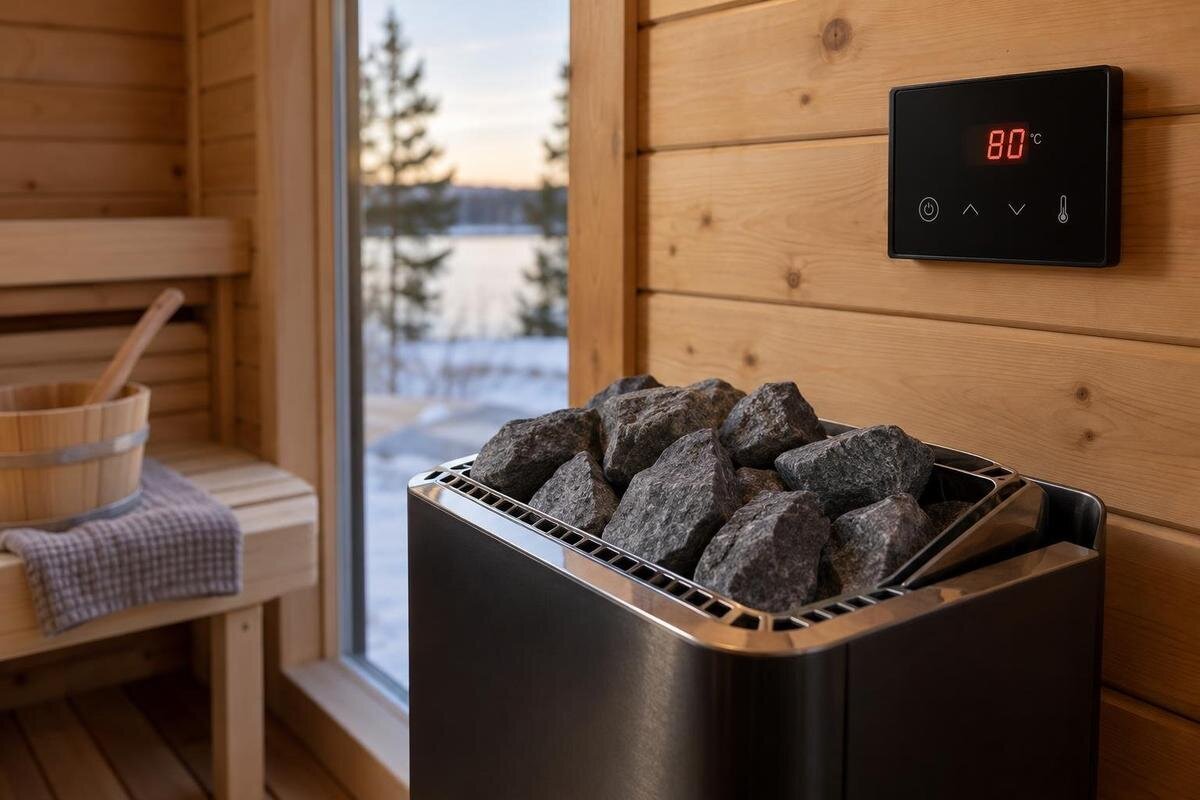
Outdoor sauna heating
Outdoor sauna heat-up time is easy to quote and difficult to compare. A clock reading only means something when the sauna’s starting state, target temperature, heater configuration and measurement point are known. Weather matters too: a test in cold, windy conditions is not directly comparable with one in a cabin warmed by sun or previously heated. This guide explains what to record, how to measure a cold start consistently, and how to judge claims without turning one result into a fixed promise for your setup.
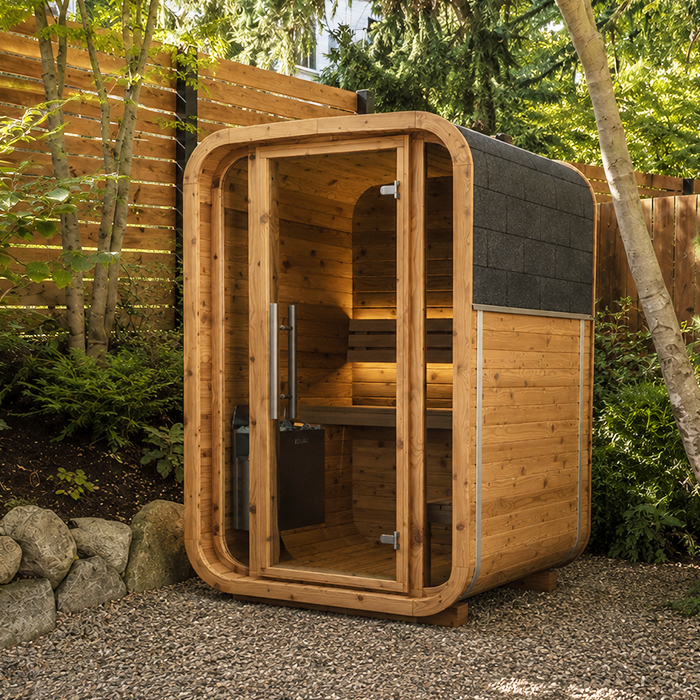
What a heat-up time actually measures
An outdoor sauna’s heat-up time is the elapsed interval between a stated starting condition and a stated finish. The start should include the cabin’s internal temperature and whether the heater is cold, warm or restarting; the finish should identify the target reading and the instrument that reports it. A phrase such as “ready in X minutes” is incomplete if it does not say what was warmed, where it was measured and from what starting point. A built-in control sensor and a separate thermometer can show different values because they measure different positions. Without those details, two published times may not measure the same thing.
Choose the finish rule before a test: the first reading at the target, or a reading that remains at the target at the next scheduled check. State whether the number comes from the heater’s display or an independent thermometer, and keep that method unchanged. Air can warm faster than benches, walls and other surfaces, so a control reading does not prove that every surface has reached the same temperature. Opening a door, changing ventilation or introducing moisture can affect conditions. Select the target in line with the maker’s operating instructions and your intended use; there is no universal target for comparing every sauna.
The sauna’s starting temperature
Initial conditions determine how much heating is needed. Record the air temperature inside the sauna before switching on, along with the outdoor temperature, and note whether the cabin has cooled fully or retains warmth from a previous use. The heater may also be cold, warm or restarting, so log its state rather than writing only “off”. Note how long the sauna has been unused, if known, whether the door was closed before timing, and whether a previous session left moisture or heat in the interior. Follow the maker’s usual start procedure. A start described as “cold” is useful only when the cabin and heater state are clear enough to repeat.
Use the exact model and configuration in your record, but keep catalogue facts separate from measured conditions. The HC-150 Thermowood Barrel Sauna listing states an area of 2.97 m²; that figure does not show whether a test began after a long cool-down or a short pause. The air can return towards the outdoor temperature while benches and walls retain heat, so an air reading alone may not capture the whole thermal history. When repeating a test, match the starting readings and residual heat as closely as practical, and note any difference instead of hiding it.
Outdoor weather and exposure
Record weather at the sauna, not just from a regional forecast. Note outdoor air temperature in a shaded position, wind, direct sun, cloud or rain, and whether the cabin is exposed or sheltered. Sunlight may warm outer surfaces; wind and wet weather can change how quickly heat is lost from an outdoor structure. A local reading can also shift during a test, so note conditions at the start and any obvious change before the finish. Adding the date and approximate time helps another person understand the conditions and makes later results easier to compare.
Keep those observations alongside the sauna identity: the HC-225 sauna listing gives a stated area of 4.4 m², but an area entry cannot describe the wind or sun at a test site. If two results come from different days, do not adjust them using an assumed weather correction. Either repeat the tests under closely matched conditions or record the differences and treat the times as separate observations. A sheltered position can behave differently from an exposed one even when the cabin and heater are unchanged, so outdoor air temperature alone is not a complete weather record.
Cabin size, glazing and heat loss
Sauna size affects the space to be heated, but a single area figure is not a full description of that space. Volume, ceiling height, internal layout and the area of glass or other exposed surfaces can matter. Benches and timber also absorb heat; the heating demand is not just the air. For a particular cabin, use the manufacturer’s drawing or specification to confirm dimensions, heated volume if supplied, and the surface details relevant to the heater maker’s sizing guidance. Do not turn a catalogue area into an estimated warm-up time or apply a universal formula to different designs.
The N-210 product listing records an area of 4.43 m². That is useful for identifying the catalogue entry, but it does not by itself state interior volume, glazing, insulation, air leakage or the time needed to reach a target. Two area figures close together do not prove equal heat loss. When comparing test data across cabins, check that the tests use the same model or identify all differences, including glazing and configuration. Where heater sizing requires a specific method, follow the selected manufacturer’s instructions rather than estimating from area alone.
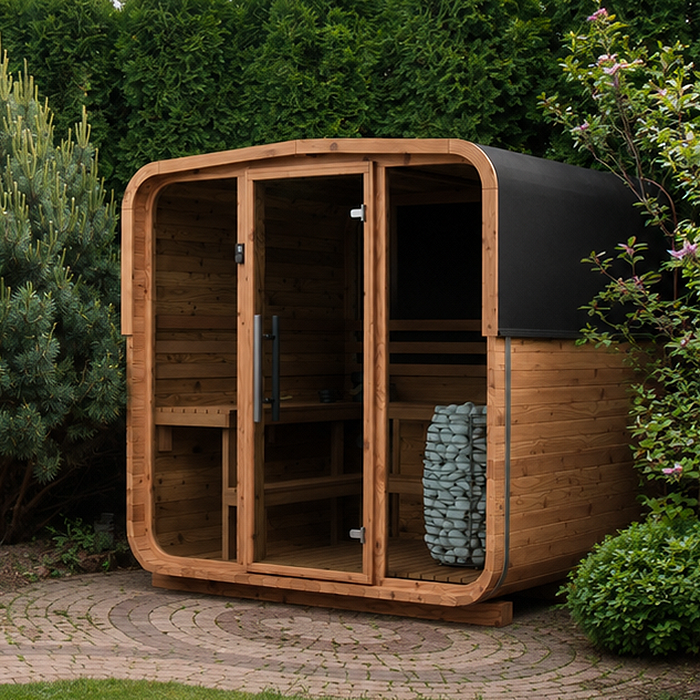
Heater output and configuration
Consider the heater as part of a specific cabin-and-control setup. Record its make and exact model, stated output, controls, sensor arrangement and energy source, then confirm in the manuals that the pairing is specified for the sauna. A rated output alone does not reveal how the system behaves in a given cabin: controls regulate heating, and the supply, ventilation and installation details may also be relevant. A larger output number does not automatically mean a shorter warm-up, and floor area alone is not enough to select a heater.
The N-250 listing states an area of 5.27 m²; that does not establish heater output or compatibility. If a claimed warm-up time names a heater, check whether the tested configuration matches the one you are considering, including its controls and sensor arrangement. A different heater or controller means the original result may not apply. Use the current manuals for the cabin and heater, and ask a qualified professional to confirm compatibility and installation where needed. Do not alter a test setup in a way that conflicts with manufacturer instructions.
Consistent temperature measurement
Choose a temperature reading you can reproduce. Use the same thermometer or data logger, in the same position, for every run, and state whether the number comes from the heater’s control sensor or an independent instrument. Follow the manufacturer’s instructions for sensor placement: a probe too close to the heater, a door, a window or another heat source may not represent the point you intend to compare. If you use an independent thermometer, record its stated accuracy or tolerance and make sure it is working as intended. Describe its location clearly enough to use the same position again, rather than simply recording “inside the sauna”. If you record both the control display and a separate thermometer, give each its own column and identify which determines the finish. Keep both records, but do not switch between them to select whichever reaches the target first.
Decide the reading interval and endpoint rule before switching on. A logger can show a continuous curve; manual readings at set intervals provide less detail but can still be useful if they are consistent and timed. Do not move the instrument mid-test or change settings without recording the change. If moisture is introduced during a run, note when and how the temperature is measured, because a reading without its method is difficult to interpret. When recording measurements for a model such as the LC-260 Thermowood Barrel Sauna, distinguish its listed area of 5.12 m² from your own test details, including the instrument and its position.
A repeatable cold-start test
A useful test is a planned cold start, not a casual observation during a session. Follow the manufacturer’s operating procedure, set the chosen target, start the timer at the agreed point and avoid changing controls or opening the door unless normal instructions require it. Define that starting point in the record: for example, say whether timing begins when you operate the heating control or when the system indicates that heating has begun. Use the same definition for every comparison. Keep preparation time separate from the measured heating interval so that another person can tell what the total includes. If someone enters or a door is opened, record when it happened rather than quietly restarting the clock. If you test a different control mode or heater configuration, label it as a separate test. The purpose is to keep the conditions stable, not to change the sauna’s normal operation to make a result look quicker. Write down any departure from the planned procedure while it is fresh in your memory.
A useful record includes the date and time, exact sauna and heater, internal and outdoor starting readings, weather, sensor position, target, endpoint rule and elapsed time. Add any door openings, setting changes or interruptions, and note whether the sauna had been used earlier. The HCF-300 sauna listing identifies a stated area of 6.89 m²; use the exact model designation in a test record rather than relying on a general product-family name. Repeat the procedure in comparable conditions and keep every result, not only the shortest one. If conditions differ, say so plainly.
Example of matched and unmatched starting conditions
The following is a sample test design, not a report of measured performance. For Run A, imagine the same sauna and heater have cooled fully; the internal air and outdoor air each read 8°C at the start; conditions are calm and shaded; the door is shut; and the sensor is at the same position specified by the maker. Choose the finish target in line with the relevant manual. Run B should begin at the same readings, with the same configuration, target, sensor and door position. Measure and record the actual elapsed time for each run; no time is assumed here.
Now compare a separate run that starts at 16°C inside but 8°C outside. Even if it has the same finish target, it has a warmer interior starting temperature, so it is not a like-for-like comparison with Run A. Report it separately rather than using it to claim that the heater is faster. These temperatures are illustrative log entries only, not measured results or recommended settings. If your log is for the LCF-300 sauna model, retain that exact designation alongside its listed area of 6.89 m²; the area alone does not identify the tested configuration. Once you have actual elapsed times for matched runs, present them together with their starting conditions. If you summarise several runs, give the number of tests and the shortest and longest recorded times, rather than showing only the quickest result. Keep the warmer-start result in a separate group. This makes the comparison useful without suggesting that unlike tests demonstrate a difference in heater performance. Where an interruption occurred, identify the affected run so readers can distinguish it from the uninterrupted tests.
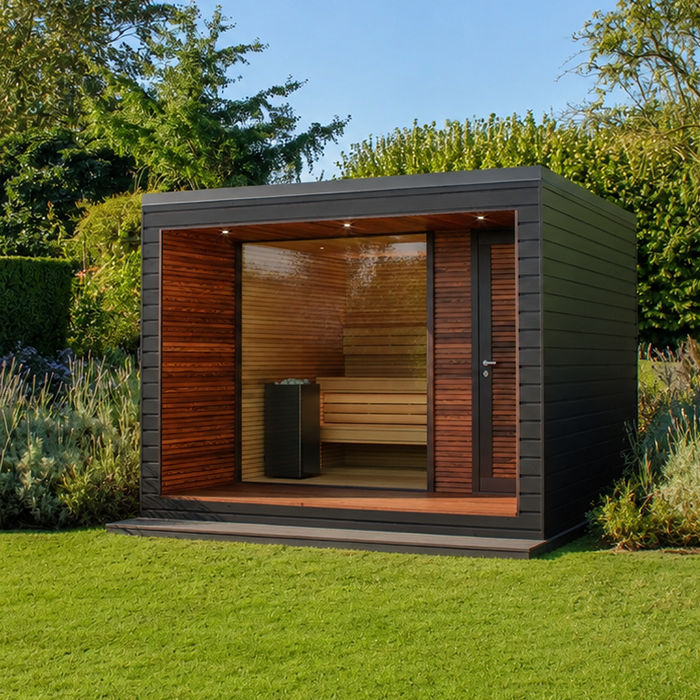
How to assess a published heat-up figure
A published figure is useful when it identifies the exact cabin and heater, starting temperature and weather, target, sensor and measurement method. It should also say whether the sauna began cold or retained heat from earlier use, whether the door was opened, and whether the time is from one run or repeated tests. If those details are missing, treat the number as a point of reference rather than a result you can reproduce. A precise-looking time is still incomplete without a clear method.
Check whether the figure means the control display reached its setting or a separate thermometer recorded the target inside the cabin. Also check whether the test used the heater configuration you are considering. The S-140 sauna listing gives a stated area of 1.93 m²; that catalogue detail is not a measured warm-up result. When a seller or manufacturer supplies a time, ask about its test conditions rather than comparing it directly with an unqualified number elsewhere. Do not fill missing information with a guessed adjustment for size, weather or target.
Planning around real-world variation
Use a test result to plan with an allowance, not as a countdown promise. Outdoor temperature and exposure change by season, and a sauna may start warmer after recent use or cooler after a longer period without heating. If timing matters, measure your own setup under conditions that resemble when you expect to use it, then repeat on another day. Keep the slowest relevant result in mind rather than assuming the quickest reading will recur. For planning, keep cold starts separate from restarts after recent use: choose the group that matches the occasion you are preparing for. Also distinguish the recorded heating interval from the other preparation you need to complete before using the sauna. A test that starts at switch-on does not include any tasks completed beforehand. Keep a brief note of which results informed your plan, so you can revise it when you have more comparable observations. Allow for ordinary variation instead of trying to force a shorter time.
Before choosing a cabin or heater chiefly for speed, make sure the time you compare refers to a compatible configuration and a target you actually intend to use. Check model-specific drawings and manuals for details a test report omits; do not infer heater capacity from an area listing or photograph. If the available evidence does not include starting conditions, ask for them or treat the elapsed time as unknown. A realistic plan is based on conditions you can reproduce, not a universal minute figure.
Frequently asked questions
How long does an outdoor sauna take to heat up?
There is no dependable single time for every outdoor sauna. The result depends on the starting temperature, weather, cabin and heater configuration, target and measurement method. A useful figure states those conditions and records the elapsed time; an unqualified number is not a reliable forecast for your setup.
Does cold or windy weather affect warm-up time?
It can. Outdoor temperature, wind, rain and direct sun can change the heat lost from an exposed cabin. Record conditions at the sauna during each test, rather than relying only on a general forecast. Results from noticeably different weather are better reported separately than treated as a direct comparison.
Can I compare heaters by their rated output alone?
No. The heater must be suitable for the particular sauna, and controls, sensor position and installation can affect a test. Check the sauna and heater manufacturers’ current instructions for the specified pairing. A rating on its own does not establish how quickly a cabin will reach a chosen temperature.
Why can the display reach its target before the sauna seems evenly warm?
The display reports a reading from a particular sensor, while air, benches, walls and other surfaces may warm at different rates. A separate thermometer in another position can also show a different value. When comparing results, use the same measurement point and state whether the endpoint is a control reading or an independent measurement.
What should a published warm-up test include?
Look for the exact sauna and heater configuration, internal and outdoor starting temperatures, weather, target, sensor and its position, and the rule used to stop the clock. It also helps to know whether the sauna began cold or retained heat from earlier use, and whether the figure comes from one run or several.
Outdoor sauna warm-up times become meaningful when the start, finish, weather, heater, cabin and measurement method are recorded together. Match those conditions before comparing results, repeat the test where practical, and state any differences rather than smoothing them away. A carefully described measurement can help you plan for your own setup; a single number without its starting conditions cannot promise the same result at another property or on another day.
