
Buying a sauna for a coastal garden: what to consider
Sauna buying guide
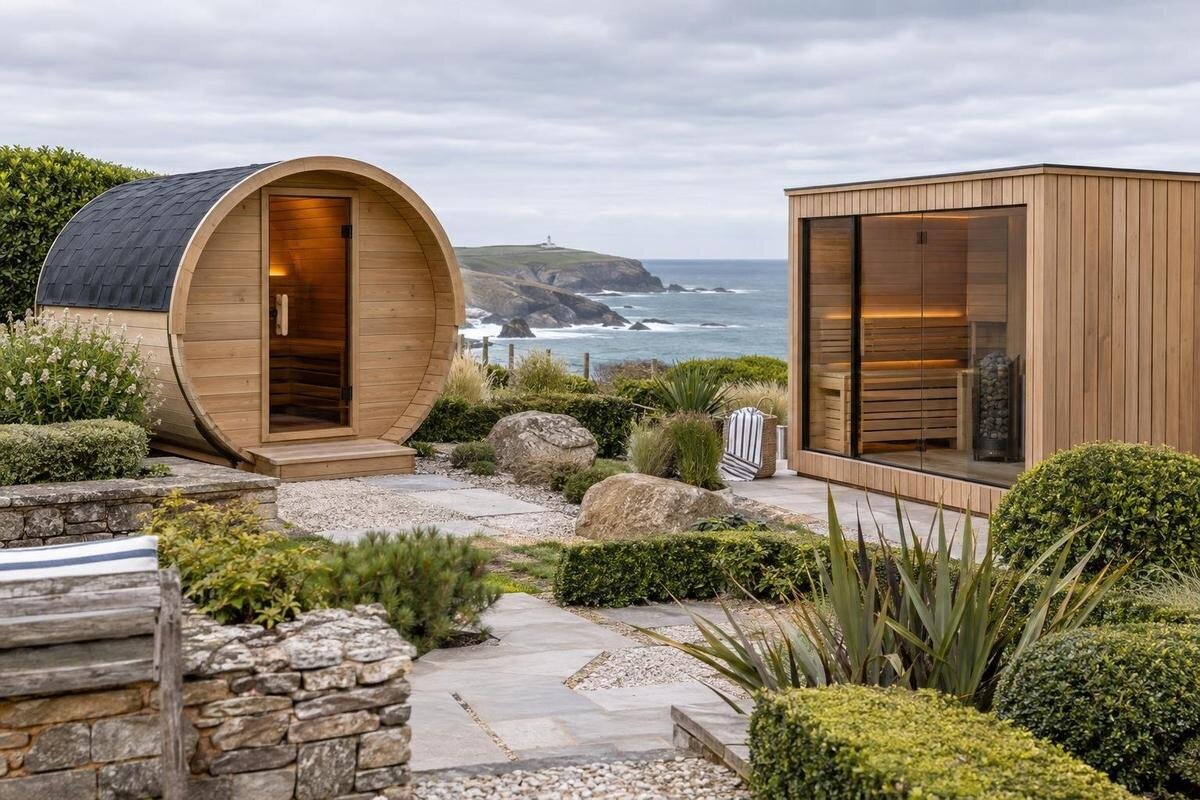
Buying a sauna for a coastal garden starts with the conditions at the proposed spot, not a generic idea of what counts as coastal. Salt carried in spray or wind, driving rain, sun and the amount of shelter can vary even within one property. Before committing to a model, find out what its manufacturer says about coastal exposure and care, then check whether the site, delivery route, base and services can support the installation. A useful shortlist is built on written, model-specific information rather than appearance or a product name.
Assess the exposure at the exact site
A coastal address is not a single exposure category. A garden open to onshore wind may receive direct spray and wind-driven rain; a more sheltered site may still collect salt carried through the air. Nearby buildings, landform, fences and planting can alter wind and shade, but none should be treated as a guarantee of protection. The conditions around the proposed sauna matter more than a broad label such as beachfront, bayside or coastal. Look at the particular corner where it would sit, including what approaches from the sea and what may shelter it. A position that seems calm in fine weather can still be exposed when the wind changes.
Record observations before contacting a supplier: whether spray reaches the spot directly or only in certain weather, where rain is blown, how much sun falls there, and whether water or salt residue is noticeable on nearby outdoor surfaces. These clues provide context, not a technical rating. Note whether the garden’s shelter changes across different wind directions and seasons; if you have not observed a condition, say so rather than filling the gap with an assumption. A few photos of the intended position and surrounding garden can make an enquiry more specific. Do not use a fixed distance from the shoreline as a universal rule; describe the actual site and ask the manufacturer to assess it.
Get model-specific coastal guidance
Ask the manufacturer or supplier for model-specific written guidance on use in coastal environments before choosing a design. The answer should address the exposure you described, rather than saying only that the sauna is intended for outdoor use. Ask which finishes, components or aspects of installation call for particular protection or inspection, whether salt-laden air or sea spray affects the care instructions, and whether any stated warranty terms exclude certain coastal conditions. Request a response tied to the exact model and, where available, the relevant instruction or product document. A timber description, product name or photograph is not proof of suitability.
Keep one model entry per line in your comparison sheet. For example, Thermowood Barrel Sauna S 140 is an identifiable candidate, but its name alone cannot establish its construction, dimensions, coastal suitability or upkeep. Request the product information and care instructions for the exact model and save the response with your quote. Ask whether the advice applies to your described exposure, including any direct spray or seasonal changes, rather than to an unspecified coastal setting. If the answer remains vague, leave the question marked unresolved; it is not evidence either that the model is suitable or that it is unsuitable. Compare alternatives on the same basis.
Choose a position that is sheltered and accessible
Choose a position that balances shelter, drying and practical access. A spot screened from the strongest wind may reduce direct exposure, yet tight enclosure by walls or dense planting can make inspection and routine care awkward and may limit airflow. Ask the manufacturer how much clearance is required around the exact model and whether the proposed position meets its guidance. Do not assume a fence, hedge, roof overhang or garden building provides the protection the maker expects, and do not add a canopy or enclosure without checking first. If you are considering two corners of the garden, assess each one separately: a small change in orientation or shelter can change how wind and rain reach the site.
Check how each candidate position works in ordinary use, not just in a weather forecast. Leave a clear route for users, and make sure the exterior remains reachable for the inspections and maintenance the manufacturer specifies. Consider whether gates, garden paths or seating will be obstructed, and whether sprinklers, roof runoff or nearby plants will repeatedly wet the sauna. When comparing a name such as Thermowood Barrel Sauna HC150, use the same proposed position and exposure notes for every enquiry rather than assuming that the model code tells you where it can sit. A sheltered location is useful only if it also works for installation and upkeep.
Confirm the base and drainage requirements
Ground conditions and base requirements need to be confirmed before you pave, excavate or alter a deck. Coastal gardens can include slopes, soft ground, paving and compacted areas, but a site photograph rarely gives enough information to decide what support a particular sauna needs. Ask for the exact model’s requirements for the base, level and support, and give those to the installer or site professional assessing the position. Do not borrow a base detail from a different sauna. An existing patio or deck is not automatically suitable because it looks level; have its suitability assessed against the product documentation where there is any doubt.
Plan where rainwater will go and whether wind-driven rain can splash on the base or collect around it. Avoid a low pocket where water stands and keep the access route usable after wet weather, while following the maker’s drainage and clearance guidance. The Thermowood Barrel Sauna HC 225 is a name for the shortlist, not evidence of a particular footprint or foundation method; request its exact installation information before fixing a position. If the project involves excavation, drainage changes or structural work, involve a qualified person who can assess those conditions rather than guessing from a general online article. Confirm the finished base matches the model requirements before delivery is arranged.
Check delivery access before choosing a position
Access can rule out a preferred position even when there is room once the sauna is in place. Walk the delivery route from the property entrance to the proposed site and note narrow gates, sharp turns, steps, low branches, overhead obstructions, retaining walls and changes in level. Measure the narrowest points and turning spaces; a description such as wide enough is less useful to the supplier than clear site information. Do not estimate the delivery method from a product image or assume the sauna will arrive in pieces. Ask how the exact order is delivered and what dimensions apply to any packed items or separate sections, plus what handling arrangements are required.
Before ordering, confirm any delivery limitations, unloading arrangements and who is responsible for moving the sauna beyond the delivery point. If assembly is included, clarify whether the installer needs extra working space or a clear access route, and whether site preparation must be complete beforehand. For a candidate such as Thermowood Barrel Sauna N 210, request delivery and assembly information for that specific model; do not infer it from the model number. If a gate, fence panel or planting would need to move, establish whether it can be removed and restored before you commit to the position. Make sure the delivery plan and chosen location describe the same route.
Match the sauna footprint to the garden
Match the usable interior to the people who will use the sauna, but assess its outside footprint at the same time. A model code is no substitute for actual exterior and interior measurements, stated capacity, seating layout, door position and manufacturer-specified clearances. Compare the number of seats and the layout with your household’s usual use, rather than planning only for an occasional maximum. In a compact coastal garden, also account for paths, planting, outdoor seating and access for upkeep. The right fit leaves room to use the surrounding garden and reach the exterior for care; it is not simply the largest unit that fits between boundaries.
Mark the proposed footprint on the ground using the measurements for the exact model, then add the installation clearances and service access given in its instructions. Do not estimate dimensions from a photograph. Check the door position and route between the sauna, the house and any changing area, while ensuring a path or deck will not block airflow or access required by the maker. The Thermowood Barrel Sauna N 250 can be included in the comparison, but its name gives no reliable dimensions or capacity. Set the figures beside your garden measurements and ask the supplier to clarify any missing detail before treating the layout as feasible.
Confirm heater and service requirements
Heating needs to suit both the sauna and the services available at the proposed site. Ask which heater options are compatible with the exact model, what is included in the order, and what power supply or other services each option requires. Do not choose on the basis of a heater pictured in marketing material unless the supplier confirms it belongs with the model you intend to buy. Take electrical requirements to a qualified electrician or sauna installer, who can assess the location and relevant installation requirements. Ask early what information they need to plan the route for any services, before paving or garden works make changes more difficult. Do not attempt connections from a general online guide.
If a wood-fired heater is under consideration, get model-specific guidance from the manufacturer or installer on placement, flue arrangements, clearances and fire safety, and have the site reviewed by an appropriate professional. If the proposed heater is electric, confirm supply needs and installation scope before finalising the base and order. A shortlist entry such as Thermally Modified Wood Barrel Sauna LC 260 still needs its own heater and services information; the product name does not reveal what is supplied or what the garden can support. Ask the installer to identify any site preparation or dependencies before you place the order, and keep the written requirements with the model documents.
Understand coastal care before you order
Maintenance is part of coastal suitability, not a small-print detail to read after installation. Ask the manufacturer how salt, wind-driven moisture and sun affect the cleaning and care routine for the exact sauna, which treatments or cleaning products are permitted, and which should be avoided. Ask whether recommendations change for a more exposed site and what areas or components need inspection. Get the recommended frequency in writing rather than assuming that all models need the same schedule. Do not presume that timber, finishes or metal parts respond alike, or apply a treatment suggested for another product. A clear care plan lets you judge the ongoing work as well as the purchase.
Make sure the final position lets you reach the exterior and any service points named in the instructions without dismantling garden features. Ask how to identify a part that needs replacement, whether a qualified service person is required and what records to keep. The Thermally Modified Wood Barrel Sauna HCF 300 is another model name to compare; its wording does not establish a care schedule or prove that any particular treatment is needed or unnecessary. Compare the manufacturer instructions themselves, then allow the specified access for routine care. If maintenance would require moving furniture, cutting back a hedge or taking apart a deck, decide whether that remains practical year after year.
Clarify delivery, installation and warranty responsibilities
Get the purchase and installation responsibilities clear in writing. Confirm the exact model and included items on the order; ask whether the heater, assembly, base preparation, delivery beyond the drop-off point and electrical work are included or arranged separately. Clarify who checks the site, who installs the sauna, and whom to contact if the delivered product does not match the agreed specification. Read the model’s installation and care instructions before arranging garden work, and request a copy if they are not available. Comparing the full scope of each proposal prevents an installation task from being mistaken for a supplied part of the purchase.
Ask how the manufacturer handles coastal exposure in its written warranty terms, including any exclusions, required maintenance and records needed for a claim. Do not rely on a verbal assurance alone; keep model-specific correspondence, instructions, installation details and records of care together. Treat Thermowood Barrel Sauna LCF 300 as the exact name for your enquiry, not as a promise about installation support or warranty cover. If information changes between the sales and installation conversations, resolve the difference before the order and site preparation proceed. Make sure everyone involved is working from the same instructions for the same model.
Compare shortlisted models against the same checks
Put each candidate through the same pass-or-pause checks: written confirmation for your coastal exposure; model-specific care instructions; dimensions and clearance; a suitable base; a feasible delivery route; and a compatible heater and service plan. Mark each item confirmed, unresolved or not applicable, and note who supplied the information and which model it covers. A sauna that looks right but lacks a clear answer on exposure or installation still has an open question. This makes comparisons fairer than setting unlike product descriptions side by side, and helps prevent a decision based mainly on appearance or an unexplained model code.
Then weigh the practical differences that matter to your garden: how much space remains around the sauna, whether the position is easy to reach and maintain, and whether its stated capacity and heating arrangement suit the way you expect to use it. A site that needs changes to paving, planting, access or services may alter the preferred position or order scope, so account for those issues before committing. If the manufacturer cannot confirm coastal suitability, do not fill the gap with a guess about shelter or a product name. Pause, request clearer model-specific guidance or compare another option whose requirements can be assessed.
Common questions
Is an outdoor sauna automatically suitable for a coastal garden?
No. Outdoor use does not by itself confirm that a model is suited to salt-laden air, spray or wind-driven moisture. Ask the manufacturer for written guidance for the exact model and your site’s exposure, including any care requirements or warranty exclusions. If the guidance is unclear, treat suitability as unresolved rather than inferring it from the name.
How far from the sea should a sauna be positioned?
There is no universal distance that settles suitability for every garden. Exposure depends on what reaches the actual spot, including wind direction and shelter. Describe the site to the manufacturer and ask whether its advice covers direct spray, airborne salt or both. Do not use distance alone as a substitute for product-specific guidance.
Does a sheltered corner solve the coastal exposure issue?
Not necessarily. A fence, hedge or building can change the wind and rain at one point, but it does not prove that a sauna meets its maker’s coastal requirements. A sheltered spot also needs suitable clearance, drainage, delivery access and room for inspection. Confirm the proposed position against the manufacturer’s instructions.
What should I confirm before preparing the site?
Obtain the exact model’s dimensions, base and clearance requirements, delivery and assembly details, heater and service needs, and maintenance guidance. Check the garden route and ground with the appropriate installer or site professional. Preparing a pad or changing access before these details are settled may mean altering the work to suit the chosen model.
What if the manufacturer gives no clear coastal guidance?
Treat that as a genuine gap in the buying decision. Send the manufacturer or supplier a description and photos of the proposed location, then ask for a model-specific answer in writing. If the maker still cannot confirm suitability or required care, compare another option with clearer documentation rather than relying on a general claim or the product’s appearance.
Buying well means deciding from the site outward: describe the exposure, obtain guidance for the exact sauna, and confirm the position, base, access, services and upkeep before committing. A coastal garden can present different conditions even within a small area, so a name or image is no substitute for the maker’s instructions and an installer’s assessment. Keep the answers with your order and choose only when the model’s requirements match the garden you can provide.
