
Choosing and buying a sauna for your holiday home

SAUNA BUYING GUIDE
Buying a sauna for a holiday home is a site-and-use decision as much as a model comparison. The right shortlist depends on how often you are there, how many people will use it together and what the property can accommodate. Compare capacity, full footprint, heating, upkeep and delivery for each exact option before you order. Product names and photographs are only a starting point; confirm the details that affect fit and operation.
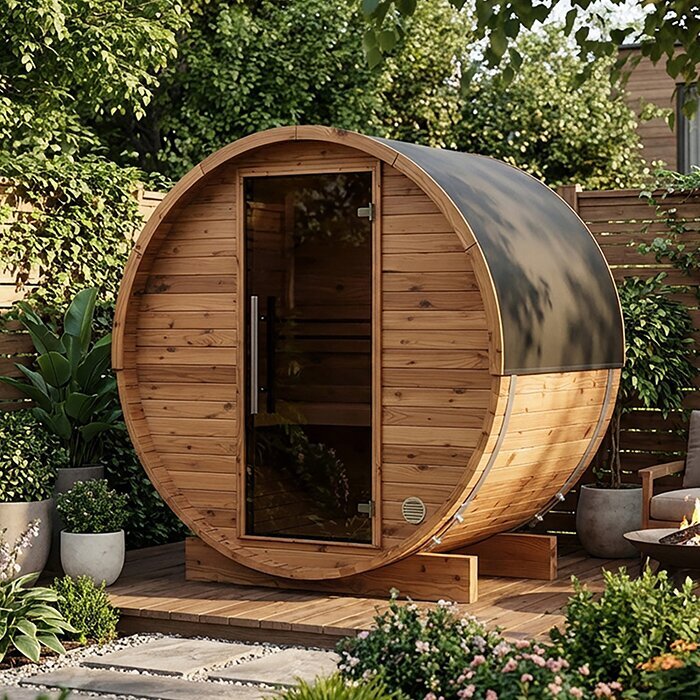
How the holiday home will be used
Begin by separating ordinary use from peak use. Note how many people are likely to use the sauna at once on a typical visit, how often the property is occupied, and whether it will be used mainly by your household or shared with friends and family. A home visited for occasional weekends has different priorities from one used most weeks, even if the number of beds is similar. Think about whether sauna time is usually a quiet individual routine or a shared activity, and whether everyone expects to use it at the same time. The aim is to establish a realistic pattern that can guide the size and features you compare.
Then rank the requirements. Put constraints such as available floor area, access, preferred heating arrangement and the number who should fit together in a must-have column; put appearance or optional extras in a preferences column. A page such as the S 140 sauna listing is a candidate to assess, not proof that it fits: use the current published details and ask for missing information rather than infer it from a model name or photograph. Agreeing priorities with everyone who owns or regularly uses the property prevents one appealing feature from outweighing a basic site or operating constraint. It also makes comparisons more consistent when product pages present information in different ways.
Choose capacity for the group using it together
Capacity is more than a headline head count. Compare the number of people you expect to use the sauna together with the manufacturer’s stated capacity and the layout that supports it. If a maximum is listed, ask how it is defined and whether the figure assumes everyone is seated; don’t translate a nominal number into comfort without knowing how the space is arranged. Consider your usual group first, then decide how often you will genuinely want a larger group to use the sauna together. Occasional busy weekends may matter, but choosing for a rare peak can affect the footprint and budget all year.
Use a table to record the stated capacity, the basis for that figure, and the interior details supplied for each option. Review the HC150 sauna listing only against information confirmed for that exact product; its name does not establish how many people it accommodates or how they sit. If the layout or capacity basis is not clear, ask the supplier for an explanation or drawing before comparing it with another option. This is particularly useful when one model has a larger stated maximum but little detail about the space available to each user. Treat an unanswered capacity question as a gap, not as a reason to assume the sauna will suit your group.
Measure the full footprint and access space
Measure the full area available before comparing footprints. Include the sauna’s external dimensions, the entrance approach, space for any door to open, steps or other obstacles, and room to move around it for installation and later care. A site sketch or temporary outline can reveal clashes with paths, garden furniture, storage and doors used every day. Consider whether people can enter and leave without blocking an area that needs to stay clear. If the sauna is planned indoors, check the route through the building and room height as well as the floor area. The aim is to assess the installed space, not just the cabin outline.
Ask for a dimensioned drawing for the exact model and clarify whether its measurements include every part that projects beyond the main body. Put the confirmed footprint beside the available space rather than estimating scale from a photograph. For the HC 225 sauna listing, use dimensions and access information supplied for that option; the name alone cannot tell you whether it will fit. If the position needs a platform or another supporting surface, ask the manufacturer and installer to confirm what the specific model requires. Don’t assume an existing deck, floor or pad is suitable simply because it looks substantial.
Check the proposed location against the site
Think about the route between the house and sauna as part of placement. Check privacy from neighbouring homes and shared outdoor areas, lighting, and ease of access at the times people are likely to use it. Consider whether there is somewhere practical to change or leave towels, and whether people can move between the sauna and the rest of the property without blocking everyday paths. If the sauna will be outdoors, ask how the manufacturer’s guidance addresses exposure, drainage and ventilation for the proposed position. Requirements vary by model, so a general product photo is not a site assessment.
Record location questions alongside your model comparison. A sketch noting nearby structures, the route to services and the intended entrance can help a supplier or qualified installer identify what needs checking, but it does not establish that the site is suitable. Ask what base, clearances and access for maintenance are specified for the N 210 sauna listing or another exact option. Keep a second possible location in mind if one requirement conflicts with the first. A change of position may resolve a privacy issue, for example, but could introduce a new access or service question that also needs checking.
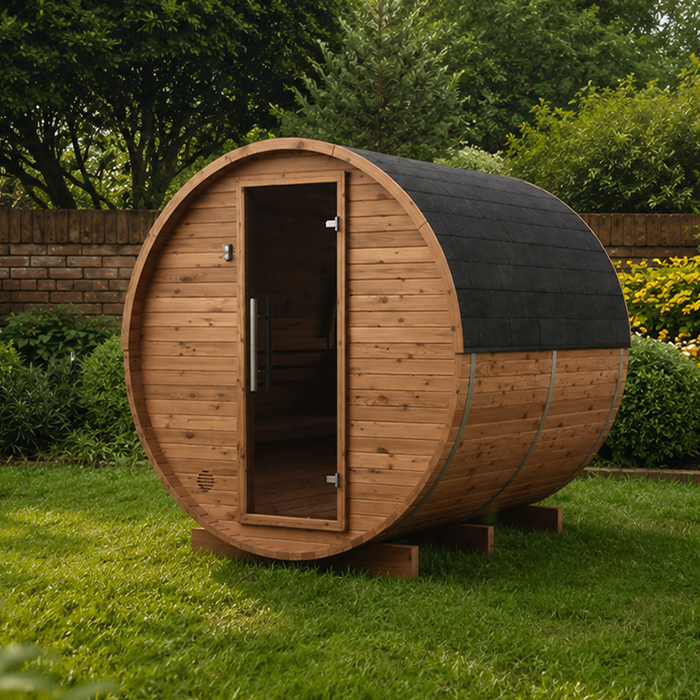
Compare heater options and site requirements
Set your heating preference early because it can affect both the shortlist and the installation questions. Find out which heater types are offered for each exact sauna and whether the quoted package includes a heater, controls or neither; never assume from the model name. Compare stated warm-up expectations with the way the holiday home is used, and check what fuel, power supply and supporting services the arrangement needs. Ask the supplier for product-specific requirements rather than relying on general claims about a heater category. An option that sounds convenient in theory may not match the property’s existing services or your preferred routine.
Before assessing the N 250 sauna listing, check the heater compatibility and installation information associated with the exact order. Ask a qualified electrician or installer to assess any site-specific electrical work; if you are considering a wood-fired arrangement, get qualified advice on its fire-safety and flue requirements. This is a suitability check, not a set of instructions to make changes yourself. Ask for realistic warm-up information for the sauna and heater combination you are considering, and note the conditions behind it. That makes the answer more useful than an unsupported promise that may not apply to your property.
Allow for running costs and ongoing care
Include operation and maintenance in your budget, not just the purchase price. Ask for the heater’s stated energy-use or fuel information and estimate costs using your expected pattern of use and actual local energy or fuel rates. A generic running-cost figure may omit assumptions that matter to your household. Request the care instructions for interior and exterior surfaces and any heater or other equipment included. Check what routine cleaning involves, whether the manual recommends airing or drying after use, and what should be done when the holiday home is left unused for a period. The written guidance is more useful than guessing from a product description.
Compare care requirements across options and ask how often any recommended inspections or treatments are needed. Do not assume that a surface needs less attention because of a product name alone. For the LC 260 sauna listing, the name identifies the product but does not establish its finish, care schedule or maintenance needs, so request those details for the exact model. Also ask where replacement parts and service advice can be obtained, and which routine tasks the owner is expected to handle. That gives you a more realistic picture of ownership between visits and helps you compare ongoing responsibilities as well as the initial outlay.
Compare what is included in the purchase
Build a like-for-like comparison of what each quote includes. Ask whether it covers the sauna only or also the heater, controls, lighting, accessories, assembly, connection or site work; none of these should be presumed. Note which items are optional and which must be sourced separately, and ask for compatibility details before ordering add-ons. A headline price may not represent the complete setup you need, while a more complete package may include items you would otherwise arrange separately. Base your comparison on written inclusions and exclusions, rather than an image or a short model label that may not describe the package.
Check after-sales terms as part of the same comparison. Ask what warranty terms apply to the exact sauna and heater, who handles a fault, whether service or parts can be arranged for your location, and whether any owner actions affect coverage. Get the answers in writing rather than assuming standard terms. A page such as the HCF 300 sauna page can be added to your shortlist, but product identity alone does not reveal what is included or how service is arranged. Compare the total amount you would actually have to organise alongside the features, so the purchase decision reflects the full package and its responsibilities.
Plan delivery and installation before ordering
Work out how a sauna will reach the holiday home before placing an order. Check access from the property entrance to the intended site: gates, turns, gradients, overhead obstructions, soft ground and room for unloading may all matter. The supplier should confirm the delivery form and handling needs for the exact order, including whether assembly takes place on site and what access is required. Don’t assume the product’s overall dimensions are the only measurements that matter; components or delivery equipment may need a different route. Take photos and make a simple route sketch so the supplier can respond to the actual site rather than a general description.
Ask who is responsible for preparing the site, unloading, assembly and removing packaging, and which tasks require a qualified installer. For the LCF 300 sauna listing, verify delivery and installation arrangements for your address directly; do not infer them from the model name or assume every order follows the same process. If access is tight or the property is a long way from regular services, resolve that before choosing rather than after delivery is arranged. Put agreed access conditions, responsibilities and any additional charges in the order details so everyone is working from the same plan.
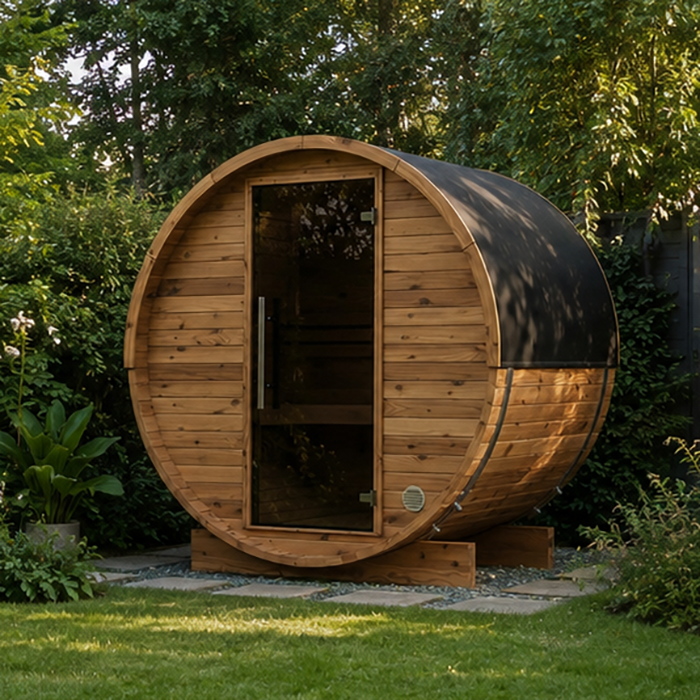
Confirm product information and safe operation
Before committing, assemble the documents for the exact sauna, heater and any optional equipment. Look for dimensions, capacity basis, heater compatibility, site requirements, care instructions and a clear list of inclusions. Check that the written information answers the questions that matter to your site and intended users; do not treat a missing answer as a favourable assumption. If a specialist assessment is needed, give the qualified person the product documentation and a description of the proposed location. Ask the supplier to resolve inconsistencies between the listing, quote and manual before you pay, so the product, package and installation plan refer to the same configuration.
Think about who will operate the sauna when the holiday home is used by your household or invited family and friends. Check that the controls and supplied instructions are understandable for those regular users, and that the owner can keep the manual available at the property. Follow the manufacturer’s stated operating and safety guidance rather than devising generic limits or assuming everyone’s needs are the same. If installation or operation depends on a qualification, supervision or access arrangement, clarify that before purchase. These practical questions can influence whether a technically compatible sauna will suit the way you use the home.
Make a shortlist that reflects your priorities
Turn the answers into a shortlist with three columns: must meet, preferred and still unknown. First remove any option that fails a firm constraint such as usable space or a confirmed site requirement. Then compare suitable candidates on capacity, heating arrangement, upkeep, complete package and delivery responsibilities. Weight the criteria according to your actual use: someone who visits infrequently may rank simple care and straightforward sourcing differently from a household there most weekends. A score sheet will not make the choice for you, but it helps show why one option is a better fit instead of relying on the strongest visual impression.
Hold off ordering while a decision-critical answer remains vague. Ask the supplier for the relevant drawing, inclusions or written clarification, and seek professional assessment for site-specific electrical, fire-safety or support questions as appropriate. Once the model, heater and package are clear, compare the complete costs and responsibilities against your budget and site plan. Save the product details and agreed terms with your purchase records so delivery and installation can be checked against what you selected. A considered choice should suit both the busiest likely visit and the quieter, more common use of your holiday home.
Frequently asked questions
How many people should a holiday-home sauna fit?
Use the number likely to use it together on an ordinary visit as your starting point, then decide whether occasional larger gatherings justify extra capacity. Confirm how the manufacturer defines the stated maximum and ask for interior-layout details; a headline number alone cannot establish whether the space suits your group.
Should I choose an electric or wood-fired sauna?
Neither is automatically the better choice. Check which heater options are compatible with the exact sauna, what fuel or services they require, and whether those suit the property and your preferred routine. Ask a qualified professional about site-specific electrical or fire-safety requirements before deciding.
What should I measure before ordering?
Check the sauna’s full external dimensions, the entrance approach, door movement and space needed for installation and care. Measure the route from the delivery point to the proposed site too, and ask the supplier which access measurements and site requirements apply to the exact order.
Which running and maintenance costs should I check?
Ask for the heater’s energy or fuel information and use it to estimate costs against your expected pattern of use and actual local rates. Get the care instructions for the sauna and equipment, including any recommended routine maintenance, and check whether parts or service need to be arranged separately.
Can a product name or photograph tell me whether a sauna will fit?
No. A name identifies a product, and a photograph can help you picture its style, but neither confirms dimensions, capacity, heater compatibility or site requirements. Use the current written information for the exact option and ask the supplier to clarify anything that is missing.
Choosing a sauna for a holiday home means balancing how people will use it with what the property can support. Set realistic capacity and space needs first, then confirm heating, care, package and delivery details for the exact option. A measured site, clear written answers and an honest full-cost comparison make the decision more reliable than choosing by a model name or photograph alone.
