
Buying a Sauna Kit: Assembly Requirements and Common Omissions
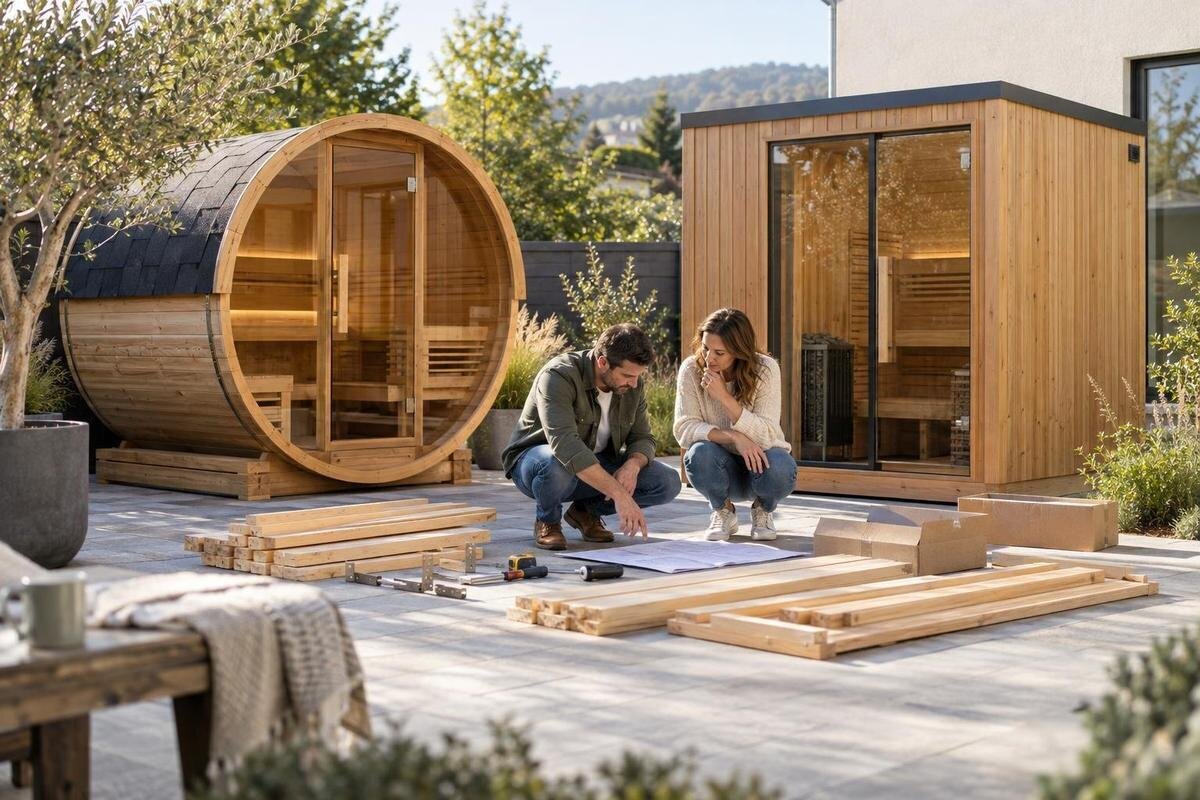
Sauna buying guide
Buying a sauna kit still leaves decisions about what arrives, what you need to prepare and who will assemble it. The word kit does not establish whether the heater, base, fittings or installation work are included. Before choosing, compare the supplied parts and the work left over against your intended site and assembly plan. This guide sets out the details to confirm so you can compare offers on their actual scope, not just their descriptions.
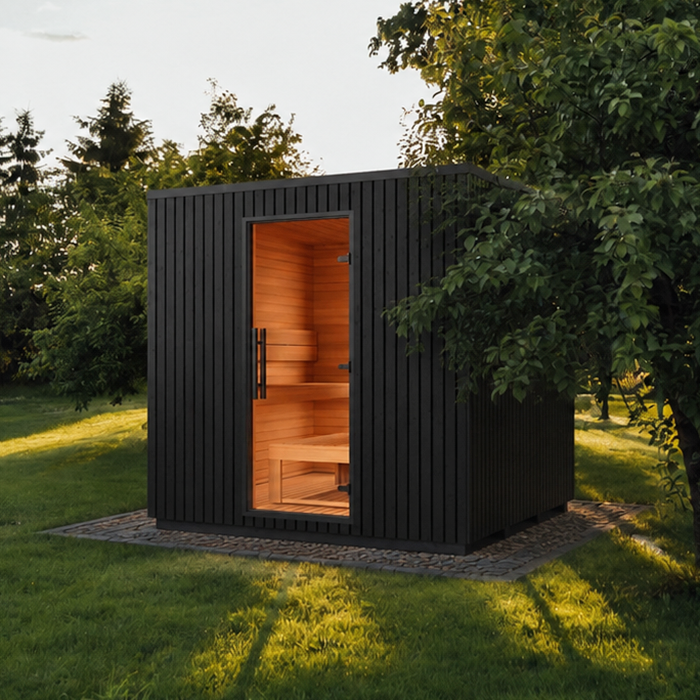
What a sauna kit actually includes
“Sauna kit” describes a package of components, not a standard promise that every item needed for a working sauna is included. One offer may cover a structure supplied in parts; another may bundle equipment or installation. The product name alone does not tell you where the scope stops. Define the outcome you expect at three stages: components delivered, enclosure assembled, and sauna completed with services and handover. A supplier may quote for only one stage, so compare offers at the same endpoint rather than treating kit as shorthand for turnkey. This distinction also helps you judge the time, work and budget involved.
Ask for a written, itemised list of inclusions and exclusions before comparing options. It should separate standard parts from optional upgrades, consumables you source, delivery, and tasks assigned to a builder, installer or electrician. Check whether anything shown in photographs is part of the package or simply illustrative. Ask what phrases such as “complete” or “ready to assemble” mean in actual components and tasks. A clear scope becomes a planning baseline: you can see which preparations belong at the site, which purchases are still outstanding, and whether the expected finish matches what the supplier has quoted. Keep the list with the quotation and note the date or version of the information. If a later change is discussed, ask for the updated scope in writing so that verbal assumptions do not become a disputed omission.
Choose an assembly route before ordering
Decide whether you will assemble the kit yourself, use an installer, or split the work. The choice depends on more than confidence: consider the instructions, parts handling, tools, available workspace and any trade work the design calls for. Ask for the assembly guide before paying, if it is available, and review the sequence, how parts are identified and whether the guide specifies extra help or equipment. If detailed instructions come later, ask the supplier to outline the skills and resources required so you can judge whether the project suits your experience and timeframe.
If you plan to hire someone, ask what their quote covers: unpacking, checking the components, assembly, fitting interior elements, finishing and cleanup may be treated as separate tasks. Do not assume these are bundled with the kit. When reviewing a product page such as the Thermowood Barrel Sauna S 140 listing, check whether that specific offer is supplied in kit form and where to find its assembly information; do not infer the format from the model name. Ask who will resolve questions or missing parts if a third party does the assembly. Agree on when the installer needs the site, components and any required documentation ready. This avoids paying for an attendance that cannot proceed because site preparation or a separately supplied item is incomplete.
Measure the site and the assembly space
Compare the supplier’s stated finished dimensions with the space available at the intended site. Allow for more than the footprint: check the height, door opening and swing, any projections shown on the drawings, and room to work around the structure during assembly. Think about where components can be laid out without obstructing other work. A finished-size diagram may not show the working space needed to put the kit together, so ask for assembly drawings or a clear description of the required clearances rather than guessing from a photograph.
Measure the surface and overhead space as well as the floor area, then record what you have measured so you can compare candidate kits on the same basis. A model name or image is not a dimension specification. For a product you are considering, such as the HC150 sauna listing, ask the supplier to confirm the relevant finished measurements and any assembly-space requirements for that exact offer. If the site has an unusual shape or fixed obstructions, ask an installer to check the plan before you commit. Consider the route from the storage or unloading point to the final position as a separate measurement exercise. Gates, corners, steps and low eaves may affect how individual components can be moved, even where the finished sauna fits the intended location.
Check the base and outdoor conditions
Find out what the kit is designed to sit on and whether any floor, base rails or other supporting components are supplied. Ask which surface the supplier specifies and what preparation is your responsibility. Do not assume that a level-looking patch of ground is suitable for every product. If the site is sloped, soft or otherwise complex, have a builder or another qualified professional assess the base requirements. This is a site-planning question, not something to resolve by guessing at dimensions or adapting the instructions.
If you plan to place the sauna outdoors, ask what the supplier says about water run-off, ground clearance, shelter and ongoing care for the specific product. A photograph of a finished sauna does not establish how much weather protection it needs or what surface preparation is appropriate. For a candidate such as the HC 225 sauna listing, request the relevant site guidance and ask which protective or finishing items are included. Allow time and budget for any preparation that falls outside the supplied package. Also consider whether water will be directed away from access routes and the area around the sauna. A site professional can advise on practical drainage and ground conditions without altering the supplier’s specified installation requirements.
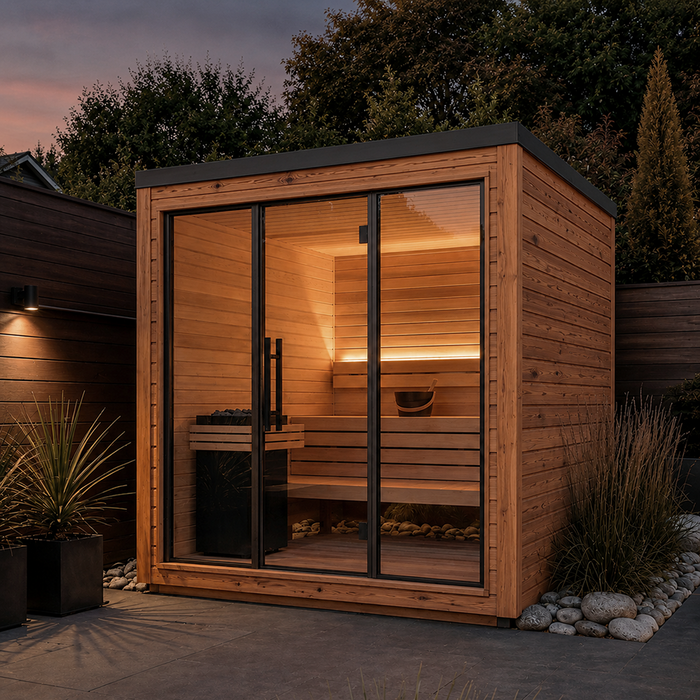
List the structure, fittings and fasteners
Use a parts schedule to confirm what makes up the structure. Depending on the offer, items to ask about may include wall or roof components, a floor, benches, backrests, a door, windows and any supporting fittings. Do not assume that an item is included because it appears in a product image, or that every package is supplied in the same state of completion. Ask whether components are prepared for assembly and how the supplier identifies them. A numbered list or drawing is more useful for planning than a general description of the product.
Check the small parts as carefully as the main components. Ask whether fasteners, brackets, handles, seals, trims and any specified finishing materials are supplied, and whether the quantities are listed. Find out which basic consumables or tools you will need to provide; avoid buying substitutes until the supplier confirms they are appropriate. When you review a listing such as the N 210 sauna listing, use it to identify the exact product, then request its own parts schedule rather than assuming that another model’s list applies. Check whether the schedule distinguishes loose components from pre-fitted items. That distinction helps the assembler plan the sequence and makes it easier to identify an absent item before work starts.
Confirm what the heating package requires
Check whether heating equipment is included, offered as an option or left for you to source. Ask for the exact heater and control components covered by the quote. Stones, a guard, sensors or other accessories may depend on the chosen system, so request a clear list rather than assuming they come with it. Have the supplier or a qualified installer confirm that the proposed heater matches the kit’s documented configuration and requirements. Do not choose a heater by appearance or by a model name alone.
For an electric heater, ask what connection information the product documentation provides and what work is outside the supplier’s scope. A qualified electrician can review the requirements for your site before the purchase is final, so electrical planning is not left until assembly is under way. If the heating option is not electric, ask the supplier and an appropriate installer to explain the associated components and installation work instead. For a candidate such as the N 250 sauna listing, verify the heating package and its exclusions for that exact offer; do not infer them from the listing’s name. Clarify who supplies each heating-related component and when it is needed in the assembly sequence. This lets you coordinate separate purchases or trade work without leaving an unfinished stage at the end of the build.
Ask about ventilation, lighting and finishing items
Ask whether the kit includes ventilation components, whether openings are specified in the assembly information and who is responsible for any work required to complete them. The product description or a photograph may not show what is supplied, so request the relevant drawings and instructions. Do not assume that vents, covers or other fittings are included simply because they appear to be part of the finished design. If the supplier’s information is unclear, settle the question before the structure is assembled, when changes may be more difficult to plan.
Lighting and interior finishing can also sit outside the main structure package. Check for light fittings, covers, wiring-related items, trim, handles, seals and any accessories shown in images; ask which are standard, optional or buyer-supplied. Request care guidance for any finish or material supplied, rather than choosing a treatment without checking the instructions. If you are considering the LC 260 sauna listing, treat it as a product reference and confirm its specific inclusions and any finishing work with the supplier. Ask whether interior components must be fitted before another trade attends, or whether they should remain accessible until that work is complete. A clear order of tasks reduces the risk of removing newly fitted parts to reach an unfinished area.
Plan how to receive and check the components
A kit still needs to be received, sorted and staged for assembly. Ask how the components are packaged, whether there is a packing list, and who is responsible for unloading and moving them to the work area. Confirm where you can keep the parts protected until you are ready to assemble them, using the supplier’s handling guidance. These details affect the order of work: a clear place to sort components helps you check the inventory and keep assembly materials together without confusing the arrival of a package with completion of the project.
Before assembly begins, compare the delivered items with the packing list and note any damage or missing components. Ask the supplier what process to follow if the shipment does not match the list, and keep the product documents and packaging labels available until you have checked everything. Do not assume that a particular replacement or support arrangement applies; ask what the supplier offers and how to raise a query. For an item such as the HCF 300 sauna listing, confirm the delivery and component-checking arrangements for that specific order rather than relying on assumptions about other kits. Take clear dated photographs of any visible issue before moving or assembling the affected component, following the supplier’s reporting process. This creates a useful record while the packaging labels and delivery details are still easy to match.
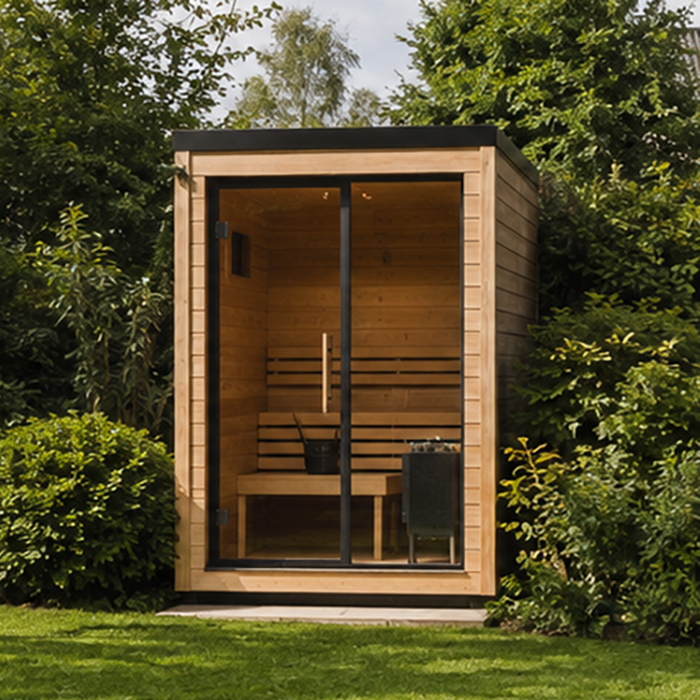
Budget for labour and anything supplied separately
The kit price is only one part of the project budget if preparation or installation is separate. List possible costs to confirm: base work, tools or hire equipment, builder or installer labour, electrical work where applicable, finishing materials and disposal of packaging. Add delivery or optional components if they are not included in the quote. These are planning categories, not assumptions that every project needs every item. The supplier’s exclusions and the instructions should help you identify which ones apply to the kit you are considering.
Ask each supplier or installer to itemise their quote so you can compare the same scope, not just the headline amount. Keep optional upgrades separate from essentials, and record which tasks you or another trade will handle. When assessing a candidate such as the LCF 300 sauna listing, use its exact offer as a reference and confirm what is priced, what is optional and what remains for you to arrange. A written comparison makes gaps visible before you commit and reduces the chance of overlooking a separate purchase. Include a contingency line for genuinely unresolved items rather than treating an estimate as a fixed total. Once details are confirmed, replace that allowance with the actual quoted cost so your budget remains tied to the agreed scope.
Compare written scopes before you commit
Ask for the documents that explain how the kit is assembled and what the finished setup requires. Depending on the offer, useful information may include an assembly manual, parts schedule, dimensioned drawings, site-preparation guidance, heating documentation and care instructions. Check that the documents relate to the exact product you are considering, not a similar-looking model. Ask where to get help if an instruction is unclear or a component is missing, and whether any additional information will only be provided after purchase.
For each option, make a simple written comparison using the same headings: supplied by the seller, supplied by you, optional, and handled by an installer or qualified trade. Add the finished dimensions, base requirements, heating scope, assembly route and documents available. Mark unanswered points and request clarification before placing an order. This makes it easier to tell whether two kits really cover the same work, and gives you a record of the agreed scope to refer to as you plan assembly. Review the comparison once more after selecting options, because an added heater, finish or accessory can change both the supplied parts and the work still required. The final record should identify the exact configuration you intend to order, not merely the base model.
Frequently asked questions
Does a sauna kit include a heater?
Not necessarily. The word kit does not define a standard package, so a heater, controls, stones or other heating components may be separate or optional. Ask for the exact items included and confirm that the proposed heater is suitable for the kit with the supplier or a qualified installer.
Can I assemble a sauna kit myself?
It depends on the kit, its instructions and your skills, tools and available time. Ask for the assembly guide and find out whether any steps call for particular equipment, extra help or trade work. If the tasks are outside your experience, include an installer in your plan.
Is the base included with a sauna kit?
Do not assume it is. Ask whether the package includes a floor or base components, what surface the supplier specifies, and what preparation is left to you. A builder or other qualified professional can assess more complex or uneven site conditions.
Which items should I check for separately?
Review the parts list for fixings, floor components, benches, vents, finishing materials, lighting and heating equipment. These are examples to verify, not items that every kit includes. Ask the supplier to identify what is standard, optional and buyer-supplied.
What should I confirm before placing an order?
Get the assembly instructions, site and base requirements, itemised inclusions, exclusions and division of work in writing. If the kit uses an electrical heater, ask a qualified electrician to review its connection requirements before you finalise the setup plan.
A sauna kit is a suitable purchase when its contents, site requirements and assembly responsibilities fit the outcome you want. Confirm the base and measurements, check the parts and heating scope, and identify labour or materials that are not supplied. With those details in writing, you can compare kits on the work they cover and plan the remaining tasks before the components arrive.
