
Buying a Sauna Without a Heater: What to Specify

Sauna buying guide
Buying a sauna without a heater gives you more control over the heating system, but only if the cabin and your chosen heater can be paired. A heater-free listing does not, by itself, show which accessories are excluded or whether a separate heater fits. Before ordering, identify the exact sauna and heater models, compare the manufacturers’ written requirements and confirm who will assess electrical or flue work. Also price delivery, assembly and site preparation as part of the same project. Keep a written record of the proposed configuration from the first enquiry, because a change to the heater, controls or cabin option can alter what needs to be checked. The goal is to buy a complete, compatible setup—not simply a cabin that leaves key decisions for after it arrives.
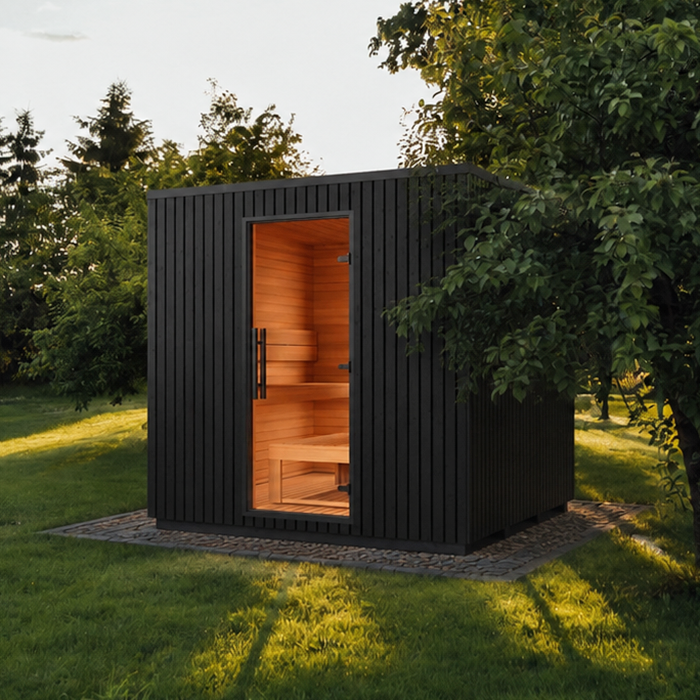
What does the heater-free order include?
Ask the seller to define the sauna-only order in an itemised scope. The phrase without a heater may tell you that the main heating unit is excluded, but it does not establish whether controls, a temperature sensor, stones, a guard, electrical parts, a flue kit or other accessories are supplied. A product photograph is not an inventory. Request a list of the cabin components, fittings and documents, together with a separate list of optional or third-party items. Ask whether the cabin is supplied as a kit or assembled, and what that description includes. If you also plan to buy a heater, separate its package contents from the sauna package so each required part has a named supplier.
Check the product page against the written quote. For the thermowood barrel sauna S 140 listing, record the exact model reference and any inclusions actually stated, then ask about anything unclear rather than treating the page as a complete order schedule. Have the seller identify who supplies each item needed for your intended configuration, including controls or flue components only where relevant. Ask for additions and exclusions to appear on the quote. This makes comparisons more meaningful: two sauna-only prices can cover different cabin components, documents or handling, even when both say the heater is not included.
Choose the heater and cabin as a pair
Decide whether you are considering electric or wood-fired heating, then shortlist an exact heater model before placing the cabin order. The heater maker’s sizing method and the sauna maker’s data need to align; use the details the instructions request, such as internal dimensions, construction and any glazed surfaces, rather than an external measurement or model name. Do not turn a published volume into a heater choice yourself if the manufacturer applies additional factors. If you have not settled on one model, compare two candidates and ask whether the same cabin is explicitly suitable for both. It is easier to resolve a mismatch while the order is still flexible.
Use the HC150 sauna page as one cabin identity to investigate, not as evidence of a heater match. Locate the published internal dimensions and construction information, and request the manufacturer’s drawings or sizing details if they are not shown. Compare those facts with the exact heater instructions and ask the seller to name any suitable candidate models in writing. Do not infer equivalence from the number in a product name, a similar-looking listing or a heater’s broad marketing description. If information is missing, treat compatibility as unresolved when comparing purchase options.
What confirms heater compatibility?
Treat compatibility as a match between named products, not a vague category. Ask the sauna supplier or manufacturer to confirm in writing that the specific heater model is suitable for the specific cabin model, using the current instructions for both. A heater with a broadly similar output or a description such as suitable for small saunas is not proof: permitted clearances, position, control arrangement and cabin construction can differ. Make sure the reply names any required accessory or version, and ask whether the match changes if you select a different control, guard or other option. Save the answer with your order documents.
Check each maker’s instructions for capacity, placement and any stated ventilation requirements. Ask the suppliers to resolve conflicting information rather than relying on a sales description or an installer to infer approval. For the HC 225 listing, request the drawing or other data needed for a check; do not infer dimensions or a permitted pairing from the name or image. Ask which instruction versions apply if a manual has been updated, and whether a later heater change would need a fresh compatibility check. This gives you a specific answer for the proposed combination, not a general assurance about a product range.
Electrical supply checks for an electric heater
For an electric option, share the exact heater instructions and cabin details with a qualified electrician before ordering. Ask them to assess the heater’s stated electrical input, supply characteristics, controls and connection requirements against the existing supply and the proposed sauna location. Do not assume a household socket, spare circuit or older wiring is suitable, and do not choose a heater because it appears to fit a familiar supply. An electrician can assess the actual site and identify work to allow for in your plans; a product page cannot replace that assessment.
Clarify who supplies and connects control equipment, sensors and any other electrical components required by the chosen heater’s documentation. Ask the electrician what information or access they need before the cabin is positioned, then include that in the delivery and assembly plan. If the N 210 sauna page is one of your options, use its exact model identity when requesting layout or product documents; the page name itself does not establish a supply requirement. Keep the advice tied to the selected heater model so it remains useful if you later compare a different option.
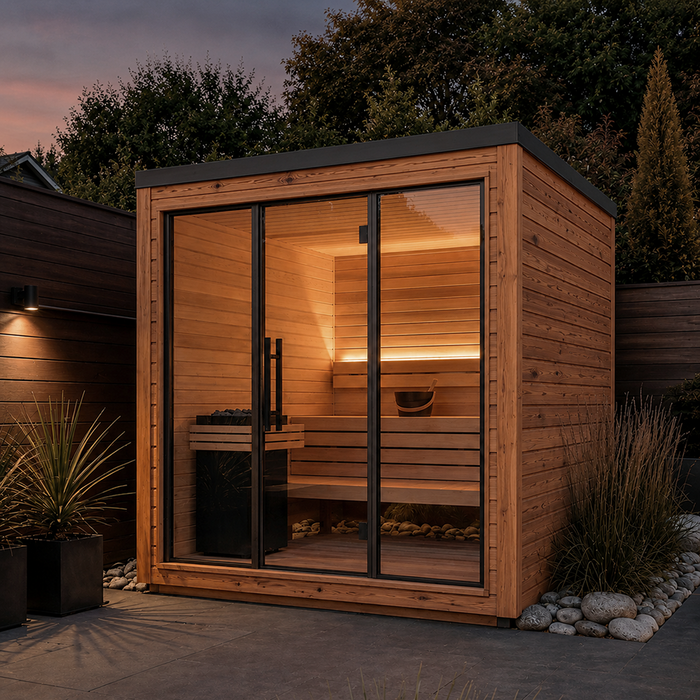
Flue planning for a wood-fired heater
For a wood-fired heater, check before ordering whether the cabin and proposed site can accommodate the named heater and its flue arrangement. Obtain the relevant instructions or drawings from the sauna and heater manufacturers, then have a suitably qualified installer assess the route, required clearances, nearby materials and any structural penetrations. Ask them to identify local requirements that affect the proposed installation. Do not assume that a chimney or flue is part of a heater-free sauna order, or that a route shown in a product photograph is suitable for your site.
Request a written list of what the heater package covers and what must be sourced separately, such as chimney components, a termination or a guard where the chosen system requires them. Have the installer consider the complete route and any site preparation before you commit to the cabin. For the N 250 listing, check the stated order scope rather than assuming a heater-free package includes flue components; ask the seller if it is unclear. If the installer cannot confirm the proposed arrangement from the documents and site details, pause the purchase or explore a combination that can be verified.
Heater position and clearances inside the sauna
Heater position is not a detail to improvise after the cabin arrives. The chosen unit occupies floor area and has a position and clearances specified by its maker, while the cabin layout determines where seating, the entrance and controls can sit. Ask for the internal plan and the heater’s permitted location, then check that they work together without blocking access or requiring an unapproved alteration. Preserve any guard, sensor, control position or spacing required by the instructions. Do not shift benches or alter the cabin based on a photograph or a general assumption; get confirmation from the relevant manufacturers.
Use the manufacturer’s drawing to consider usable floor area, the route into the sauna and access to user-operated controls. The LC 260 sauna page identifies a product to ask about; use its exact model reference when requesting the internal layout, and rely on the drawing rather than the URL name or an exterior photograph. Confirm that the intended heater position and cabin arrangement are compatible before deciding on the order. If the necessary layout information is not available, treat it as an open purchase question, especially where changing the seating or cabin arrangement may not be straightforward.
Site preparation, assembly and delivery
Separate product supply from site preparation, assembly and commissioning. Confirm whether the sauna arrives as a kit or assembled, what assembly is included, and who handles the work needed to position it. Ask the supplier for package dimensions and weight, unloading details and any base or support guidance from the manufacturer. Have a suitable professional assess the proposed site and base if preparation or structural capacity needs checking; do not choose a base or make structural assumptions from a photograph. If the sauna will be outdoors, verify that the specific model is intended for that setting rather than relying on its appearance.
Make a responsibility list for delivery, assembly, electrical or flue work, commissioning and packaging removal, assigning each item to the seller, installer or buyer. Confirm access constraints such as gates, steps, turning space and overhead obstacles with the delivery provider, using actual package details rather than just advertised cabin dimensions. When considering the HCF 300 listing, request its current transport and assembly information instead of inferring handling needs from the model label. Record any dependencies in the order plan, including whether the heater and other components will be available when the installer needs them.
Warranty terms and responsibility between suppliers
When the heater is sourced separately, responsibility may be split across the cabin seller, heater supplier, electrician and installer. Ask each party which product combination they have reviewed, what documents their advice relies on and who should answer if a supplied component differs from the agreed specification. Read the written warranty conditions for both products, including any stated requirements about heater type, assembly, installation, maintenance or alterations. Do not assume a warranty is void or unaffected by a third-party heater; ask the relevant supplier to state the terms for your proposed combination. It is also useful to establish who is responsible for reporting a defect in a component supplied by another party, and whether any inspection or commissioning record is expected before use. Clear answers do not transfer responsibility between suppliers, but they prevent you from discovering a gap only after delivery or installation has begun.
Keep the final quotation and order confirmation explicit about model numbers, options, included parts, exclusions, installation scope, delivery and any conditions that affect changes or returns. Ask for current terms in writing rather than relying on a conversation remembered later. The LCF 300 product page is an example of a listing to identify precisely in your notes, not proof of a particular warranty or inclusion. If a supplier confirms compatibility or offers an alternative component, record its exact model and whether the confirmation applies to that configuration.
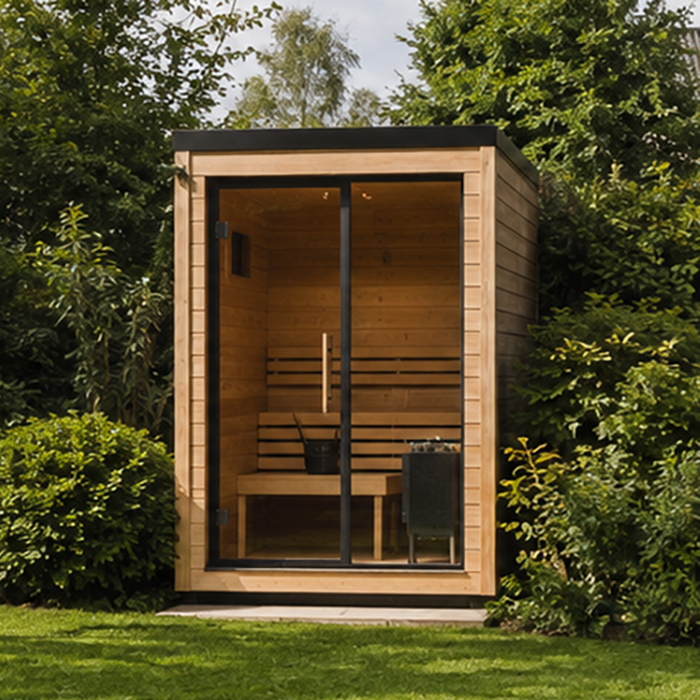
Compare the cost of the complete setup
Compare the cost of the planned setup, not only the sauna cabin. Depending on the selected heater and its instructions, the full project may involve a separate heater, controls, stones, a guard, flue components, electrical work, assembly, delivery, site preparation or commissioning. These are possible cost lines, not items to assume are all required. Ask for separate prices or estimates where relevant, and have the supplier or installer identify what is essential for the specific pairing. A lower cabin quote may leave more work unspecified, while a more detailed quote may include some of it; compare what each one actually covers.
Use the same completion point for every quote: for example, a delivered cabin, an assembled cabin or a commissioned setup. Record each item as included, excluded or still to be confirmed, and note who supplies it. Treat an unanswered line as an unknown rather than as a zero-cost item. If a site assessment could change the work required, write down the assumption behind the estimate. Compare whether tax, travel, lifting equipment, removal of packaging or follow-up work has been addressed where those items are relevant, rather than assuming similar quotes use the same boundaries. Date the comparison and retain the written quotes, since an informal estimate is less useful than a defined scope. This approach helps you see whether buying the heater separately still suits your budget and avoids comparing a cabin-only figure with a more complete project price.
A written specification before the order
Bring the decision together in one order specification. Include the exact cabin model and heater model, the written compatibility confirmation, the documents used for the check, and an itemised list of included and excluded parts. Record the outcome of the electrical or flue assessment, as relevant, along with the agreed site preparation, assembly, delivery and installation responsibilities. Put outstanding items beside the person responsible for confirming them and note any assumption that affects a quote. A clear record makes it easier to compare the final offer with what you asked for and to spot a missing component before the purchase is committed. Add the date and version of any drawing, manual or confirmation that the decision relies on, especially if the products have options or revised documentation. This creates a practical reference for the supplier and installer and makes it easier to identify exactly what needs reassessment if the proposed setup changes.
Review the documents as one system rather than as separate product descriptions. If the heater, controls, cabin option or intended location changes, ask whether the compatibility and site checks still apply; do not assume an earlier confirmation automatically covers a new configuration. If an essential match or supply requirement remains unanswered, hold the order until it has been clarified. Once the cabin, heater, scope and installation plan agree in writing, you can judge the purchase on the setup you intend to complete rather than on an assumed pairing.
Frequently asked questions
Can I choose the heater after buying the sauna?
You can decide later, but you should not assume that a future heater will fit. Before committing, shortlist an exact model or get written confirmation of which heaters the sauna supports. A later choice may affect placement, services, accessories and the total cost.
Does a sauna without a heater include controls and stones?
Not necessarily. Those items may be part of a heater package, the sauna order, or a separate purchase, depending on the products. Ask for an itemised list showing who supplies each component your chosen setup requires.
How can I tell whether an electric heater is compatible?
Check the exact sauna and heater models against their manufacturers’ current instructions and obtain written confirmation of the pairing. A similar size or a suitable-sounding product description is not enough; placement, clearances and other requirements also matter.
What information should I give an electrician before ordering?
Provide the exact heater model, its instructions, the sauna details and the intended location. A qualified electrician can assess the heater’s stated electrical requirements against the actual site supply and identify any work to include in your plans.
What if the seller cannot confirm the heater match?
Treat compatibility as unresolved rather than relying on an assumption. Ask the sauna or heater manufacturer for a written answer based on the exact models and relevant documents, or compare another pairing that can be confirmed before you order.
A heater-free purchase works best when sauna-only is a defined package rather than an unresolved combination. Put the cabin and heater identities, compatibility confirmation, required supporting equipment, site checks and responsibility for each installation task in writing before comparing final quotes. If a supplier cannot verify the pairing, hold the order until the manufacturer or a qualified professional can confirm it. That keeps the decision centred on a sauna setup you can plan and complete, not on an assumed match.
