
Buying an Outdoor Sauna: A First-Time Buyer’s Guide
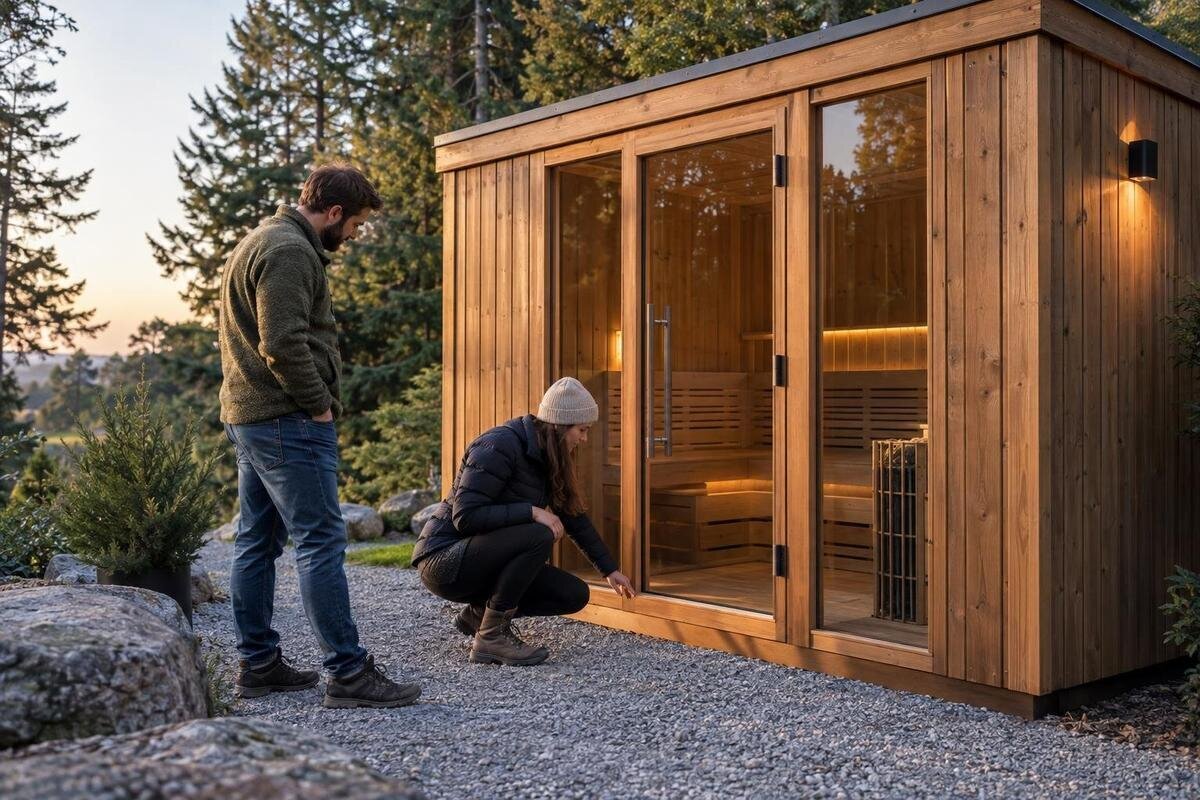
Outdoor sauna buying guide
Buying your first outdoor sauna is easier when you begin with the way it will be used and the conditions it needs to fit, rather than choosing from a photo or model name alone. Compare the usable interior, the space and access route, the heating system, the materials and the work involved in installation. For a home in New Zealand, the right choice depends on your property and routine, not on a single feature. Working through the practical details can narrow the options without assuming that similar-looking saunas are interchangeable.
Define how you will use the sauna
Begin with the way you expect to use the sauna during an ordinary week, not with the largest gathering you might host. How many people are likely to use it most often? Is it mainly a quiet solo space, a regular activity shared with others, or somewhere friends and family will join you? Consider whether people will usually sit, want room to change position, or expect to stretch out. These answers influence the interior layout and useful capacity you need to compare. An exterior photo can show a style, but it cannot tell you whether the inside suits those everyday habits.
Frequency matters too. If you expect regular use, simple controls, a convenient route from the house and manageable cleaning may matter more than features you rarely use. For occasional use, the way it operates and the space it takes up still deserve thought. Write down your typical user count, preferred seating, heating preference and essential access needs. Separate those must-haves from nice-to-haves before browsing. A short purchase brief gives you a fair basis for comparing different designs and makes it easier to tell whether a feature answers a real need or simply looks appealing.
Match capacity to the usable interior
Once you know who will use the sauna, ask for its stated capacity and internal measurements, including the bench arrangement and usable seating length. A people count is a useful starting point, not a guarantee that everyone will have the room they find comfortable. Compare the layout with ordinary posture: can the intended users sit without feeling crowded, and is there space to shift position? If stretching out matters, check whether the dimensions allow for it rather than assuming this from a photo. Exterior length and width do not answer questions about bench space, headroom or how the interior is arranged.
A model name such as Thermowood Barrel Sauna S 140 is an identifier, not a capacity measurement. Request the interior dimensions, a layout drawing and the stated occupancy for any model you are considering. Check whether the bench shape and entry arrangement work for the people who will use it, not just whether the number on a product description appears adequate. If a useful measurement or layout detail is missing, treat it as an unanswered question. Do not convert a code, the word barrel or an exterior measurement into an estimate of how many people can sit comfortably.
Measure the footprint and the access route
Use the exact external dimensions from the model information to check the proposed position. Mark out the footprint on the ground so you can see how it sits beside fences, garden beds, trees, paths and the house. Include the entry side, the space needed to open the door if specified, and any access or clearance requirements in the manufacturer’s instructions. Look above the site as well as around it: eaves, branches and other obstacles can affect whether the sauna can be positioned or assembled as planned. A sketch helps, but checking the marked-out space on site can reveal awkward corners or pinch points.
Measure the route from the access point to the final position, including gates, narrow passages, steps and places where a load would need to turn. Ask how the particular sauna is supplied and what access is needed for its delivery and assembly; do not assume it can be carried through a tight opening because its footprint fits. For the HC150 model listing, request the exact dimensions and handling requirements rather than reading a size from the model code. A route that works on paper should also be checked against the actual obstacles and surfaces on your property.
Choose a heating system you can operate
The choice between electric and wood-fired heating affects the routine as well as the installation. An electric option means checking the required supply, controls and electrical work for that specific heater. A wood-fired option involves access to suitable fuel, a place to store it, and the regular tasks associated with lighting, tending and removing ash. Smoke and chimney arrangements also need to be considered. Neither type is automatically the simpler choice: the practical fit depends on your site, preferred routine and the configuration offered for the sauna.
For a named option such as Thermowood Barrel Sauna HC 225, verify the exact heater type and specification instead of inferring them from the sauna’s name. Ask whether the heater and associated components are included, optional or supplied separately, and request the relevant installation information. Have a qualified electrician assess the requirements for an electric heater. For a wood-fired arrangement, use the manufacturer’s instructions and seek advice from a qualified installer about the chimney, siting and any applicable local requirements. Do not rely on a general description as a substitute for model-specific guidance.
Check the timber, finishes and care requirements
Ask what materials are used in each part of the sauna, rather than relying on a broad label. The interior, benches and exterior may have different materials or finishes, and the product information should make that clear. Find out how the materials are treated, which surfaces are exposed to the weather and whether the finish is intended to be maintained or left as supplied. For a site exposed to strong sun, wind, rain or salt air, ask how those actual conditions affect the recommended care. Avoid assuming that a material name alone establishes how a particular model will age at your property.
Request a practical care schedule before comparing options: what cleaning is recommended, whether any exterior treatment is needed, and how often the maker expects it to be done. Check which products or methods are suitable for the surfaces, including the benches. The N 210 sauna page name does not tell you the timber species, finish or maintenance routine; ask for those details for the exact model. Clear care instructions help you judge the time and upkeep involved, as well as whether the appearance you want is realistic for the conditions where you plan to place the sauna.
Choose a practical outdoor position
Think about how the location will work before and after a sauna visit. Consider privacy from neighbouring homes and paths, the approach from the house, useful lighting and whether nearby activity or noise will affect the experience. A short, straightforward path may matter more in everyday use than a position chosen only for the view. Think about where towels or a robe will be kept and whether the route remains practical in wet weather. These choices are specific to your property; walk the likely route at different times of day rather than judging the site from indoors.
Note the actual exposure at the proposed position, including sun, wind, rain, salt air, falling leaves and roof runoff. Ask for the manufacturer’s siting instructions for any model you shortlist. If you are considering a partly enclosed position or placing it under a roof, get confirmation that the exact sauna is suitable for that arrangement and check its stated clearances. For Thermowood Barrel Sauna N 250, as for any named model, do not treat the word outdoor as a complete placement specification. The site and the product instructions need to be considered together.
Confirm the base and support requirements
Before choosing a model, find out what surface and support it requires. Request the manufacturer’s drawings and installation instructions, including the required base dimensions, support points, level and any drainage or anchoring details. These are model-specific requirements, so a photo of a sauna on paving or a generic example may not reflect what your shortlist needs. Include the base in your site plan early: the position and preparation of the supporting surface can affect where the sauna can go and how much work is needed before assembly.
Do not assume that an existing patio, paving or timber deck is suitable simply because it looks substantial. Check whether the product’s support requirements can be met and whether water will drain away as intended. If you are unsure about the structure or the changes needed, ask a qualified building professional to assess the site; do not use another installation as a guide to its capacity. The LC 260 barrel-sauna listing name does not establish its base requirements. Get the relevant drawings and instructions for the exact model before committing to site preparation.
Plan who will assemble and install it
Confirm how the sauna is supplied and what assembly entails before deciding that it is a suitable purchase. Ask whether it arrives in components or another form, what work is required on site, and whether there are particular access or handling needs. If you plan to assemble it yourself, read the instructions for the exact model and be realistic about the tools, time and help you can arrange. If you intend to hire someone, speak with an installer before buying so you can describe the model and site rather than relying on a general estimate.
Set out who will handle each part of the job: preparing the base, assembling the sauna, completing any specified finish work and arranging the heater connection. Ask which tasks require a qualified trade and whether the seller or installer coordinates them. Include labour and any separate installation work in your comparison, without assuming that assembly is included. For the HCF 300 model page, request the assembly and installation documents for that exact model. A clear plan helps you compare the real commitment involved, not just the visible sauna.
Compare the complete package and ongoing costs
Compare itemised information for each option so you know what the quoted amount covers. Check the sauna structure, heater, controls and any associated components, along with accessories or installation work that may be separate. Do not assume that an item is included because it appears in a photograph or because another configuration includes it. Ask for a written summary of the proposed package and record any exclusions. This makes comparisons more useful than looking at a headline figure, especially when the models you are considering are supplied in different configurations.
Also think beyond the purchase itself. The ongoing cost will depend on the specific heater, how often it is used and the care the materials require. Ask for reliable information about energy use or fuel needs, then consider it alongside local energy or fuel costs and your likely routine. Include cleaning supplies, maintenance and replacement parts in your thinking rather than treating them as unexpected extras. For the LCF 300 barrel sauna listing, as for any model, confirm the package and operating details instead of inferring them from its name. If information is unavailable, record the gap rather than guessing.
Compare a shortlist using the same evidence
A simple comparison sheet can keep a shortlist grounded in useful details. Record the internal and external dimensions, stated occupancy, bench layout, heater configuration, base requirements, material and care information, installation needs, package inclusions and quoted cost. Use the same headings for every model, and mark missing information as unknown rather than filling it in from a photo or model code. This makes it easier to spot whether an option meets the essentials you identified at the beginning, and where a feature is attractive but not important enough to outweigh a practical mismatch.
Before choosing, resolve any gaps that could affect fit, heating or installation. Request the drawings and documents for the exact model, read the warranty conditions and find out how support and replacement parts are handled. Check whether any installation requirements affect the warranty, and make sure the written package matches what you intend to buy. If two options both meet your needs, compare their trade-offs against your own brief: interior comfort, site fit, operating routine and upkeep. A well-matched choice is one you can use as planned and install with the requirements understood.
Frequently asked questions
What size outdoor sauna do I need?
Start with the number of people who will use it most often, then compare the internal dimensions and bench layout with how they prefer to sit or stretch out. Check the stated capacity as well as the exterior footprint. A model code or product photo is not a reliable way to estimate usable space.
Should I choose an electric or wood-fired heater?
Choose according to the routine you want and what your site can accommodate. Compare the work involved with fuel, ash and smoke for a wood-fired option against the electrical supply and installation requirements for an electric one. Confirm the exact heater configuration and ask a qualified professional about installation.
What kind of base does an outdoor sauna need?
Follow the requirements for the specific model, including the stated support surface, dimensions, level and drainage details. Do not assume an existing patio or deck is suitable. If its ability to support the sauna is uncertain, ask a qualified building professional to assess it.
Can I put a sauna under a roof or in a partly enclosed space?
Do not assume that an outdoor sauna is suitable for every covered or enclosed position. Ask for written confirmation that the exact model can be installed there and follow its siting and clearance requirements. The word outdoor alone does not provide those details.
How can I tell whether the heater is included?
Check the itemised information for the exact model and configuration. Confirm whether the heater, controls and any associated components are included, optional or supplied separately. Also ask what installation work is required, so you can compare the complete purchase rather than the sauna alone.
A suitable first outdoor sauna is one that gives your usual users enough space to be comfortable, fits the site and can be installed and maintained as planned. Compare exact dimensions and instructions, confirm the heater and package details, and factor in the work beyond the purchase. That gives you a shortlist based on how each option will actually fit your home and routine.
