
Wood-Fired Sauna Heaters: Internal or External Feed?
Sauna heater guide
Choosing between an internally and externally fed wood-fired sauna heater is mainly a decision about where you want to handle firewood, ash and routine tending, and how that location fits the cabin. An internal feed places the loading door in the sauna; an external feed makes it reachable from the other side of a wall, with the layout varying by heater. Neither arrangement automatically improves circulation, makes servicing easier or guarantees compatibility. Compare the exact heater and cabin drawings, ventilation requirements and access clearances before settling on a feed position.
What internal and external feed mean
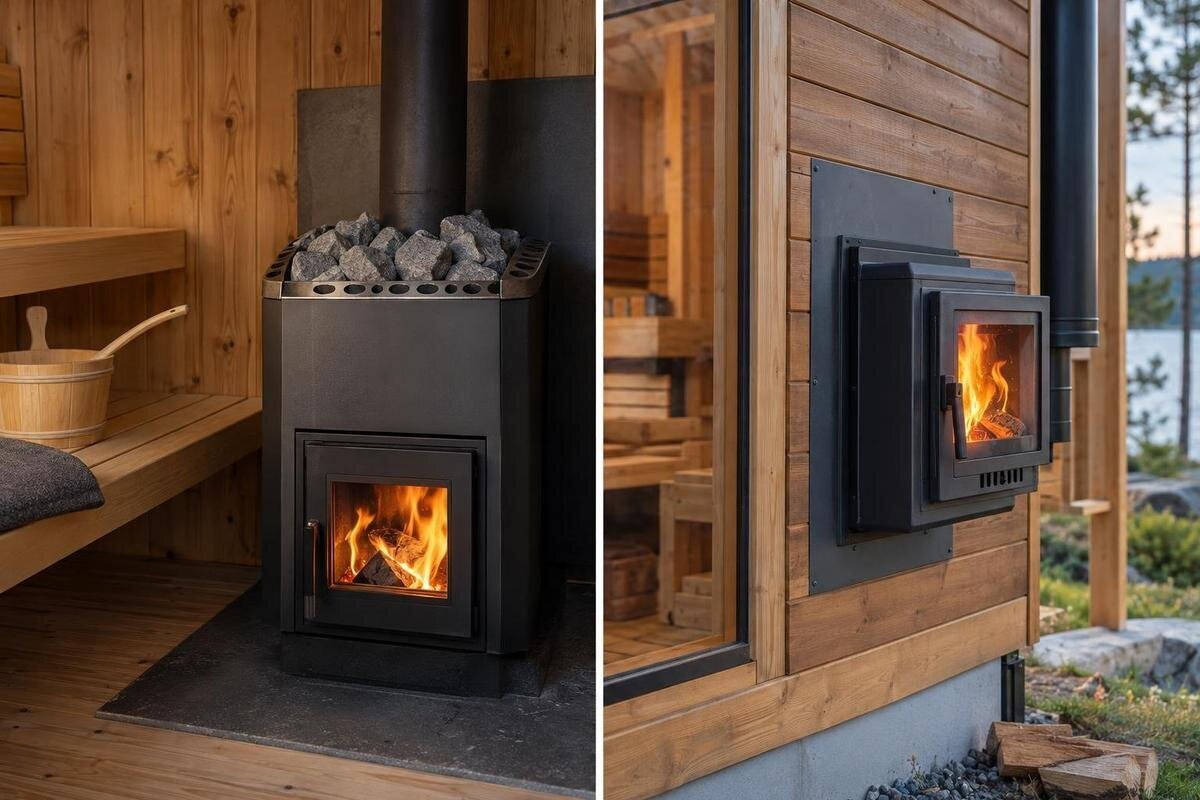
An internally fed heater has its firebox loading door opening into the sauna. Wood is carried into the hot room, and the person tending the fire enters it to add fuel. With an externally fed design, the loading door is reached from the other side of the sauna wall. That side might be a changing room or an outdoor area, depending on the heater and cabin. The firebox, heater body and loading door do not necessarily sit on one side together, so the label alone doesn’t reveal what projects through a wall or where the appliance sits.
Ask for the exact heater and cabin drawings before weighing up convenience. Mark the loading door, which way it opens, the heater body, any wall opening and the flue route; these are related but separate parts of a layout. The wood-loading opening isn’t a chimney connection, and an external-feed description doesn’t prove that a particular heater can be fitted to a particular sauna. Check the current instructions for the exact combination, including its air supply and clearance requirements. This helps prevent a convenient-sounding feed option being mistaken for a complete installation plan.
Using an internally fed wood heater
An internal feed keeps the loading door on the sauna side, so you tend the fire from inside the hot room rather than from an adjoining room or outdoors. This can suit a standalone sauna or a plan with no convenient adjoining room. The trade-off is that carrying wood and using tending tools must not block a bench, the approach to the heater or a route through the room. In a compact layout, that’s a real space requirement, not merely a housekeeping detail. Consider the route from the sauna entrance to the firebox as well as the space immediately in front of it. A loading door that is easy to reach in an empty cabin may be less convenient when people are seated and the sauna is in use.
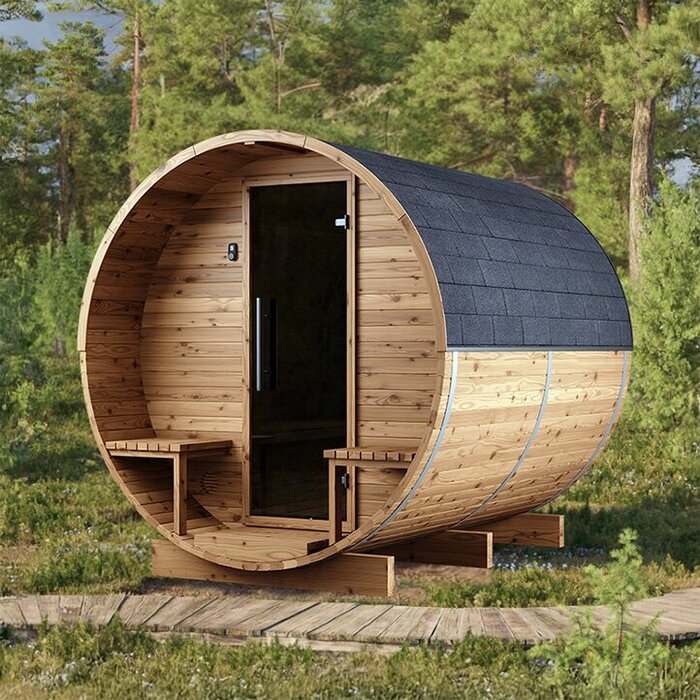
Think about when the fire will be tended, where the person will stand and which way the firebox door opens. A door facing a bench or narrow aisle can make routine access awkward. Loading and ash handling happen on the sauna side, and the manufacturer’s operating instructions matter whenever the firebox is opened. Incorrect handling can create smoke or ember risks, so don’t treat the area around the heater as storage or rely on a room vent to resolve a stove problem. If the HCF-300 Thermowood Barrel Sauna is on your shortlist, compare its cabin plan with the proposed heater drawing. Trace the route with the loading door both closed and open, noting whether someone tending the fire would obstruct anyone entering or leaving. This gives you a more useful comparison than looking only at the heater’s position against the wall; compatibility still needs to be confirmed for the exact combination.
What external loading changes
With an external feed, the person tends the fire from the other side of the sauna wall rather than from inside the hot room. If that side is a useful changing area, this can avoid carrying logs through the sauna and may keep bark and debris away from seating. It can also make tending easier for someone who wants to stay outside the hot room while others use it. These are workflow benefits, not evidence of better heating performance, safer operation or a more comfortable sauna.
Check what’s accessible from the loading side: the firebox door, ash clean-out and other service points may be arranged differently. A door into a changing area needs room to swing and a clear place to stand; one opening outdoors adds a weather-exposed route and may mean carrying fuel over a deck or path. Consider what else happens there. A changing area may also be used for dressing, storing belongings or reaching the sauna entrance, so a convenient loading point must work alongside those activities. For an outdoor position, trace the route from wood storage rather than assessing the doorway in isolation. If you’re considering the LCF-300 Thermowood Barrel Sauna, ask whether the proposed heater has an approved external-feed configuration for that cabin and which side each routine task is carried out from. External loading does not mean that all cleaning and servicing will take place outside the sauna.
Clearances and door access
Clearances and access form part of the footprint. With an internal feed, the approach to the loading door and its swing must fit without narrowing the route to benches or the sauna exit. An external feed also needs standing room and a door swing on the other side. Depending on the heater, a through-wall firebox can create a recess or projection, so measuring only the sauna-side heater body can miss occupied space. Sketch both areas at scale with benches, doors and fixed equipment shown; product photos don’t show all the required access zones.
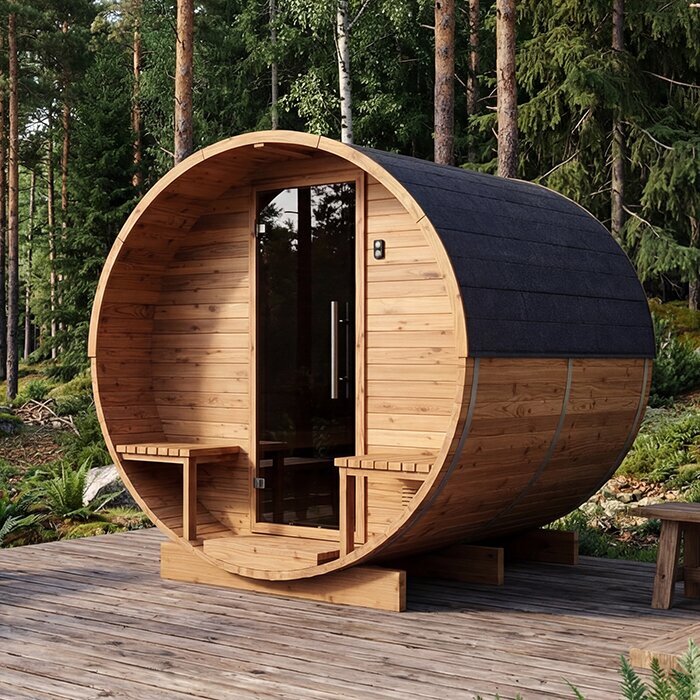
Use the manufacturer’s drawings to identify specified distances from materials, floor or wall protection, guards and other requirements for the particular heater. Moving the loading door outside doesn’t remove clearance requirements for the heater body or flue. Keep these requirements distinct from the space you would prefer for comfortable access: a layout must account for both. When comparing a cabin such as the S-140 Thermowood Barrel Sauna, use its exact plan to show the benches and entrance alongside the proposed heater arrangement. Check where the loading door would open and whether the remaining route is usable, rather than treating every unoccupied patch of floor as available space. A qualified installer should review the proposed arrangement against the installation instructions. If it needs a different bench position or door orientation, include that change in the comparison before deciding which feed layout is more practical.
Wood storage and ash handling
Compare the route for firewood, not just the point where you load it. Internal loading means carrying logs into the hot room or bringing them right to its entrance; either way, you need a clear approach and a safe place to stage fuel. With external loading, the route ends on the other side of the wall. A changing-room door may shorten the carry, while an outdoor door can expose fuel to rain during tending or mean a longer walk from storage. Neither layout removes the need to keep fuel clear of heat sources as the manufacturer’s instructions require.
Ask which side has the ash pan or clean-out access. Loading and ash removal need not happen from the same face, so don’t assume external feeding makes all fire tending external. Think about where ash can be collected and handled in line with the appliance instructions, and whether that route crosses seating or a frequently used doorway. Bark, kindling and ash are part of the routine too. When assessing the HC-150 sauna, note the proposed fuel route and ash-removal route separately on the layout. This makes it easier to see whether external loading would actually reduce carrying through the hot room or merely move one task elsewhere. Include the journey back to storage or the designated handling area, not just the space at the firebox. The cabin listing identifies the model; the chosen heater’s arrangement determines where these tasks take place.
Sauna circulation is a separate question
Sauna circulation concerns the movement of heat and air through the room; the feed door mainly changes access. Heat distribution depends on the heater’s position and design, room layout, benches and ventilation arrangement. An external loading door doesn’t automatically make heat more even or warm the room faster, just as internal loading doesn’t guarantee an even result. A projecting firebox or required clearance can affect which walls and bench positions remain available, so consider circulation and feed access on the same plan.
Follow the ventilation layout for the exact cabin and the air-supply instructions for its heater. Mark designed inlets and outlets before settling bench positions, and confirm how they relate to the heater with the manufacturer or installer. Don’t move vents just to accommodate a door. Room ventilation and combustion-air provision are related planning questions, but don’t assume that one opening serves both purposes. If you’re comparing a proposed installation in the HC-225 Thermowood Barrel Sauna, assess heat and air movement separately from the convenience of carrying wood. A shorter loading route is a practical benefit, but it does not establish better circulation. Keep both questions in your comparison: whether the loading position works for the people using the sauna, and whether the heater position and ventilation arrangement suit the specified cabin and appliance.
Plan the feed opening and flue separately
A feed-through opening and a flue have different jobs. The first provides access for loading wood; the flue carries combustion products away from the heater along its own required route. One mustn’t be treated as a substitute for the other. The flue path can influence where the heater sits and which wall or roof it can pass through, while external loading raises a separate question about the construction between the sauna and loading side. Both parts need to suit the exact appliance instructions.
Before committing, have a qualified installer review the heater and cabin drawings against the actual site and materials. Ask them to assess clearances, floor and wall protection, penetrations, supports, weather sealing where relevant, air requirements and access for inspection, as well as any applicable local requirements. Don’t size or modify an opening from a photograph or another heater’s plan. For a proposed installation in the N-210 Thermowood Barrel Sauna, discuss the loading position and flue route as two parts of the same layout. If the preferred firebox position conflicts with the proposed flue route, resolve that conflict before treating either feed option as settled. Likewise, an accessible loading door is not enough to establish that the intervening wall suits the arrangement. The purpose of this review is to identify a workable combination, not to adapt the cabin around an assumed heater position.
Leave room for servicing
Service access is separate from loading convenience. Check how the heater is inspected and cleaned, where any ash receptacle or removable parts sit, and which side needs to be reached for routine maintenance. An externally fed firebox may still need access from inside the sauna; an internal-feed heater may have service points on another face. A fixed bench, decorative panel or tight enclosure can prevent maintenance even when the loading door opens freely, so include the required working space in your comparison.
Ask what access the manufacturer requires for routine care, repairs and flue inspection, and whether parts need to be lifted out or removed through a particular route. Make sure whoever will maintain the heater can reach those points without obstructive fixtures in the way. Don’t assume an external feed makes servicing simpler, or that a small access hatch is enough. When reviewing the Thermowood Barrel Sauna N-250, distinguish between the space needed to open the loading door and the access needed to remove or inspect components. Show both on the proposed plan, including any route through the cabin entrance or adjoining room. If the arrangement depends on moving a bench or panel, ask how that would be done and whether it is part of the intended design. A layout that is convenient to fire but awkward to maintain has not resolved the whole access question.
Compare complete layouts before choosing
Compare proposed layouts on the same scale drawing rather than choosing from a product photograph. Mark the exact heater footprint, loading-door position and swing, clearance zones, flue route, benches, vents and access routes. Then trace the ordinary jobs: bringing in wood, tending the fire, removing ash, entering and leaving the sauna, and reaching service points. Include any space occupied on the other side of the wall; both the feed door and the person standing at it need room.
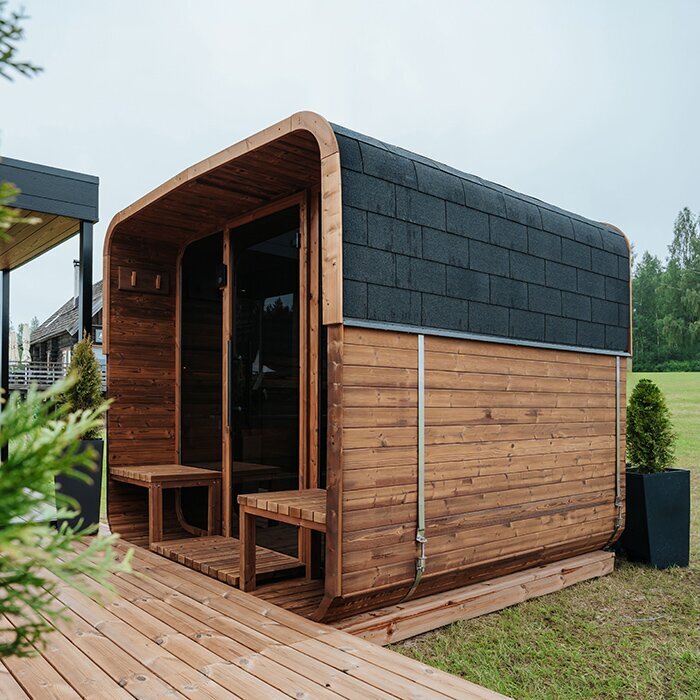
Ask the supplier or installer to identify the compatible heater model and confirm whether the proposed feed orientation is available for that cabin. Request the relevant manufacturer drawing or manual, with the exact heater and sauna identified rather than a generic example. For each option, record where loading, ash removal and servicing happen, along with any changes to benches or adjoining space. This keeps the comparison consistent: one proposal should not appear more spacious simply because its external working area has been left off the drawing. If you’re reviewing the LC-260 Thermowood Barrel Sauna, use the cabin identity to organise the enquiry, not as evidence that a particular heater or feed arrangement is supported. Compare the resulting proposals by the space and access each actually needs. Where a detail remains undecided, keep it visible as an open question rather than treating it as an advantage.
Which feed layout suits your sauna?
An internal feed can suit you if you’re comfortable tending the fire inside the hot room and have space there for door swing, access and ash handling. It removes the need to use a separate room just to load, but doesn’t remove the need for safe clearances or servicing. External feed is worth considering when the adjoining space provides a genuinely convenient, unobstructed loading point and the approved heater design suits that wall. If the space is cramped, exposed or used for another essential route, its practical advantage may disappear.
When both arrangements are supported, judge them by the routine you expect to follow. Someone who prefers to tend the fire from inside may value internal loading, provided it leaves practical access around the benches. Someone who wants to handle logs without entering the hot room may prefer external loading, provided the other side of the wall offers a useful working area. Consider occasional tasks as well as each load of wood: ash removal, cleaning and inspection still need workable routes. If either proposal depends on an unresolved change to the cabin or heater, don’t count that arrangement as available yet. The better fit is the supported layout whose loading and maintenance requirements work with the way you intend to use the sauna.
Frequently asked questions
Does an externally fed heater sit outside the sauna?
Not necessarily. External feed describes where the loading door can be reached, not where the whole heater sits. The firebox and heater body may be arranged differently from one model to another, so check the exact drawing to see what passes through the wall and where the appliance is positioned.
Does external loading improve sauna circulation?
Not by itself. It changes where you load the wood; heat and air movement depend on the heater’s position and the ventilation plan for the sauna. Follow the instructions for the specific cabin and heater, and don’t move vents simply to suit the loading door.
Can I convert an internal-feed heater to external feed?
Only if the manufacturer supports an external-feed arrangement for that exact heater and the cabin construction suits it. Don’t cut or extend a firebox through a wall based on appearance. Ask the supplier and a qualified installer to confirm the approved configuration and site requirements.
Which feed layout takes up less space?
There’s no universal answer. Internal loading needs room for access and door swing inside the sauna. External loading needs space on the other side, and part of the firebox may occupy both sides of the wall. Compare the exact drawings, including required clearances.
What should I check before choosing a layout?
Check the exact heater and cabin drawings, compatible configurations, door swing, ventilation, clearances, flue route and servicing access. Also plan where wood will be carried and ash handled. Ask a qualified installer to review the proposed layout and any applicable local requirements.
Feed location is a layout decision, not a ranking of heaters. Internal loading gives you access from within the sauna; external loading moves the fuel-loading point to the other side of the wall. Compare the whole routine, including carrying wood, removing ash and reaching service points. A useful layout accommodates those tasks alongside seating and access, while meeting the requirements for the chosen cabin and heater.
