
Electric vs Wood-Fired Sauna: Which Routine Fits?
Sauna buying guide
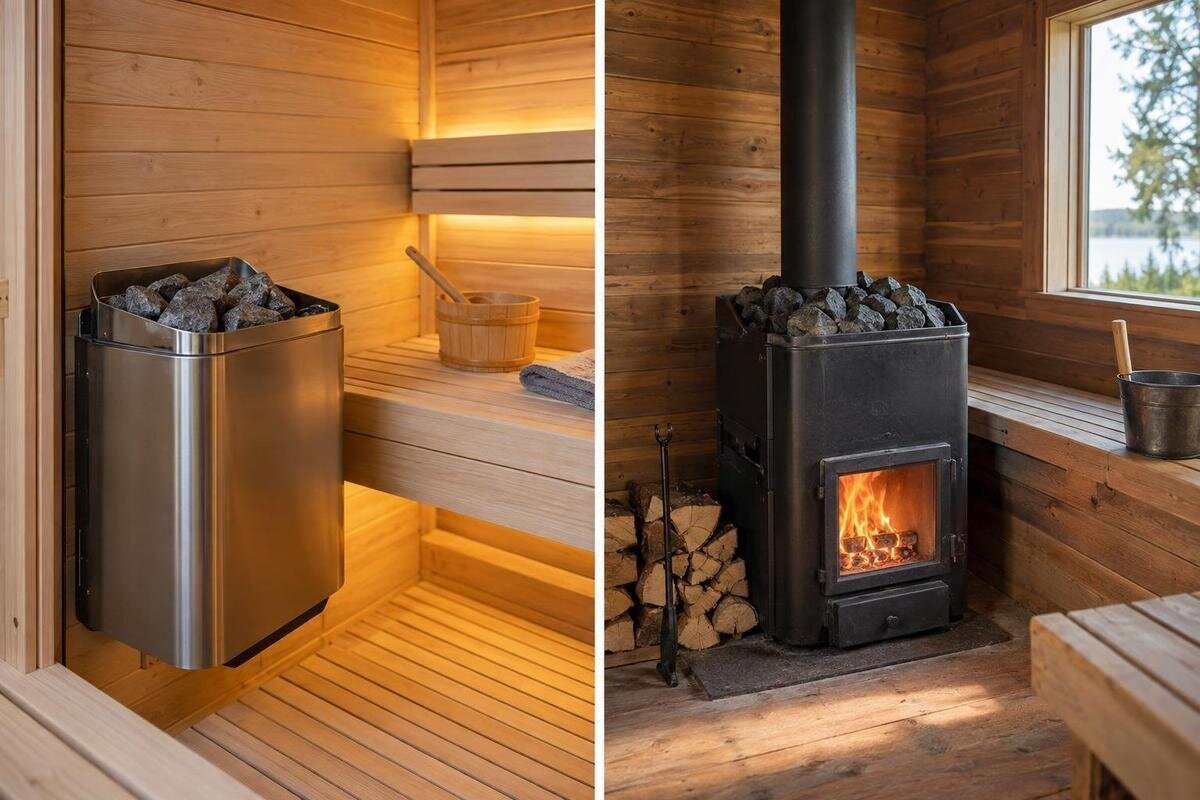
An electric sauna heater generally makes the start-up sequence more straightforward: use its controls as directed and allow the room to warm. A wood-fired stove adds fuel preparation, lighting and tending, followed by ash management. Neither removes the need to plan for warm-up or care for the room. To decide which suits regular use, compare the jobs you will do before, during and after a session against an ordinary weekday and the way your household shares the work. Heater instructions, fuel or power access and the exact sauna configuration matter more than a general promise that one type is always quicker or easier.
Preparation, tending and after-use care
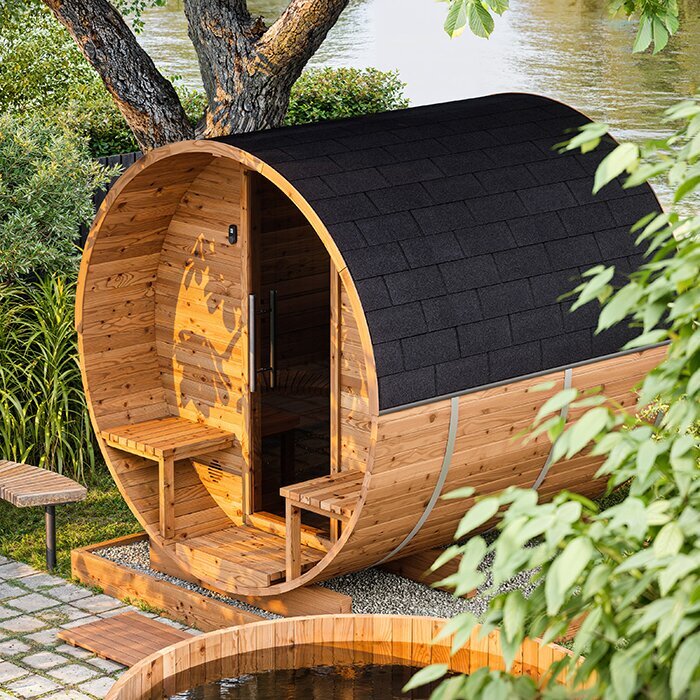
Both sauna types involve a warm-up period, and both need care after use. The difference is what you do before the room is ready. With an electric heater, the main start-up task is to use its controls as directed and allow the sauna to heat. A wood-fired stove adds handling the fuel it requires, preparing and lighting the fire, and tending it according to the stove instructions. After a session, ash handling is another wood-fired job. Getting yourself, towels and water ready is common to both, so focus the comparison on tasks created by the heater. Wood usually means more hands-on stages, but that alone does not say how quickly a particular sauna heats.
That is why it is misleading to frame the choice only as fast versus slow. Warm-up depends on the specific room and heater, their starting conditions and the maker’s operating guidance; there is no universal time that applies to every setup. You can compare the preparation involved, though: is start-up mainly a matter of using controls and waiting, or does it include fuel preparation and active tending? Consider an ordinary session, such as after work, rather than an occasional day when you have plenty of spare time. A longer wait may be easy to plan around; extra tasks can matter more if they repeatedly make a short session feel like a project.
What an electric heater changes
For electric heating, the start sequence is usually more straightforward: prepare the sauna as required, operate the heater controls and allow the room to warm. There is no firewood to bring to the stove for that session and no ash from a wood fire to handle afterwards. The heater still needs time, and you should not assume that it has a timer, remote start or another convenience feature unless the exact model’s instructions confirm it. Operate it only as the manufacturer describes. If electric heating is on your shortlist, have a qualified electrician confirm the supply and installation requirements for that specific heater before you plan the site around it.
A familiar control sequence can make regular use feel more predictable, especially if the same people use the sauna at similar times. That can be convenient without making the heater instant or fully automatic. When browsing the Sauna S-140 listing, which identifies a Thermowood Barrel Sauna with a listed area of 1.93 m², ask which heater configuration is available for the version you would order. For an electric option, consider how its actual controls would fit your evening routine. The useful comparison is the sequence you would follow each time, rather than convenience features you hope might be included.
What a wood-fired stove adds
A wood-fired routine begins before the sauna is warming. You need the fuel specified for the stove, any permitted fire-starting supplies and a place to keep and retrieve them. Then comes starting and tending the fire in accordance with the manufacturer’s instructions. That gives the user a more involved role than operating a control, and it takes attention as well as preparation. For some people, tending is an enjoyable part of the occasion; for others, it becomes a barrier after a full day. Neither response is a technical advantage. The useful question is whether those recurring tasks would feel welcome or inconvenient in the way you actually use the sauna.
Think through the whole fuel routine, not just the moment of lighting: replenishing suitable wood, keeping enough on hand, carrying it to the stove, putting supplies away and managing ash as the stove manual directs. Consider which jobs happen for each session and which need organising less often, such as replenishing your supply. The Sauna HC-150 listing identifies a Thermowood Barrel Sauna with 2.97 m², but does not establish whether a wood-fired configuration is offered. If that is your preferred option, confirm its availability before planning the fuel routine. Agree who will take responsibility for these jobs, particularly when several household members use the sauna.
Planning warm-up around a weekday
An after-work routine makes the difference easy to picture. With electric heating, you can build the control sequence into the evening, but the time needed for the room to warm still has to fit. Do not assume the controls permit automatic or unattended starting. With wood, allow for preparing supplies, starting the fire and tending it as the stove instructions require. If you have a fixed window before dinner or bedtime, compare the complete sequence with that window. If sauna use is planned for the weekend and setting up is part of the leisure time, the extra wood-related tasks may feel less pressing.
Use a specific weekday as a reality check: when would you get home, when would you want to begin, who would be available to prepare things, and when would the clean-up need to happen? Check the warm-up guidance for the heater you are considering rather than estimating from its type. The Sauna HC-225 product page lists a model area of 4.4 m², but area alone cannot predict heating time. Room design, heater specification and operating conditions matter. A schedule that works on a free Saturday may not suit a busy Tuesday, so consider the day you expect to use the sauna most often.
Power supply and firewood storage
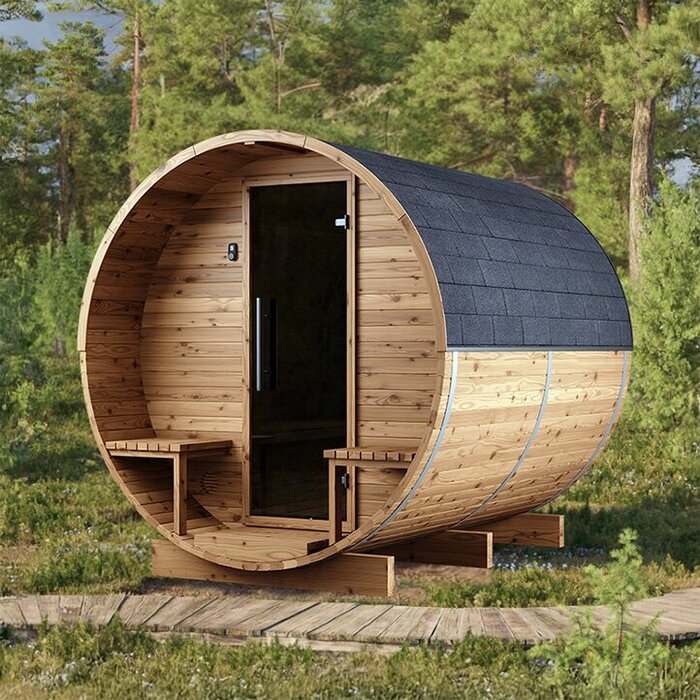
Electric operation ties the routine to a suitable power supply. Confirm the exact heater’s electrical requirements with the manufacturer and a qualified electrician; a general description of electric heating is not enough to plan an installation. Consider whether the supply is available at the intended site and whether the household can use the sauna at the times it wants. A power disruption can also interrupt the plan. These are practical dependencies, not reasons to reject electric heating: once the arrangement is confirmed, there is no need to organise firewood for each session.
Wood-fired operation replaces that electrical dependency with a fuel routine. Storage needs to keep the stove’s specified fuel in usable condition, and the route from storage to the sauna should feel manageable in the conditions when you expect to use it. Allow for replenishing stock rather than thinking only about the wood needed for one session. A distant store or a difficult carry can become more noticeable with frequent use. If the Sauna N-210 listing, with its listed area of 4.43 m², is on your shortlist, consider fuel storage separately from the sauna’s footprint. That area alone does not tell you how much fuel a stove would need.
Cleaning and care after use
Some after-use jobs apply to both types: removing personal items, dealing with towels and water, cleaning surfaces as the manufacturer permits, and allowing the sauna to dry as directed. Include these tasks when you consider how much time a session takes. If the room needs another round of cleaning before its next use, a supposedly quick visit can become a longer household job. Cleaning products and methods should follow the sauna maker’s guidance, since materials and finishes can differ. The basic care of the room does not disappear when you choose one heater type over the other.
The heater creates the main difference. An electric system avoids the ash produced by a wood fire, but it still has manufacturer-specified care, which may include checks of components or stones if that model uses them. A wood-fired stove adds ash management and whatever routine checks its manual calls for; follow the instructions on when and how ash can be handled. For a model such as the Sauna N-250, listed at 5.27 m², compare the heater’s care requirements alongside the room-cleaning tasks. Separate the jobs needed after each use from less frequent maintenance, so you know what belongs in the everyday routine. Choosing electric heating removes ash handling, not all heater care.
When several people use the sauna
Think about who will use and operate the sauna. If one person takes responsibility for starting every session, they may be happy with either system; if several people take turns, the ease of explaining the start sequence matters. Electric controls can reduce the number of fire-related tasks, but each user still needs to understand the controls and instructions. A wood-fired system asks each operator to be comfortable with fuel preparation and tending, not only with using a warmed room. Talk through who would prepare things, who would attend to the heater as required and who would look after the space afterwards.
Shared use can expose an overlooked mismatch: one person may enjoy tending a fire while another expects a quick finish and does not want to manage ash. Agreeing on the jobs can prevent less visible work from falling to one household member by default. When considering the Sauna LC-260 listing, which gives a model area of 5.12 m², discuss how you would share preparation and clean-up as well as time in the sauna. Make sure everyone who operates the heater understands its instructions. If one person starts a session and another takes over, responsibility for tending and after-use care should be clear rather than left to assumption.
Check the exact heater configuration
Check the heater separately from the sauna design. A product model may identify the room, while a heater may be included, offered as an option or sold separately; do not assume which applies without checking the current product details. Confirm the exact heater and controls, what components are supplied and which manual covers day-to-day operation. For electric heating, have a qualified electrician confirm the requirements for the actual heater. For wood-fired equipment, ask an appropriately qualified professional about installation requirements and the manufacturer’s guidance for the flue, clearances and ventilation. Do not plan those details from a product photograph or a heater label alone.
Ask what configuration is currently available in New Zealand, without assuming the same package is offered across models or at every time. Check what is included, who is responsible for installation, what fuel or electrical arrangement is required, how heater care is described and whether the sauna manual matches the version being supplied. The Sauna LCF-300 product listing identifies a Thermowood Barrel Sauna and lists 6.89 m²; that area does not establish which heater comes with it or whether a particular setup is suitable. Compare the complete configuration and its instructions, not the room name alone.
The full routine, from preparation to clean-up
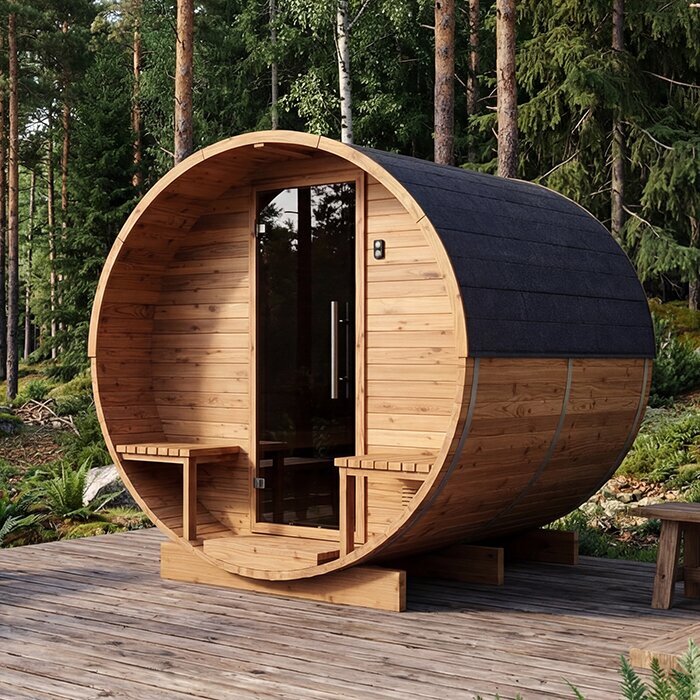
Run a simple rehearsal on paper for the routine you expect to repeat. Start at the moment you decide to use the sauna: who retrieves supplies, who starts the heater, what needs attention during warm-up and what will be done at the end? Include drying and cleaning, plus putting firewood or other equipment away. For electric heating, use the exact operating guidance to understand the start sequence; for wood, account for tending and ash management. Avoid adding a speculative time estimate to make either option look better. If a seller or manufacturer can provide the relevant manual, use it to test whether the sequence fits your day.
Compare like with like: the same planned use, number of people and expectation for after-session care. For example, if you are considering the Sauna HCF-300 listing, which gives a model area of 6.89 m², use the confirmed heater details to work through both preparation and finishing up. Keep waiting time separate from tasks that need your attention; a period of warming and a period of tending place different demands on your evening. Then ask which jobs you would still be willing to do when tired. That often reveals whether the preparation and attention of a wood-fired routine would be enjoyable or an unwelcome chore.
Which routine suits regular use?
Electric heating may be a better everyday fit when you value fewer start-up and clean-up tasks, have a suitable electrical arrangement and are content to follow the heater’s controls and warm-up guidance. Wood-fired heating may suit you when handling fuel and tending a fire are acceptable parts of the session, you can store and replenish fuel, and you can give the stove the attention its instructions require. These are preferences about the routine, not guarantees of speed or performance. Either option can become inconvenient if its main requirement conflicts with your site or schedule.
Choose for the pattern you are likely to keep, not an ideal week in which every session allows for unhurried preparation. Consider how often you expect to use the sauna, who normally starts it, how much time is available and which after-use jobs you are willing to take responsibility for. If your answers point in both directions, give more weight to the tasks you would regularly find inconvenient than to an occasional attraction. A heater that fits your ordinary routine is more practical than one that sounds appealing but leaves you with the same unwanted job every time.
Frequently asked questions
Does an electric sauna heat up immediately?
No. The heater and sauna still need time to warm, and the time depends on the exact model, conditions and manufacturer’s guidance. Check the relevant manual rather than relying on a general estimate or assuming the heater has a timer or remote start.
Does a wood-fired sauna need tending?
A wood-fired routine involves preparing fuel, starting the fire and tending it according to the stove instructions. The exact tasks vary by model. Consider whether you would welcome that attention as part of a regular session or find it gets in the way.
Is an electric sauna easier to clean?
It avoids the ash from a wood fire, but the sauna room and heater still need care as specified by their manufacturers. A wood-fired stove adds ash management. Follow the instructions for the exact heater and sauna.
Which type is better for regular use?
Neither is automatically better. Electric may suit you if you want fewer fuel-related tasks and have a suitable electrical setup. Wood-fired may suit you if you are happy to store fuel, tend a fire and manage ash. The exact configuration matters.
Can I choose a heater based on sauna area alone?
No. Area is only one detail. Confirm which heater is available for the exact sauna model, check the manufacturer’s requirements, and ask a qualified professional about installation needs where relevant.
Electric and wood-fired saunas are not a simple choice between convenience and atmosphere. Electric avoids fuel handling and fire tending as part of the usual start-up; wood asks you to prepare, attend to and clean around a fire. Both need warm-up time, correct operation and care for the room. Match those jobs to the way your household actually uses a sauna, then confirm the chosen model’s heater and requirements. The right fit is the routine you can repeat without its regular tasks becoming a burden.
