
How to Calculate Electric Sauna Costs per Session
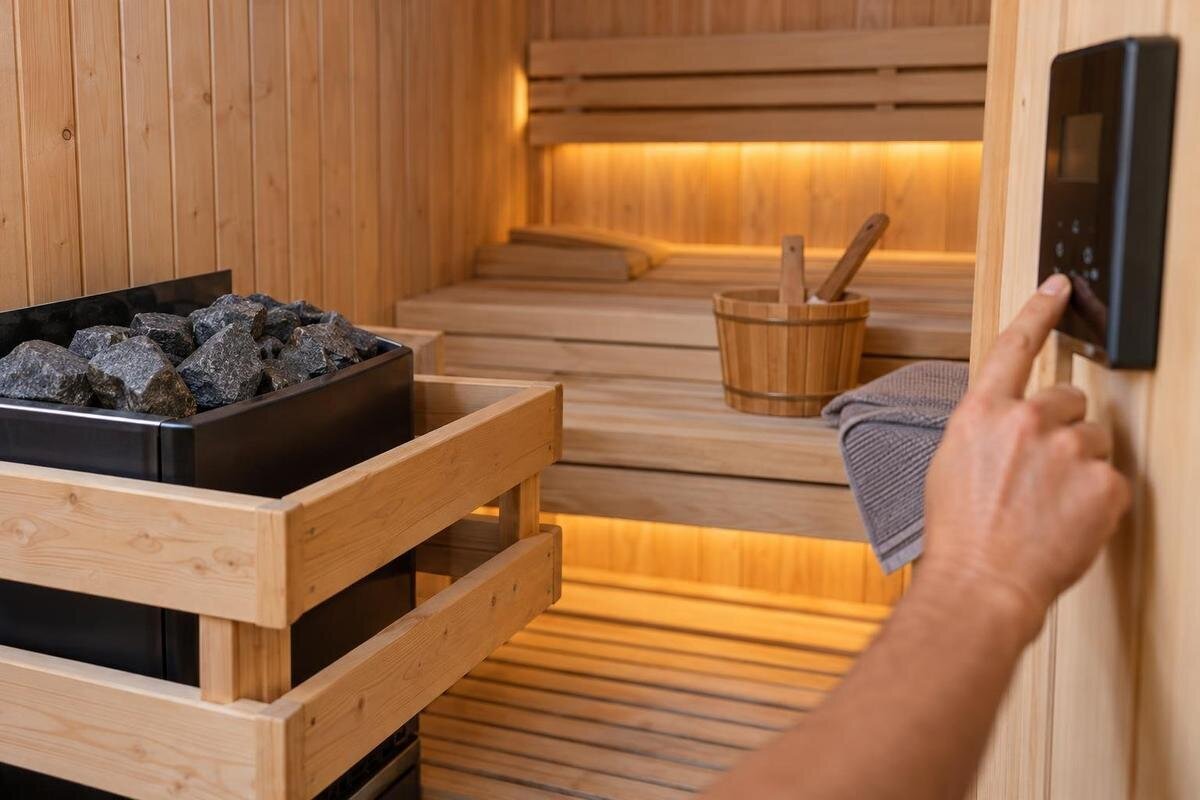
SAUNA RUNNING COSTS
To calculate an electric sauna’s running cost per session, measure the energy used from the beginning of heat-up through the end of bathing, then apply the electricity rate that covered those kWh. The heater’s rated power is not the same as its measured energy use: a thermostat-controlled element may cycle, so multiplying its rating by the whole elapsed time can give the wrong answer. A clear boundary, usable meter data and the correct tariff make the estimate repeatable.
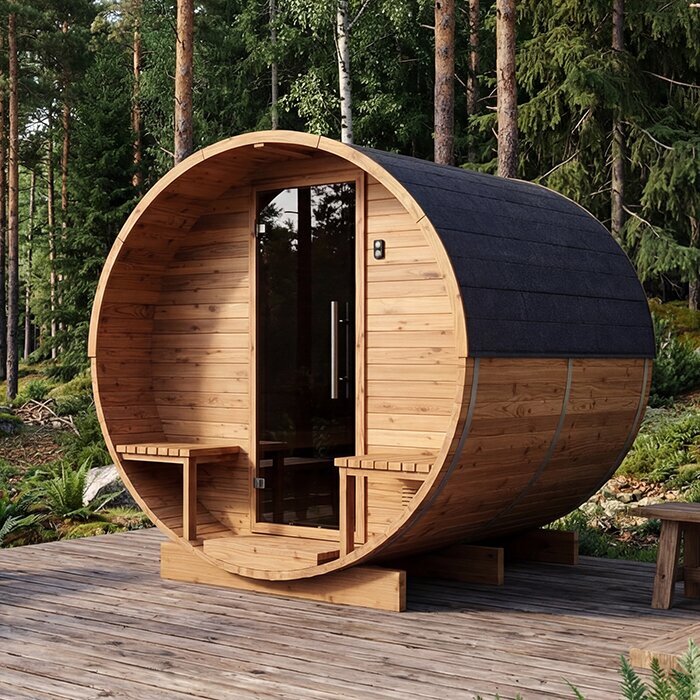
What counts as one sauna session?
Choose the boundary before taking a reading. For a straightforward running-cost figure, define one session as the period from switching the heater on until it is switched off after bathing. That captures heat-up energy and the energy used while the heater maintains its chosen setting during use. It also captures energy during pauses if the heater is left on. A meter may include the controller, lights or another accessory on the same circuit; if so, those loads are part of the total. Decide whether your figure represents the whole sauna cycle or the heater alone, and keep that scope consistent.
Session can mean one heating cycle or one person’s visit, so say which you mean. If several people use the same already-heated sauna, the meter records the energy for that shared cycle, not a separate amount for each person. You can divide the cycle cost by the number of users to give a rough per-person average, but label it clearly. A warm restart is not directly comparable with heating from cold. If you switch the heater off between bathing periods, or turn it back on afterwards, note that sequence and include the energy that falls within your chosen boundary.
Measure energy across the full cycle
The clearest method is to use a meter that reports energy in kilowatt-hours (kWh). Record its cumulative reading immediately before the heater starts, then record it again just after the cycle ends. Subtract the starting figure from the ending figure to find the energy used. A meter that already reports kWh for a defined interval can also work, provided the interval matches the session. For a fixed heater circuit, ask a qualified electrician about a suitable meter. Do not open a switchboard or alter wiring to get a reading, and do not assume an ordinary plug-in meter is suitable for a sauna heater.
Keep a short record of the date, start and finish readings, calculated kWh, warm-up time and bathing time. Write down both meter readings, not just their difference, so you can check the subtraction later. Also note whether the sauna started cold or warm and what was included in the measurement. If you are using the Sauna LC-260 product page to identify your cabin, record the actual heater and controls alongside the model name. This keeps the equipment details separate from the readings used in your calculation. Give each cycle its own entry rather than combining several visits under one date: otherwise, you may lose track of which reading belongs to which heating period. If a display shows kW, hours or a setting rather than accumulated kWh, it cannot be treated as a session energy reading without further information.
Use the rate that applied when you used the sauna
Find the variable electricity rate on your power bill or plan. It may be shown in cents per kWh or dollars per kWh; make sure you use the right form in the calculation. For a session that has already happened, use the rate that applied at the time. For a future estimate, use the rate you expect to pay when you plan to heat the sauna. If your bill has a daily fixed charge, keep it separate from the marginal cost of one more session: it is not a per-kWh charge caused by that cycle.
Some plans have different unit rates at different times, so the time of use matters as well as the kWh total. Keep the tariff in its own field beside the equipment details when preparing a forecast for a cabin such as Sauna HCF-300. If the bill shows several variable per-kWh components, use the applicable total once rather than adding a component that is already included. Record the plan and date with your estimate, as rates can change. Copy the rate’s units as well as its number: an entry of ‘30’ is ambiguous, whereas ‘30c/kWh’ makes the calculation clear. When updating a forecast, retain the rate used for past sessions so that historical costs are not accidentally recalculated at the new price.
Calculate the cost from energy use and the unit rate
For a single rate, the calculation is simple: kWh used equals the ending meter reading minus the starting reading. Session cost in dollars equals kWh used multiplied by the rate in cents per kWh, then divided by 100. If your rate is already in dollars per kWh, multiply the kWh figure by that rate directly. For example, 30c/kWh and $0.30/kWh express the same rate; choose one format and use it consistently. If a meter reports watt-hours rather than kilowatt-hours, divide the reading by 1,000 to convert it to kWh before using the bill’s unit rate. Keep the units alongside your figures so that cents are not mistaken for dollars, and round the final dollar amount rather than each intermediate step.
As an illustrative example only, suppose the starting meter reading is 120.0 kWh and the ending reading is 128.4 kWh. Subtracting them gives 8.4 kWh for the cycle. At an applicable rate of 30c/kWh, the calculation is 8.4 × 30 cents, or 252 cents: $2.52. These figures are hypothetical, not a typical New Zealand tariff or a prediction for a particular sauna. A budget entry for Sauna LCF-300 would need readings from that setup and the rate you pay. Keep the starting reading, ending reading and rate beside the result so another household member can follow the arithmetic. The total is for the defined heating cycle, including warm-up, rather than just the minutes spent bathing.
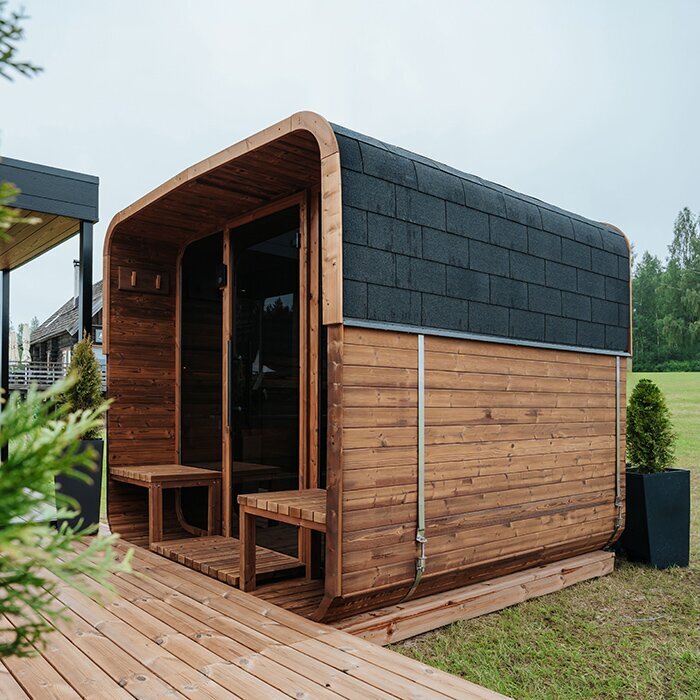
Split sessions across time-of-use rates
If your plan charges different rates at different times, match energy use to the rate in force for each interval. Calculate the cost for every band by multiplying its kWh by its rate, then add those amounts. This gives a more accurate result than multiplying the session’s total kWh by whichever rate looks most convenient. Do not divide energy evenly by minutes unless you have a sound basis for that assumption: a heater’s draw can vary during heat-up and while the thermostat is cycling.
For a made-up example, a cycle using 4 kWh at 25c/kWh and another 3 kWh at 35c/kWh costs $1.00 plus $1.05, or $2.05 in total. The figures illustrate the method, not a quoted plan. When keeping a running-cost record for Sauna S-140, enter the kWh used in each band on separate lines, then add the line totals. Check that the band readings also add up to the cycle’s total energy: here, 4 + 3 equals 7 kWh. If your meter gives only one total, the exact split is unknown. You can show a range by applying the lowest and highest rates to that total. In this example, 7 kWh would cost between $1.75 and $2.45. That range describes the uncertainty; it does not establish how much energy was actually used in either band.
A heater rating is not a session reading
Kilowatts (kW) measure power; kilowatt-hours (kWh) measure energy over time. A heater’s rated input tells you its specified power, not how many kWh it will use from warm-up to switch-off. If a heater drew its full rated input continuously for one hour, the energy used in kWh would equal its rated power in kW multiplied by that one hour. That is a conditional calculation, not a reliable session estimate. A thermostat-controlled heater may cycle rather than draw full rated input continuously, and its pattern depends on the heater and operating conditions.
The rating can be useful when checking the actual heater documentation, but multiplying it by the total session length can overstate or misstate real use. When considering Sauna HC-150, confirm the selected heater separately; the cabin’s name does not establish its electrical input. If you cannot meter a session yet, describe any calculation as a scenario rather than measured consumption. State the assumed power draw, operating time and electricity rate together. Be explicit about whether the operating time means continuous heating or the whole elapsed cycle: those are not interchangeable assumptions. Keep this provisional figure separate from later meter results so that an early budgeting assumption does not become your reported running cost simply because it was the first number recorded.
Keep repeat measurements comparable
A consistent session log makes repeat measurements easier to compare. Use the same fields each time: date, starting condition, heat-up duration, bathing duration, control setting, meter readings and tariff. Record pauses and any periods when the heater was left on, rather than counting only time spent inside the sauna. Brief notes about outdoor conditions and door use can help explain an unusual result. Keep observations separate from assumptions: ‘started warm’ records what happened, while ‘probably used less energy’ is an interpretation to check against the reading. You do not need a complicated spreadsheet, but an unexplained total on its own gives you little basis for comparing one cycle with another.
Use the same equipment configuration when comparing readings. For a setup built around Sauna HC-225, include the actual heater and controls in the log rather than relying on the cabin name alone. Compare cold starts with cold starts and warm restarts with warm restarts where possible. Several ordinary cycles give a more useful picture than one unusual test. If the setup, setting or session length changes, keep the result but mark the difference instead of treating it as a like-for-like comparison. A separate column for exceptions lets you retain useful readings without mixing unlike sessions into one average. It also helps you distinguish a change in energy use from a change in cost caused solely by a different electricity rate.
Separate sauna use from household use
A whole-house meter records more than the sauna. Hot water, cooking, heating, laundry and other loads can all change the reading over the same period. If you use a household meter, a before-and-after difference may therefore include energy unrelated to the session. Time-stamped usage data from your retailer can help if its intervals line up with the cycle, but it may combine the sauna with other appliances. A meter that measures the relevant heater load separately is a more direct way to attribute kWh.
When estimating electricity use for Sauna N-210, distinguish a household-meter result from a separate heater reading in your records. If separate measurement is unavailable, you can compare a sauna period with a similar period when the sauna was not running, while noting other household activity. Use periods of the same length so the comparison is not distorted by including more time on one side. Subtracting the comparison period’s use gives an estimate of the additional energy, not a direct measurement of the heater. Household demand varies, so retain both original totals and explain the comparison used. If the available data is too coarse to isolate a short session, say so rather than reporting the difference as an exact heater reading.
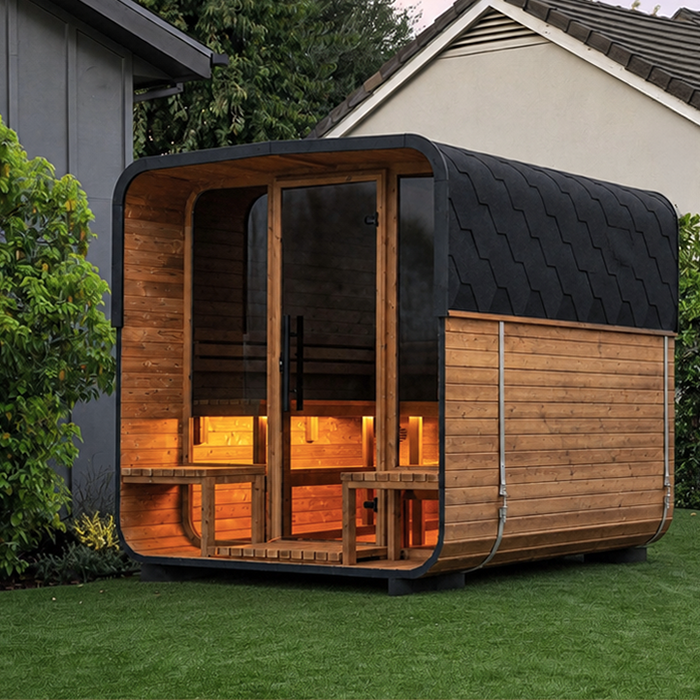
Why two sessions can use different amounts of energy
Measured kWh can change with the starting condition, outdoor weather, session length, control setting and how often heat escapes when the door is opened. Ventilation and the enclosure’s heat loss also matter. These factors affect how long the heater needs to add energy and how often it cycles to maintain the chosen setting. That is why one reading should not automatically be treated as the cost of every future session. Record the conditions that are easy to observe, then use a range or an average when your normal use varies.
When comparing cabins, a product page such as the listing for Sauna N-250 provides a model reference, but listed floor area alone does not give volume, heat loss, heater configuration or metered kWh. Do not use area as a shortcut for an electricity estimate or as proof that one cabin will cost less to run than another. For a model-specific budget, identify the exact local configuration and selected heater, then measure representative cycles once it is in use. Keep comparisons on the same basis: a cold-start cycle for one setup and a warm restart for another do not answer the same running-cost question.
Average costs without hiding the assumptions
After recording several cycles, calculate an average cost by adding the cost of each session and dividing by the number of sessions. This preserves the rate used for each cycle, unlike multiplying average energy use by today’s rate when the original tariffs differed. For example, the two illustrative cycle costs above, $2.52 and $2.05, total $4.57; dividing by two gives $2.285, or about $2.29 per cycle. This demonstrates the arithmetic, not a representative sauna budget. Keep cold starts and warm restarts separate if they are meaningfully different in your routine, and retain the lowest and highest recorded costs alongside the average. For a monthly estimate, multiply a representative session cost by the expected number of similar cycles. If use or rates vary, estimate each type separately and add the totals rather than assuming every planned cycle will match the overall average.
Keep the figure labelled as an electricity running cost per heating cycle. It does not include the sauna’s purchase price, delivery, installation, maintenance or other household charges. If you want to allocate a daily fixed charge or other costs across sessions for a broader household budget, show that as a separate accounting choice rather than implying the charge was caused by one cycle. The assumptions—session boundary, meter scope, tariff and expected frequency—are what make the final number useful to someone comparing their own use.
Frequently asked questions
Can I calculate the cost from the heater’s kW rating alone?
No. kW measures power, while kWh measures energy used over time. A heater’s rating does not show how much energy it used across a complete session, because it may not draw its full rated input continuously. Use metered kWh where possible, then apply the relevant electricity rate.
Should I include the warm-up period?
Yes, if you want the cost of a complete heating cycle. Take the first reading before the heater starts and the second after it is switched off at the end of use. Note whether the sauna was cold or already warm, as those cycles may use different amounts of energy.
How do I calculate a session that crosses peak and off-peak periods?
If the rate changes during the session, split the measured energy by time band. Multiply the kWh used in each band by that band’s rate, then add the costs. A single total kWh reading cannot give an exact answer across different rates unless you also know how the energy was divided between them.
Can my household meter show the sauna’s energy use?
It shows the combined electricity use of the home, so other appliances can affect the reading. Time-stamped retailer data may help with an estimate, but it may not isolate a short sauna cycle. A suitable meter that measures the relevant heater load gives a clearer result.
How do I work out a cost per person?
First calculate the cost of the full heating cycle. If several people share it, divide that total by the number of users for a simple average per person. Label it as an average: it does not measure each person’s individual use, and the cycle cost is not necessarily the same as a separate cost for each visit.
For a useful per-session figure, define the cycle, measure kWh from heater start-up through switch-off, and apply the unit rate that applied when the energy was used. Split the calculation if the rate changed during the session. Keep the heater’s rating, fixed daily charges and one-off project costs separate unless you are deliberately calculating a broader budget. Several clearly recorded cycles provide a better basis for planning than a guess based on rated power alone.
