
Plan the Five-Year Cost of Outdoor Sauna Ownership
Outdoor sauna budget
An outdoor sauna’s catalogue price is only the starting figure. Over five years, the budget can also include delivery, site preparation, professional installation, electricity or fuel, routine care, servicing and any repairs you choose to allow for. There is no useful single total without a model-specific quote, a heating choice and a pattern of use. The scenario below assumes one cash purchase, five years of ownership and two heat-up cycles a week. It separates the initial installed project cost from later running and upkeep costs, then shows where to use your supplier, energy and service figures. No current NZ prices are supplied, so the example uses actual-quote inputs rather than invented amounts.
01
Separate the installed project cost from ownership costs
Define the number before comparing options. A five-year ownership total is the cash outlay for one chosen sauna from purchase through the end of its fifth operating year. Show two subtotals: the initial installed project cost, covering the product and the work needed to have it ready for use, and the costs arising during years one to five. The later subtotal can include electricity or fuel, routine cleaning and care, planned servicing, paid repairs, and any confirmed extra insurance or other costs. Separating these lines stops a product-only price being mistaken for the cost of having a usable sauna on site.
The base case here is one outdoor sauna with an electric heating configuration confirmed for the selected model. It is bought for cash at the start, kept for five full operating years and used twice a week. The owner also chooses to budget for one professional check each year. Two cycles x 52 weeks x five years equals 520 heat-ups. Purchase, setup, service and energy amounts must come from current quotes or measured use; they are not supplied as market prices here. The example excludes loan interest and resale proceeds. If you choose wood-fired heating or a different check schedule, replace those lines rather than forcing the assumptions to fit.
Get a quote for the exact sauna configuration
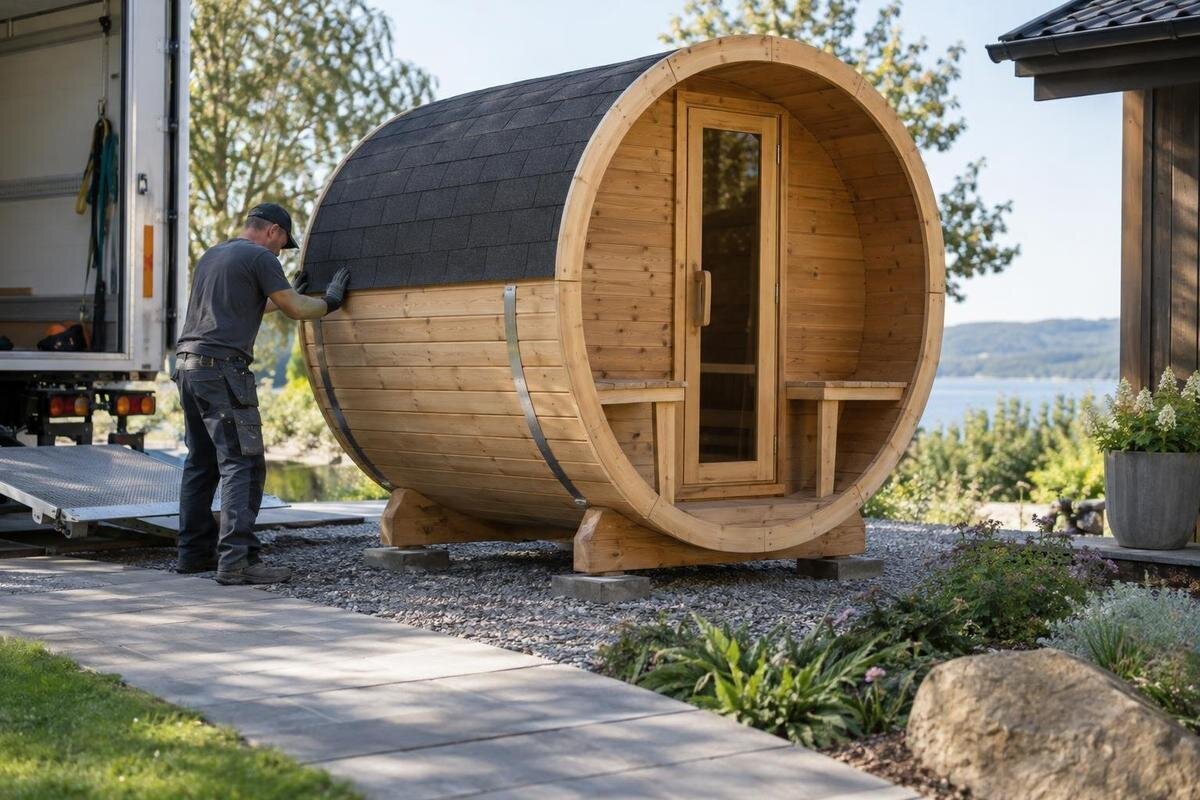
Choose an exact model and configuration before building a budget, rather than pricing a broad product category. Ask for a written, itemised quote showing the sauna package and identifying components or options that are separate. A heater, controls, accessories, assembly and delivery may appear on different lines, so confirm what applies to your selection. Use the Thermowood Barrel Sauna LCF-300 listing to identify the model when requesting a quote, then record the quoted configuration, inclusions and price together. Record the quote date and use the same tax basis when you compare figures.
Request the price for the version you actually intend to buy. Ask whether the quote includes GST, freight to your address, unloading and assembly, and whether any separately supplied component is outside the package. Keep optional extras in their own column: a changing area, outdoor seating or path improvements should not be folded into the core price unless you plan to purchase them. A package quote and a complete installed quote answer different questions. Use the first to identify the product cost, then add confirmed work as a separate initial cost.
02
Add delivery, site work and professional installation
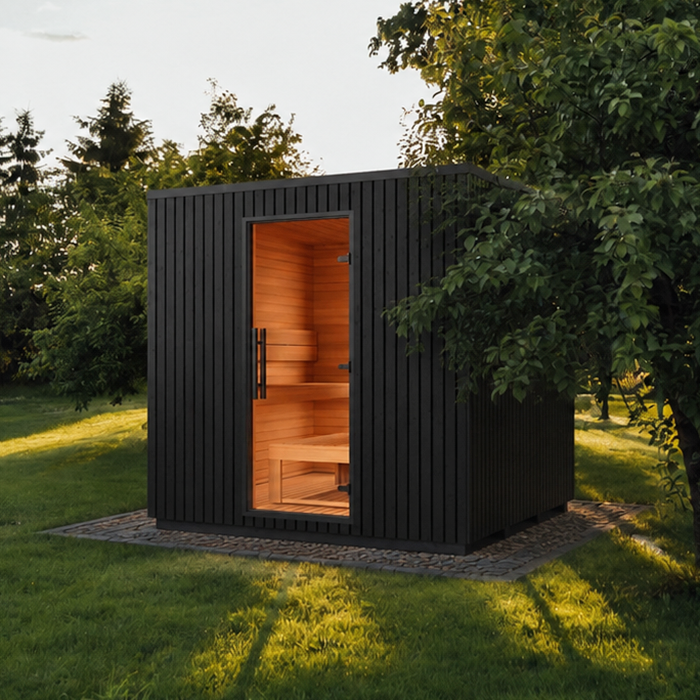
Delivery costs can depend on the address, access and how the sauna is unloaded and moved into position. Ask the supplier what delivery covers and whether assembly is included. For the site, seek guidance for the exact model and a quote based on the actual location. Ground preparation or a base may be part of your plan, but do not assume one type of base is required for every site. If you are considering the S-140 sauna listing, identify that model in your enquiry and describe the intended location so that delivery and site work can be priced for your project.
Put each part of the setup on its own line: freight and handling, ground or base preparation, assembly, and professional connection or commissioning where applicable. For an electric configuration, ask a qualified electrician to scope the connection. For a wood-fired setup, have a suitable professional confirm any flue-related work and its cost. These are quote questions, not installation instructions. Include optional landscaping, lighting or a path only if they are part of your planned project, and confirm who supplies the labour and materials for each item.
Set a session count for the five-year scenario
Count heat-up cycles rather than people. In this example, two cycles a week gives 104 a year and 520 across five years. If two people use the sauna during one heated session, that is still one cycle for the energy calculation; another full heat-up would be another cycle. This distinction helps keep the use assumption meaningful. It also gives you a useful denominator for later working out an all-in cost per use, once you know the actual five-year spend.
Treat the two-sessions-a-week pattern as a planning choice, not an average or recommendation. Your own calendar may include weeks with no use, extra sessions when guests visit, or different patterns at different times of year. Start with the weeks you expect to use the sauna, then estimate the number of new heat-ups in those weeks. Record separate annual totals if your plans differ across the five years; there is no need to force every year into the same pattern. Keep the base case visible at 520 cycles so that later changes remain easy to explain. Count a shared session once, even if several people take turns, unless you plan another heat-up. This keeps the usage forecast tied to the heating activity you are budgeting for rather than to the number of bathers.
03
Calculate heating from measured electricity or fuel
For an electric configuration, use the measured electricity for a complete heat-up and use cycle, including the warm-up. If a typical cycle uses k kilowatt-hours and your applicable tariff is t NZ dollars per kilowatt-hour, the example’s variable energy cost is 520 x k x t. Use a suitable source of consumption data or ask a qualified electrician how it can be obtained safely. A heater’s rated power is not a measure of what it consumes continuously throughout a session. If your tariff varies by time or year, total the relevant periods rather than applying one assumed rate to every cycle.
For a wood-fired configuration, record the quantity of fuel used for a typical firing and multiply it by the price per unit, then total the firings you expect. Include purchased kindling, delivery or other fuel costs where relevant to your plan. Keep the units consistent: the quantity used and the quoted price must refer to the same measure. Distinguish fuel purchased from fuel consumed if you are keeping both a cash-flow record and a per-firing estimate, rather than counting both as separate expenses. If the HC-150 product listing is on your shortlist, ask the supplier about its quoted heating configuration before assigning fuel or electricity costs to it.
Budget for routine care and servicing
Ask for care guidance for the exact sauna and heating configuration, then price the tasks you expect to carry out or pay someone to do. The base case allows for one professional check in each of the five years, with the amount taken from a local quote. That is an owner-selected budgeting assumption, not a universal service interval or a claim that every sauna needs an annual visit. If the manufacturer’s guidance or your chosen service plan uses a different schedule, change the number and timing of visits in the worksheet.
List routine supplies separately from paid servicing: for example, cleaning products and any surface-care materials that the manufacturer specifies or approves. Do not assume a particular treatment is suitable for every material. If you do routine work yourself, include the cash cost of supplies; if you also want to value your time, show it separately from cash spending. Ask what a service quote covers, including travel, labour and any parts, so that you do not count the same task twice. For the HC-225 sauna page, as with any model, request care information for the exact configuration you are considering.
04
Separate repair reserves from other costs
Repairs are uncertain, so do not present a possible replacement or call-out as a cost that will definitely occur. In a forecast, you can add a separate contingency based on advice or quotes for the chosen equipment. In an account of actual ownership, record a repair when it is paid. If you set aside a reserve and do not use it, it remains a reserve rather than an expense. Check the written warranty terms and exclusions for the exact purchase, but do not assume a repair will be covered or that any particular coverage applies.
Some costs belong in the budget only if they are genuinely additional. Ask your insurer whether owning the sauna changes your cover or premium, and include a confirmed increase rather than the whole household premium. Likewise, include an extra electricity supply charge only if it is caused by the project. When seeking information about the Thermowood Barrel Sauna N-210 listing, keep the model and quoted configuration together so that replies relate to the purchase you are considering. Record each confirmed extra cost with its timing: a one-off amount belongs in one year, while a recurring amount belongs in each year it applies. Leave an unresolved amount clearly marked as unknown rather than silently treating it as zero.
Compare heating options on a like-for-like basis
Compare the full five-year picture for each heating choice, not just one energy bill. An electric option has measured electricity costs and whatever connection work is included in the actual quote. A wood-fired option has measured fuel costs and any setup or servicing work confirmed for that configuration. First check whether the quoted package includes the heating equipment or prices it separately. Then use the same number of heat-ups, ownership period and cost boundaries for both estimates. No fuel quantity, electricity tariff or system price can be assumed from the sauna’s name alone.
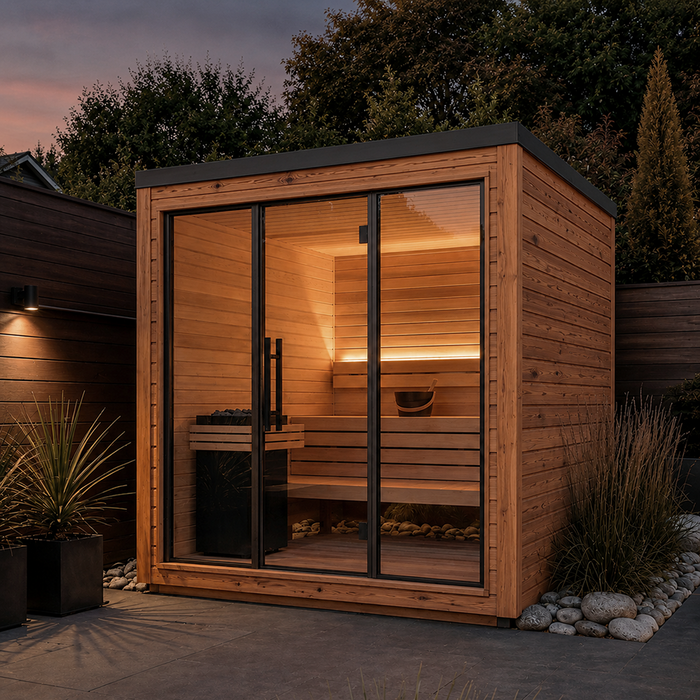
Keep the product and heating information tied to the actual quote. If the N-250 product page is one of the models you are comparing, ask the supplier which configuration the current quote covers and what related work is excluded. Do the same for any alternative. Put the package, site work, heating, routine care and repair allowance in comparable columns. Use the same site description and scope of work for quote requests, while allowing the quoted amounts to differ where the configurations require different work. If one estimate leaves a necessary item unpriced, mark that gap before comparing totals. This shows whether an apparent saving comes from a genuinely lower cost or simply from a missing line, without turning the comparison into a judgement based on energy costs alone.
05
Build low, base and high five-year estimates
Use a simple worksheet. Let P be the quoted sauna package, S the quoted delivery, site work and professional installation, H the five-year electricity or fuel cost, M the planned routine-care and servicing spend, and X any confirmed extra costs. Planned spending is P + S + H + M + X. Show a repair reserve, R, separately; adding it gives the amount you intend to have available, not a prediction that every dollar will be spent. For the electric base case, calculate H from 520 planned cycles, measured consumption per cycle and the applicable tariffs. If an annual professional check costs C and you choose one each year, M includes five times C, plus your planned care supplies. Where annual costs differ, enter and sum them individually instead.
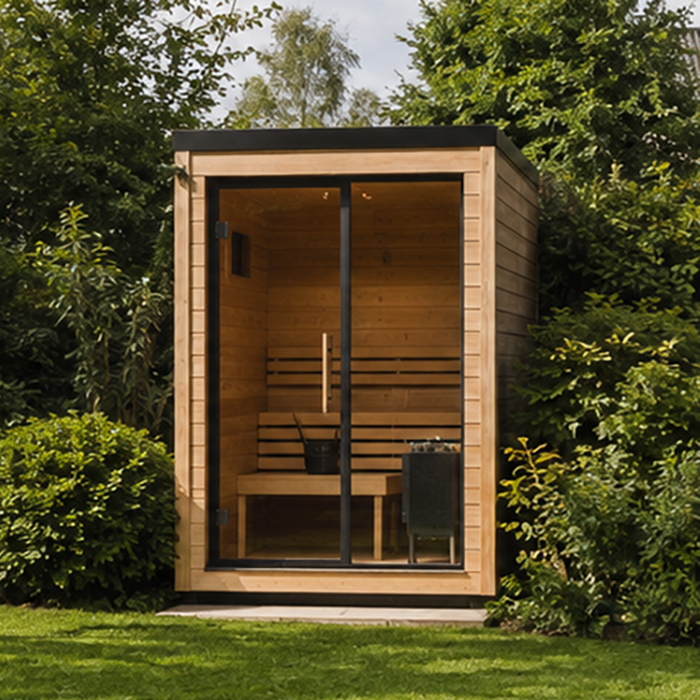
Make the low, base and high versions by changing stated assumptions, not by adding arbitrary percentage buffers. The base case uses 520 cycles; lower and higher cases use session counts that fit your likely routine. To see the effect of usage alone, keep the other inputs unchanged and vary only the cycle count. Then test a different tariff, fuel price or care schedule separately, labelling each change. This makes the reason for a higher total visible. If the LC-260 model listing is an option, give it its own quoted package and setup lines rather than reusing another model’s amounts. Keep the repair reserve visible beside each spending estimate, and use the same treatment of reserves across all three versions.
Track cash flow and update the estimate
Show when the money is expected to leave your account. Put the initial installed project cost at the beginning of the plan, recording individual payments when they are due under your quotes. Heating, care and servicing then fall across years one to five, with repairs recorded if they occur. Dividing the five-year figure by five gives an average for comparison, not the amount due in each year. A year-by-year view distinguishes the money needed to complete the installation from the later amounts needed to keep using it. Show any money you set aside for future costs separately from payments to suppliers or tradespeople, so that saving for a bill and paying it are not counted twice. If you use finance, show interest and fees separately from the cash-purchase base case.
As you own the sauna, record heat-ups, measured electricity or purchased fuel, service invoices, supplies, repairs and any confirmed change in insurance. Replace estimates with actual amounts for completed years and retain forecasts for the years still ahead, clearly labelling the difference. If the HCF-300 sauna listing is another product you are considering, keep it as a separate quote case with the same ownership period and cost categories. At year five, report actual cash spent separately from unused reserves and any resale proceeds. You can then divide actual spending by recorded heat-ups to calculate an all-in cost per cycle. Label that figure clearly: it includes purchase and setup, so it is not the same as the energy cost of one additional session.
Frequently asked questions
Does the sauna’s product price show the five-year cost?
No. It is one part of the purchase cost. Add delivery, site preparation and installation where applicable, then estimate five years of heating, care, servicing and any repairs or other confirmed costs. Keep the product price and installed total as separate figures.
How do I calculate five-year electricity costs?
Multiply the measured electricity used for a complete heat-up and session by the applicable tariff, then total that amount across your planned sessions. For the example here, that is 520 cycles. Use actual tariff periods if rates vary, and don’t treat a heater’s rated power as continuous consumption.
How much should I budget for servicing?
There is no universal figure or interval to apply to every sauna. Ask for care guidance for the exact configuration and get a local quote for any professional work you plan to book. The example uses one optional check per year as an assumption, not a requirement.
Should I include repair costs if I don’t know whether a repair will be needed?
Show a repair allowance separately from planned spending. It is a reserve for budgeting, not a repair cost that has already occurred. For a record of actual ownership costs, count repairs when they are paid and show any unused reserve separately.
Is a wood-fired sauna automatically cheaper to run?
Not necessarily. Compare the actual fuel used and its cost with measured electricity use and your tariff. Also compare the quoted setup and servicing costs for each heating choice over the same five-year period and session count.
A useful five-year budget starts with the installed cost, then adds heating, routine care, servicing and other costs under clearly stated assumptions. Keep repair reserves separate from expected spending, and distinguish the total you need to fund from the amounts due each year. Replacing estimates with actual costs as you go will show how your original plan compares with the cost of owning and using your sauna.
