
Home Sauna vs Spa Membership: A Personal Cost Comparison
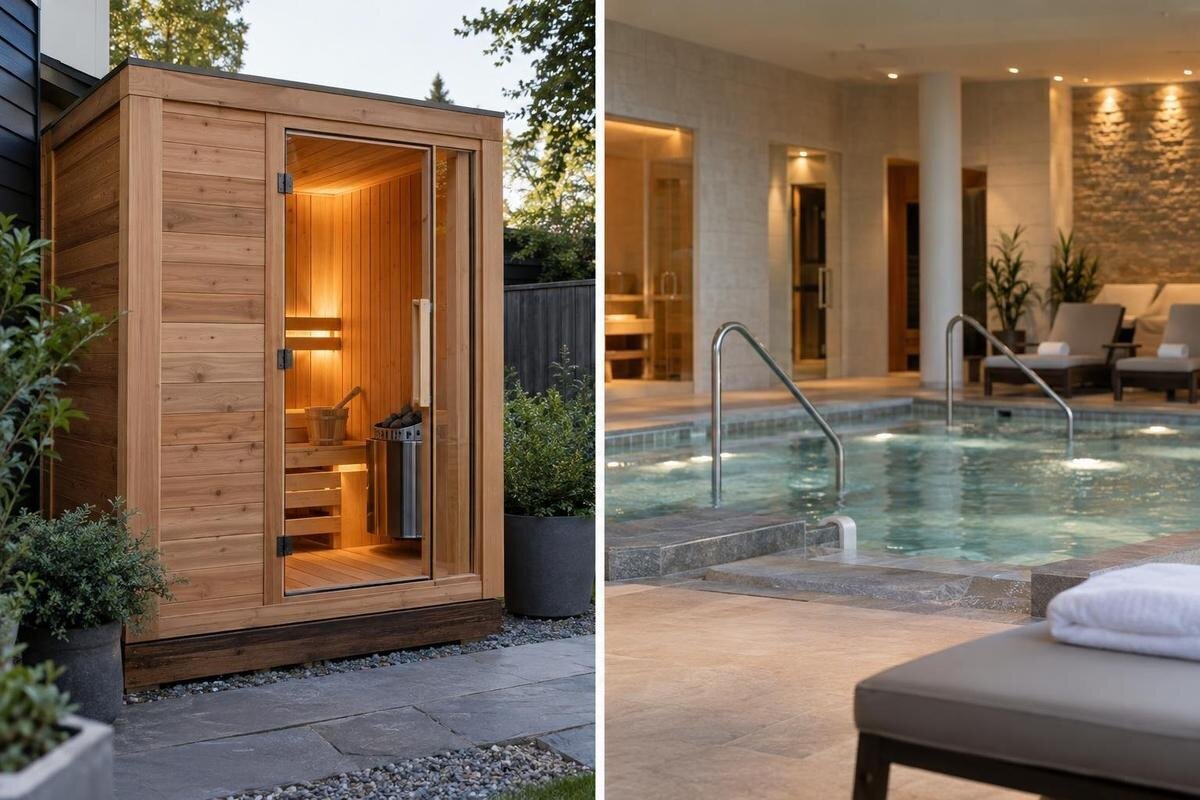
Sauna cost comparison
Whether a home sauna costs less than a spa membership depends on how often you would use each, what the membership actually covers and the full cost of buying and running a sauna. A useful comparison includes return journeys as well as entry fees, and separates the home purchase from annual electricity and upkeep. Set out your assumptions over the same period, then test a lower-use and higher-use version. That gives you a personal comparison without treating any payback date as certain.
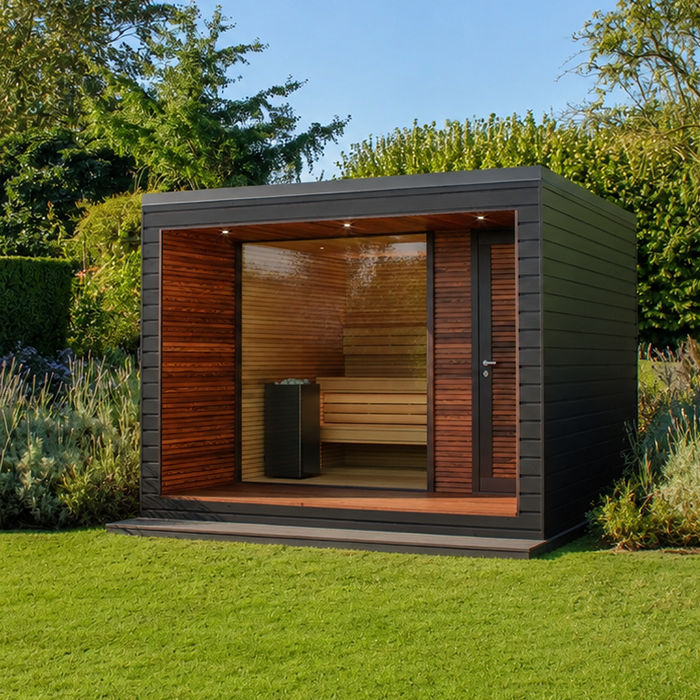
Use the same comparison period
Choose one comparison window before opening a calculator. A membership may be paid monthly or annually, while a home purchase concentrates much of its cost at the beginning and is used over time. Compare both options across the same number of years: ideally, the period you genuinely expect to use a home sauna, not an arbitrary twelve months. Show total cash paid over that period and a yearly equivalent as separate figures. An annual membership bill cannot fairly be compared with the full purchase price unless you are deliberately comparing first-year cash flow. If your likely ownership period is uncertain, run more than one timeframe.
Define whose use is included and what counts as a visit. One spa trip with two members may mean one travel cost but two person-entry charges; a family membership may be priced differently again. Choose a unit—household session, individual visit or trip—and use it consistently, while noting where fees apply per person. Use actual attendance and booking records if available, including cancelled plans and months when use falls. Forecast low, typical and high use from your routine rather than the maximum number of days theoretically available. Do not assume that owning a sauna automatically creates more sessions.
Check exactly what the spa membership covers
Read the current membership terms and build an annual cost from them. Record the recurring fee, any joining or administration charge, minimum term, renewal arrangements, and what happens if you pause, cancel or change the number of members. If there is a discount for paying upfront, use that amount only if it matches how you would actually pay and the conditions you can meet. Put one-off charges in the year they apply and include them in the full comparison period; do not spread them across years in one option but leave them as a lump sum in the other.
Check specifically whether the membership gives access to the sauna, when it is available and whether a booking, session limit or higher tier applies. A general spa pass is not automatically an equivalent sauna option. Note the facilities you would genuinely use and any extras you would pay for, but leave unused facilities out of your personal value calculation. If you would keep the membership for other facilities, do not count the whole fee as a cost you could avoid by buying a sauna. You can divide membership spending by completed sauna visits to find an effective cost per visit, but keep total spending visible too.
Add visit charges and return travel
Separate fixed membership costs from charges triggered by each outing. Check for entry fees for people not covered, booking fees, guest charges and other costs that apply to your chosen visit; include each only if the spa confirms it. If the membership includes entry, do not add a standard admission fee again. For a group outing, use the number of people who actually pay, not the number of car trips. This gives you a variable cost per visit and avoids treating an all-inclusive membership as though every visit attracts another entry charge.
Add the return journey using your actual route and travel mode. Include fares, parking and other direct trip expenses; for driving, use a consistent estimate based on your vehicle and current fuel costs rather than a general average. If you would make the journey anyway for another reason, count only the extra distance or expense caused by the spa visit. Track travel time separately unless you deliberately assign it a value. For the home comparison, note whether your planned location would remove these trips from your routine. The Sauna N-210 model listing identifies one candidate for your cost sheet; keep its purchase and setup costs separate from any travel savings.
Price a specific home sauna
The home figure starts with the price for a specific model and configuration, not with the word sauna. Use an up-to-date quote and record its date, delivery destination, options and exactly what the price includes. If you are considering the Sauna LC-260 product listing, use that model name to request the matching quote; do not assume that a catalogue identity or product photograph establishes an installed price or a particular package. Keep a copy of the quote so that later changes in configuration are not mistaken for price changes.
Make an itemised list for the one-off purchase. It may need separate lines for the sauna, components or accessories not included, delivery, unloading, assembly and other supplier-confirmed charges. Mark each line as included, optional or still to be priced, and avoid counting the same item again under site work or installation. Ask what the quoted amount includes and what could change the total. Do not fill gaps with an assumed allowance presented as a supplier price; label estimates clearly and keep them separate from confirmed figures.

Include delivery, site work and professional costs
A unit price may not include the work needed to prepare its location or complete the project. Ask the supplier and relevant local contractors to state who handles delivery access, unloading, ground or base preparation, assembly, any professional assessment and electrical work. These costs are project-specific: a quote should explain its assumptions about access and site readiness rather than leaving you to infer them from a model name. Include separately priced work in the home total even if it is invoiced by someone other than the sauna seller.
Gather written estimates for work that applies to your plan and identify exclusions, such as access arrangements or work by another trade. For technical matters, rely on a qualified professional who has the site and product details; ask what, if anything, needs assessment or local approval rather than assuming a universal rule. If the Sauna HCF-300 product page is your candidate, it can identify the product you are pricing, but it does not establish delivery, site or installation costs. Keep a contingency as a separate planning allowance based on uncertainties you can name, not as a fabricated quote.
Estimate electricity from the exact setup
Estimate electricity from information for the exact proposed configuration and a usage pattern you expect to follow. Ask the supplier or manufacturer for a realistic energy estimate per session, including the heating period and any consumption while idle if applicable; a rated power figure alone does not tell you the energy used in a complete session. Calculate session energy in kilowatt-hours against the rate that applies to your household at the times you expect to use it. If your tariff varies by time, show that assumption rather than applying one rate to every session.
Multiply the per-session estimate by the number of home sessions in your annual scenario, then add only other confirmed recurring costs linked to the setup. Do not allocate the whole power bill to the sauna when most of it belongs to existing household use. If the Sauna LCF-300 listing is the model being considered, ask for information for its exact configuration; neither its name nor the listing establishes energy use. Keep the source of the estimate, applicable power rate and any uncertainty together so you can change each input without rebuilding the comparison.
Allow for upkeep, finance and resale uncertainty
Ongoing ownership can include care, cleaning supplies, consumables, servicing or replacement parts, but only include items that apply to the exact model and setup. Check the manual or ask the supplier what maintenance is expected, at what interval and whether any parts or materials have a cost; get a price where possible. If the Sauna S-140 model page identifies your candidate, use that exact name when requesting matching care information. Set aside a realistic amount for likely costs and show uncertain repairs separately rather than treating every possible repair as a certain yearly bill. Include an insurance cost only if a provider confirms it adds to what you already pay.
If you finance the purchase, compare the repayment schedule and fees over the same period as the spa costs. For a cash-cost view, use the purchase and setup outlay once; for a financed cash-flow view, use repayments and fees, and do not add the purchase principal a second time. You can also show a simple annual ownership equivalent by dividing initial costs across your planned ownership years, with interest and annual upkeep shown separately. Keep possible resale value out of the base case unless supported by evidence: future resale is uncertain, not a guaranteed credit.
Compare annual costs and calculate a visit threshold
Use annual totals for a first like-for-like calculation. For this calculation, let N be household sauna sessions per year, M the membership and other fixed spa fees, A the total uncovered entry charges for everyone attending each session, and T the incremental travel cost for the corresponding trip. Annual spa spending is M + N × (A + T) + other annual extras. For pay-as-you-go, set M to zero and put admission in A. The home annual equivalent is C ÷ Y + E + R: C is purchase, delivery and setup; Y is years of intended use; E is annual electricity; and R is maintenance and other confirmed ongoing costs. If the Sauna HC-150 listing is a candidate, use its exact quote to fill C; the product page itself is not an installed total.
This division is a planning average, not a payback promise: it spreads the initial outlay across the chosen years and does not credit resale value. Keep a second view showing actual cash paid in each year, especially if financing. To estimate a visit threshold, let F be the home’s fixed annual equivalent, M the spa’s fixed annual cost, e the home’s variable cost per session and q the spa’s variable cost per visit after membership inclusions. The totals are F + N × e at home and M + N × q at the spa. Where q is greater than e, a simplified threshold is N = (F − M) ÷ (q − e). If the assumptions do not produce a useful positive threshold, compare actual totals at your expected visit count instead.
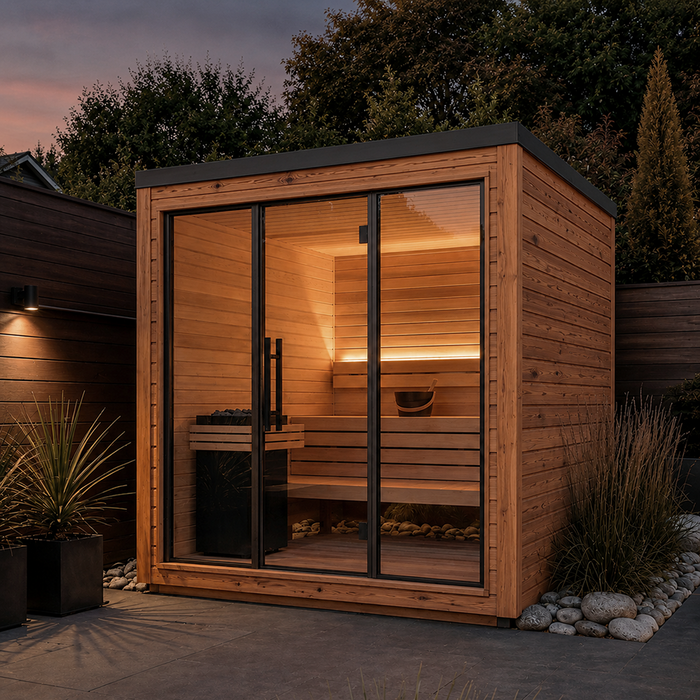
Test different use and ownership assumptions
Build your usage scenarios around the weeks when you could realistically use each option. Allow for holidays, work commitments and other planned breaks rather than multiplying an ideal week by fifty-two. If you expect different attendance at home and at the spa, show those session counts separately and explain why; do not use the same count merely to make the arithmetic simpler. For outings with different numbers of people, calculate the relevant entry charges separately before adding them to the annual total. If the Sauna HC-225 product page identifies your home option, keep the quoted model and configuration unchanged while testing these attendance patterns.
Vary one assumption at a time first: number of visits, years of ownership, electricity rate or a confirmed service cost. Then run a combined downside case, such as fewer years of use and fewer sessions, without pretending it is a forecast. Review the spa’s actual pause, cancellation and renewal terms for the same period. Note non-financial differences—opening hours, booking convenience, travel, privacy and how each household member would use the options—in a separate column. That keeps personal value visible without turning an unverified preference into a dollar saving.
Record the figures behind your comparison
Put the figures into a single dated ledger. For the spa, list membership, non-included entry or booking charges, incremental travel and relevant one-off fees. For the home, list the exact purchase quote, delivery, site work, assembly, professional services, electricity, maintenance, finance costs and other confirmed ongoing expenses. Mark each number as a quote, a bill-based calculation or an assumption, and note the period it covers. The Sauna N-250 listing can identify a candidate model; obtain the current matching quote and confirm its inclusions before using it as a number.
Read the results in three ways: total cash outlay over the selected period, average annual cost and cost per completed visit under each use scenario. A small difference is not decisive if delivery, energy or repair figures are still uncertain, so show a range instead of false precision. Keep a separate note for access and convenience factors that matter to you. A personal comparison is useful when every total can be traced to a term, quote, bill or clearly stated assumption—not when a single payback date hides the inputs.
Frequently asked questions
Does a spa membership always include sauna access?
No. Check the current terms for sauna access, booking rules, time limits, membership tiers and extra charges. A pass is comparable only if it covers the sauna use you expect. If you would keep the membership for other facilities, do not count its full fee as a saving from buying a sauna.
How do I estimate a home sauna’s electricity cost?
Ask for an energy estimate for the exact proposed setup and a typical session. Multiply the estimated kilowatt-hours by the electricity rate that applies when you expect to use it, then multiply by your planned annual sessions. Do not infer energy use from a model name alone.
How many visits make home ownership cheaper?
There is no standard number. Compare the home sauna’s fixed annual costs and per-session running cost with the membership, any uncovered entry fees and travel. With an all-inclusive membership, visits may change travel spending and the average cost per visit without changing the membership fee.
Should I count travel time as a cost?
Include fares, fuel, parking and other direct travel expenses in the monetary comparison. Record travel time separately. If you choose to give that time a dollar value, use a personal method and apply it consistently rather than treating avoided travel as an automatic cash saving.
Should I subtract the home sauna’s expected resale value?
Keep uncertain resale proceeds out of your base comparison. If you have a defensible estimate, show how it changes the result in a separate calculation, not as a guaranteed credit. Compare full-period cash outlay as well as the annual equivalent of ownership costs.
Neither option has a universal break-even point. A membership used for several facilities may be difficult to compare with a home sauna on entry costs alone, while a home purchase looks different when assessed as a first-year outlay rather than spread across years of use. The most useful result matches your actual attendance, household, quote and likely ownership period. Keep fixed costs, per-visit costs and uncertainty visible, then weigh the totals alongside the access and routine that suit you.
