
New or Used Outdoor Sauna: A Buyer's Comparison
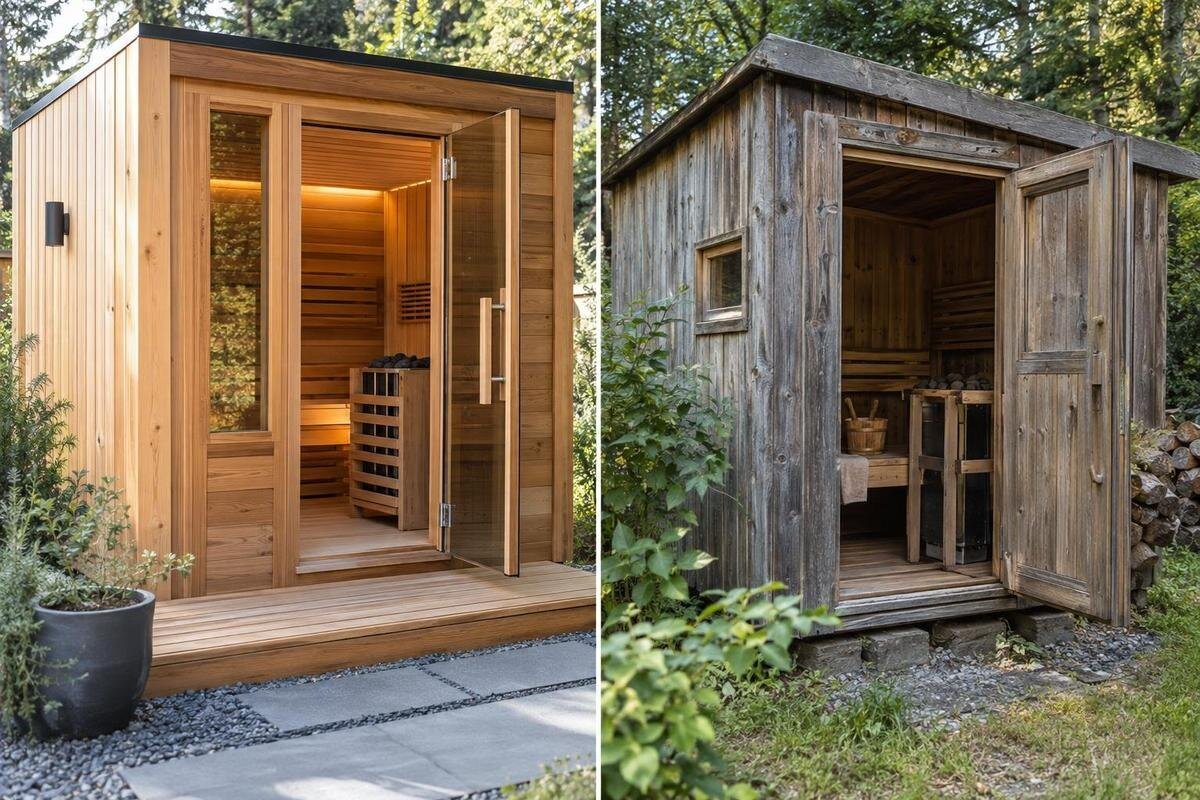
Outdoor sauna buying guide
Choosing between a new and a second-hand outdoor sauna is not simply a matter of comparing two prices. A used unit may look sound yet be missing parts, records or a workable route off site; a new purchase may be easier to document but still have exclusions for delivery, site preparation or installation. Compare both offers on the same basis: what is supplied, what condition it is in, who handles each stage, and which responsibilities remain yours. This guide covers inspection, completeness, manuals, service history, removal, transport, reinstallation and support—without assuming an older sauna can be moved safely.
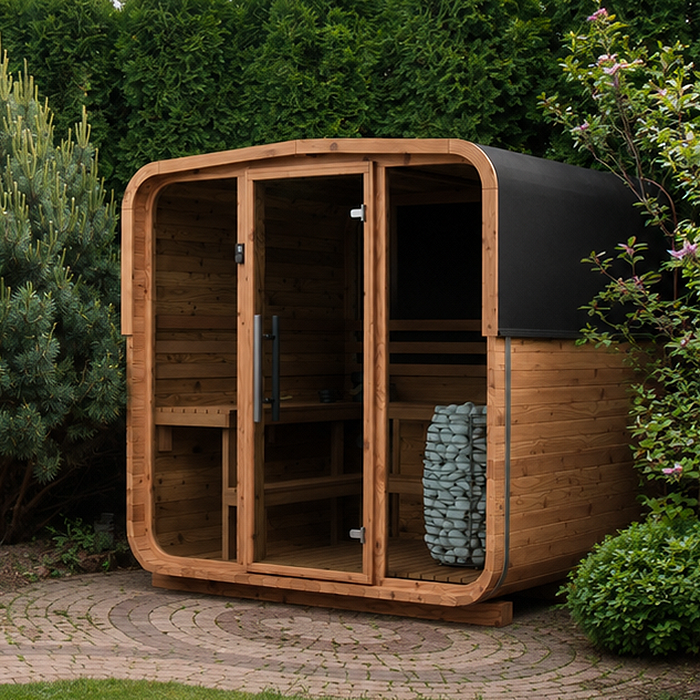
What each offer includes
Set up a like-for-like comparison before weighing the apparent saving. For each option, record the exact sauna model or build, age if known, area and measurements as described in its documents, heater identity, included items, condition, location, and what the seller or retailer will do. Note whether each figure is a written quote, an estimate or simply an asking price. A quote for a new sauna may still exclude site preparation, unloading, assembly, connection or disposal of an old unit, so ask for its scope rather than assuming everything is included. A second-hand advertisement may show accessories that are priced separately; confirm which items are included in writing. Two offers described as a complete sauna may cover quite different configurations.
Use a catalogue entry to identify the model you are comparing. For example, the Thermowood Barrel Sauna S-140 is listed with an area of 1.93 m². Before comparing that figure with a second-hand advertisement, confirm that the measurement basis and sauna version match. Put differences in model codes, later substitutions, missing fittings or changed layouts on your comparison sheet. Keep the catalogue description separate from the seller’s inventory: it describes the listed product, not necessarily the unit being offered. If a seller cannot identify the sauna, record that uncertainty rather than treating the closest catalogue entry as an equivalent.
Inspect the enclosure and signs of exposure
Inspect the enclosure in good light, inside and out, and take dated photographs with permission. Note visible movement, broken or loose boards, gaps that differ from surrounding joints, damaged door or window components, staining, soft or swollen timber, mould-like growth, rust, and signs water may have entered around the roof or base. These are observations, not a diagnosis: ask what happened, when it was repaired, and who assessed it. Pay attention to floors, corners and areas around openings, where wear can be easy to miss. Record each finding separately from the seller’s explanation; photographs against the same checklist can also help a specialist review the unit. A clean exterior does not establish that concealed faces or joints are sound.
Ask how long the sauna has stood at its current site, whether it has remained assembled, and how it has been exposed to rain, sun and wind. Compare the answers with the timber and maintenance instructions for the exact model; do not apply a generic coating or regard a fresh finish as proof of repair. If you are comparing the used unit with a new Sauna HC-150 barrel sauna, listed with an area of 2.97 m², keep the used unit’s inspection findings alongside the new product description. Similar model names do not establish similar condition. If moisture damage, structural movement or an altered opening is suspected, get a competent sauna or building professional to assess the cause before deciding whether it is cosmetic or costly.
Check the heater and electrical records
Ask for the heater make, model and serial or other identifying details, plus its installation date if known and any commissioning, maintenance or repair records. Record replaced parts, faults, unusual shutdowns and unresolved issues, not just the date of the last service. Check that the documents refer to the heater currently fitted; components may have changed since the sauna was first bought. A seller saying it worked last time is not an assessment of its condition now, particularly if it has been disconnected or stored. Do not connect or energise an unfamiliar unit as a casual test. Arrange an appropriately qualified electrical professional or sauna technician to assess the equipment and requirements before you rely on it.
List controls, cables and other electrical items separately from the timber structure. Confirm their identity and condition before counting them as equipment you can reuse. Ask who will disconnect the setup, whether a specialist will inspect items before reuse, and what information is needed to assess the destination. A sound enclosure does not establish electrical suitability, and age alone does not tell you whether a component needs replacement. When requesting a new-sauna quote for a model such as Sauna HC-225, listed with an area of 4.4 m², ask for the heater specification separately. For the used option, obtain details of the heater actually fitted. Allow time for a professional opinion before payment rather than relying on the seller’s recollection.
Match every included part to the manual
Ask for the original manual, assembly drawings and parts or packing list that match the exact version. Check them against what is physically present, using an inventory rather than relying on a broad assurance that the sauna is complete. Depending on the design, items to confirm may include the door and glazing, benches, supports, fixings, vents, roof or weather-cover components, heater, controls and supplied accessories. Do not presume every used unit was sold with the same contents, or that loose parts in photographs are included. Ask the seller to identify each item, and mark anything missing, damaged, modified or substituted before you price the deal. Photograph the inventory and agree who keeps each loose part until collection.
Ask whether parts have been modified, repaired or sourced later, and whether those changes are documented and compatible with the manufacturer’s instructions or accepted by an appropriate installer. A missing fixing or altered component may complicate reassembly; a replacement is not necessarily interchangeable because it looks similar. If your comparison includes the Sauna N-210 model, listed with an area of 4.43 m², request the relevant parts list as well as the product description. For the second-hand unit, compare model codes, drawing revisions and photographs with the physical inventory. Ask the manufacturer or supplier to clarify discrepancies and confirm replacement compatibility, availability and price in writing. Resolve missing-parts questions before removal.

Build a service and ownership timeline
Build a simple ownership and service timeline from documents the seller can supply. Useful records include purchase paperwork, model or serial details, dated service reports, repair invoices, receipts for replaced parts, installation or commissioning documents, and maintenance notes. For each entry, check what was done, who did it, and which sauna or component it concerned. A pile of unrelated receipts is less helpful than a coherent record. Ask about periods when the sauna was unused, stored elsewhere, dismantled or exposed to weather, because gaps in the history affect what an inspection can confirm. Note any reported fault that remains unresolved, even if the unit is not currently in use.
Check that paperwork belongs to the offered unit: dates, model identifiers and repair descriptions should make sense alongside its current configuration. Ask permission to contact a service provider or former supplier if a major repair claim affects the price. Keep copies and mark gaps in the history; missing paperwork does not prove damage, but it leaves less evidence on which to base a decision. For a unit advertised as a Sauna N-250, the catalogue area of 5.27 m² is one point to compare with the listing. Match the service records to the actual sauna and its components, rather than attaching a history to a model name alone. Treat spoken history as a lead to verify.
Plan removal and transport before paying
Before paying a deposit, establish exactly how the sauna will leave its current site. Ask whether it can be moved in one piece or needs partial dismantling, who will decide, who will do the work, and which parts must come off first. A photograph or seller’s estimate is not a lifting plan. Check the access route at both ends: gates, paths, steps, overhead restrictions, turning room, ground conditions, loading position and space for equipment. Give a removal contractor accurate measurements and photographs, then request a written scope that identifies exclusions and who is responsible for each stage. Include how parts will be protected and labelled, not just the vehicle journey.
Agree who will count and store components, and who bears the cost if dismantling reveals hidden damage or pieces cannot be reused. Confirm whether loading, transport, unloading and temporary storage are included; do not infer them from a general transport quote. If the unit is identified as a Sauna LC-260, its listed area of 5.12 m² is only part of the information a mover needs. The people planning the move must assess the existing structure’s construction, condition and access. Use an experienced mover and a sauna or building professional where needed, and establish who will coordinate their work. If no provider will agree to a clear removal plan, regard feasibility as unresolved.
Check the destination and reinstallation scope
Compare the destination with the sauna’s installation drawings and manufacturer guidance before arranging transport. Identify the intended position, supporting base, delivery access, drainage, weather exposure, door clearance and space needed for maintenance. A base that supported the sauna where it stands may not suit a different site, and a visually level patch does not prove that the structure can be installed there. Have relevant questions about ground, drainage and support checked by a competent local professional, particularly if levels or conditions are uncertain. Allow the installer to review the proposed site rather than relying only on a photograph. Do not select the position solely because the seller says the previous location worked.
Ask what reassembly requires, what must be inspected or replaced first, and who will carry out each task. An electrical professional should assess the destination supply and the actual heater requirements rather than relying on the seller’s former setup. Confirm the delivery route, work area and model-specific instructions with the people doing the work. When considering the Sauna HCF-300 outdoor sauna, listed with an area of 6.89 m², obtain its dimensions and required clearances from the relevant drawings. Use the same level of detail to assess the second-hand option; floor area alone does not establish site suitability. Resolve the scope before booking transport so the unit arrives with an agreed installation plan.
Confirm after-sales support and parts access
Ask what support the seller can provide after handover. For a new purchase, get written terms covering after-sales service, any warranty offered, parts, technical advice, and responsibility for delivery or installation questions; do not assume these are included because the product is new. For a used sauna, find out whether any seller or manufacturer support applies to a later owner, what records can be passed on, and what proof is needed to request assistance. Ask about parts that may be difficult to source or changed between versions before deciding. Convert verbal assurances into specific written answers tied to the exact sauna and heater.
Make support enquiries specific to the model and version. If you are comparing a used offer with the Sauna LCF-300 barrel sauna, listed with an area of 6.89 m², ask the retailer what support applies to the new configuration and the manufacturer what assistance is available for the used unit. Provide model plates, heater details, manuals and any change history so each enquiry concerns the right equipment. If the second-hand sauna has been altered, dismantled before or mixed with parts from another model, explain those changes when asking about replacement parts or technical advice. Record exclusions and any conditions for transferring support to a later owner before comparing the answers.

Add removal and setup to the total cost
Compare the whole project cost, not the used asking price against a new purchase price. For a second-hand sauna, gather itemised estimates for inspection, disconnection if relevant, dismantling, specialist handling, transport, storage, replacement parts, reassembly, site work and connection checks. For a new unit, request a quote that clearly states the configuration and included services, then obtain separate figures for any work it excludes. Not every line will apply, but leave unpriced items visible rather than silently treating them as zero. Keep transport costs separate from installation if different providers are quoting. Add a contingency informed by the contractor’s findings and the condition assessment, not an arbitrary percentage.
Put estimates beside likely downtime, coordination effort and the chance that records or parts are incomplete. Separate confirmed costs from provisional figures, and decide what unknown would make you walk away. Include interim storage or disposal only if relevant; do not assume the cheaper route involves fewer tasks. Ask whether quotes depend on an inspection, access conditions, intact components or work by other trades. If a key estimate cannot yet be secured, mark it as open or use a clearly stated range; false precision can make a used deal look safer than it is. Compare the final responsibilities as well as the totals, because the buyer may be coordinating tasks that a different quote includes.
When to consider a used sauna or walk away
A second-hand sauna may be worth pursuing when its identity is clear, its condition can be assessed, its components match the applicable manual or inventory, and a specialist has accepted the removal and reinstallation scope. Records should explain important repairs; the destination should be reviewed; and you should know who is responsible for each task. A new purchase is easier to compare only when the product configuration and quote are explicit. Neither label settles the choice: age is not a complete condition report, and a new listing does not by itself define site work, delivery or services. Base your decision on the package you can document, not a general impression of age or finish.
Pause or decline if access has not been assessed, the seller will not allow a reasonable inspection, the model or heater cannot be identified, important components are missing, damage remains unexplained, or no removal contractor will scope the job. A low price does not compensate for an unbounded repair or reinstallation risk. You can request a specialist inspection, revised price or documented scope, but none guarantees that the sauna is recoverable. Keep the decision tied to written evidence and an agreed plan. If a crucial unknown remains and cannot be checked before commitment, walking away is a practical outcome, not a failed negotiation.
Frequently asked questions
Can a second-hand outdoor sauna be moved in one piece?
There is no reliable blanket answer. The sauna’s design, current condition, assembly, route out, loading access and destination all affect the plan. Have an experienced mover, and where useful the manufacturer or installer, assess whether the actual unit can be moved intact or needs dismantling. Do not rely on a photograph or the seller’s assurance alone.
What documents should I ask the seller for?
Request the model and heater identifiers, the matching manual and assembly drawings, a parts list, purchase records if available, and dated service, repair, installation or commissioning records. Ask for notes on faults and replacements, too. These documents help confirm what is present and which instructions apply; they do not replace a physical inventory or specialist assessment.
How can I check whether a used sauna is complete?
Use a parts list for the exact model and version, then check each item with the seller before collection. Photograph and label what is included; record damage, substitutions and missing pieces in writing. Ask a supplier to confirm that any proposed replacement fits that version, and check its availability and price before treating the sauna as complete.
Is a second-hand sauna always cheaper overall?
Not necessarily. Compare the asking price plus inspection, disconnection, dismantling, transport, storage, repairs, reassembly, site work and connection checks with a written quote for a new configuration and its exclusions. Keep estimates and unknowns visible; a low advertised figure is not the total project cost.
Is it enough that the seller says the heater worked?
No. Past use or the seller’s assurance does not establish the present condition of a heater or its installation, especially after disconnection, storage or changes. Get the actual model and available records, then arrange an assessment by an appropriately qualified electrical professional or sauna technician before relying on it.
The fair comparison is between a defined new package and a used sauna whose condition, parts and route to reinstallation are understood. Ask for evidence, assign each removal and reinstallation task to someone, and keep unknown costs separate from confirmed ones. If a major question remains, pause before paying and get the assessment or written quote needed to resolve it. A well-documented used sauna may justify further investigation; when it cannot be verified or moved with a sound plan, a new option—or waiting—is the clearer choice.
