
Outdoor Sauna Costs: Build a Complete Project Budget
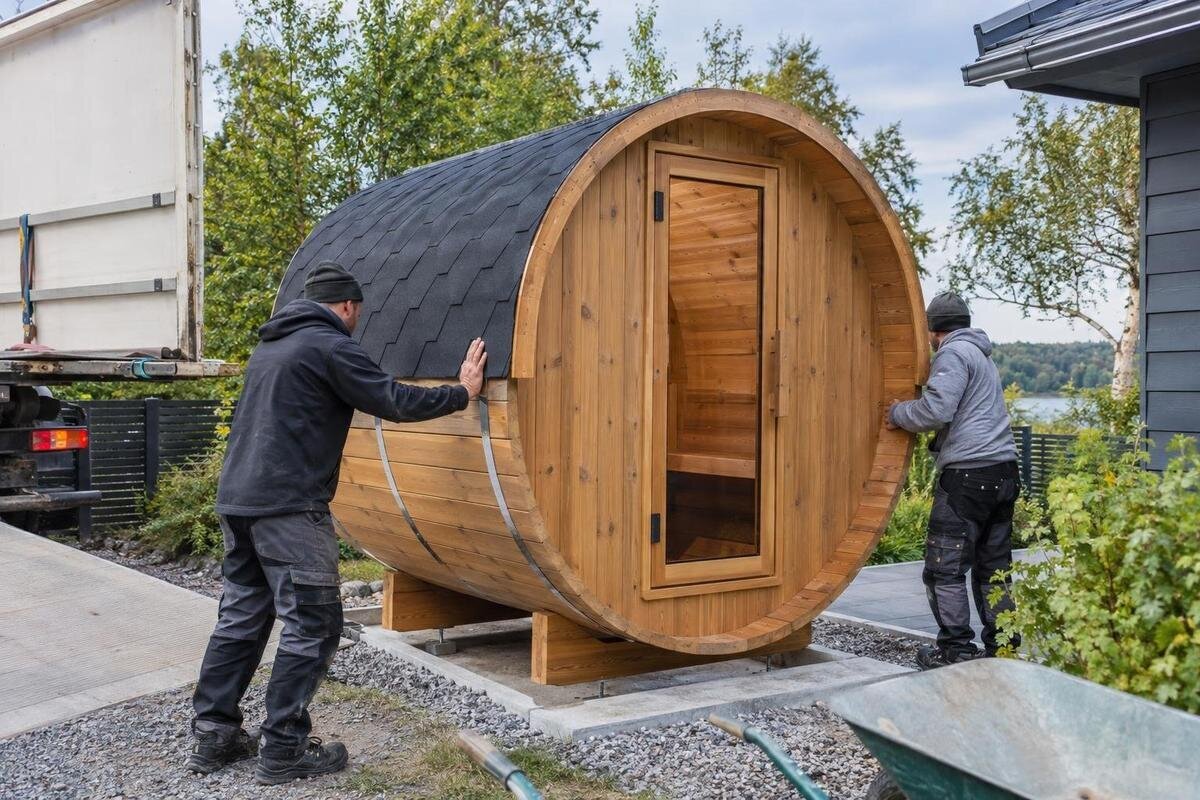
Outdoor sauna project budget
Planning an outdoor sauna means budgeting for a finished project, not just a cabin listing. The one-off total can include the selected cabin and heater, prepared base, site work, service connections, freight, unloading and installation. Some quotes bundle several items; others leave them to you. This guide explains how to build a New Zealand project budget from current local quotes, identify provisional costs and keep future running expenses separate.
Define the complete project total
A complete project budget covers the work needed to move from an unprepared site to the agreed handover point. Set out the cabin, selected heater, base, site preparation, required service work, freight, unloading, and assembly or installation as distinct lines. Depending on the property and agreed scope, you may also need to price lifting equipment, removal of excavated material, drainage or reinstatement around the base. These are possibilities, not standard charges. Ask which site conditions each supplier or contractor has priced, and whether the figure assumes a particular access route or site state. A product price alone cannot account for work at your address.
Define what complete means before requesting prices. It could mean delivery only, or it could include assembly, heater work, completed connections and packaging removal; ask who is responsible for each part. Describe that handover point in the budget so everyone prices towards the same outcome. If you will arrange some work yourself, name it explicitly rather than leaving it outside the project total. Keep confirmed quotes separate from provisional allowances, and never enter an unpriced item as zero. Check that bundled work is not also counted in a contractor’s quote. Where two quotes overlap, identify which supplier will do the work before removing either amount. Put electricity, fuel and routine upkeep in a separate running-cost section: they matter to ownership, but they are not one-off installation expenses. This gives you a total for the agreed project, rather than a collection of prices with different starting and finishing points.
Choose one cabin and heater configuration
Choose the cabin and heater arrangement before seeking full-project prices. A product listing identifies a model, but a quote may price the cabin alone, bundle a heater or show options separately; the title and images do not settle the scope. Name the exact model and configuration on each request. If Sauna N-250 is on your shortlist, use that identity as the reference and ask the seller for a current quote for the configuration you want. Treat it as a product reference, not a price for a completed installation.
Ask the supplier to state whether the heater and any specified controls, accessories or other components are included in the amount. Do not assume this from a product title. Fix the preferred heating type before trades quote the connection work, or prepare separate alternatives with the heater, its required components and service work shown independently. If a choice is still pending, label it clearly. Combining a cabin quote for one arrangement with a service estimate for another can make the total look lower or more certain than it is.
Check what the cabin price actually covers
Ask for a written list of inclusions; words such as package, set or complete are not a substitute for one. For Thermowood Barrel Sauna LC-260, for example, request confirmation of whether the quoted amount covers the cabin only or also a heater, specified accessories, assembly or other items. Ask what will arrive with the order and what must be sourced separately. If a component or service is not included, record it as a separate purchase or trade cost instead of assuming it comes with the cabin. Distinguish required purchases from optional additions: the first group belongs in the complete project total, while the second can be priced separately for consideration. If the seller offers alternatives, keep each option attached to its own inclusions rather than combining the lowest figures from different packages. This is a scope check, not a reason to add every optional extra.
Check that the quote states its currency and whether GST is included. Ask whether it covers packing, delivery, unloading, a site visit, assembly or removal of packaging before describing it as a complete package. Record the quote date and any conditions with the written inclusions. If the seller uses a broad term such as installation, ask what work that covers and what remains for you to arrange. A low headline figure may simply leave costs to be priced elsewhere; your project budget needs to include those missing lines.
Price the base and site preparation
Allow for the support surface and any necessary work to prepare the site, but do not choose a base type by copying another installation. Ask the sauna supplier for the drawing or installation documentation for the exact configuration, then have a relevant builder or site professional assess what is appropriate on your property. Depending on the site, work to consider may include clearing, excavation, levelling, moving spoil or drainage. Which items apply should come from the site assessment, not a general estimate.
Request a written scope that separates the base itself from preparation and surrounding landscaping. Ask what surface and conditions the price assumes, whether cartage or removal of material is included, and what would prompt a revised quote. Give the contractor the exact product reference, such as Sauna HCF-300, and have the sauna supplier’s documentation inform the discussion. If a visit is needed to assess the ground or access, find out whether the estimate is firm before that visit or provisional. Keep any unconfirmed site work visible in the budget. Separate work needed for the agreed installation from improvements you would like around it. For example, do not combine a necessary site-preparation allowance with a broader garden redesign under one unexplained landscaping figure. Ask for those scopes to be priced separately so you can adjust optional spending without losing sight of the work needed for the sauna.
Heater installation and service connections
For an electric heater, ask the supplier what service requirements apply to the selected setup, then have a qualified electrician assess the existing supply and quote the work. Depending on the property and route, the scope could involve a cable run, excavation, changes to existing equipment or other work; do not assume any of these is included or needed. Ask the electrician to identify the assumptions behind the quote, including the route and the work they have allowed for. Do not estimate electrical requirements from a product photograph or a general cabin description.
For a wood-fired setup, have a suitable installer specify the stove and flue-related supply and labour for the chosen product and site. A stove price alone does not establish the cost of a complete installation. Ask which site-specific work is included and whether you should confirm any local requirements with the council or relevant professionals. Only add plumbing or other services if they are part of your plan. Give the supplier and trades the same exact cabin reference, such as Sauna LCF-300, and ask them to confirm the configuration rather than infer it from the listing.
Freight, unloading and site access
Request a delivery quote using the full property address, including the region and postcode, rather than relying on a general freight figure. Confirm whether delivery is priced to the property, to the roadside or to another agreed point, and whether unloading is included. Ask about any conditions on vehicle access and whether lifting equipment or additional handling is part of the quote. Put the exact order reference, such as Sauna S-140, on the request so the supplier can confirm the package details needed for freight; do not estimate them from a model name.
Walk the intended route from the delivery point to the sauna site with access in mind. Gates, steps, slopes, overhead obstructions and soft ground may affect what can be moved and where it can be placed. Ask the supplier for package dimensions and weight, then check the route with the delivery provider or installer. Confirm who moves the goods beyond the drop-off point and whether packaging is removed. Coordinate delivery with the base and trades so the site is ready, and ask what happens if access or readiness differs from the assumptions in the freight quote.
Specify assembly and installation labour
Separate the cost of assembling the cabin from fitting the heater and completing service connections. A quote that uses the word assembly may cover only one part of the job. Ask the installer to list the tasks included, what they expect to be ready beforehand, and whether their work ends at assembly, at the agreed connections, or at another handover point. If you are considering Sauna HC-150, for instance, put that exact model on the labour quote so it is clear which product the scope refers to.
Ask whether the labour price includes travel, equipment, extra visits, waste or packaging removal and coordination with other trades. Find out what could change the price, such as an unready base or access that differs from what was described. If you plan to assemble anything yourself, allow for your time and any hired help or equipment; follow the manufacturer’s instructions and do not assume a task is suitable for DIY. Keep your own time separate from cash expenses so the budget shows what you must pay as well as what you must organise. When comparing self-assembly with paid assembly, retain the same delivery, heater and service scope in both versions. Otherwise, the apparent saving may include work that has simply disappeared from the comparison. Make sure a separate professional quote covers any work that needs specialist input, and identify who will coordinate the handover between your work and theirs.
Compare quotes on the same scope
Compare written quotes against one shared list rather than ranking their totals alone. Check that each uses the same cabin model and heater arrangement, then compare what is included for the base, site work, service connections, freight, unloading and labour. Note exclusions and assumptions beside each amount. One estimate may cover supply only while another includes assembly or delivery, so their totals are not directly comparable until the missing work is identified. Record each quote’s currency, GST treatment, date and stated conditions in the same place.
Ask for clarification wherever a description is vague, particularly when a quote calls a job turnkey or installation. Request a revised figure if a product choice, site condition or delivery address changes, rather than editing the scope in your own notes and treating the old amount as current. If estimates refer to similar names but different models, record the exact reference, such as Sauna HC-225, before comparing them. If consent or other local requirements may affect the project, confirm what applies with the council and relevant professionals rather than assuming it is covered.
Keep allowances visible in the working budget
Use a simple worksheet with one row per cost: cabin, heater, base, site work, each service, freight, unloading and installation. For each row, record the scope, supplier or trade, amount, quote date, GST status, inclusions, exclusions and whether the figure is confirmed or provisional. Put the exact model reference, such as Sauna N-210, against the cabin line so a revised quote can be matched to the right product. Add a note about the site or configuration assumptions behind any amount, not just the figure itself.
Total confirmed one-off quotes separately from provisional allowances, and keep recurring costs outside both sums. For an unknown item, seek a local quote or write down who will obtain one and when; leaving the cell blank or marking it zero hides a gap. When an allowance is replaced by a quote, replace the amount in the same row rather than adding a second charge for the same work. Keep a short note of the change so you can explain why the total has moved. If you want a contingency, choose it in light of the unresolved site and scope risks rather than applying a universal percentage. Treat that reserve as a buffer, not a substitute for pricing work that should be quoted. If the total exceeds your limit, compare complete alternative budgets instead of silently removing necessary work. Show optional additions separately, making it clear whether your displayed total includes or excludes them.
Separate installation costs from running costs
Keep future energy or fuel spending in a separate estimate. For an electric sauna, running costs depend on actual energy use, how often it is used and the applicable electricity tariff; a heater’s rated input is not a record of its ongoing consumption. For a wood-fired setup, use observed fuel use and a local fuel price when estimating. Routine maintenance and any consumables also belong in the ownership plan, not in the one-off installation subtotal. You can refine these estimates after the setup and pattern of use are clear.
For a clear ownership budget, give recurring estimates a time period and state the usage assumptions behind them. An annual estimate and a per-session estimate answer different questions, so do not place either beside the installation total without a label. If you have not yet settled on a heating arrangement, keep the running-cost assumptions with the corresponding project option rather than using one shared figure. Likewise, distinguish an accessory bought with the initial order from a consumable you expect to replace during use: record the initial purchase once, then show future purchases separately. This keeps the upfront budget focused on getting the sauna installed while still showing the expenses you will need to plan for afterwards. Refine the ownership estimate as your usage becomes clearer; it should not obscure which installation costs are already quoted and which remain provisional.
Frequently asked questions
Can I use the cabin price as my full project budget?
Treat it as one line only until the seller confirms what is included. Add the selected heater, base and site preparation, service work, freight and unloading, and assembly or installation where these are not covered. Use current quotes for your address and keep unpriced work visible as an allowance.
How can I tell whether the heater is included?
Ask for an itemised written quote that names the cabin configuration and heater. Check whether any specified controls, accessories or other components are included, and whether installation or connection work is separate. Do not rely on a product title or photograph to establish the package contents.
Should the base be a separate budget line?
Include a line for the support surface and any necessary site preparation, then confirm the requirements for your chosen configuration with the sauna supplier and a relevant site professional. Whether work is needed, and what it involves, depends on the product instructions and your property.
What should an installation quote spell out?
It should identify the model and the work included: for example, whether the price covers assembly, heater installation, service connections, travel, equipment and clean-up. Ask what is excluded, what site conditions the quote assumes, and who is responsible for each part of the handover.
Do electricity, firewood and maintenance belong in the upfront total?
Keep them in a separate running-cost estimate. They affect the cost of ownership, but they are not one-off installation expenses. Estimate energy or fuel from your intended use, measured consumption where available, and the local tariff or fuel price.
A useful outdoor sauna budget is a written sum tied to one cabin and heater configuration, a prepared site and a clearly defined delivery and installation scope. Separate confirmed quotes from provisional allowances, and keep future running costs in their own estimate. When each line has an inclusion status and a responsible supplier or trade, gaps are easier to spot before the project moves ahead.
