
How Much Maintenance Does an Outdoor Sauna Really Need?
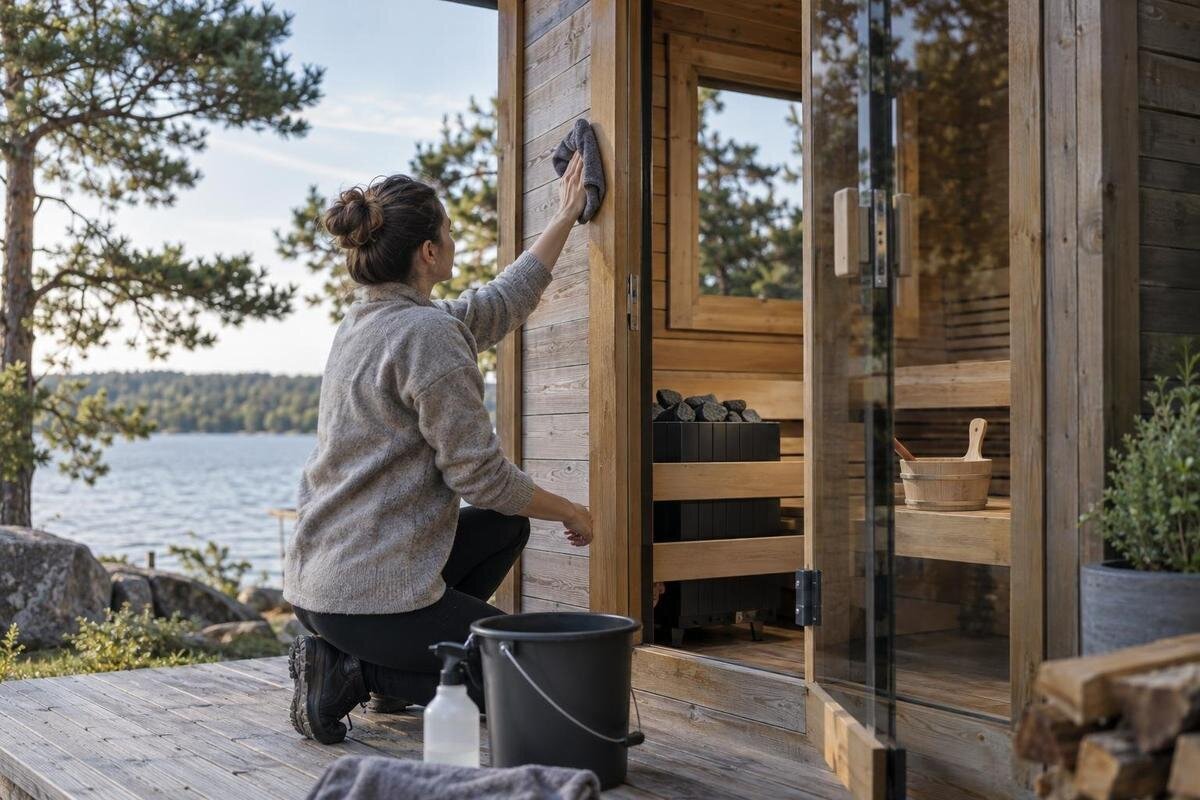
Outdoor sauna care
An outdoor sauna is not a fit-and-forget building, but its upkeep is usually a collection of manageable jobs rather than a complicated, fixed programme. You will need to clean the hot room, keep an eye on timber and fittings, and look after the area around it. The workload changes with frequency of use, construction, finish and exposure to rain, sun, salt, shade and debris. The manufacturer’s instructions matter: a cleaning method or treatment suitable for one design may not suit another.

What outdoor sauna maintenance usually involves
Think of the work in three layers: small jobs after a session, visual checks as part of normal ownership, and less frequent tasks linked to materials or equipment. After using the sauna, remove towels and loose debris, deal with visible drips or marks as the manual permits, and allow the room to dry in the way the manufacturer specifies. A glance at the floor, door and fittings can reveal a change early. These actions do not replace renewing a finish or arranging a heater service; each job looks after a different part of the sauna. Owner cleaning is not the same as technical servicing. If the manual separates after-use care from periodic checks, keep those categories distinct rather than turning every task into a daily chore.
How onerous those layers feel depends on the number of sessions, how many people use the room, the materials and finish, the heating system and the site. Frequent use generally means more wiping and floor debris; a sheltered position may reduce wind-driven rain but can still stay damp where airflow or drainage is poor. Compare the manufacturer’s task list, not a phrase such as “easy care”. The Sauna S-140 product page identifies a model, but its name alone does not set the cleaning method or exterior-care timing for the supplied configuration. Ask for the instructions before deciding what workload is manageable.
Routine cleaning for the hot room
After a session, pick up used towels and clear loose dirt from the floor. Remove visible water or sweat marks with a clean, soft cloth and water only if the manual permits that method, then follow its drying instructions. The aim is to leave seating and walking surfaces clean and able to dry, not to saturate the timber. Give attention to places where people sit or water gathers; they may need more care than surfaces that stay dry. Keep damp towels and personal products out of the room so they do not hold moisture or leave residues. A quick pass can be easier than letting marks build up, but the manual sets the permitted cleaning routine.
How you ventilate and dry the hot room is product-specific. Follow the instructions for doors and vents; do not assume that leaving every opening in one position suits every design. For heavier cleaning, use only products and tools the manufacturer approves. Abrasive pads, strong detergents, oils or other household cleaners may mark timber or leave residue. If a mark remains, ask before sanding or treating it, since a spot repair may leave a different appearance. Request the hot-room cleaning guidance for the Thermowood Barrel Sauna HC-150 configuration rather than relying on advice for a bathroom or a different sauna.
Timber care depends on the surface finish
Timber care cannot be specified from a material name alone. Confirm what wood is used on each surface and whether the exterior arrives bare, stained, sealed or otherwise treated. The interior may need different care from weather-exposed cladding. Some surfaces may be intended to weather naturally; others may need a manufacturer-approved coating. A treatment designed for an outdoor deck may not be suitable inside a hot room, where heat and skin contact matter. Ask what finish is supplied, what can be cleaned with it and whether the care instructions differ by surface. This is worth checking before buying maintenance products.
Look for peeling, fading, rough patches, splits or water staining as signs to investigate, not instructions to sand or repaint automatically. If a finish is needed, use the specified product and preparation method and follow the manufacturer’s timing advice; generic stain, oil or sealant may be incompatible. “Thermowood” or “thermally modified” in a listing is not enough to assume no care is needed. For the Thermowood Barrel Sauna HC-225 listing, request separate interior and exterior care guidance for the version supplied, and ask whether exposure changes the recommendation. Do not buy a treatment solely because it is marketed for outdoor timber.
Weather exposure changes exterior care
An outdoor sauna’s workload is shaped by its position. Driving rain, direct sun, salty air, leaves and airborne dirt can affect exposed surfaces differently, while a damp, shaded corner may dry slowly. Conditions vary from site to site, so a general description such as coastal or sheltered does not tell you everything about your own structure. Consider nearby trees, wind exposure and whether the area collects debris. These factors can change how often you need to clean and inspect the exterior, even when the sauna itself is unchanged. Check the surface rather than relying on a generic climate label.
Look for dirt build-up, finish changes, loose external pieces and signs that water is not shedding as intended, then use the manufacturer’s cleaning or treatment method. Do not assume pressure washing, household mould remover or a general deck coating is suitable; forceful water or incompatible chemicals may affect surfaces and joints. If your site is coastal, exposed or persistently damp, ask whether the manufacturer recommends different care and how timing is determined. The Sauna N-210 page cannot answer that site-specific question by itself; obtain advice for the selected material and finish. A visual check after particularly rough weather can be more useful than adopting an arbitrary schedule.

The site around the sauna needs upkeep too
Maintenance includes the ground and planting around the sauna. Keep leaves, weeds and stored items from hiding the base or blocking openings identified in the installation guide. Check whether water repeatedly pools against the structure and keep enough access to see the surfaces and carry out ordinary cleaning. If the design includes a roof edge, gutter or downpipe, include it in a visual check and clear debris only when it can be done safely. Do not assume every model has the same roof or drainage details; use the supplied setup information. Routine garden care can also make changes easier to spot.
Look at the support area and nearby paths for movement, erosion or persistently wet patches. Such signs do not prove a structural problem, but they are a reason to ask the installer or a qualified building professional before changing supports or adding drainage. Avoid piling mulch against timber or planting where growth hides damp areas. Keep access to any required vents and clearances as directed in the guide. When considering the Sauna N-250, request the site guidance for the exact model and planned installation; do not infer it from a photograph. Ordinary garden upkeep is not a substitute for resolving a drainage or support issue.
Heating equipment needs product-specific care
Heating equipment adds responsibilities that depend on the system supplied. The owner instructions should say what routine checks or cleaning are permitted, what to do after use, and which signs call for service. Electric and wood-fired systems have different components and care needs; if a wood-fired heater and flue are part of the configuration, ash handling and flue maintenance are separate tasks. Use the manufacturer’s instructions and a suitably qualified service person rather than guessing from a generic sauna checklist. Separate these equipment tasks from timber care when assessing the overall maintenance workload.
Electrical faults, wiring and internal repairs are not ordinary cleaning jobs; have them assessed by a qualified professional. Do not remove covers or adjust components unless the manual explicitly identifies a safe owner task. Confirm which heater, controls and any flue are included, who is expected to service them, and what to do if the equipment behaves unexpectedly. For the Sauna LC-260 listing, ask for the specification and service guidance of the supplied heating configuration rather than inferring it from the model name. Keep the instructions accessible to anyone who operates the sauna, including the relevant service contact details.
Care for doors, glazing and fittings
Doors, glass, hinges, handles, latches and seals see repeated use and exposure to heat, moisture or weather. Clean glass with a method intended for that component, keeping cleaners off nearby timber unless the manufacturer approves them. Check that the door opens and closes as intended, handles are secure, and glass has no visible damage. A check is not a reason to tighten every screw: fittings may need a specified adjustment, and over-tightening can cause damage. Note a change in operation rather than forcing a sticking door, and check the instructions before using lubricant.
Look for corrosion, a split seal, a loose handle or a change in how a door meets its frame. Follow the manual for approved cleaners and lubricants; do not oil hinges or seals by habit or use a solvent that could mark the finish. If the door sticks or glazing is damaged, ask the supplier or a competent repairer whether adjustment or replacement is needed. When considering the Sauna HCF-300 page, ask what fittings come with the supplied version and how they are maintained. Do not force a latch to compensate for misalignment; report the change and get advice.
Signs of damage that need closer attention
Early inspection helps distinguish ordinary surface marks from something that needs attention. A dark patch may be a stain, moisture or natural variation; soft timber, repeated wetness, a leak or spreading finish failure deserves closer investigation. Photograph a change and note when it appears, particularly after heavy weather or a period of non-use. That record helps the manufacturer or installer give relevant advice, and reduces the temptation to treat an uncertain mark with a product that may not suit the surface. A single mark is not a diagnosis; look for change over time and whether the same area keeps getting wet.
Carry out only repairs the manufacturer identifies as suitable for owners. Cutting, sanding, resealing joints, changing supports or altering heater parts can affect other components, so refer uncertain work to the manufacturer, installer or an appropriate professional. If glazing is damaged, wiring exposed or a heater loose, keep clear and seek qualified help before using the sauna. Ask about repair guidance and replacement components for the Sauna LCF-300 listing before choosing a model; do not assume a product page answers service questions. Keep repair records with the manual, particularly if the same issue returns.

How use and household habits affect cleaning time
Your time commitment is largely shaped by the number of sessions and how consistently small jobs get done. More use means more towels, sweat and dirt to clear; a larger interior may take longer to wipe than a compact one, although that alone says little about timber-care requirements. If several people share the sauna, agree who removes towels, dries the room and notices changes. A straightforward after-use habit can prevent dirt or moisture marks being left until a deep clean is needed. Make sure everyone knows where the care instructions are kept.
Occasional use reduces cleaning after sessions but does not remove site and condition checks. A sauna left idle can still collect dust, leaves or moisture, so follow the manual before returning it to use. Conversely, frequent use does not automatically mean complex maintenance if the design, site and routine suit the household. Estimate the work from your planned use and available time; compare the actual jobs you are willing to do, not a claim of “maintenance-free”. Include both everyday cleaning and less frequent service tasks when weighing up the commitment.
Questions to ask before choosing a model
Before choosing, ask for the maintenance guide for the exact model and configuration, not just a general brochure. Clarify the timber and finish on the interior and exterior, approved cleaners, how the room should dry, whether the outside needs treatment, and what method and timing the manufacturer recommends. Ask which jobs belong to the owner, which need a service professional, and whether care differs by site exposure. If the seller cannot answer, the workload is still uncertain; advice for another sauna is not a reliable substitute. Request the guidance in writing so it remains available after installation.
Also ask about the heater, controls and any flue included, replacement parts, inspection tasks and whom to contact when something changes. Find out whether instructions account for an exposed or damp site and whether a proposed coating or cleaner is allowed. Ask which tasks have a suggested interval and which depend on use or visible condition; do not treat an illustrative schedule as a universal rule. Keep the care guide with the sauna so everyone who uses it can follow the same routine. A clear list of tasks, products and responsibilities gives a more useful comparison than a broad low-maintenance claim, especially when models have similar appearances but different configurations.
Frequently asked questions
Is an outdoor sauna maintenance-free?
No. Even a straightforward setup needs regular cleaning and occasional visual checks, while timber treatments, the site and heating equipment may add work. A “low-maintenance” description should still come with a clear list of owner tasks and servicing needs. Ask for guidance that matches the exact model and supplied configuration.
How often should I treat the outside timber?
There is no single interval that applies to every type of timber and finish. Exposure, the treatment supplied and the manufacturer’s guidance all matter. Use only an approved coating and follow the specified preparation and timing advice; do not adopt a deck-staining schedule for a sauna without checking first.
Can I use a pressure washer or ordinary deck cleaner?
Do not assume either is suitable. Forceful water or an incompatible cleaner can affect timber, finishes and joints. Use the method and products specified by the manufacturer, particularly inside the hot room. If the instructions do not cover a product or tool, ask before using it.
Do I maintain the heater myself?
Only carry out owner tasks explicitly described in the manual. Heater internals, electrical repairs and flue servicing, where applicable, need product-specific guidance and may require a qualified service provider. Confirm what equipment is included and whom to contact if something changes.
Does infrequent use reduce the work?
Fewer sessions usually mean less cleaning after use, but they do not remove site and condition checks. A sauna left idle can still collect dust, leaves or moisture. Follow the manufacturer’s advice before returning it to use rather than assuming it has stayed ready.
The honest answer is that an outdoor sauna needs attention, but its routine work can be straightforward when the care instructions and responsibilities are clear. Clean the room, keep the exterior and surrounding area accessible for checks, and handle surface or equipment work according to the relevant manual. A material label alone cannot tell you the full workload; what matters is the task list for the sauna you will actually own. That is the best measure of whether it will fit your household.
