
Planning a Sauna for Daily Use or Weekend Sessions
Sauna planning
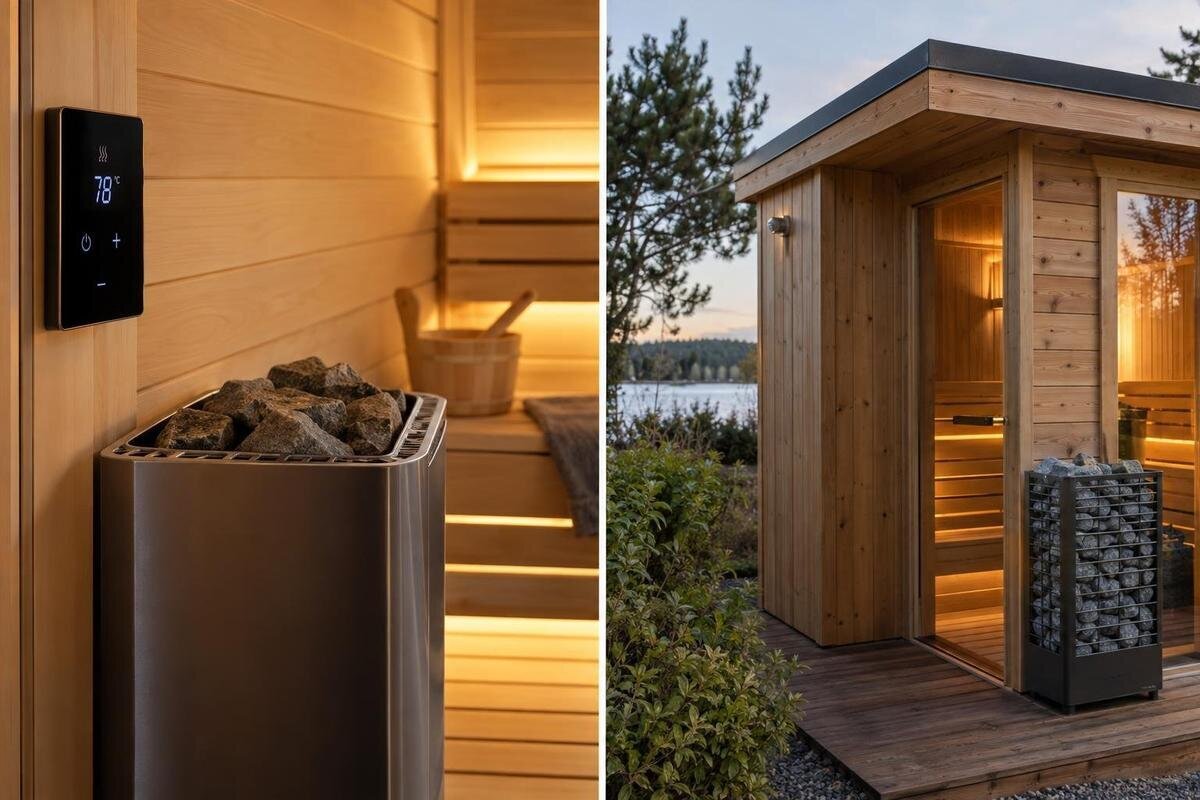
Choosing a sauna for daily sessions or occasional weekend use is not a matter of matching a frequency label to a particular heater or size. The pattern changes how often you repeat the practical jobs: getting ready, starting the heater, using the controls, cleaning up and keeping up with maintenance. A weekend session may allow more time for preparation; everyday use makes small delays and awkward access more noticeable. Neither pattern is automatically better. Map the users and timetable first, then check the exact sauna and heater documents for the setup, operating and maintenance details that will shape your routine.
Before choosing 1
How frequency changes the buying brief
Daily use is easiest to assess by looking at the repeated sequence, not by imagining an ideal week. Who is likely to start the sauna, at what time, and what needs to be ready first? If it has to fit between work, school or other household routines, a confusing control, a cold walk to collect towels or an awkward place to change can matter more than a feature used occasionally. Weekend use may be more flexible: there could be time to prepare, clean afterwards and leave the room unused between visits. Those patterns are not rules about what kind of sauna to buy. They change which inconveniences you are willing to repeat and which details deserve attention.
Write down a normal week and a busier one. Include likely users, whether sessions will be planned or spontaneous, and who will prepare and clean up the space. Note constraints such as a fixed evening window, shared controls or carrying items along an exposed path. Identify the task that would be most inconvenient if repeated frequently; for occasional use, note what could disrupt a planned visit if overlooked. When considering the Thermowood Barrel Sauna HC-225 listing, turn those observations into specific buying questions. For example, distinguish essential requirements for your weekday routine from conveniences that would simply be welcome when you have more time.
Allow time for the whole session
Work backwards from when you want to begin, but keep the timetable realistic. Account for the exact heater’s documented start-up process, then leave space to collect towels, water and other personal items, change and make the trip to the sauna. Do not put a generic warm-up figure into a weekday schedule: starting conditions and the installed heater affect timing, and the product configuration matters. A trial run after installation gives a better picture than a broad estimate, provided you follow the manufacturer’s operating instructions. If the morning or evening window has no slack, a routine that depends on arriving at precisely the right moment may be difficult to maintain.
Weekend sessions can be scheduled with a buffer, but preparation includes the end of the visit as well: time to tidy, return used towels and leave the space as the manufacturer recommends. Decide where everyday supplies will live so nobody has to hunt for them, while keeping access clear and following instructions about the heater area. If another person may operate the sauna, make sure they understand the documented sequence. When reviewing the Sauna N-210 product page, use the matching documentation to plan start-up; do not infer a warm-up time or included control from a model label. That keeps the timetable grounded in the actual equipment.
Before choosing 2
Choose controls that are clear to regular users
Control convenience matters more when the same sequence is repeated. Check where the controls are, whether the labels and feedback are clear to the intended users, and whether a new user can follow the documented steps without guessing. Treat a wall control, preset, timer or connected function as available only if it is confirmed for the exact heater and sauna configuration; a photograph or general product description is not proof. Do not assume remote starting is offered or appropriate. Confirm operating restrictions and any required safety features in the heater maker’s instructions, and have electrical work assessed by a qualified professional.
Households with different users should agree who starts the heater, changes settings and shuts the system down, and where the instructions will be kept. If you expect weekend guests, a clear explanation of the controls may matter more than extra functions; with frequent use, a confusing menu can become a recurring nuisance. For Sauna N-250, compare the controls specified for the exact configuration with the tasks each user will perform. Ask how operating status is displayed and how users know the system has been switched off. These questions make convenience easier to assess than a list of functions alone.
Plan the route and usable sauna space
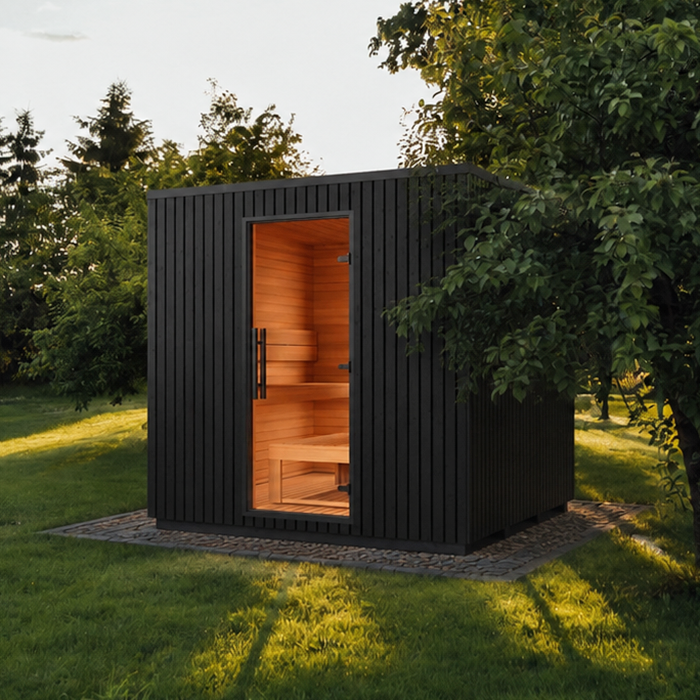
An outdoor sauna has to fit into the route people use before and after a session, not only onto a patch of ground. Consider access in wet weather, privacy, lighting, a place to change or keep dry items, and where used towels will go. Check that the approach remains practical for everyone who will use it, including when they are carrying supplies. The proposed position should also allow the installer and future service person access. Site, foundation, drainage and electrical requirements depend on the exact model and property; use manufacturer drawings and have site work assessed by qualified tradespeople rather than extrapolating from a product photograph.
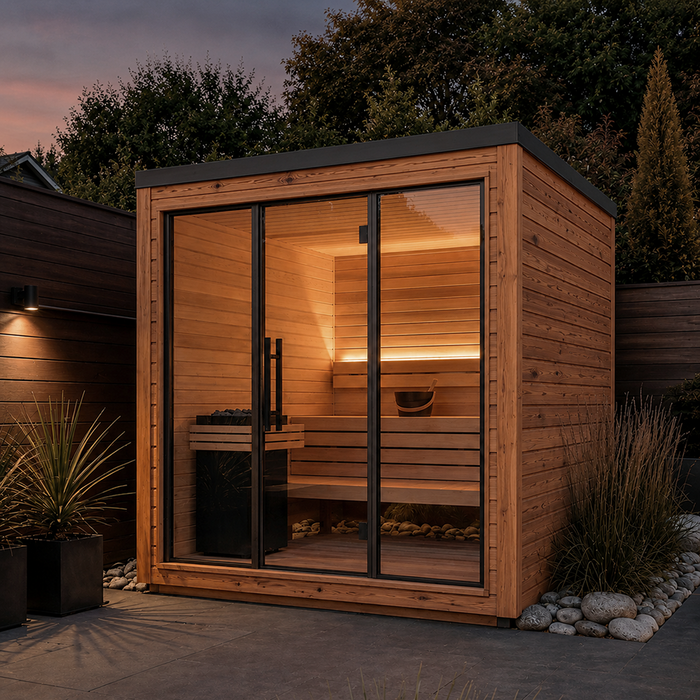
Inside, compare the actual drawing: door swing, bench arrangement, headroom and the space needed to enter and move without shifting stored items. A listed area figure is a useful screening detail, not a promise about seat count, usable bench length or comfort. For example, the LC-260 barrel sauna listing shows 5.12 m²; that number alone does not describe the layout or how much room your household needs. Check that the drawing depicts the option being sold, then confirm dimensions and occupancy guidance before committing to a site or building a routine around it.
Before choosing 3
Match sauna capacity to the number of users
Frequency and occupancy are related but not interchangeable. A sauna used most days by one person has a different pattern from one used at weekends by a household or guests, yet session count alone cannot establish the room’s suitable capacity. List the usual number of people and the maximum you genuinely expect to use it together, then compare those figures with the manufacturer’s occupancy and layout information. If the busiest session is rare, decide whether it is worth planning around; if shared use is routine, make sure the route, changing space and clean-up arrangements work for everyone. This avoids choosing for an imagined crowd rather than actual habits.
The HCF-300 listing shows 6.89 m², which is a starting point for comparing space, not a stated seating capacity. Use its official layout and occupancy information to assess your usual group. Consider whether everyone expects to use the sauna together or whether separate sessions would genuinely suit their plans. Do not assume guests will be happy to take turns if the main reason for buying is shared weekend use. Equally, occasional visitors need not determine the whole purchase if the sauna will mainly serve a smaller household. Make that choice explicitly rather than allowing the largest imagined gathering to set every requirement.
Confirm the heater and installation details
Regular use makes clear operating and service information valuable, but it does not justify guessing at heater size or electrical requirements. Ask which heater and control are included in the exact sauna configuration, what the manufacturer requires for installation, and which qualified professional will check the site and connection. The heater maker’s sizing and operating guidance applies to the particular room and its specified equipment, not simply to whether you expect daily or weekend sessions. Do not calculate a heater choice from a generic rule or modify electrical components yourself. Have installation requirements and compatibility confirmed by a qualified professional before ordering.
Also establish what is supplied separately and what the installation work covers. For Sauna LCF-300, request a clear breakdown of the sauna, heater, control and installation so you can distinguish the product package from work arranged separately. Record who is responsible for each part and where questions should go if the proposed configuration changes. This is particularly useful when the retailer supplies the sauna but another professional handles site work or the connection. Before agreeing to the order, resolve any gaps between those responsibilities so that an essential task is not left for the household to arrange unexpectedly.
Before choosing 4
Make cleaning manageable between sessions
Cleaning frequency should follow the maker’s care instructions and the way the sauna is used, not a one-size-fits-all timetable. With frequent sessions, make the reset straightforward: remove used towels, clear personal items and deal with visible moisture or dirt in the way the manufacturer recommends. For a weekend visit, plan the same reset at the end rather than leaving it for the next session. What can be wiped, brushed or rinsed depends on the surface and finish, so avoid choosing a cleaner or treatment based on a generic sauna tip. Check the manual before applying water or products to any surface.
Access affects whether the routine is realistic. Check that the doorway and available floor space let you remove towels and reach the surfaces the manual says to clean. Before choosing the Sauna S-140 listing or another option, compare the layout with those cleaning tasks. Decide where supplies can be stored without interfering with normal operation, and where used towels will be collected. For consecutive-day use, include washing and replacing towels in the household routine rather than considering only the sauna itself. If several people share cleaning, keep the permitted method and products clearly noted so that everyone follows the same approach.
Follow a maintenance plan for the actual model
Cleaning after a session is not the same as periodic maintenance. Keep the manufacturer’s schedule for the heater and sauna, and note how often the room is used so you can follow any use-based tasks it specifies. Record unusual changes such as visible damage or controls behaving differently, then consult the instructions or a qualified service professional instead of attempting an electrical repair. Do not invent inspection intervals from session count: the task and timing depend on the particular heater, sauna and environment. Keep the manual accessible to everyone who may be responsible for routine checks.
For occasional use, include any manufacturer-required checks after an idle period in the plan for returning to the sauna. Keep the sauna, heater and installation documents together, along with a simple record of completed maintenance and any unresolved concerns. This makes it easier for different household members to see what has already been done without relying on memory. For the HC-150 model page, confirm who can provide manufacturer-recommended servicing or parts if needed later. Separate tasks the owner is instructed to carry out from work requiring a service professional, and keep the relevant contact details with the maintenance record.
Before choosing 5
Compare the routine as well as the product details
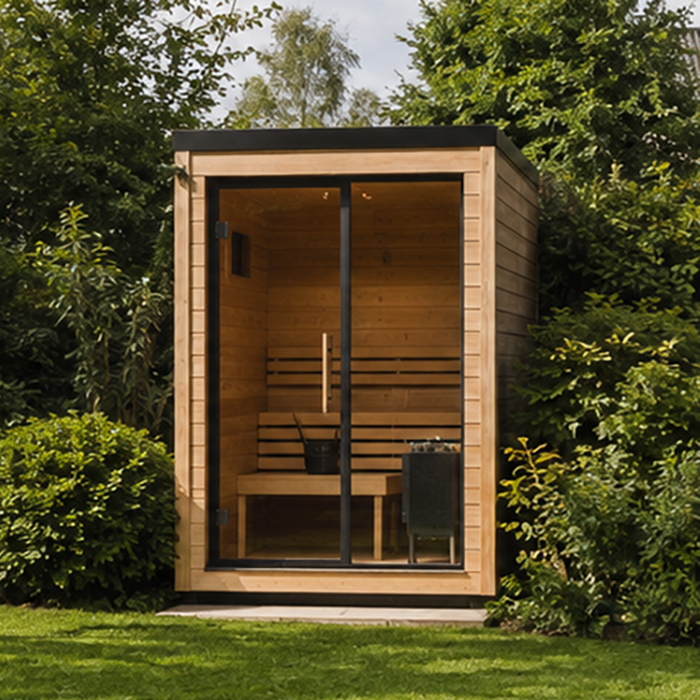
Once you know how often and by whom the sauna will be used, compare candidate listings and documents against the same questions: stated dimensions and occupancy, heater and control details, start-up instructions, cleaning directions, care tasks, and access for installation and service. Separate confirmed facts from points still to ask. A photograph can help you picture the style, but it cannot establish a control feature, bench layout or care requirement. If one listing states a detail and another does not, treat the gap as a question to resolve rather than assuming the second model is identical. A short comparison sheet can help keep those questions visible.
Then give each comparison point an appropriate priority. An essential requirement is something the purchase must meet, such as accommodating the usual group within the stated capacity; a preference is something you could compromise on. For everyday use, control clarity or convenient access may carry more weight than an extra function. For a planned Saturday session, preparation and changing arrangements may matter more. Compare complete configurations on that basis rather than letting the longest feature list decide. Where an answer is still missing, record how much it affects the choice: a minor preference can remain open, but an essential requirement needs a clear answer.
Allow for changes in household routines
A sauna bought for weekend use may later become part of a weekday routine, while an expected daily habit may settle into less frequent sessions. Consider both possibilities without buying for every imagined future. Ask whether the access, preparation and cleaning arrangements would still be manageable if sessions became more frequent. If use became occasional, consider who would keep track of care tasks between visits. The aim is to identify arrangements that depend too heavily on the original schedule, such as one person always being home to prepare the sauna, rather than to predict exactly how often the household will use it.
Distinguish changes to household organisation from changes to the equipment. Moving towel storage or sharing cleaning duties is a different decision from replacing a heater or adding a control function. Do not assume the system can be altered or upgraded; verify any proposed equipment changes with the maker and installer. If a future feature is essential to your purchase, establish its compatibility now rather than treating it as an easy addition later. Otherwise, judge the sauna on the configuration you are actually buying. A plan that works with the confirmed setup is more useful than one that depends on an uncertain upgrade.
Common questions
Does daily use require a different sauna from occasional use?
Not automatically. Frequency changes how valuable simple preparation, clear controls and easy cleaning may be, but it does not establish the right size, heater or configuration. Base those choices on the intended users and site, then check the documented requirements for the exact model.
Is remote control necessary for a daily sauna routine?
No. Consider a remote function only if it is documented for the exact heater, compatible with the installation and used within the manufacturer’s instructions. Do not assume it is included or suitable just because it appears in a general description or photograph.
What cleaning routine suits a sauna used most days?
Make cleaning up practical: remove used towels and personal items, then follow the manual for cleaning and drying surfaces. The method depends on the finish and equipment. More sessions mean these tasks recur more often, but frequency alone does not determine which cleaner or treatment is appropriate.
Is the listed area enough to decide how many people a sauna will hold?
No. An area figure does not show bench lengths, the seating arrangement or the manufacturer’s occupancy guidance. Use the official drawing and capacity information for the exact configuration, then compare those details with the number of people likely to use it together.
What should I check before using a sauna after a long break?
Follow the manufacturer’s instructions for restarting or checking that sauna and heater. If the instructions or the equipment’s condition raise a concern, consult a qualified service professional. There is no universal checklist for every model, so do not substitute another model’s manual.
Daily use calls for preparation, controls, cleaning and maintenance that fit comfortably into an ordinary day. Occasional weekend use may allow more time to get ready, but cleaning up afterwards still needs a place in the plan. Choose around the people who will actually share the sauna and the tasks someone will reliably carry out. Frequency helps you weigh those priorities; it does not replace the model’s specifications. The best fit is a confirmed setup whose routine you are willing to repeat, whether that means most evenings or a planned weekend session.
