
Moving House with an Outdoor Sauna: What to Confirm
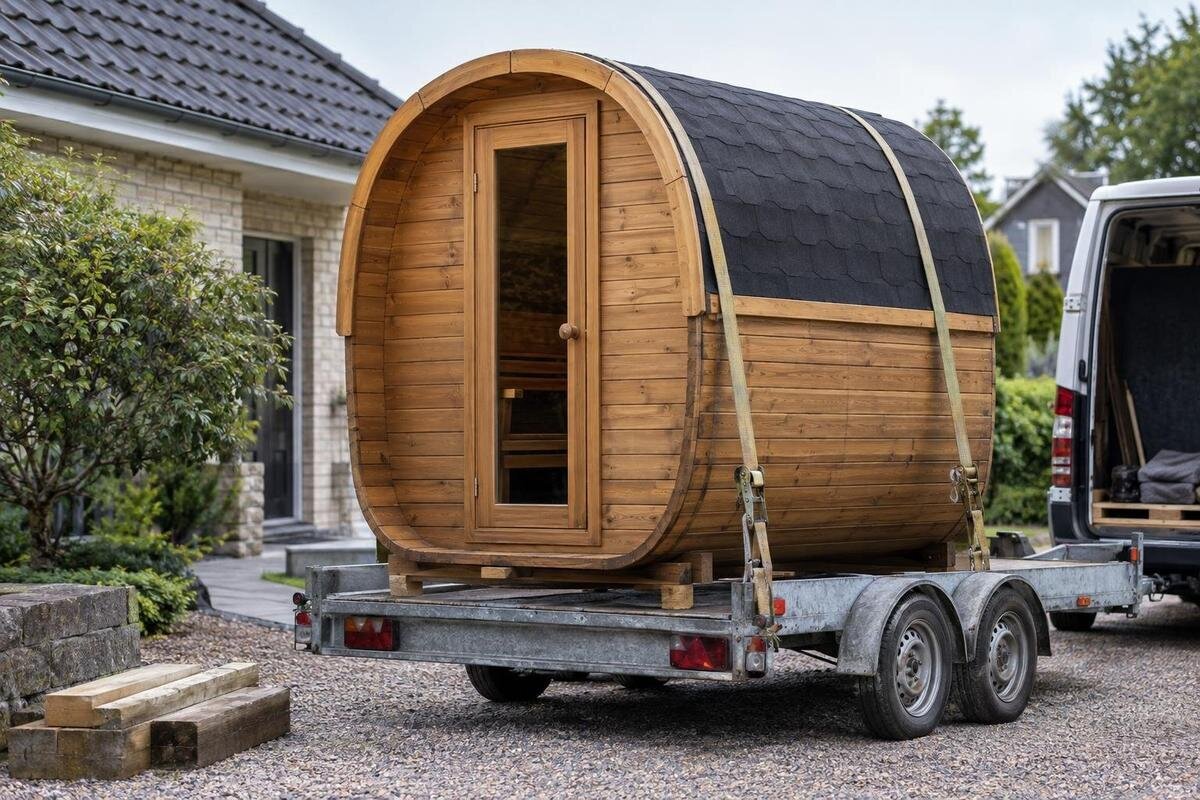
Outdoor sauna relocation
Moving house doesn’t automatically mean an outdoor sauna can go too. The answer depends on the exact model, how it was assembled, its present condition and what the manufacturer permits. A sauna that can be lifted out of one garden isn’t necessarily approved for dismantling, transport or reinstallation. Before booking removal, get model-specific guidance, arrange an assessment of the lifting route and transport, and confirm that the new site and any required services can meet the installation instructions. Treat each as a separate check: a successful trip alone doesn’t prove the sauna is ready to use.

Can an outdoor sauna move to a new property?
Sometimes, but the answer depends on the exact model and the manufacturer’s relocation rules. An outdoor sauna may have been assembled from components at the property, or installed in a way that must remain intact; its appearance doesn’t tell you whether it can be dismantled or moved as one unit. Being physically liftable doesn’t prove that its structure, joints, heater or connections can tolerate transport and be put back into service. The manufacturer may approve a particular method, require an approved installer or advise against relocation. It may also distinguish between an original delivery and a second move after installation, so ask specifically about relocation.
Get the manufacturer’s written answer before booking removal, and make sure it covers your actual configuration and condition. A moving company’s quote means it is prepared to price the job, not that the sauna is approved for lifting, rebuilding or use at another property. If you’re comparing a product listing such as Sauna N-250, use the name to identify the model, not as evidence that it can be relocated. Ask whether approval covers removal and reinstallation at the new site, and record any conditions on who does the work, what equipment is needed and what inspection follows. If a condition is impractical, resolve it before the move date.
Identify the exact sauna and its instructions
Gather the purchase record, original assembly or installation manual, model and serial or identification number, drawings and service history. Photograph the identification plate and the sauna as it stands, including the heater and any visible additions. Record repairs, replacement components, changes made since purchase, and who assembled or serviced it. If you bought it second-hand, ask the previous owner for these records and any history of earlier moves. A broad description such as “barrel sauna” isn’t enough to match instructions; visually similar versions can have different handling requirements. Note gaps in the paperwork instead of filling them from memory.
Send those details to the manufacturer or an authorised service provider and ask them to confirm which instructions apply. A listing for Sauna LC-260 can help you recognise a model name, but it can’t identify every option or later alteration on an individual unit. Ask whether the relocation guidance covers your exact sauna and heater arrangement, and what information or inspection the manufacturer needs before approving a method. Confirm whether added fittings change the instructions. Keep the reply with the manual and share it with the people responsible for dismantling, transport and installation; conflicting advice should be resolved before work starts.
Confirm what may be dismantled
A sauna supplied in kit form may have been designed for assembly once, not repeated dismantling. Joints, seals, cladding, glazing or installed equipment can be affected by undoing them, and parts that look removable aren’t necessarily approved for removal. Equally, if the manufacturer requires the unit to stay assembled, splitting it to fit through a narrow gate may not be acceptable. Don’t infer the permitted method from a photograph, product name or video of a different sauna. Relocation instructions should specify whether the unit moves whole or in sections and which parts must stay attached.
Ask for written instructions that identify the work sequence, who should carry it out, any special tools or support, how removed parts should be labelled, and whether components or fasteners need replacement. If you own a Sauna HCF-300, include that model name and your unit’s identification details in the request so the manufacturer can match the instructions to it. Clarify whether heater, electrical or fuel components are within the sauna installer’s role or require a separate qualified service person. Don’t disconnect equipment or undo structural joints without that guidance. If the manufacturer won’t confirm an approved method, stop and reassess rather than asking a crew to improvise.
Agree on the lifting method and access
Once a method is approved, the lifting contractor needs information for that exact installed unit. Ask the manufacturer for verified dimensions and weight, approved lift points or a handling frame, any sections that must be removed, and limits on how the sauna can be supported. Don’t estimate these from its shape or use a generic lifting plan. The manufacturer sets the technical handling constraints; a suitably qualified lifting contractor assesses the job and plans the lift. Clarify who will prepare the sauna, provide any required handling equipment and supervise the removal, so different contractors aren’t working from conflicting assumptions.
Walk the route at both homes with the contractor. Include gates, turns, steps or changes in level, overhead and side obstructions, ground conditions, and space for the vehicle and lifting equipment. Photos and measurements help with an early check, but may not replace an on-site assessment. When planning a move for a Sauna LCF-300, give the contractor the model details alongside current manufacturer documents showing the unit’s weight and approved handling method. Have the contractor confirm any specialist vehicle, access limits and site arrangements before booking. If access is uncertain at either end, resolve that before removal rather than on the day.

Check the sauna’s condition before removal
Record the sauna’s condition before anything is removed. Photograph all sides, doors, glazing, interior surfaces, visible joints, heater area and base. Note existing movement, cracks, water entry, decay, corrosion or other damage, along with repairs, water exposure and previous alterations. These records help distinguish pre-existing issues from damage during handling, but photographs can’t certify that a structure is suitable to move. Give the manufacturer or installer an honest account of what you’ve found; a history of repairs or changes may matter when they assess the proposed method.
Ask the manufacturer or a suitable sauna installer to assess visible damage or instability before lifting. They can advise whether repair is needed first, whether the proposed move is still permitted and what to inspect after transport. For a Sauna S-140, as for any existing sauna, provide the unit’s condition records alongside its model details so the assessment concerns the sauna you actually own. If a specialist can’t confirm that it is suitable for the proposed handling, postpone the move until they give clear advice. Keep the before-and-after photos and inspection notes with your service records, and make sure the lifting contractor knows about any issue that could affect handling.
Protect the sauna during transport
Agree how the sauna and every removed part will be packed, kept together and protected in transit. Ask the manufacturer whether components need a particular orientation or protection; don’t devise a method for fragile or structural items by judging their appearance. Make an inventory and photograph parts as they’re packed. Label them using an agreed system and keep small fittings in identified containers that travel with the unit. Tell the crew which items belong together and whether any parts need separate handling. If the route includes temporary storage, check how the packed components will be kept secure and protected until delivery.
Confirm the transport provider’s written scope: loading, packing, transit, unloading, temporary storage and placement may involve different people. Ask who is responsible if a component is lost or damaged, how concerns should be recorded on delivery, and whether the provider’s cover includes the sauna and separately packed parts. If you’re arranging transport for a Sauna HC-150, share the manufacturer’s packing instructions with the provider and confirm which packing tasks are included in the quote. Check that the destination will be ready when the sauna arrives, so it isn’t left exposed or stored somewhere unsuitable while other work is completed.
Ask how relocation affects warranty and support
Don’t assume that a move automatically cancels a warranty or leaves it unchanged. The manufacturer’s terms may distinguish between owner-performed work, authorised dismantling, transport damage, repairs and installation by an approved provider. Ask whether moving this unit to another property changes cover, whether a change of owner matters, and whether the heater or other components have separate terms. If you own a Sauna HC-225, identify it by model and serial number when asking for a written answer. Explain the proposed relocation method and who will do the work, so the response addresses your actual move rather than a general enquiry.
Separate warranty status from technical support. Even where a move is allowed, the manufacturer may specify inspections, recommissioning or service records before the sauna is used again. Ask who records each stage, which documents to retain and whether a suitable installer is available at the new address. Save dated emails, invoices, condition photographs and contractor details. If the manufacturer gives a conditional answer, check that your removal and installation bookings can meet every condition. Resolve any uncertainty before dismantling begins, as changing the plan afterwards may be harder.
Prepare the new site and services
Treat the new property as a fresh installation, not a copy of the old one. Request the current manufacturer drawing and site instructions for the exact unit, if available, then compare them with the proposed position, access route and prepared base. Check the stated footprint, support, drainage and clearances against the maker’s guidance; don’t rely on the old base or assume a garden surface is suitable. Consider access to the door and to areas needed for installation or maintenance. If the base or site suitability is uncertain, have an appropriate builder, installer or other qualified professional assess it against the documents rather than estimating structural requirements yourself.
Confirm the sauna’s actual heating system and service requirements before it leaves the old address. A fixed electrical connection, fuel supply or other service may need separate disconnection, inspection or new work; arrangements vary, so don’t assume an existing connection can be reused. Use a qualified electrician or relevant service professional for work on installed services, and ask the manufacturer who is responsible for reconnection and checks. For a Sauna N-210, give those professionals the model-specific instructions and details of the equipment fitted to your unit when discussing the new site. Don’t schedule delivery until the installation plan and required tradespeople are in place.

Plan reassembly and inspection
Reassembly should follow the manufacturer’s instructions and be done by the people it specifies, where approval is required. Before unloading, confirm that the receiving location is accessible and the prepared base is ready. Have the installer check that all components and fixings arrived, identify anything damaged in transit and document any deviation from the instructions. A sauna can look complete while a connection, seal, alignment or service remains unresolved, so don’t treat appearance alone as sign-off. If a part is missing or a fit is uncertain, stop and seek advice rather than substituting hardware or forcing components together.
Ask in advance what post-move inspections are required and who is responsible for each one, including any heater, electrical or fuel-system checks by an appropriately qualified person. Confirm what should be recorded before the sauna is used again, and keep the installer’s notes, service records and dated photographs with the manual. Reinstallation is separate from removal: the first contractor may not be qualified to recommission equipment, and the manufacturer may require evidence from another specialist. Return the sauna to service only when the required checks are complete and identified issues have been resolved.
Compare the full move with other options
Moving may make sense when the manufacturer supports a clear method, the sauna is in suitable condition, both properties are accessible and the required services are available. Compare the complete work, not just the truck journey: assessment, approved dismantling, specialist lifting, packing, transport, storage if needed, repairs, base preparation, reconnection and reinstallation can all be separate parts of the job. Ask contractors to state their roles and exclusions in writing, so a removal-only quote isn’t mistaken for the cost of a working sauna at the new address. Time without use and possible replacement parts belong in the comparison too.
Make the decision before the moving date, using the written relocation guidance, condition assessment, confirmed lifting and access plan, destination readiness, service bookings and warranty answer. If a key detail is still unknown, delay removal rather than leaving the crew to decide on site. If the manufacturer can’t approve the proposed method or the logistics don’t work, compare leaving or selling the sauna at the old property, where arrangements permit, with installing another unit at the new home. Compare what each option involves through to a usable sauna, rather than treating successful loading and transport as the measure of a worthwhile move.
Frequently asked questions
Can I move an outdoor sauna in one piece?
Possibly, but only if the manufacturer approves that method for your exact model and installed configuration. The lifting contractor also needs the relevant handling information and must confirm access at both properties. Don’t assume a sauna is suitable for a single lift because it looks compact or a similar one has been moved.
Can any barrel sauna be dismantled and rebuilt?
No. A barrel shape or kit-style appearance doesn’t prove that an installed sauna is designed to be taken apart and reused. Follow the manufacturer’s instructions for the exact model and version, and check who should do the work and what inspection is needed afterwards. If the instructions are missing, don’t improvise.
Will moving the sauna void its warranty?
There’s no universal answer. Terms may distinguish between approved relocation, unauthorised dismantling, transport damage and reinstallation by different providers. Ask the manufacturer about your specific unit before work starts, including whether cover continues at a new address and what inspections or records are required. Keep the answer in writing.
Should an electrician disconnect and reconnect the sauna?
If the sauna has fixed electrical connections, ask a qualified electrician to assess and handle disconnection and reconnection as needed. Confirm with the manufacturer whether the heater or other components require a separate service provider. Don’t assume the existing connection can be reused, and don’t attempt electrical work yourself.
When should I arrange a relocation assessment?
Before booking removal or transport, and early enough to resolve questions about documentation, access, site preparation and services. This gives the manufacturer, lifting contractor and installer time to assess their parts of the job. There’s no fixed lead time that suits every move; the route and required approvals determine the schedule.
An outdoor sauna can move house only when its instructions, condition and logistics support the proposed method. Confirm manufacturer guidance, lifting and transport arrangements, the new site, service work and any warranty conditions before removal; then assign reassembly and inspection to the people qualified to do them. If a key answer is missing, pause and resolve it. The goal isn’t simply to get the sauna to the new property, but to have it properly reinstalled and ready for use.
