
Choosing Interior Timber for Sauna Benches and Backrests
SAUNA INTERIOR GUIDE
Bench and backrest timber deserves a separate specification from a sauna's outer structure. These are the surfaces you sit on or lean against, so the useful questions concern the exact species or timber description, how the boards are finished, how the components are assembled and what the maker says about cleaning and upkeep. A label such as Thermowood for exterior timber does not, by itself, confirm the material or finish of the interior seating. This guide explains what to ask for and how to compare the answers without guessing from a product photograph or model name.
What to confirm before you buy 1
Benches and backrests need their own material details
Treat the interior as a set of components, rather than assuming one timber description covers everything. A bench can include the slats you sit on, side rails, supports and fixings; a backrest has its own contact boards and supporting pieces. The visible slats may not be the only wood in the assembly, and the backrest may not match the seat. Ask for a parts list or drawing that names each component and states which material description applies to it. The drawing should distinguish items actually supplied from pieces mentioned only as part of a general assembly description. If the documents say only wooden benches, record the species and finish as unconfirmed.
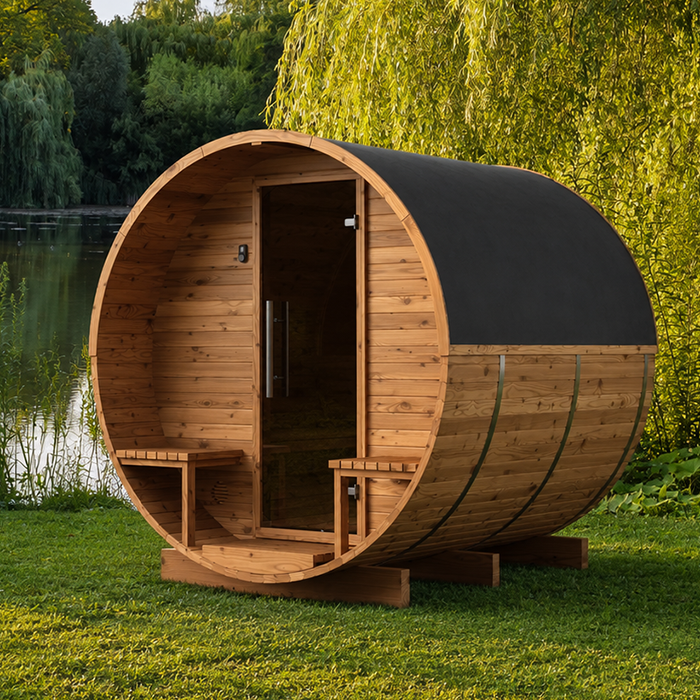
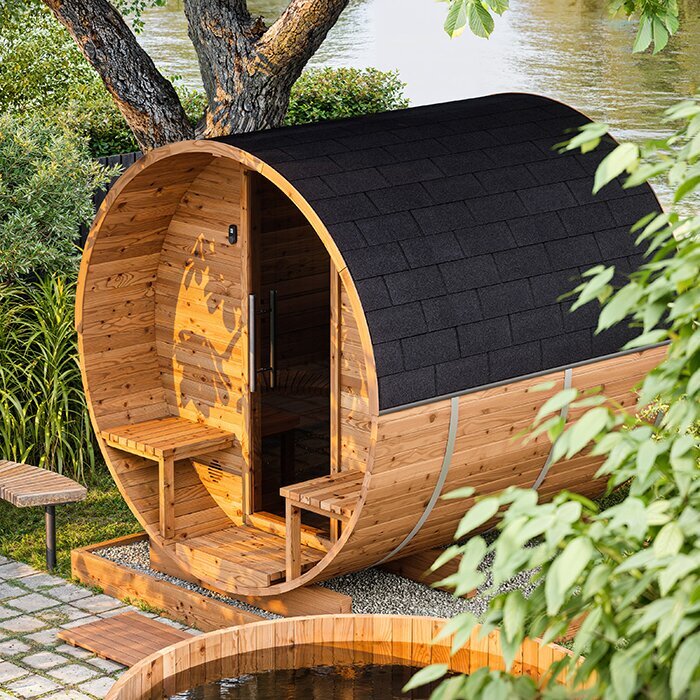
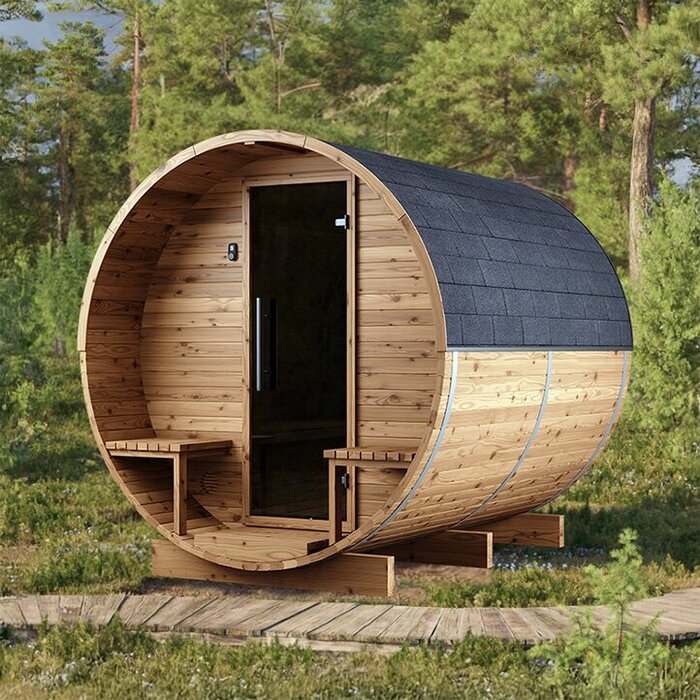
Match that component list to the exact model and configuration. The catalogue entry for Sauna LC-260 identifies a Thermowood barrel sauna, but that wording does not identify the timber or finish on its bench and backrest. Establish which seating and backrest components are included in the version you intend to order, and distinguish those inclusions from any optional pieces shown in general illustrations. If several configurations are offered, keep their interior specifications separate rather than combining details from different versions. This gives you a defined set of supplied parts to assess before comparing individual materials.
Ask for the timber species and component coverage
Ask the supplier to name the wood used on each exposed surface, rather than relying on a general term such as timber or natural wood. Where a species or commercial name is given, clarify whether it applies to the seat, backrest and supports alike, or only to selected boards. A material schedule is more useful when it distinguishes contact surfaces from hidden framing and lists any alternatives for different configurations. If the answer uses a trade or general name, ask for a more precise description and whether the supplier can confirm an exact species. If that detail is unavailable, record it as unknown rather than treating it as confirmed.
For Sauna HCF-300, ask for the current interior timber list with the species or commercial name beside each component. An answer naming the bench slats still leaves the backrest and supports to be identified; an answer describing all seating as timber leaves the material itself unclear. Where alternatives are listed, establish which material belongs to the configuration you are considering and whether a choice is included or optional. Keep the supplier's wording in your notes, including any qualifications, rather than shortening a partly specified assembly to a single timber name. Save the reply with the order documents for later reference.
What to confirm before you buy 2
Inspect the surfaces, edges and sanding
Species is only part of how a surface feels. The finish, sanding and shape of the board edges affect what you notice when sitting against the bench or leaning on the backrest. If you can inspect a sample or display, look closely at the contact faces and ends for rough patches, raised fibres, splinters, sharp corners, prominent knots or uneven sanding. These observations help you ask better questions; a small sample does not prove every installed board will look identical. Ask whether the sample matches the ordered finish and whether that surface preparation is included in the specification.
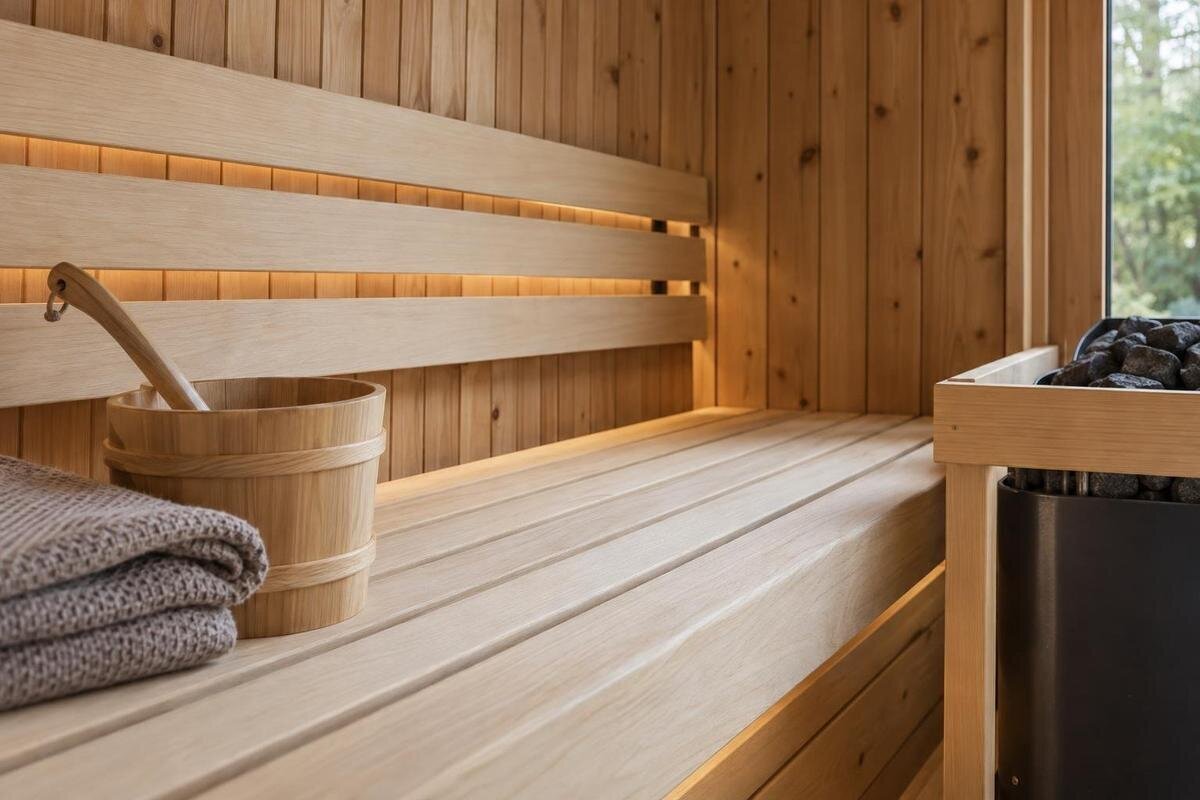
With Sauna LCF-300, request an interior drawing or a sample identified for the model and chosen configuration, if one is available. Check the backrest surface as carefully as the seat: an attractive bench photograph may not show the board edges or the finish on a separate component. If you cannot view the product, ask the seller to describe sanding and edge treatment in writing, and clarify which details are specified and which may vary in appearance. A picture is useful for seeing the overall look, but it cannot confirm the timber or finish.
Confirm exactly what finish is applied
Ask whether the bench and backrest timber is supplied without a coating or treated with a named product, and record surface preparation such as sanding separately. If a coating is applied, confirm which components receive it, who applies it and whether the sauna manufacturer approves that exact finish for interior contact surfaces exposed to heat and moisture. Natural, sealed or oiled is not a complete specification: those words do not identify the product or its maintenance requirements. Do not substitute furniture polish, household oil or exterior timber stain based on a generic label; follow written instructions for the sauna and the surfaces in question.
The product information for Sauna S-140 identifies a Thermowood barrel sauna; that description does not state the bench finish. Ask for separate details for the exterior timber and the seating and backrest surfaces. If a finish choice is offered, request its exact name and care guidance before deciding. If no finish is listed, do not interpret the omission as proof that the timber is untreated. Have the supplier confirm what will arrive, including whether the seat and backrest receive the same treatment.
What to confirm before you buy 3
Get cleaning instructions for the interior timber
Before comparing options, read the maker's instructions for cleaning the seat and backrest, not just general care for the sauna exterior. Ask what should be done after use, whether the surfaces should be wiped or left to dry, which cleaners are permitted and which should be avoided, and whether water should be used sparingly. Do not build a routine from advice for a different timber or finish. If the instructions refer only to the cabin interior as a whole, check whether they also cover the bench boards and any coated surfaces. Specific directions are more useful than a broad claim that timber is easy to maintain.
When enquiring about Sauna HC-150, ask how its care directions apply to the supplied bench and backrest materials and finish. If you plan to use towels on the seat, check how the maker expects moisture beneath them to be managed; a cover does not replace care of the timber itself. Distinguish the routine after-use clean from the response to marks, residue or damp patches, so you know which instructions apply in each case. Keep the manual accessible to everyone using the sauna. A shared routine is easier to follow when it clearly separates cleaning the contact surfaces from leaving them ready to dry.
Plan for drying and changes in moisture
Timber can respond to changes in moisture, so care advice should explain how the interior is expected to dry after use. Ask whether the bench and backrest should be left in place or can be moved for cleaning, whether there are areas where moisture may collect, and how the maker recommends airing the surfaces. Board spacing, joints and the arrangement beneath a seat affect access for cleaning, but do not alter them to create a gap or drainage route without approved instructions. The aim is to understand the supplied design and its care requirements, not to redesign it.
For Sauna HC-225, focus your questions on access around and beneath the seating when reviewing the interior-care instructions. If the manual identifies removable boards, check the stated removal method and which surfaces become accessible; if it does not, do not assume the assembly is designed to be taken apart. Ask how areas that remain concealed should be cared for and whether the drying guidance covers the backrest as well as the seat. This helps you understand the practical routine for the supplied arrangement, including any parts that must stay in place, without treating a general instruction to dry the interior as a complete explanation.
What to confirm before you buy 4
Understand repair and replacement options
Benches receive repeated contact and are among the surfaces you will notice during routine cleaning. Ask how the manufacturer says to handle roughened areas, stains, damaged edges or a board that becomes loose. Request identifiers for replacement slats or backrest boards, if these are separately replaceable, and confirm whether maintenance is intended to be done by the owner or a service provider. Do not sand, oil or alter a fitted part because a general timber guide recommends it; a repair may change the finish or conflict with the product instructions. Ask what to do if a surface becomes uncomfortable or difficult to clean.
Before committing to Sauna N-210, ask which bench and backrest parts are listed as replaceable and how to identify the correct part for that model. The model name alone is not a parts list, and similar-looking boards should not be assumed interchangeable. A useful answer specifies the part, any finish it needs and the permitted replacement or repair procedure. If the manufacturer does not provide that information, record the uncertainty rather than assuming a repair will be simple or a replacement will match.
Compare the seat and backrest surfaces separately
Seat boards and backrest boards meet the body in different ways, so assess them separately rather than treating bench timber as one comfort question. If a suitable display, sample or interior photograph is available, look at both contact surfaces and their edges. Consider whether the finish seems consistent, whether the backrest gaps or contours feel comfortable to you, and whether the visible boards match the materials named in the documents. A sample can help you judge colour and surface feel, but it cannot represent the full bench layout or confirm an unlisted species. Your own preferences are worth considering alongside the written specification.
If you are assessing Sauna N-250, distinguish your impressions of the timber surface from your impressions of the seating arrangement. A sample may help you judge smoothness and colour, but it cannot show how the fitted backrest supports you or how its board spacing feels. For that comparison, establish whether a display corresponds to the configuration you would order. Where an in-person check is not possible, use a labelled interior image or drawing to understand the arrangement and request written details of the board profile. Keep any questions about personal comfort separate from confirmed material details; a photograph cannot settle both.
What to confirm before you buy 5
Check the longer-term maintenance requirements
Routine cleaning and longer-term care of the surface finish are separate questions. Once you know what finish is supplied, ask whether it requires renewal and what the manufacturer's instructions say should trigger that work. The guidance may specify an interval or a visible condition; record whichever applies rather than inventing a schedule. Establish whether the same directions cover the seat and backrest, and whether any owner-applied treatment is permitted. A factory-applied finish does not automatically mean no future care, while an unfinished surface does not tell you which treatment to add. Keep these upkeep requirements separate from the procedures for repairing a damaged board.
Compare upkeep as well as appearance. An option may require no owner-applied coating under the stated instructions, while another may involve an approved surface treatment; do not infer either from a species name or a claim such as low maintenance. Ask what routine work involves, whether cleaning products are limited, and how a worn area should be restored so it matches the rest. If you have a preferred finish, get approval for the exact product before applying anything. Its suitability depends on the manufacturer's guidance and the timber it covers.
Record the details in a like-for-like comparison
Write a short comparison for each model or configuration: the named timber for the seat boards, backrest boards and supports; the finish on each; the cleaning and drying instructions; and any permitted repair or replacement route. Mark each answer as confirmed, optional or not specified. This keeps an exterior material, a supplier's broad description and an interior contact-surface specification separate in your notes. If a document lists only some parts, ask what applies to the rest rather than carrying the known detail across the whole assembly. Record the source of each answer, such as the manual or a written supplier reply.
Before ordering, confirm that the quote and manuals refer to the same model and options you selected, and that any finish choice is shown in writing. Save the materials schedule, answers about treatment and care instructions with your purchase documents. If the supplier cannot verify the bench or backrest wood, decide whether that uncertainty matters to you; you can also compare a configuration with clearer documentation. The point is not to choose a universally superior species, but to know what the contact surfaces are made of and how the manufacturer expects you to care for them.
Frequently asked questions
Does a Thermowood sauna have Thermowood benches?
Not necessarily. A Thermowood description for an exterior part does not confirm the species or finish of the bench and backrest. Ask for an interior parts list tied to the exact model, including its supports, and check whether the details change with the configuration you are considering.
Which timber is best for sauna benches and backrests?
There is no universally best choice based on a timber name alone. Compare the documented material, surface preparation, finish, how it feels to you and the maker's cleaning and repair guidance. The manufacturer should confirm what is used on the interior contact surfaces. If the description is vague, ask what it covers.
Should I oil or seal sauna bench timber?
Only use a finish if the sauna manufacturer confirms it is suitable for the specific interior surfaces. Ask for the product name, which parts it can be used on, and the instructions for application and future care. Do not assume a household oil or exterior timber product is appropriate.
How should I clean sauna bench and backrest timber?
Follow the care instructions for the materials and finish supplied with your sauna. Check which cleaners are permitted, how the surfaces should be dried, and what to do about marks or residue. Do not transfer cleaning advice for a different timber or coating without checking it applies.
Can I sand or replace the boards myself?
Do not assume that sanding or replacing boards is permitted. Ask which parts, if any, are replaceable, how to identify the correct replacement, and what repair or refinishing method the manufacturer allows. Avoid modifying a fitted part based only on general timber advice.
Bench and backrest timber is best judged from the parts actually supplied, not inferred from an exterior treatment or a broad product label. A written component list tells you what the surfaces are; a named finish and clear care instructions explain what you will need to maintain. If any detail remains unconfirmed, keep it visible in your comparison rather than choosing on an assumption. That gives you a fair basis for weighing feel, appearance and upkeep.
