
Compact Premium or Larger Basic Sauna: Budget Priorities
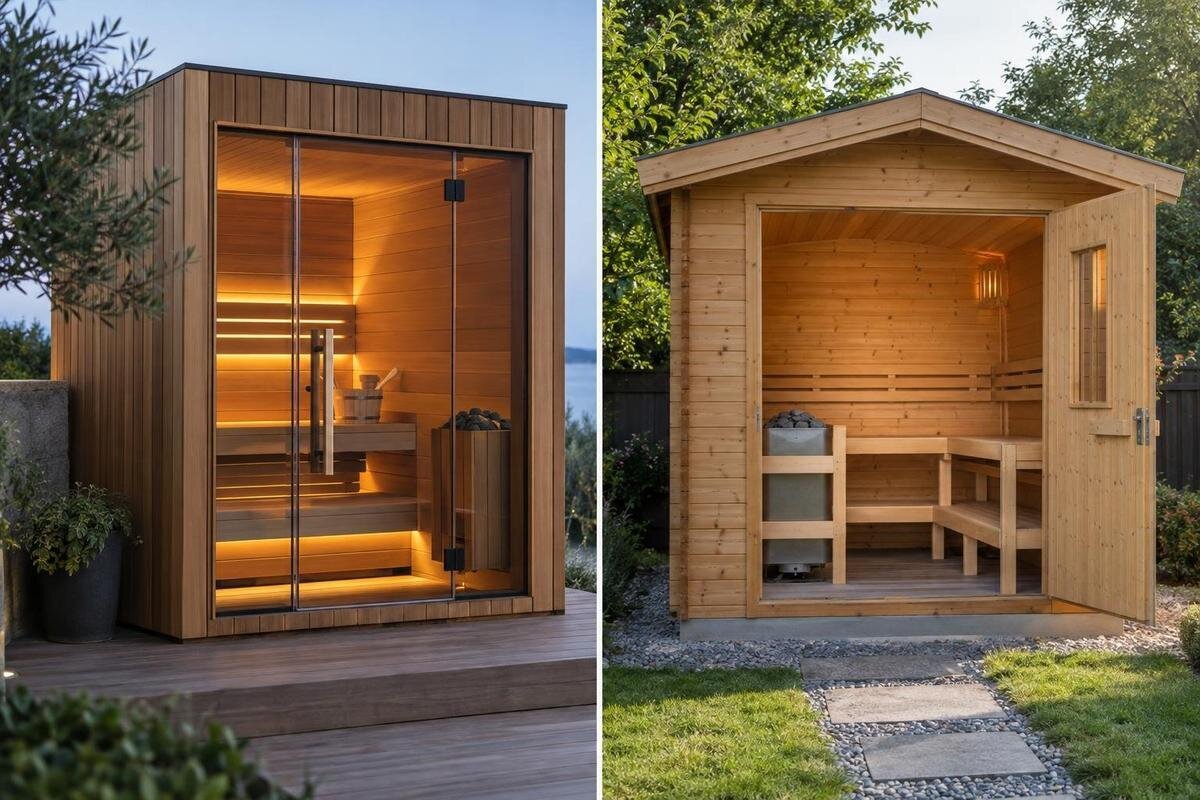
Sauna buying guide
With a fixed budget, the choice between a compact premium sauna and a larger basic one is not simply a contest between quality and space. Those labels are shorthand, not reliable specifications: a higher-priced option may include details you value, while a larger model may offer room you rarely use, but neither follows automatically from its label. Compare exact configurations and the cost of the complete project. The right allocation preserves your non-negotiable needs—fit, documented construction and comfort—while making a trade-off you can live with in ordinary use.
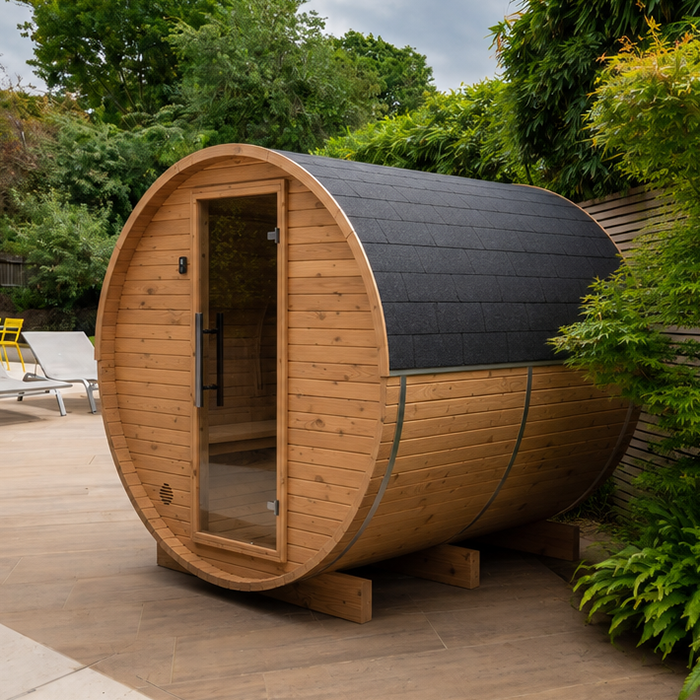
Set a total project ceiling before comparing cabins
Set a ceiling for the finished project, not just the sauna cabin. A product quote may or may not include a heater, controls, delivery, unloading, assembly or site work, so do not infer inclusions from its headline. Separate the sauna and chosen configuration from any base preparation, delivery access, installation and utility or electrical work where required. Record who is responsible for each task and obtain a written cost or estimate. The Sauna N-210 product listing records 4.43 m², which helps identify a candidate; it is not a quote for a complete installation or proof that the cabin is ready to use at the stated price.
Then distinguish costs that vary by configuration from those common to every choice. If a heater, controls, assembly or delivery is optional or quoted separately, price it before deciding how much to allocate to room size. Include comfort features only when they are part of your actual brief, rather than allowing a list of extras to inflate the comparison. Leave some headroom for costs that a site visit or final drawing may reveal. Separate one-off project costs from later operating and care costs, so a low entry quote does not look like better value simply because important items are missing.
Measure usable room, not just the listed area
Separate the space the sauna occupies on site from the space people can use inside. A catalogue area is a useful first comparison, but it may not define how the figure is measured or show the interior dimensions and bench arrangement. For example, the Sauna N-250 listing records 5.27 m². Treat that as a stated catalogue figure until the manufacturer’s drawing explains it; it is not, by itself, a confirmed seat count or proof that the benches suit your preferred posture. Ask for a plan showing the interior measurements and the position of seating, door and heater.
Check the drawing against the available site space. Allow for the approach, door opening and access needed for assembly or service, following the supplier’s instructions rather than guessing at clearances. Inside, note the bench length and depth, where each person can put their feet, and whether someone can enter or leave without disrupting others. A larger outline may still be poorly matched to your group if the layout does not provide the space you need. A compact plan may be adequate if its measured seating works. Do not turn square metres into a people-per-sauna calculation.
Size the room for the people who will use it
Write down the usual number of people at one time, then separately note the busiest session you expect occasionally. The first describes routine use; the second shows how much spare capacity you would actually pay for. Consider whether everyone prefers to sit upright or stretch out, whether the group varies in height, and whether solo sessions are more common than group visits. The Sauna LC-260 entry states an area of 5.12 m², but that number cannot tell you who will fit comfortably. The interior layout and bench measurements matter, so check those rather than relying on a model name or photograph.
Put a value on peak capacity instead of treating it as essential by default. If visitors join only occasionally, you may accept less spare room in exchange for a smaller cabin or another documented feature. If several people use the sauna together most weeks, cramped seating could become a regular compromise. Consider the space outside the sauna too: changing, storing towels or moving between the sauna and house may require an area that is not part of the product. Choose for the sessions you genuinely plan, rather than a theoretical maximum.
Look for evidence behind construction quality
Treat “premium” as a question: what specific construction detail is included, and can you see it in documentation for that exact configuration? A glossy finish, model name or higher price is not evidence by itself. Request the product description, assembly and maintenance instructions, and drawings relevant to the sauna being quoted. The HCF-300 product listing records 6.89 m², which helps identify the model and its stated area; it does not establish how the joints, door, roof or bench supports are made. Keep the decision tied to documented details rather than a broad tier label.
Compare details that may affect assembly and later ownership: how components join, what supports the seating, how the door is fitted, which parts can be replaced, and what the supplier says about routine care. Ask what the quoted version contains and whether the documents cover that version, rather than a visually similar sauna. If a construction claim is central to your choice, request its written basis and clarify any maintenance that follows from it. The aim is not to favour a particular material by default, but to distinguish a specified build from an attractive yet vague description.
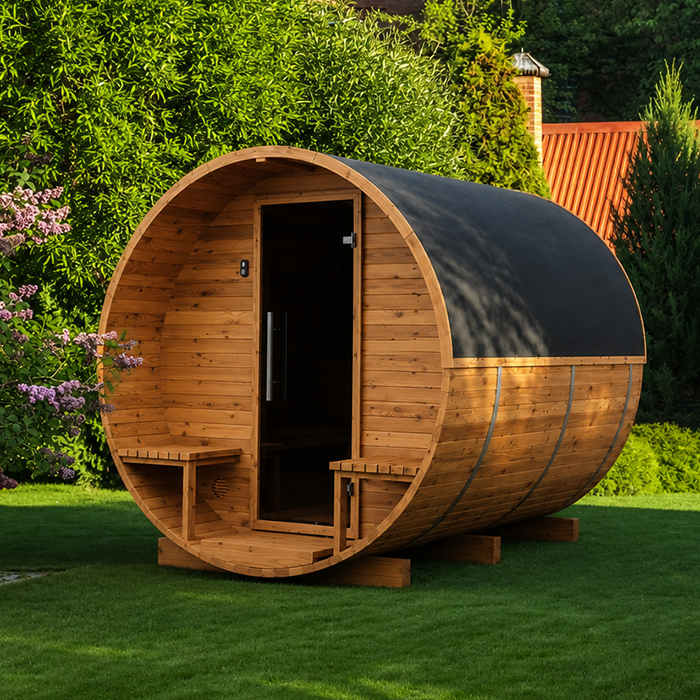
Pay for comfort features you will notice
Make a short list of comforts that matter each time you use the sauna, and rank them above occasional extras. Your list might include bench arrangement and dimensions, ease of entry, back support, lighting, window preference or control location. Treat each as a question for the drawing or product documentation: a feature may be included, optional, unavailable or different in the configuration being quoted. The LCF-300 listing records 6.89 m²; area alone does not tell you whether its seating, lighting or controls match your priorities. Ask for exact inclusions before paying for a feature.
A comfort detail can be worth more than extra floor area when it addresses a repeated need, but only if it is documented, useful to you and within the total budget. The reverse applies when a supposed upgrade is something you will rarely use while the sauna remains too tight for ordinary sessions. Compare complete configurations, not a base cabin on one side with several add-ons on the other. Weigh access, seating and controls alongside appearance, and ask whether an optional item can be added later before treating it as something you can defer.
Confirm the heater and installation scope
A change in room size can affect which heater configuration is suitable, so do not treat a listed area as a heater specification. The Sauna S-140 listing gives a stated area of 1.93 m²; that figure alone does not identify a compatible heater, its requirements, controls or expected warm-up. Ask the supplier which heater is specified for the exact sauna and configuration, and compare the relevant manufacturer instructions. If the heater is sold separately, include its cost and any required controls in the same written quote rather than comparing cabin-only figures.
Have installation-related costs assessed before choosing between more room and extra finish. Check the delivery route and unloading arrangements, how the supplier expects the sauna to be assembled, and what base or site preparation the specific product requires. Find out what falls outside the quote. If the selected heater is electric, a qualified electrician should assess the electrical supply and connections; do not infer the work from a photograph or cabin area. Ask the supplier or installer which site details need professional review, so a low cabin price does not conceal a mismatch between the product and the site.
Include maintenance and service in the value test
Construction is only one part of value; you also need a realistic plan for care and repairs. Ask what routine maintenance the manufacturer requires, whether suitable service is available locally, and whether replacement parts can be sourced for the exact model. The HC-150 product page identifies a sauna listed at 2.97 m², but the area figure does not establish parts support or repairability. Request maintenance instructions and information about service arrangements rather than assuming they are the same for every model in a range.
Read any written warranty terms and exclusions as part of the paperwork, without treating a warranty as proof that the sauna will suit your site or use. Ask how a damaged or worn component could be dealt with, whether repair requires a specialist, and whether care costs differ between the options. A more expensive build is not automatically easier to maintain, and a basic option is not automatically disposable; these are questions to resolve from the available documentation. If one choice appears cheaper upfront but leaves an important service question unanswered, include that uncertainty in your decision.
Compare complete configurations on one sheet
Put the finalists side by side and use the same headings for each: exact model and configuration, listed area, interior layout, included heater and controls, comfort features, delivery, assembly, site work, any electrical assessment and written price assumptions. The HC-225 listing records 4.4 m², while the N-210 entry records 4.43 m². Those figures are close, but they do not prove identical layout, seating, construction or installed cost. Note what each area figure measures before using it to rank the options.
Mark anything unconfirmed as unknown, then get the same questions answered for both candidates. Do not award a point for a feature simply because it appears in a photograph, or compare an optional package with a basic quote as if both were complete. Ask the seller to confirm the current New Zealand configuration and availability for the model you are quoting. This like-for-like record helps reveal whether your budget buys a meaningful difference in usable room, a documented construction detail or a comfort feature you value—or only a more persuasive product description.
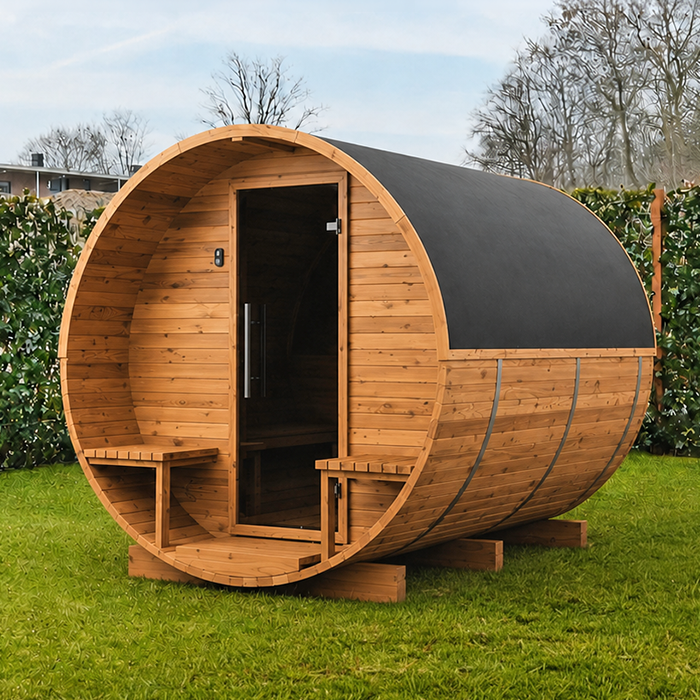
Use pass-or-fail priorities before scoring preferences
First mark genuine non-negotiables as pass or fail: the sauna fits the site according to the relevant drawing, its documented layout suits your usual number of users, its construction meets your requirements, and the complete project stays within budget. A high score elsewhere should not cancel a failure on something you need. Then rank your remaining preferences as low, medium or high importance, and compare how well each qualifying option meets them. Keep these priorities personal: one buyer may value extra seating most, while another may place greater weight on a particular construction detail or control arrangement.
Now ask which compromise you would notice most often. Choose a compact premium option when its documented layout still meets routine needs and its specific construction or comfort details justify the difference in total cost. Favour the larger basic option when its additional measured room solves a regular use problem, while its construction, heater pairing and installed price still pass your essentials. Neither result follows from the label alone. If a benefit cannot be named or confirmed, do not give it extra weight just because it is bundled into the higher-priced choice.
Change the brief if neither option meets the essentials
If every compact option fails your seating or site-fit test, while the larger one pushes the complete project over budget, treat that as a mismatch rather than forcing a choice. Revisit the brief in a controlled order: remove extras you do not value, request a different configuration, compare another size or layout, or postpone until the available budget suits the project. Make one change at a time so you can see what it improves and what you give up. Do not remove an essential installation check or required construction detail just to make the headline cabin price fit.
Before committing, write one sentence that describes the trade-off you are accepting. For example: “I am choosing less spare room because the measured layout works for our usual sessions, and the documented feature matters more to us.” Or: “I am choosing a simpler finish because we regularly use the larger layout and the complete quote is affordable.” Replace those sample details with evidence about the actual options, and confirm that the quoted configuration has not changed. If you cannot state the benefit and sacrifice clearly, keep comparing.
Frequently asked questions
Should I choose a compact sauna if I usually use it alone?
Solo use is a reason to consider a compact sauna, but it should not decide the choice on its own. Size the room around the number of people who will use it regularly, then decide how much you value occasional spare capacity. Check the measured interior and bench layout rather than using catalogue area as a headcount. If solo use is typical, a larger room may take up space and budget you do not need; if group sessions are frequent, cramped seating may be a recurring compromise. Compare complete project costs before deciding.
Is a sauna described as premium necessarily better built?
No. Premium is not a construction specification. Ask what exact details distinguish the quoted option, and look for relevant documentation, assembly instructions and maintenance information. Check that the documents apply to the model and configuration you are considering. A higher price or a polished photograph does not, by itself, establish how a sauna is made or how easy it will be to maintain.
Will a larger sauna always cost more to run?
There is no reliable answer from area alone. A larger heated space may affect heater selection and energy use, but the complete construction, chosen heater, conditions, session length and local energy tariff also matter. Ask for manufacturer guidance for the exact configuration. For an electric heater, actual energy use is best assessed from measured consumption and your tariff rather than assuming the rated power is used continuously.
Can catalogue area tell me how many people will fit?
Not on its own. First confirm what the area figure measures, then review the interior dimensions and bench layout in the relevant drawing. Seating length, arrangement and the space people need to enter and sit comfortably matter more than a simple conversion from square metres to people. Ask for the layout of the exact model and configuration before treating an area figure as evidence of capacity.
What should I compare in two sauna quotes?
Compare the same scope: exact model and configuration, heater and controls if included, delivery, unloading, assembly, site preparation and any required connections. Record optional comfort features separately, and ask what is excluded and who is responsible for each task. A written quote should identify the configuration and its assumptions, so a lower cabin-only price is not mistaken for a lower finished-project cost.
Base the decision on your regular sessions, documented construction and complete project cost. A compact premium option makes sense when its specific upgrades matter to you and its usable room still meets your needs. A larger basic option makes sense when the extra space supports regular use without compromising your essentials. If neither option passes both the site and budget tests, revise the shortlist rather than letting a tier label decide.
